These 9 Towns In Maine Were Ranked Among US Favorites In 2026
Maine measures its coast in thousands of miles, and the best of it hides in towns most lists skip. Rockland keeps a working art museum next to a working lobster pier. Castine has changed flags four times since 1613. Eastport catches the country's first light before anyone in the Lower 48 is awake. These nine communities trade the usual postcard stops for something with more salt in it. Each one earned its place among 2026's most-loved Maine destinations on its own terms.
Rockland

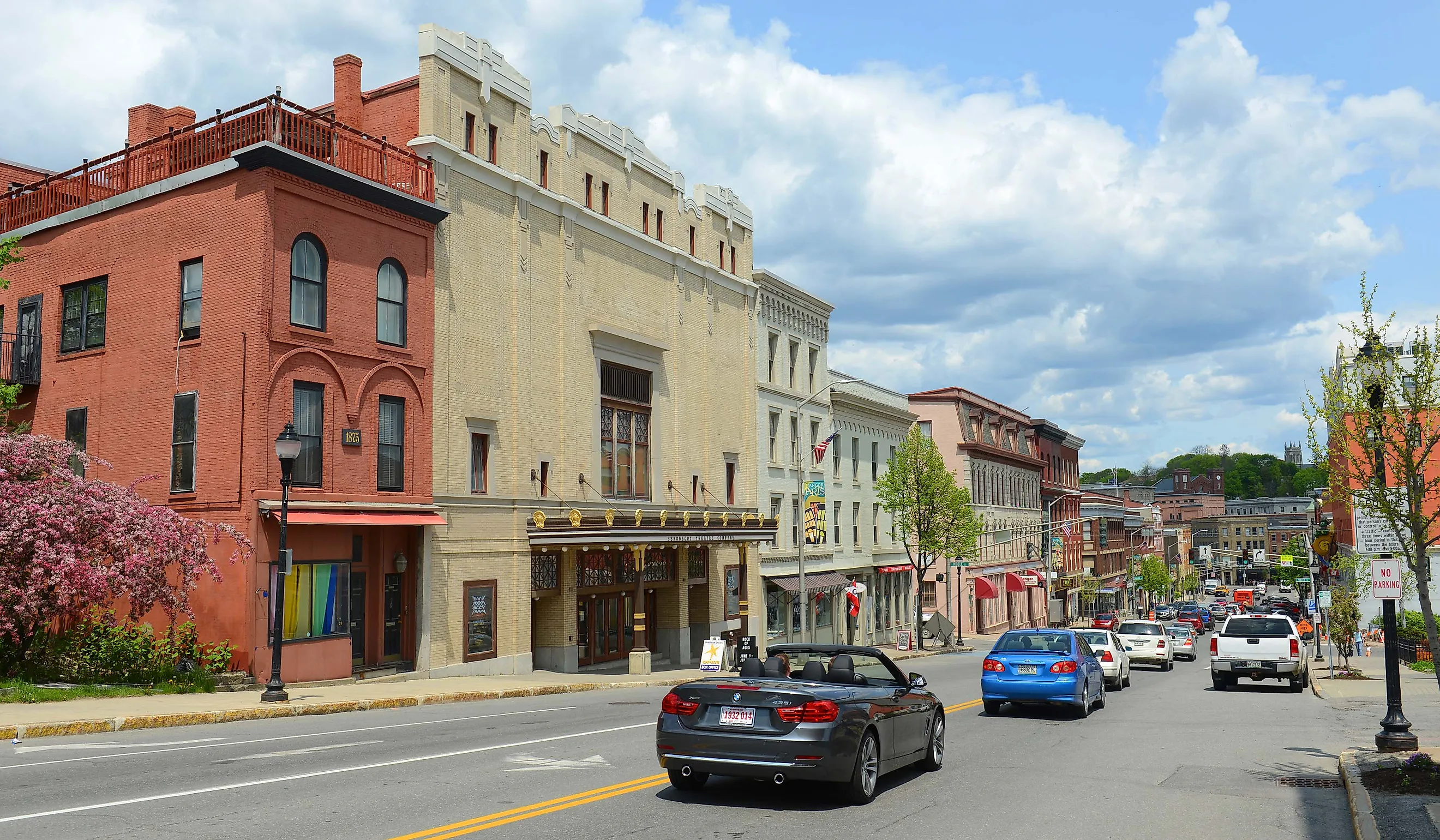
The Farnsworth Art Museum anchors Rockland with nearly 16,000 works, including the largest public trove of Andrew, N.C., and Jamie Wyeth paintings anywhere. Andrew Wyeth's most famous canvas, "Christina's World," grew out of the Olson House in nearby Cushing, which the museum still maintains. Outside the galleries, Main Street runs thick with independent dealers that earned the town its "Art City" reputation. The Strand Theatre, restored to its 1923 look, screens films and beams in Metropolitan Opera broadcasts.
The harbor never stopped working. Lobster boats unload beside the state's biggest windjammer fleet, the tall-masted schooners that carry passengers out into Penobscot Bay. For the town's signature walk, head out the granite breakwater that took 700,000 tons of local stone and eighteen years to build, ending at the 1902 Rockland Breakwater Lighthouse nearly a mile offshore. Each August, the Maine Lobster Festival floods the waterfront with five days of music and seafood.
Castine

Few American towns have switched hands as often as Castine, which calls itself the "battle line of four nations." French, Dutch, English, and American flags have all flown over this Penobscot Bay peninsula since a trading post opened here in 1613. The earthwork ruins of Fort George, raised by the British in 1779, still crown the high ground above town. That summer, the colonies sent a fleet to dislodge them and lost it entirely, a defeat that stood as the worst in American naval history until Pearl Harbor.
The merchant wealth of the early 1800s left rows of Georgian and Federal houses, most still standing in near-original condition. Today the Maine Maritime Academy keeps the seafaring trade alive, training officers and engineers for the merchant marine, with its training ship State of Maine docked in the harbor much of the year. The Wilson Museum fills in the rest, with everything from local relics to 460-million-year-old trilobite fossils.
Wiscasset

Summer traffic crawls through Wiscasset on Route 1, and the cause sits right at the bridge. Red's Eats has stacked whole-claw lobster rolls on a toasted bun since 1938, with a line that runs down the block toward the Sheepscot River most of the season. Sprague's Lobster works the same corner across the street, and locals will tell you the slowdown is really the speed limit and the bridge, not the rolls.
The town behind the lobster shacks earned the label "prettiest village in Maine" the old-fashioned way. Wiscasset grew into the largest shipping port north of Boston in its day, and its Federal-style homes survived intact enough to land the whole downtown on the National Register of Historic Places. Castle Tucker and the Nickels-Sortwell House open their 19th-century rooms for tours. Antique dealers and galleries fill the historic storefronts in between.
Stonington

At the southern tip of Deer Isle sits Stonington, Maine's largest lobster port by volume. More than 300 working boats leave the moorings before dawn, and the catch outlands every other harbor in the state. This is a fishing town first, with bait barrels and diesel engines part of the daily air, not a yacht stop dressed up for visitors. Clapboard and shingled buildings stair-step up the hill above a harbor that looks out on the islands of Merchant Row.
Granite built the place before lobster did. Quarries on Crotch Island and nearby shipped pink stone for landmarks like Rockefeller Center, and the Deer Isle Granite Museum tells that story through a working scale model. The 1912 Stonington Opera House, on the National Register, still hosts roughly 70 shows a year. For a closer look at the bay, kayak outfitters run guided paddles past seal ledges and out toward Isle au Haut.
Eastport

You cannot pass through Eastport on the way to anywhere, which is the point. The easternmost city in the United States spreads across Moose Island, reached by a causeway, and it greets the sunrise before almost anywhere else in the country. Tides on Passamaquoddy Bay swing more than 20 feet twice a day. Just offshore churns Old Sow, the largest whirlpool in the Western Hemisphere, visible from the water near peak tide.
The fishing past lingers on Water Street, where Victorian storefronts on the National Register house galleries and the Tides Institute & Museum of Art. Raye's Mustard Mill, the last traditional stone-ground mustard mill in the country, still runs its grinding stones for visitors. The waterfront keeps a working pulse with lobstering and salmon farming, and the Fourth of July here swells into one of Maine's biggest celebrations, complete with a visiting Navy ship.
Damariscotta

People have been eating oysters at Damariscotta for more than 2,000 years. The Whaleback Shell Midden preserves towering heaps of shells discarded by the Wawenock people, one of the largest such sites on the East Coast. The river that fed them still does the work, growing the prized Pemaquid oysters that supply much of Maine's farmed harvest. Outfitters run tasting cruises and kayak tours that paddle straight past the active farms.
The downtown wears its 19th-century brick well. The discount chain Reny's opened its first store here and now runs shops across the state, and the circa-1875 Lincoln Theater still screens films and stages live shows a few doors down. A bridge over the river links the town to its "twin village" of Newcastle. Each October, the Pumpkinfest turns Main Street into a gallery of carved giant pumpkins and sends hollowed-out ones racing across the harbor.
Belfast

Shipbuilding money gave Belfast its architecture, and the town kept it. Victorian sea-captain's houses and ornate brick blocks line a downtown that holds a national Main Street designation. The art deco Colonial Theater and the Belfast Maskers performing-arts company keep the cultural calendar busy, and the streets fill with galleries and independent shops.
Down at the water, the Passagassawakeag River, the "Passy" to locals, runs past a working shipyard you can watch from the Belfast Harbor Walk. The path threads past restaurants that put the day's catch on the plate, including Nautilus Seafood & Grill and Marshall Wharf, where the menu leans on lobster, salmon, and mussels straight off the boats.
Ellsworth

As the service center for Downeast Maine, Ellsworth draws nearly everyone headed toward the coast, and most of them never stop. They should. The Hancock County seat of about 9,000 holds the state's eleventh National Main Street downtown, with the 1938 Grand Theatre, a restored movie house, now staging concerts and live events.
The Union River runs through the middle of town and gives it a waterfront few passersby notice. Set out from Ellsworth Harbor Park & Marina, or just claim a picnic table by the water. The dining stretches from Finn's Irish Pub to Morton's Moo, a homemade ice cream shop a block off Main, making the town an easy detour rather than a drive-through.
Greenville

Inland and away from the salt water, Greenville sits at the foot of Moosehead Lake, the largest lake in Maine at roughly 75,000 acres. The water sets the pace here. Anglers chase salmon and trout, swimmers wade into the shallows of Lily Bay about nine miles out, and the surrounding Highlands open onto trails like the climb up Mount Kineo.
The name on the map says the rest. This corner of Maine supports some of the densest moose numbers in New England, and Greenville built a small industry around it. Guided tours head out by van or canoe to find the animals feeding along the shoreline at dawn and dusk, when the odds of a sighting run highest.
Maine Beyond the Usual Stops
What ties these nine together is how little they perform for visitors. Rockland and Stonington still haul lobster for a living, and the art and the galleries grew up around the work rather than replacing it. Castine and Damariscotta carry histories measured in centuries, one in colonial forts and the other in oyster shells older than most of Europe's cities. Eastport sits at the literal edge of the country, awake before the rest of it. Visit any one of them and the state stops looking like a postcard and starts looking like a place where people live.