These 11 Towns In New York Were Ranked Among US Favorites In 2026
Few towns in New York earn their place on a favorites list the way these eleven do. Lake Placid carries two Winter Olympics. Seneca Falls launched the first Women's Rights Convention. Corning turned glassmaking into a museum that draws visitors from around the globe, and Cooperstown turned a judge's son into America's first great novelist. The glaciers set the stage, gouging the Finger Lakes and stacking up the Adirondack peaks that now hold ski runs and waterfall gorges. What keeps these towns near the top is that history and landscape still work together in each one.
Lake George

Lake George is both a major lake and a lakeside village, and each has its own nickname. The lake is called the Queen of American Lakes for its clear waters, while the village bills itself as the Birthplace of the American Vacation. Either way, the village draws crowds to lakeside spots like Million Dollar Beach and Fort William Henry, a 1755 British fort featured in the novel The Last of the Mohicans. Due to its location near the Adirondack Mountains, Lake George is a favorite among mountain hikers, with several easy hikes nearby, such as the Prospect Mountain Hiking Trail and the Rush Pond Trail, which is also open in winter for skiing and snowshoeing.
Lake Placid

Lake Placid is a truly Olympic community. This Adirondack Mountain town hosted the 1932 and 1980 Olympic Games. The 1980 games in particular were a dramatic spectacle, as the U.S. team defeated the Soviet Union in an Olympic hockey match that would come to be known as the "Miracle on Ice." Guests can visit the Olympic Museum to learn about these two games, or ice skate at the Olympic Center year-round. One of the most popular spots in Lake Placid is Mt Van Hoevenberg, where visitors can go sledding at the Olympic Sports Complex or ride the Cliffside Coaster, North America's longest mountain coaster.
Wilmington

Set deep in the Adirondack Mountains, Wilmington is ringed by woodlands and anchored by Whiteface Mountain, which hosted the alpine skiing events for the 1980 Winter Olympics. In winter, skiers head to Whiteface Mountain Ski Resort for its 94 trails, totaling 24 miles of runs. Most notably, it has the longest vertical drop east of the Rocky Mountains, at 3,430 feet. There are other natural spots around Wilmington, such as the High Falls Gorge, where visitors can view four waterfalls on a 30-minute hike and even cross glass walkways over the woods. In summer, those same visitors trade the slopes for a swim at the town's Ausable River beach.
Ticonderoga

Ticonderoga has something for both history buffs and die-hard Star Trek fans. During the early days of the American Revolution in 1775, the militia group known as the Green Mountain Boys captured Fort Ticonderoga. They took the British completely by surprise. Today, the fort holds a large collection of 18th-century artifacts, along with its recreated King's Gardens. A ticket to the fort will give guests access to the Mt. Defiance trail, offering an aerial view of the fort and the Adirondack Mountains. The other big draw is the Star Trek Original Series Set Tour, a meticulous recreation of the USS Enterprise that fans praise for its accuracy.
Ithaca

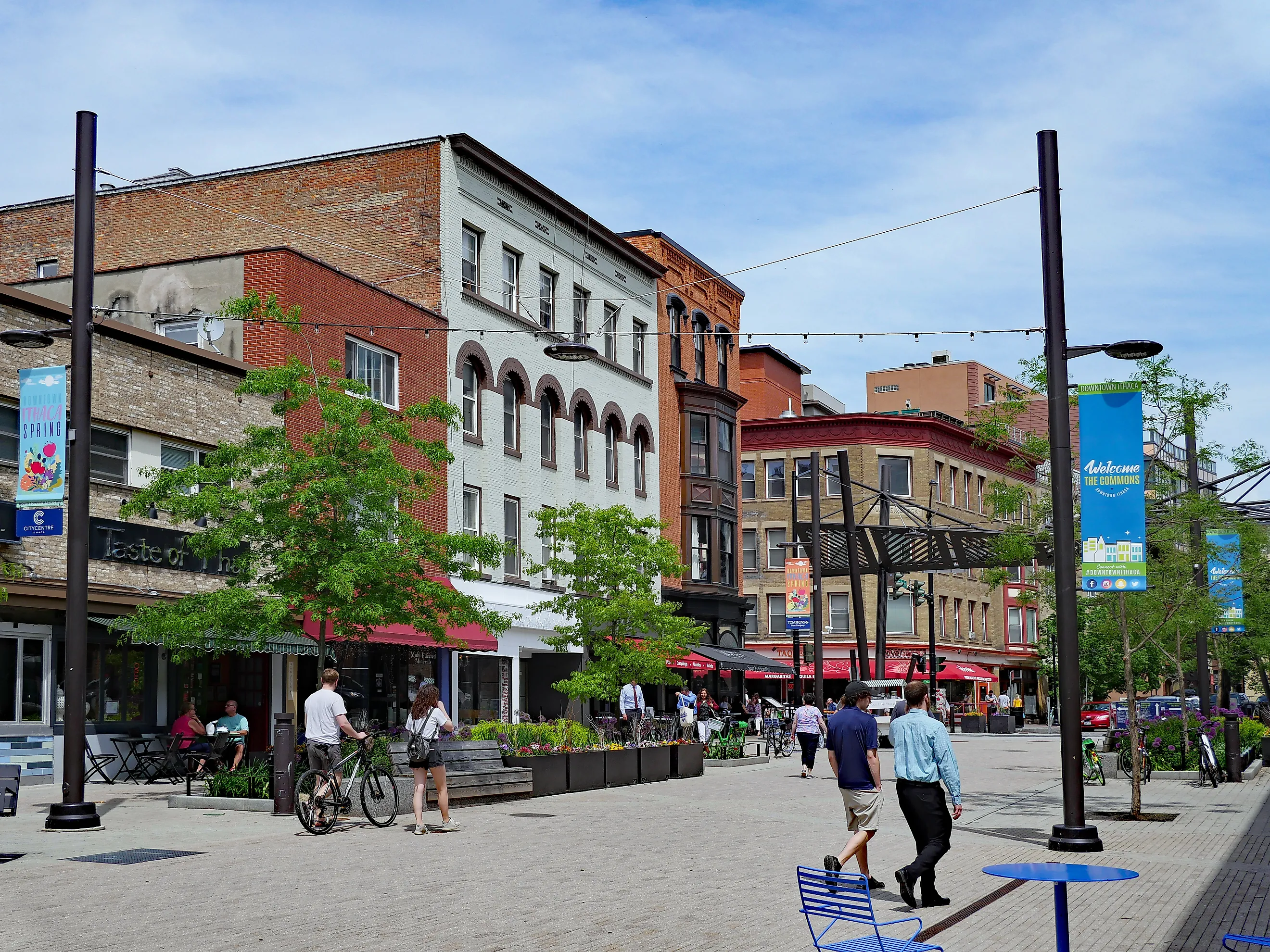
Ithaca has a deep connection both to nature and the sciences. Located on the southern shore of Cayuga Lake in the Finger Lakes, Ithaca sits at the headwaters of streams that flow into the lake, creating a network of waterfall trails right in downtown, such as the Cascadilla Gorge Trail and the Ithaca Falls Trail. These waters sustain the magnificent botanical gardens on the Cornell University campus, the Cornell Botanic Gardens. As an Ivy League school town, Ithaca has a long history of cutting-edge research, including research into the distant prehistoric past. The Museum of the Earth is one such example of that work, as it hosts one of the most complete mastodon skeletons in the world, along with many other exhibits on the Earth's geology and prehistory.
Seneca Falls

Seneca Falls sits just west of Cayuga Lake and is one of the better-known small towns in New York, and it is often linked to the inspiration for Bedford Falls in the Christmas classic "It's a Wonderful Life." The town preserves memorabilia and stories connected to the movie and its Seneca Falls associations at the It's a Wonderful Life Museum. Part of the town's draw comes from its history of women's empowerment. In 1848, it hosted the first Women's Rights Convention, organized by Elizabeth Cady Stanton and other activists. The Women's Rights National Historical Park includes both the Wesleyan Chapel, where the convention was held, and the Stanton House, where Elizabeth Cady Stanton lived. Seneca Falls also honors women from the past to modern times in America at the National Women's Hall of Fame.
Watkins Glen

Watkins Glen is a Finger Lakes community on the southern shores of Seneca Lake. The lake is open to fishing charters, boat tours, and kayak rentals, but its real draw lies just inland at Watkins Glen State Park. This park will guide hikers down a gorge with a stream that cascades over 200-foot cliffs, producing waterfalls along the way. Summer visitors can cool off in the park's Olympic-sized pool, while fall brings the autumn colors that light up the gorge. Watkins Glen is also firmly on the Seneca Lake Wine Trail, which connects several local wineries, including Lakewood Vineyards.
Corning

Sitting in the Finger Lakes region to the southwest of Seneca Lake, Corning has a long tradition of glass-making techniques perfected by gaffers. Today, that legacy lives on in its Gaffer District, defined by the 50-foot-high Centerway Clock Tower, built in 1883 from Antrim stone. The district's biggest attraction is the Corning Museum of Glass, which traces the history of glassmaking from Ancient Egypt to the modern day and includes the Contemporary Art + Design Wing, which showcases contemporary glass art. The museum also offers glass-blowing demonstrations and classes for those who want to make their own creations. Corning celebrates other artistic creations at the Rockwell Museum, which in 2015 became the first Smithsonian Affiliate in New York State outside New York City. It offers a mixture of Native American art, 19th-century paintings, and modernist works.
Saratoga Springs

Saratoga Springs is popular both as a spa weekend trip and a crawl through American Revolutionary War battlefields. Long before the spas, Haudenosaunee (Iroquois) peoples came to the area for its healing waters, and were later followed by European settlers. Today, those waters are contained within Saratoga Spa State Park, with access from the Roosevelt Spa. The park is also home to the Saratoga Performing Arts Center, which hosts theatrical performances. For Revolutionary War buffs, Saratoga Springs is close to the Saratoga National Historical Park, where American forces dealt the British a decisive defeat on October 17, 1777, marking a major turning point in the war. Guests can follow interactive displays on trails throughout the park or join a guided tour with a park ranger. For a more in-depth look at Saratoga Springs' military history, visitors can go to the New York State Military Museum.
Cooperstown

On the shores of Otsego Lake, Cooperstown was founded in 1786 by William Cooper. His son James Fenimore Cooper would go on to write several books based in part on his experiences growing up in Cooperstown, including Leatherstocking Tales. Cooperstown is best known for the National Baseball Hall of Fame & Museum, featuring more than 40,000 artifacts spread across three floors, as well as the Cooperstown Bat Company, which produces bats for visitors to take home. Those who don't enjoy baseball will find plenty to keep them occupied, such as visiting the living-history Fenimore Farm & Country Village, designed to resemble an 1845 village, snapping a photo of the lake from Lakefront Park, or going swimming at Otsego Lake at Glimmerglass State Park.
Sleepy Hollow

Sleepy Hollow is one of the most popular towns in New York to visit during the spooky season of Halloween. It was featured in the 1820 short story "The Legend of Sleepy Hollow" by Washington Irving, which told the tale of a headless horseman who terrorized the townsfolk. Today, the town is filled with historic landmarks related to the life of Washington Irving, such as Christ Episcopal Church, where he served as a Sunday School teacher and where his funeral was held, and the Sleepy Hollow Cemetery, where he is buried. Nearby in Irvington, one can find many unusual sites, such as the Armour-Stiner Octagon House, a domed octagon home built in the 1860s to resemble an ancient temple. Sleepy Hollow kicks off the Halloween season with its Street Fair each September, with handcrafted goods and an appearance by the Headless Horseman himself.
Where New York's Landscapes Meet Local History
All of these towns maintain a close connection with nature. In some cases, that can be through skiing resorts, such as the vast skiing trails outside of Wilmington, while others have built their towns around beautiful trails, like Ithaca's waterfall trails that wind around the campus of Cornell University. History is the other thread tying them together, whether that's the Revolutionary War battlefields, the women who organized for equal rights in Seneca Falls, or the old American tall tales kept alive in Sleepy Hollow. These communities still have many tales to tell for those willing to listen and go see them for themselves.