These 10 Towns In Alabama Were Ranked Among US Favorites In 2026
The Rolling Stones cut "Brown Sugar" in a Sheffield studio, and NASCAR runs its biggest crowds through Talladega. None of those places is a big city, and that is the point. The towns that keep landing on travelers' best-of lists for 2026 tend to be the ones most people drive past, each holding onto a single outsized story that gives a stranger a reason to stop. What follows is that case, made one town at a time.
Tuskegee

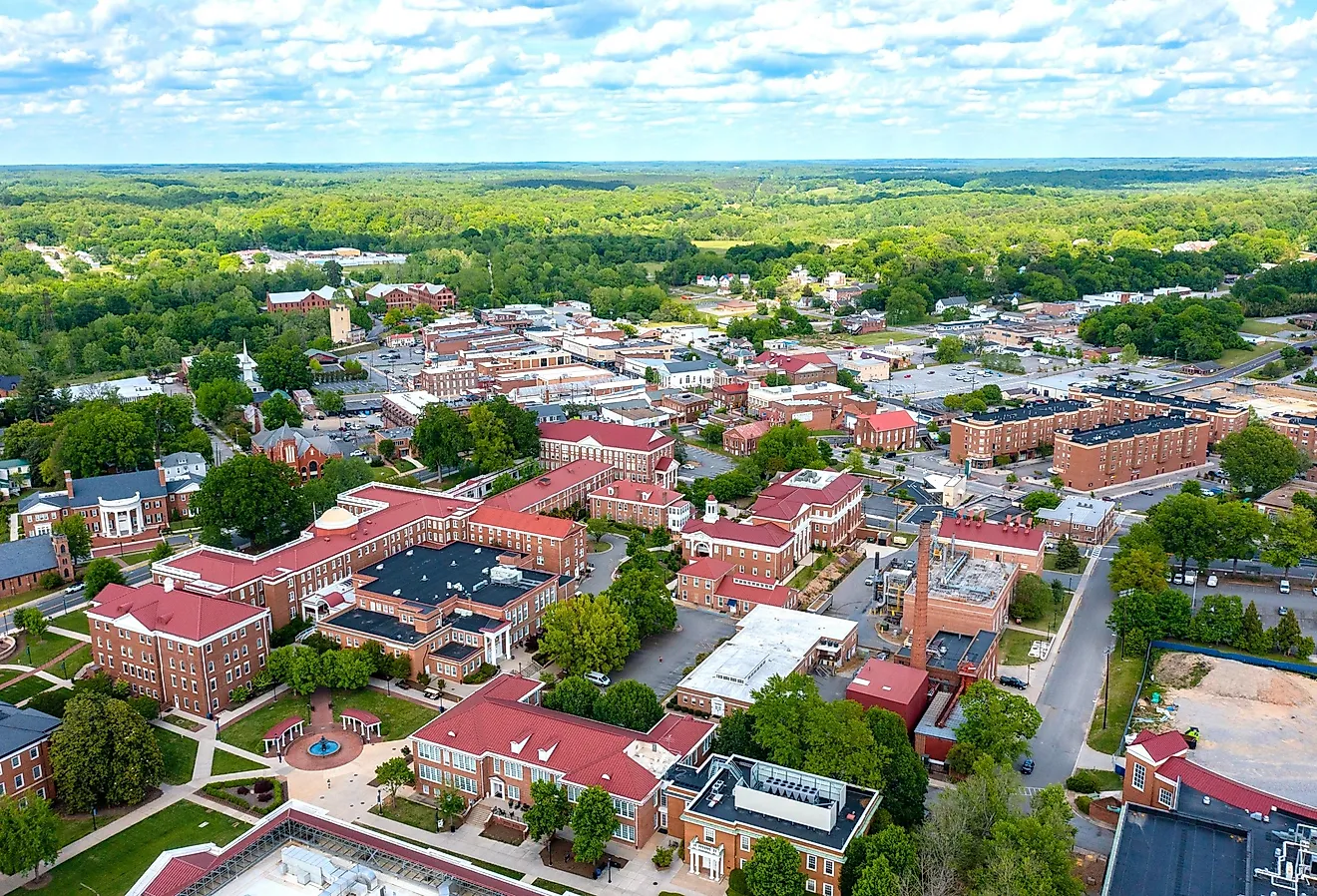
Tuskegee University, once again ranked among the nation's top historically Black colleges and universities (HBCUs), gives this Alabama favorite much of its identity. Visitors can take scheduled campus tours that highlight architectural landmarks built by students during the late 19th century. The university's story began as a normal school for Black teachers in 1881. It later grew into a major institution known for fields such as aerospace engineering and veterinary medicine.
Tuskegee also gives travelers a deeper look at American history through preserved public spaces such as the Tuskegee History Center. Moton Field adds an essential stop, with exhibits tied to the Tuskegee Airmen and the World War II-era "experiment" that tested whether African Americans could be trained as combat pilots. The Tuskegee Airmen, who served in World War II as the first African American military aviators in U.S. history, also included navigators, dispatchers, technicians, bombardiers, and support staff.
Fort Payne

Fort Payne's "Sock Capital of the World" nickname points to its hosiery-manufacturing past. Its connection to the country band Alabama gives music fans a separate reason to visit. The town sits in the southwesternmost section of the Appalachian Mountains, making it a strong base for outdoor trips. Visitors can raft at Little River Canyon National Preserve or go zip-lining and fishing among the towering trees of the 3,500-acre DeSoto State Park. They can also explore Lookout Mountain Parkway during the "World's Longest Yard Sale" each August.
The town's 1880s industrial boom is still visible at the 1889 Fort Payne Opera House. It is the oldest theater in Alabama originally built for that purpose and still in operation today. Fort Payne's mix of factory history, mountain views, and live-performance heritage gives the stop a distinct identity in northeast Alabama.
Guntersville

Guntersville is one of Alabama's best-known outdoor recreation towns, centered around the sprawling 69,000-acre Lake Guntersville. As the state's largest lake, stretching 75 miles between Nickajack Dam and Guntersville Dam, it has earned a national reputation as a "fisherman's paradise." Championship bass fishing is a major draw. Largemouth bass are the best-known catch, but the waters also hold crappie, bream, redear sunfish, catfish, and other species. Lake Guntersville State Park also offers over 30 miles of multi-use trails for hiking, biking, and horseback riding through woodlands and along the Tennessee River.
The park's zip-lines give visitors a high-flying look at the canopy and a chance to spot the bald eagles that live in the area. Guntersville's lake setting, trail access, and wildlife viewing help explain why it is regularly named among Alabama's top vacation destinations by regional travel publications.
Muscle Shoals

Muscle Shoals preserves one of the South's most important music legacies through FAME Recording Studios and Muscle Shoals Sound Studio. These working studios are tied to the "Swampers," the house band that backed Aretha Franklin, Wilson Pickett, and other major artists, and whose studio later drew the Rolling Stones, Bob Dylan, and Paul Simon. Visitors can stand in the rooms where hits such as "I'll Take You There" by the Staple Singers and the Rolling Stones' "Brown Sugar" were recorded. That experience gives music fans a direct connection to the "Muscle Shoals Sound." The town's studios helped shape soul, rock, blues, gospel, country, and folk styles that changed the cultural landscape of the South. Many visitors arrive for the music, then add time outdoors in the Muscle Shoals National Heritage Area, the only National Heritage Area in Alabama.
Talladega

Talladega is built for speed, with Talladega Superspeedway standing as its signature attraction. Since opening in 1969, the track has become one of NASCAR's most recognizable venues. It draws large crowds for high-speed race weekends. The track provides van tours during working hours, except on event weeks. Next door, the International Motorsports Hall of Fame opens daily and displays vehicles, memorabilia, and exhibits tied to the sport's growth. Downtown adds the Talladega Walk of Fame at Davey Allison Memorial Park, where racing legends are honored in a public setting. Talladega also serves as a gateway to the Talladega National Forest, more than 392,000 acres of federally managed wilderness. Hikers and nature lovers are frequently drawn to the Pinhoti Trail, a southern extension of the Appalachian Trail that winds through hardwood forests and scenic overlooks. Nearby Cheaha State Park is home to the state's highest point at just over 2,400 feet.
Foley

Foley has grown into a family-friendly Gulf Coast destination with railroad history, shopping, entertainment, and easy access to Alabama beaches. Founded by John B. Foley in 1901, the city was built on the backbone of the Louisville and Nashville Railroad. The railroad turned isolated farms into a busy shipping area for potatoes and other crops. Today, visitors can learn about that background at the Foley Depot Museum, housed in the restored 1909 train station. Foley gives travelers an inland base just minutes from the white sand beaches of the Gulf. The centerpiece of its modern visitor scene is OWA Parks & Resort, an award-winning destination with the Tropic Falls theme park. The resort also has an indoor water park with a convertible roof, outdoor thrill rides, and Downtown OWA. This pedestrian-only entertainment district is filled with dining, shopping, and live performances at the OWA Theater. Foley is a practical and lively stop for travelers heading toward Alabama's beaches, especially those who want recreation and entertainment before reaching the shore.
Dauphin Island

Dauphin Island, the "Sunset Capital of Alabama," is a barrier island three miles south of Mobile Bay with beaches, maritime history, and coastal research sites. A three-mile bridge connects the island to the mainland. A historic ferry ride of roughly 40 minutes links it to Fort Morgan, a National Historic Landmark that has guarded the bay since the 1830s. The ferry route also gives visitors a chance to spot dolphins on the way to this quiet coastal getaway.
History buffs can walk the grounds of Cadillac Square, which once served as home to Governor Cadillac and the capital of the Louisiana Territory before a 1717 hurricane forced the capital to move. They can also follow the paths at Indian Shell Mound Park, where Indigenous people gathered over thousands of years to harvest fish, shellfish, and marine birds. The site was also used for feasts and trade. The Dauphin Island Sea Lab highlights coastal Alabama habitats through 31 aquariums totaling over 30,000 gallons. Its exhibits also include a 10,000-square-foot hall, a 7,000-gallon stingray touch pool, and the Living Marsh Boardwalk. Local family-owned eateries and markets serve fresh-caught shrimp, oysters, fish, and crab from surrounding waters.
Fairhope

Fairhope has been called "pretty near perfect" by Southern Living and one of "America's 30 Most Charming Seaside Towns" by TravelPulse. It has also appeared among MSN's "14 Cutest Small Towns in the South." Its elegant, walkable downtown rewards slow exploration with local boutiques, restaurants, and coastal cottage architecture throughout nearby residential streets.
The Fairhope Museum of History, free to the public and housed in the 1928 Spanish mission-style former city hall, explains the city's origins as a single-tax colony and its long-standing identity as an artists' escape. Nature lovers can also visit Weeks Bay Reserve, which encompasses more than 6,000 acres of tidal and forested wetlands within a small estuary. It remains one of the sites in the National Estuarine Research Reserve System. The Fairhope Municipal Pier serves as a local gathering place and is widely celebrated for sea life, bird-watching, fishing, and views of Mobile Bay.
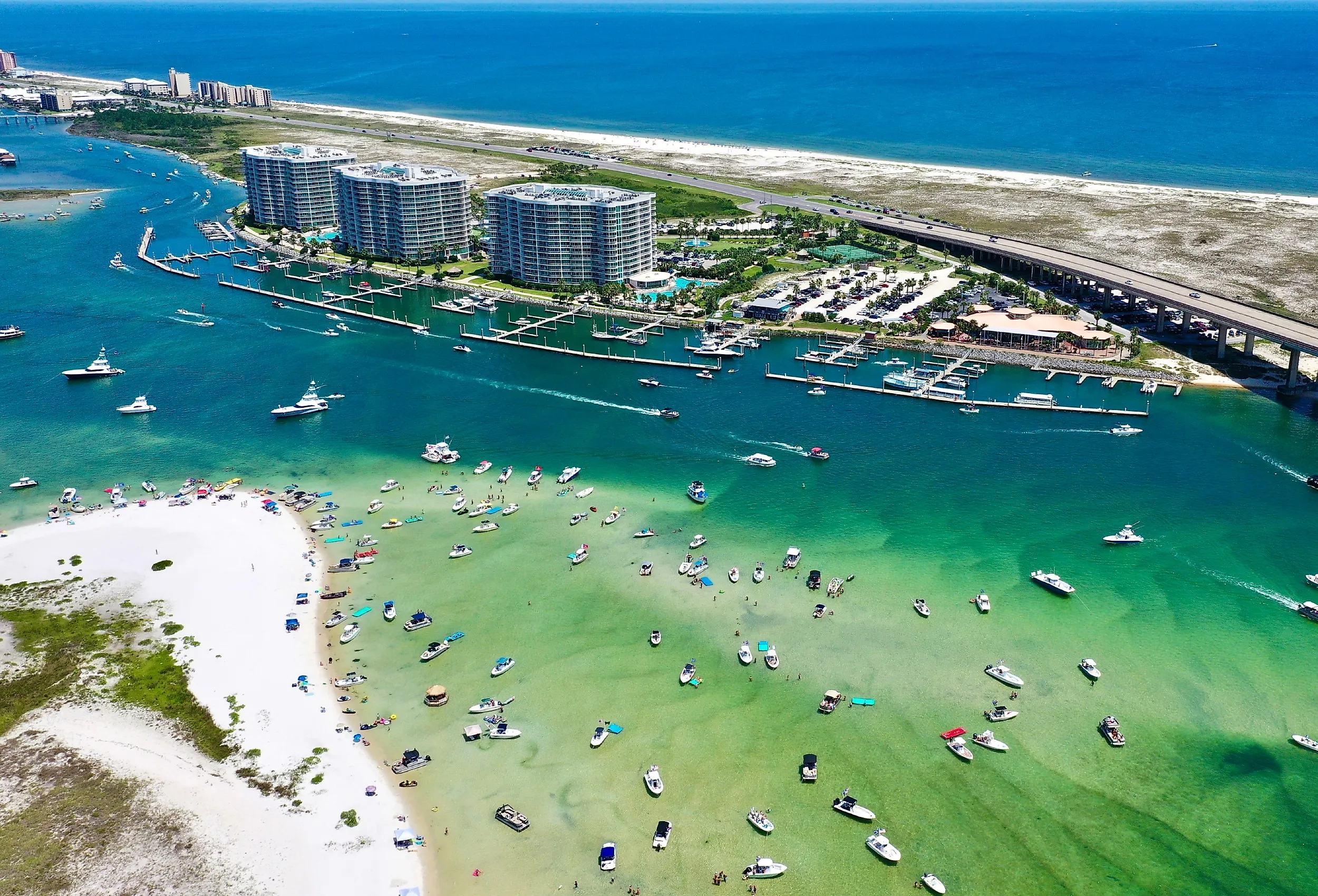
Orange Beach

Orange Beach sits on the sugar-white sands of the Alabama Gulf Coast. Beach days, boating, trails, and entertainment shape the city's visitor scene. Travelers can relax on the beaches, discover the Hugh S. Branyon Backcountry Trail, or take in a performance at The Wharf Amphitheater. The city also offers outdoor dining, shopping, festivals, and recreation. Known as the "Youth Sports Capital of the South," Orange Beach hosts leagues and teams of all levels at the Orange Beach Sportsplex. The facility is equipped with fitness, aquatic, and tennis facilities, as well as a par-3 executive-style golf course.
Often dubbed "Mayberry at the Beach," the city features a waterfront public library, the Orange Beach Indian and Sea Museum, a senior activity center, and the "Unleashed" dog park. The Flora-Bama beach bar sits on the Florida-Alabama state line in Perdido Key, Florida. It remains a major nightlife draw for Orange Beach visitors. Known as the "Last Great American Roadhouse," it also hosts the Interstate Mullet Toss.
Gulf Shores

Gulf Shores, located just west of Orange Beach, combines Gulf Coast beach life with historic landmarks, resort amenities, parks, and local dining. Visitors can explore Civil War history at Fort Morgan, walk the beach, browse local shops and bistros, and spend time in public recreation areas. Gulf State Park is one of the city's main outdoor draws, with 6,500 acres, nine distinct ecosystems, and a 1,540-foot fishing pier. The Alabama Gulf Coast Zoo adds a family-friendly stop with its tropical urban setting.
Travelers can also play championship rounds at Craft Farms Golf Club, which features Alabama's only Arnold Palmer Signature Design Course. They can also spend the day at Waterville USA, a 20-acre water and amusement park. The Hangout brings beachfront dining and live music to the end of Highway 59. Food, concerts, and Gulf views sit at the center of the city's visitor scene. Frequently recognized by major travel publications as a top family beach vacation spot in the U.S., Gulf Shores remains a favorite for travelers who want resort amenities close to protected coastal landscapes.
Planning The Trip
The ten towns split cleanly into two trips that can also be stitched into one. Fairhope, Dauphin Island, Foley, Orange Beach, and Gulf Shores cluster around Mobile Bay and the Gulf Coast, close enough that beach days, seafood, and coastal history fill a long weekend without much driving. Guntersville, Fort Payne, Muscle Shoals, Talladega, and Tuskegee spread across the northern and central parts of the state, trading beaches for lake water, canyon trails, recording studios, and racing history. Anyone with a full week can start on the coast and work north, ending at Cheaha's overlooks or a race weekend at Talladega.