8 Best Places To Live In Northern Ireland In 2026
Northern Ireland packs a lot into a small area, with a population of just under 2 million spread across coastal towns, lakeland villages, and two cities. A young professional chasing a growing job market, a family weighing schools and crime rates, and a retiree after sea views and a slower week will each find somewhere here that costs far less than the equivalent in Great Britain. The eight places below run from the north Antrim coast to the Fermanagh lakelands, and each earns its spot for a specific reason rather than a general one.
Holywood

The Sunday Times has named Holywood the best place to live in Northern Ireland on more than one occasion. This coastal town on the shores of Belfast Lough sits 8 miles from Belfast city center, close enough to commute but far enough to keep its own High Street, where independent shops, cafes, and restaurants outnumber the chains. The North Down Coastal Path, a 16-mile walking and cycling trail, follows the shoreline with views across the lough toward the Antrim Hills. Redburn Country Park, on the edge of town, adds woodland walks within minutes of the center. Holywood is the hometown of golfer Rory McIlroy, who learned the game at Holywood Golf Club. Housing here runs toward the higher end for Northern Ireland, but the schools and the Belfast rail link keep it among the most sought-after addresses in the country.
Bangor

Bangor has drawn holidaymakers since the Victorians arrived by train in the 1860s, and the seafront still carries that resort character. The town is built around one of the largest marinas in Ireland, on the southern shore of Belfast Lough, and it pulls in sailors and walkers without charging the prices a comparable English seaside town would. Average house prices sit around £217,000, and the housing stock runs from Victorian terraces to modern apartments to suburban family homes. The Ards Peninsula stretches south into some of County Down's best cycling and walking country. The town carries two yacht clubs, a café and restaurant scene along the high street, and a live music calendar unusual for its size. Bangor Grammar School is among the most respected schools in the region, and the area's low crime rate is a draw for families.
Lisburn

Lisburn turns up near the top of quality-of-life surveys for Northern Ireland, helped by some of the lowest unemployment rates in the country and a walkable center that mixes independent shops with national retailers. The Irish Linen Centre and Lisburn Museum, set inside a 17th-century market house on the main square, traces the linen industry that built the city. The Lagan Valley Regional Park runs along the river through the middle of town, carrying miles of walking and cycling trails. Friends' School Lisburn is among the most respected schools in the country, and the Lisburn Leisureplex gathers swimming pools, gyms, and family facilities under one roof. Rail services reach Belfast in around 20 minutes. Average house prices sit around £232,000.
Belfast

Belfast has become a draw for young professionals while staying cheaper to live in than almost any other UK city. The average house price is around £181,000, less than half what comparable English cities charge, and rents are the lowest of any UK capital. Northern Ireland's tech sector has grown fast, with over 1,100 international companies operating in the region, many of them in Belfast, and the city is now counted among the fastest-growing tech sectors in the UK. The Cathedral Quarter, around St. Anne's Cathedral, holds most of the city's creative venues and nightlife. Titanic Belfast stands on the slipways where the ship was actually built, anchoring a rebuilt waterfront. Queen's University Belfast, a Russell Group research university, sits in the Queen's Quarter, a neighborhood of Victorian terraces and independent coffee shops that ranks among the most desirable addresses in the city. Northern Ireland also records some of the lowest crime rates of any UK region, which catches first-time visitors off guard more often than it does residents.
Derry/Londonderry

Derry has ranked as the most affordable city in the UK for three years running, with average house prices around £185,000 and city-center apartments from about £700 a month. It sits on the banks of the River Foyle near the Irish border, with the Donegal hills behind it. The City Walls, finished in 1619, form the only complete walled circuit left in Ireland and take under an hour to walk, with the old town and river below. The Bogside Murals, a series of large gable-wall paintings, document the city's experience during the Troubles and rank among the most-visited sites in Northern Ireland. More than a third of the population is under 25, the job market is growing with several multinationals now based here, and the arts scene carried Derry to the title of UK City of Culture in 2013.
Portrush

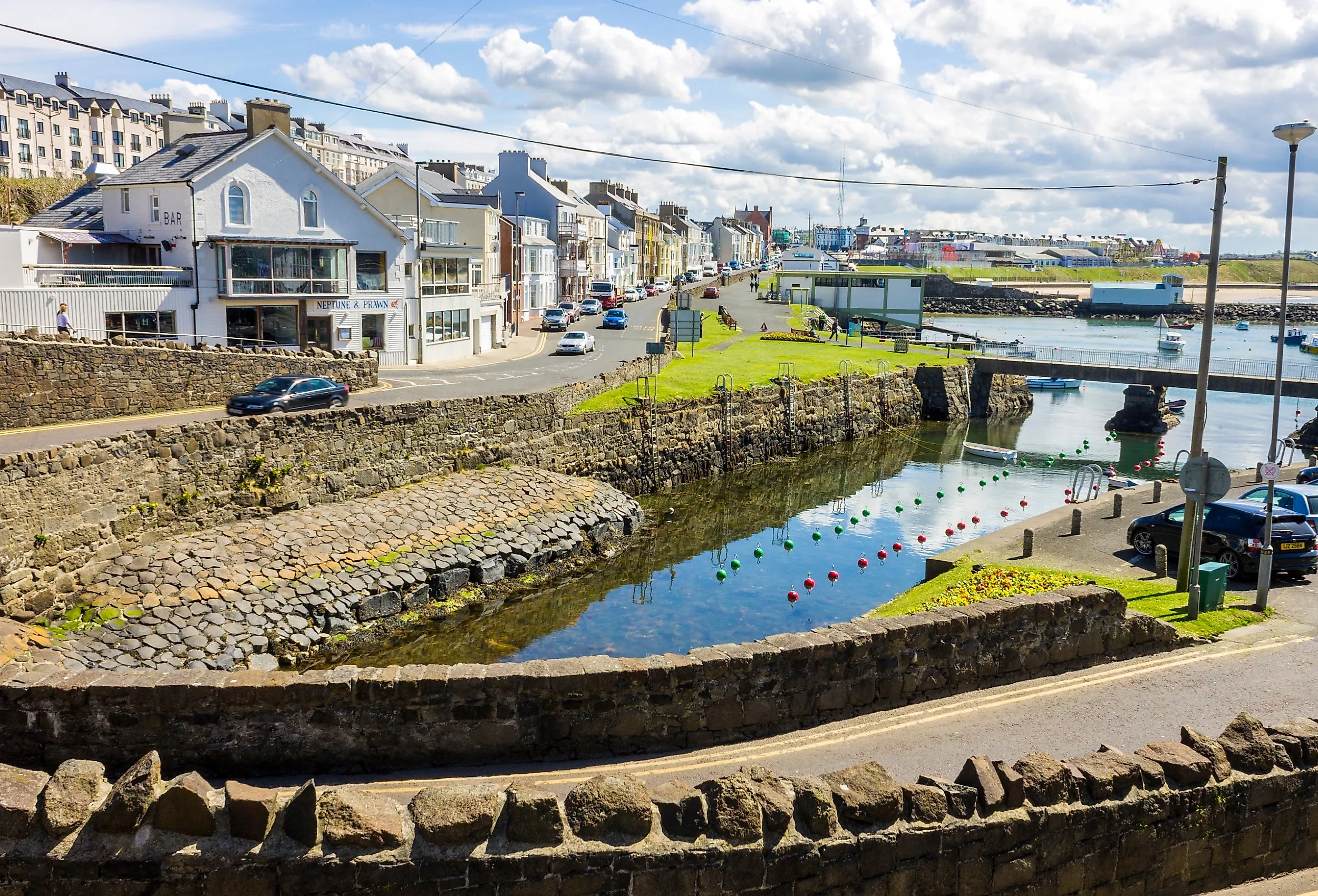
Portrush gives retirees an ocean view at close to the Northern Ireland average house price, and its year-round population of around 7,000 keeps it quiet outside the summer season. Royal Portrush Golf Club, a regular host of The Open Championship, is the town's best-known landmark and draws golfers who would otherwise have no reason to stop in a town this size. Up the coast, the Giant's Causeway, a UNESCO World Heritage Site of thousands of interlocking basalt columns left by ancient volcanic activity, is one of the most-visited natural sites in Ireland. The ruined Dunluce Castle, on a clifftop just outside town, dates to the 13th century and faces the sea toward Scotland. Portrush has three sandy beaches along its headland, and the Causeway Coastal Route, which several publications have called one of the world's great drives, begins on its edge.
Enniskillen

Enniskillen sits on a natural island in the middle of Lough Erne, one of Northern Ireland's largest lakes, with water on both sides of the town center. The Sunday Times named it one of the best places to live in the UK in 2023, and local polls have repeatedly voted it the happiest place to live in Northern Ireland. Average house prices sit around £174,000, below the Northern Ireland average, and the population of roughly 14,000 keeps distances short. Enniskillen Castle, a 600-year-old waterfront fortress that now houses a museum, is the town's main landmark. The Marble Arch Caves, a network of underground rivers and chambers 23 minutes from the center, are among the larger show caves in Europe. The South West Acute Hospital is in town, and together with the low crime rate it makes Enniskillen a practical choice for retirees as well as a pleasant one.
Carrickfergus

Carrickfergus is one of the oldest towns in Ireland, and its castle says so at a glance. Carrickfergus Castle, built by the Norman knight John de Courcy in 1177 above Belfast Lough, is one of the best-preserved medieval castles in the country and has guarded the town for over 800 years. The town stands on the north shore of the lough in County Antrim, about 25 minutes from Belfast by road, and has been named one of the safest medium-sized towns in the UK. Property prices here run among the most affordable on the north shore, which makes it a common landing spot for first-time buyers and for families who want coastal living without Holywood or Bangor money. The Carrickfergus Marina sits on the waterfront, and the town's August medieval heritage days, centered on the castle, are among the larger annual events on the Antrim coast.
Eight Towns, Eight Different Reasons
The right choice depends on what you are after. Holywood and Bangor pair a coastal address with a short Belfast commute. Belfast and Derry offer city life at prices that have not yet caught up with the rest of the UK. Portrush and Enniskillen trade urban convenience for water on the doorstep, which is the trade most retirees here are happy to make. Lisburn and Carrickfergus land in between, with family housing and schools that do not demand a premium. Each of the eight earns its place on a particular merit rather than a general one, which is the useful way to read the list.