The Best Small Towns on the Atlantic Coast for a Weekend Retreat
The East Coast's older maritime towns hold their weight against any weekend getaway in the country. Beaufort, North Carolina was Blackbeard's favourite hideout and now has his flagship's artifacts on display in its maritime museum. St. Michaels, Maryland preserves a working shipyard from the age of sail. Mystic, Connecticut has whaling ships that still put to sea. Chincoteague, Virginia is home to Assateague's wild ponies. Bar Harbor, Maine opens onto Acadia National Park. These ten towns trade on Atlantic Coast history, and a weekend in any of them feels like a step out of the usual travel circuit.
Beaufort, North Carolina

In the middle of North Carolina's coast, Beaufort sits on a working waterfront with preserved antebellum architecture along Front Street. The Beaufort Hotel handles most out-of-town stays. The North Carolina Maritime Museum displays artifacts recovered from Blackbeard's flagship Queen Anne's Revenge, which ran aground off Beaufort Inlet in 1718 and was rediscovered in 1996. Artifact recovery continues today. The Rachel Carson Reserve, accessible by boat from Front Street, preserves an undeveloped marsh island with wild horses descended from colonial-era livestock.
St. Michaels, Maryland

St. Michaels is one of the Chesapeake Bay's most intact 18th-century boatbuilding towns. The Inn at Perry Cabin is the historic-luxury option on the waterfront, with rooms overlooking the Miles River. The Chesapeake Bay Maritime Museum runs a working shipyard that still builds and restores historic wooden boats, plus the relocated 1879 Hooper Strait screw-pile lighthouse on its grounds. Downtown is walkable, with the main commercial strip of Talbot Street lined with restaurants serving Eastern Shore crab cakes, oysters, and local rockfish.
Mystic, Connecticut

Mystic in southeastern Connecticut anchors the state's maritime identity. The Whaler's Inn is the central lodging option. The Mystic River runs through town with boat tours and kayak rentals available at the waterfront. The Mystic Seaport Museum, the largest maritime museum in the US, preserves 19th-century American whaling ships including the Charles W. Morgan (the last surviving American wooden whaleship) and a recreated 19th-century coastal village with active craftspeople demonstrating historic trades.
Chincoteague, Virginia

Chincoteague is the gateway to Assateague Island's wild ponies and the Chincoteague National Wildlife Refuge. The Refuge Inn is the go-to family-owned stay. The refuge preserves 14,000 acres of barrier-island habitat with beach, maritime forest, and wetlands. Every July, the town hosts the Pony Swim, when local "saltwater cowboys" herd the wild Chincoteague ponies across the channel to Chincoteague Island for the annual auction (a tradition made famous by Marguerite Henry's 1947 children's book Misty of Chincoteague). The Museum of Chincoteague Island covers local oyster-harvest history and Misty-specific memorabilia.
Kennebunkport, Maine

Kennebunkport is the summer home base for New Englanders and the vacation home of the Bush family (former President George H.W. Bush's Walker's Point compound sits on the coast here). The Nonantum Resort handles most waterfront stays. Goose Rocks Beach, a three-mile sand beach, is one of Maine's best summer swimming and walking spots. The Seashore Trolley Museum, the world's oldest and largest electric railway museum, preserves over 250 transit vehicles including vintage streetcars that still run on a small heritage track. Goat Island Lighthouse is visible from Cape Porpoise Harbor.
Cape May, New Jersey

Cape May is the oldest seaside resort town in America, continuously operating since the mid-1700s, and home to the largest concentration of preserved Victorian-era buildings in the US (the entire town is a designated National Historic Landmark). The Southern Mansion and other Victorian bed-and-breakfasts run seasonal stays. Cape May Point State Park contains hiking trails, a beach, and the working Cape May Lighthouse (built 1859). The Emlen Physick Estate is a preserved 1879 Stick-style Victorian house open for guided tours. Whale-watching boats run from Cape May's harbour into the lower Delaware Bay, spotting humpbacks, fin whales, and dolphins in season.
Bar Harbor, Maine

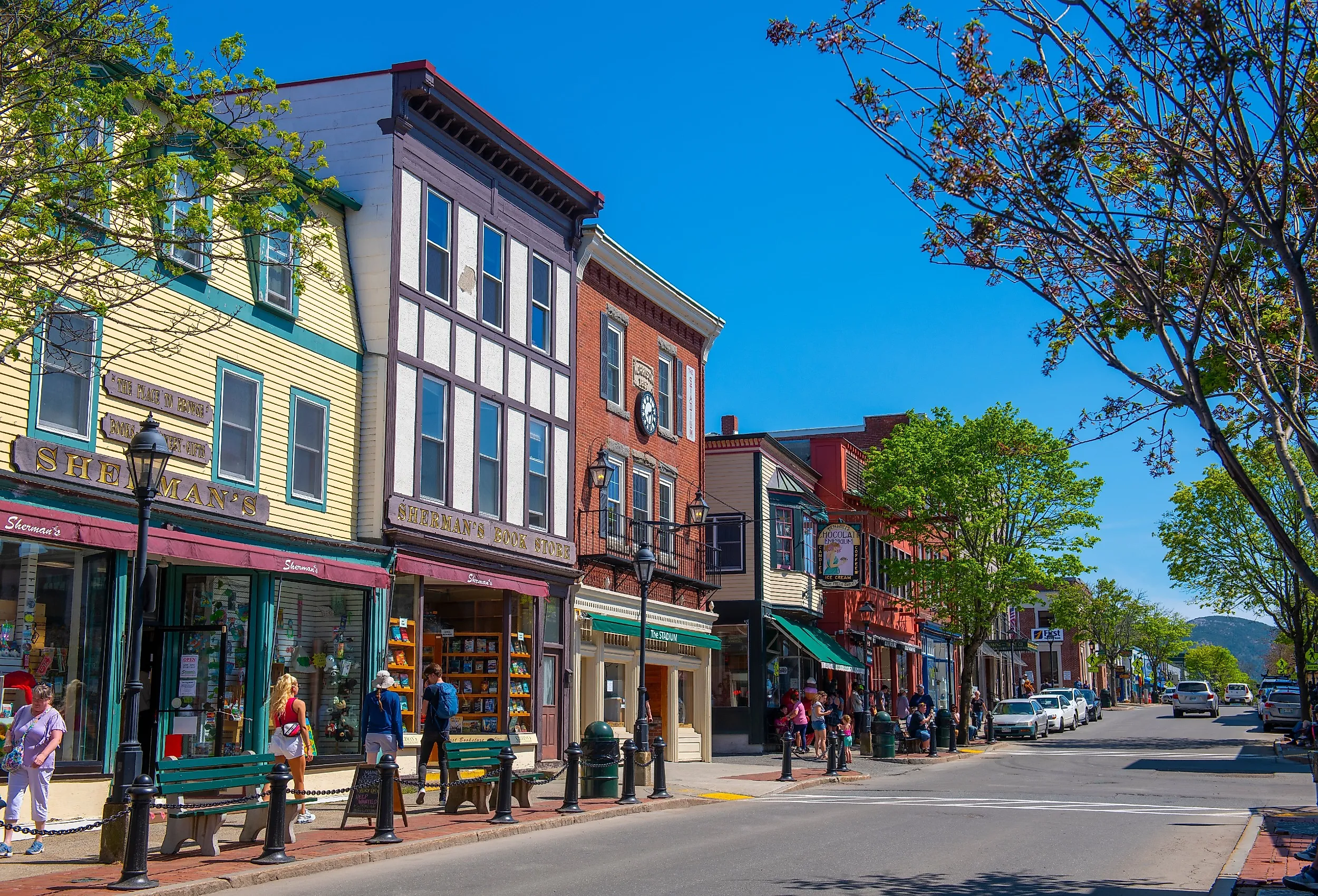
Located on Mount Desert Island, Bar Harbor is the main access point for Acadia National Park, one of the most visited national parks in the US. The Bar Harbor Inn and Spa overlooks Frenchman Bay from a waterfront position. Acadia offers 158 miles of hiking trails, the 27-mile Park Loop Road, and the summit of Cadillac Mountain (1,530 feet, the highest point on the US Atlantic coast and one of the first spots in the continental US to see the sunrise between October and March). The Abbe Museum in town is the only Smithsonian-affiliated museum in Maine, focused on the Wabanaki peoples of the region (Penobscot, Passamaquoddy, Maliseet, and Mi'kmaq).
Nantucket, Massachusetts

Nantucket, the island 30 miles south of Cape Cod, was the world's largest whaling port in the early 19th century, and most of downtown's cobblestone streets and cedar-shingled architecture date to that era. The Wauwinet on the north shore runs the island's high-end stay. Cisco Beach on the south shore handles the Atlantic surf. The Nantucket Whaling Museum covers the island's whaling industry, including a 46-foot sperm whale skeleton and a working 19th-century candle factory that produced spermaceti candles from whale oil. The ferry from Hyannis handles most summer visitors.
Beaufort, South Carolina

Not to be confused with the similarly named Beaufort in North Carolina, Beaufort in South Carolina is the state's second-oldest town (founded 1711) and the heart of the Lowcountry. The Beaufort Inn in the historic district handles boutique stays. Hunting Island State Park, a 15-minute drive out, preserves three miles of beach with driftwood, a maritime forest, and a climbable 1875 cast-iron lighthouse. The Beaufort History Museum in the historic Arsenal building covers the Lowcountry's Gullah-Geechee heritage, the Civil War Port Royal Experiment, and the area's Revolutionary War history.
St. Augustine, Florida

St. Augustine, founded by the Spanish in 1565, is the oldest continuously occupied European-founded city in the continental US (Santa Fe, New Mexico and Virginia's Jamestown followed decades later). The Collector Inn and Gardens runs stays in the historic district. The Castillo de San Marcos is the oldest masonry fort in the continental US, built by the Spanish between 1672 and 1695 from coquina (a shell-based limestone unique to Florida's coast), and still standing in near-original condition. Anastasia Island across the Bridge of Lions handles beach access and the Anastasia State Park's maritime hammock and dune habitats. The city's Spanish Renaissance architecture, particularly around Henry Flagler's 1888 Ponce de Leon Hotel (now Flagler College), makes it walkable and photogenic in equal measure.
Ten Weekends, Ten Harbours
These ten Atlantic Coast towns each carry a specific weight of maritime history: Beaufort NC holds Blackbeard's shipwreck, Beaufort SC holds Gullah-Geechee heritage, St. Michaels holds Chesapeake shipbuilding, Mystic holds the last American whaleship, Nantucket holds the old Yankee whaling fortune, Kennebunkport holds presidential weekend history, Cape May holds Victorian Jersey Shore architecture, Bar Harbor holds Acadia's trailheads, Chincoteague holds the ponies, and St. Augustine holds the oldest European streets in the country. Pick the history you want to walk through, and spend the weekend there.