Portugal's 11 Most Laid-Back Towns
Portugal has a remarkable number of small towns where daily life still follows the rhythm of the landscape. In Caminha, the Minho River meets the Atlantic beside a historic town square and pine-fringed beaches. Sortelha's granite houses nestle among enormous boulders beneath a medieval castle, while Marvão clings to a mountain ridge with sweeping views across the Alentejo and into Spain. Along the Guadiana River, Mértola carries traces of Roman, Islamic and Medieval Portuguese history through its whitewashed streets. Further south, Monchique offers cool mountain air. Together, these eleven towns reveal a quieter side of Portugal, shaped by old traditions and an unhurried pace of life.
Caminha

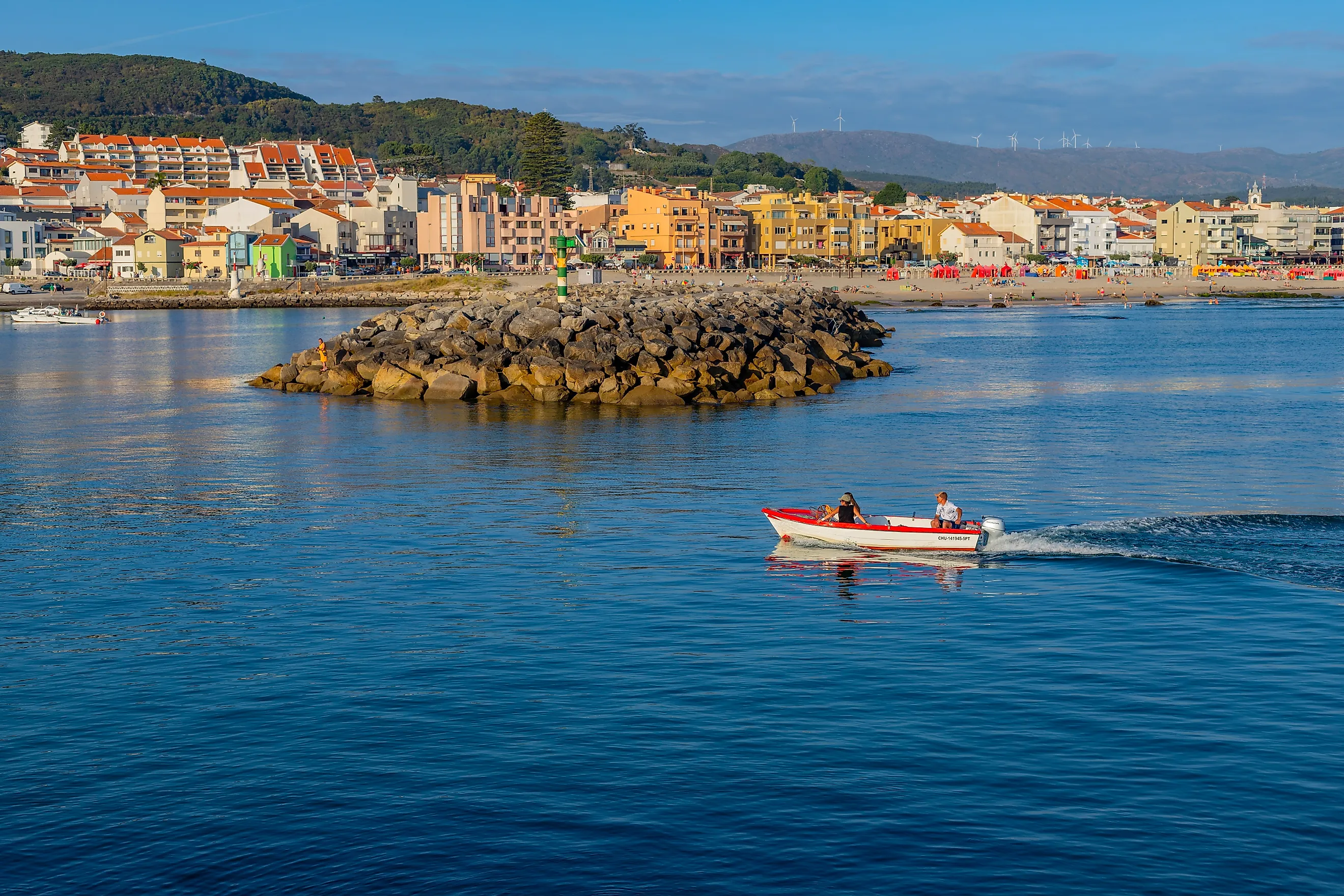
All the way to the north is the beautiful border town of Caminha, set along the Minho River where it spills into the Atlantic Ocean. It is a traditional Portuguese town, with red tiled roofs atop white plaster buildings, that has a maritime identity. What is also unique about this town is its access to beautiful river walks, beaches, and wooded hills, all without being a big tourist draw. As a bonus, just across the river is Spain, and there is a ferry you can take to visit the town of A Guarda.
Situated so close to Spain, the town was created as a fortified border village. The Torre de Relógio is a surviving Medieval town gate. Make your way to Moledo Beach where you can bask in the sun for as long as you like or watch local birds if it’s too cold for sunbathing. You can drive and park to get there, or choose the short train ride. Also nearby is a lovely pine forest, Mata Nacional de Camarido, perfect for walking and biking. For a break, get coffee at Café Central in the main square, Praça Conselheiro Silva Torres, and soak in the surrounding historic buildings.
Almeida

Almeida is also close to the Spanish border, but along the eastern edge, on a high open plateau. It’s about 150 miles southeast of the city of Porto in a sparsely populated part of the country and has a truly remote feel. For history buffs, especially those fascinated with military history who don’t want the masses of people that are often a part of historic sites, this could be an ideal option.
It is perhaps best known for the Fortaleza de Almeida or the Star Fortress of Almeida, due to its star-shaped walls. You can walk the ramparts along the points of its shape and see how perfectly situated it is for fortification, with its long views across the rolling plains that surround it. Visit the two magnificent original gates that lead into the village. The Museu Histórico Militar is a deep dive into the miliary history of both this town and the rest of Portugal. The Solar São Joao is an 18th century house museum where a military family once resided.
Sortelha

Somehow, the tiny village of Sortelha has escaped commercialization and the hustle and bustle of modern life. This is one of the most authentic Renaissance and Gothic era walled towns in the country, complete with a castle, Castelo de Sortelha, that towers over it with medieval gates. This is another great town to visit for both general and military history buffs, with a story that goes back to 1228. But with a completely different look to Almeida. One thing that makes it unique is the use of granite in building construction, as opposed to the more typical whitewashed plaster buildings that are all over this country. In some places the buildings literally melt into the unusually formed granite boulders that the town is built on.
Once you’ve had your fill of historic sites within the fort walls, take a four and a half mile walk along the Caminho Histórico de Sortelha and see some of the truly astonishing rock formations in the surrounding countryside.
Piodão

The very tiny village of Piodão is one of the 12 designated Historic Villages of Portugal. It offers one of the most dramatic settings in the country, tucked into the Serra do Açor mountain range, which rise up all around the terraced town. The buildings are made of dark stone squares, known as schist houses, with blue doors and windows. As you drive into the village along winding roads, you will see the village appear, the houses looking almost as though they are growing out of the hills like a sparkling Nativity village.
The mountains offer miles and miles of trails for hiking, amongst native trees, streams, and rocky outcrops. In warmer weather, the Praia Fluvial de Piodão is a natural swimming hole filled with clear mountain water. With a tiny year-round population of less than 200 people, you can count on peace and quiet even when you finish drinking in the surrounding scenery and return to explore the village itself. Right in the center sits the bright white Igreja Matriz de Piodão, contrasting against the dark stone schists.
Castelo de Vide

Castelo de Vide and Marvão, which is about seven miles to the south and is the next town on this list, are great to see together because of their historical ties. Marvão was one of the few entry points into Portugal when Spain forced all of its Jewish residents to leave the country in 1492. About 4,000 of those settled for a time in Castelo de Vide until they were forced to either leave Portugal or agree to convert. Judaism went underground in fascinating ways. The Museu-Sinagogo de Castelo de Vide (Museum of Castelo de Vide) is a museum within the remains of the old synagogue that was only rediscovered in 1972.
If history is an important part of your exploration of small towns, you will certainly enjoy this one, but there is more to it than that. It has a lovely, romantic atmosphere with traditional whitewash buildings that meander along medieval lanes. The Castelo of Castelo de Vide (Castle of Castelo de Vide in English) offers wonderful views of the Parque Natural de Serra de São Memede and in fact, the village itself is literally surrounded by it. Hiking trails begin right at the edge of the historic center of town.
Marvão

Another village with a dramatic setting is Marvão, also set in the Serra de São Mamede mountains, and also close to the Spanish border. As you approach the town, it will look as though whitewashed plaster buildings with sienna colored roof tiles are climbing up the side of a steep hill, crowned by Castlelo Marvão. Climb up to the top of the castle’s tower keep and, you will feel as though you are in the clouds. The 360-degree views from here go across the Alentejo plains on one side and into the Spanish town of Valencia de Alcántara on the other. This medieval village is a great place to just stroll through the narrow cobbled streets and see almost no signs of modern life on your way to a traditional Alentejo meal at Varanda do Alentejo.
South of the village, just over four miles away, is the Cidade Romana de Ammaia, one of the most important ancient Roman archaeological sites in the region.
Alcácer do Sal

About 60 miles southeast of Lisbon is the beautiful town of Castelo de Alcácer do Sal, overlooking the Sado River. Even though sandy Atlantic coast beaches are about a 20-minute drive away, and traditional Portuguese buildings with cobble streets are everywhere, this town has somehow managed to avoid becoming overrun with either tourists or the noise of the modern age. River life is what it’s all about here, with walks along its shores to see fishing boats and the nearby Sado Estuary Natural Reserve where you can view birdlife and, if you are lucky, bottlenose dolphins.
Overlooking it all is the Castelo Alcácer do Sol, with a history that goes back to 1217. Beneath it is the Cripta Archaelogica, an archeological museum that shows the layers of settlement in this area going back to the Iron Age. But the true draw of this village is the lovely, unspoiled traditional Portuguese character throughout. Have a delicious Alentejo meal at several restaurants, most of them serving regional dishes in settings that emphasize the food, not the décor. Porto Santano serves the traditional tomato soup with poached eggs this region is known for, among other authentic dishes.
Mértola

Further to the south is another river town, Mértola. It is tucked into the side of the Rio Guadiana, about seven miles from the Spanish border. What’s unique about the feel of this town is the historical blend. Walking along the streets, you’ll see the influence of Roman, Islamic, and medieval Portuguese everywhere. As with many of the smaller towns in Portugal, Castelo de Mértola sits on a rocky hill with the whitewashed buildings spilling down beneath it. The medieval castle dates back to the late 13th century but beneath it are layers of Roman and Islamic remains. In the 11th century, the town was actually an independent Islamic kingdom and was called Martulah. This is another town where you can get your fill of history without standing in line or feeling hemmed in.
This is also the perfect place for leisurely walks along the river and excursions all around the outskirts. Mértola is surrounded by the Guadiana Valley Natural Park with its rugged landscape, great for scenic drives. Pulo do Lobo(Wolfs’ Leap) is a spot where the river goes through a narrow gorge, creating a dramatic waterfall and rapids.
Monchique

When people think of the Algarve region in Portugal, all the way to the south, it’s usually as a summer tourist haven and crowded beaches. But there are lovely, quiet villages away from the coast as well, often making it possible to have the best of both worlds: a peaceful home base that is within driving distance from the water for day trips to the beach. Monchique is one such village. The temperatures here in the lush hills of the Serra da Monchique mountains are cooler than on the coast. A car ride from town can lead you to cork, chestnut, and eucalyptus groves. While out driving, go to Fóia, the highest peak in the Algarve to see the 360-degree vista, perhaps all the way to the Atlantic Ocean if the weather is on your side. It is possible to drive almost the whole way up but if you like to hike, you can do that right from the town.
On the outskirts of town, take the laid-back approach even further and visit Caldas de Monchique, a spa village that has existed since Roman times. The services have been upgraded since then, but the thermal waters are the same.
Salema

The Algarve, Portugal’s southernmost region, is also one of the most popular places for tourists and ex-pats with its legendary beaches. This means that the towns along the coast can be hectic and packed with people. The small fishing village of Salema hasn’t entirely escaped tourism but without the huge resorts that are ubiquitous elsewhere, it is a lovely and peaceful place to relax and enjoy the sand and water. Salema is about a 20-minute drive west of the larger town of Lagos. This town, tucked into a valley that opens into the sea has retained much of its traditional Portuguese feel, with whitewashed buildings climbing up the hillside. Within the historic center of town, there are small shops with basic services (for a large grocery store you’d need to drive to another town) and a few wonderful restaurants, such as O Lourenço, where you can eat freshly caught fish.
Praia de Salema is a favorite beach for swimming and from there, you can watch fishing boats come in with the daily catch. Many of these are traditional boats that are pulled up on to the sand at day’s end. Praia da Boca do Rio is another nearby beach next to Roman ruin remains and a fish-salting complex.
Horta

Almost any village in the Portuguese archipelago of the Azores could be called laid back. Horta, on the island of Faial, is one with a magical maritime atmosphere and history that draws sailors from all over the world. One of the most interesting aspects of Horta is that this international flavor has managed to fit in perfectly with the traditional Azorean culture that is very much here. You can see the island of Pico, another one of the nine Azorean islands, right across the water, with its huge volcano poking up into the clouds.
Strolling around the marina and seeing the boats that moor here is one of the most fun things to do. A distinctive feature of the marina is the hundreds of handmade paintings all over the marina walls. Sailors consider that leaving one behind before they head out on their next voyage is good luck. Also along the waterfront, you’ll find examples of the traditional sidewalks, or calçada portuguesa, made from dark volcanic basalt found on the islands and white stones. After this, go into town to see the colorful buildings and have a drink at Peter Café Sport, which has been a favorite of sailors since 1918. Just outside of the historic center is a protected crescent-shaped beach, Porto Pim.
History, The Ocean, And Nature
What makes for a relaxed visit is uniquely defined by individual travelers. It is certain, though, that whatever you choose, you are likely to find it in more than one place in Portugal.