8 Underappreciated Towns To Visit In Northern California
Healdsburg has more wine tasting rooms in its central plaza district than anywhere in California outside Napa proper. The same pattern applies to the other seven towns ahead. Each sits in the shadow of a more famous neighbor (Calistoga next to Napa Valley proper, Fort Bragg next to Mendocino, Nevada City and Grass Valley next to Tahoe, Tiburon next to Sausalito, Point Reyes Station next to the bigger National Seashore, Ferndale next to the Lost Coast and Eureka), and each has been quietly accumulating its own identity while the headlines went next door. The eight communities below have most of the same draws without the same crowds.
Healdsburg

Healdsburg sits at the meeting point of the Russian River and Dry Creek in central Sonoma County, with three of California's most productive wine appellations (Russian River Valley, Dry Creek Valley, and Alexander Valley) converging within ten miles of the central plaza. The plaza itself anchors the town's social life and is ringed by restaurants, tasting rooms, and independent shops; more than 30 wineries operate tasting rooms inside the plaza district alone, the densest concentration in California outside Napa proper. The Healdsburg Museum and Historical Society on Matheson Street covers the area's pre-Prohibition agricultural history, when grapes were just one of many crops alongside hops, prunes, and pears. For an outdoor break, Memorial Beach on the Russian River runs as the town's summer swimming hole, with seasonal pop-up beaches formed by the temporary inflatable dam at Veterans Memorial Bridge.
Ferndale

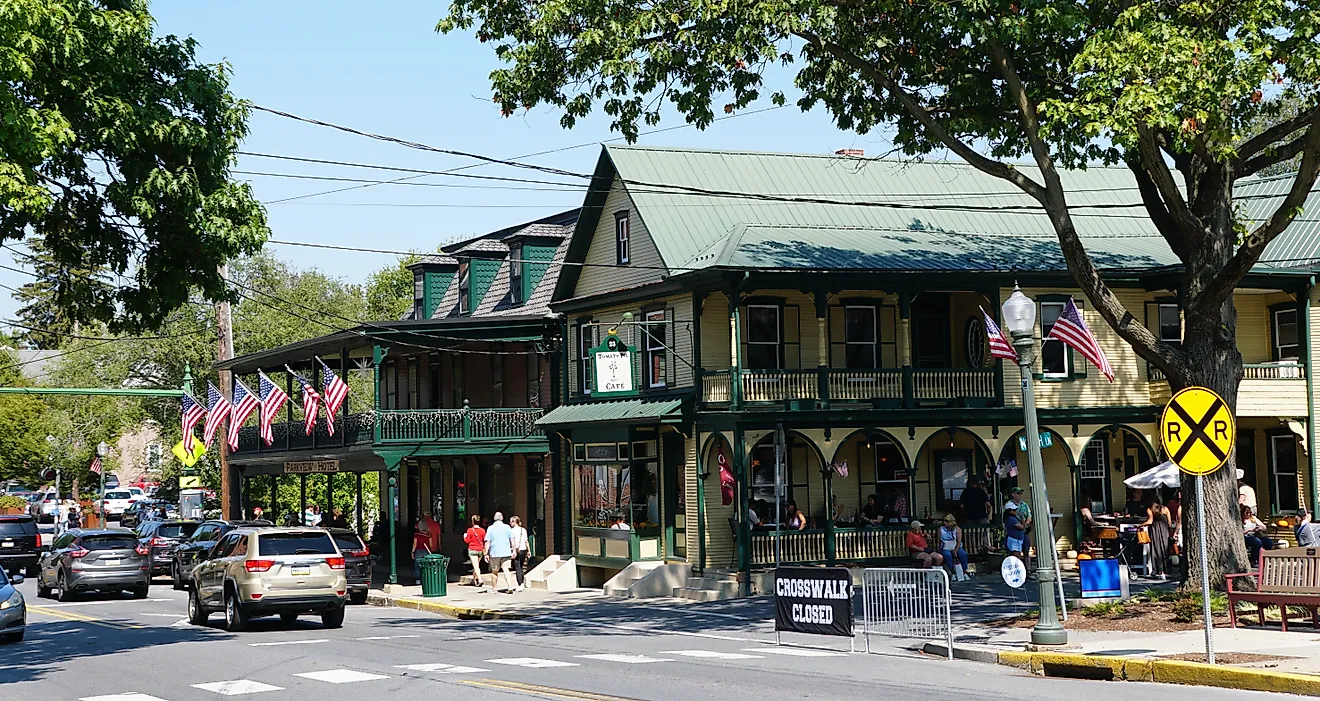
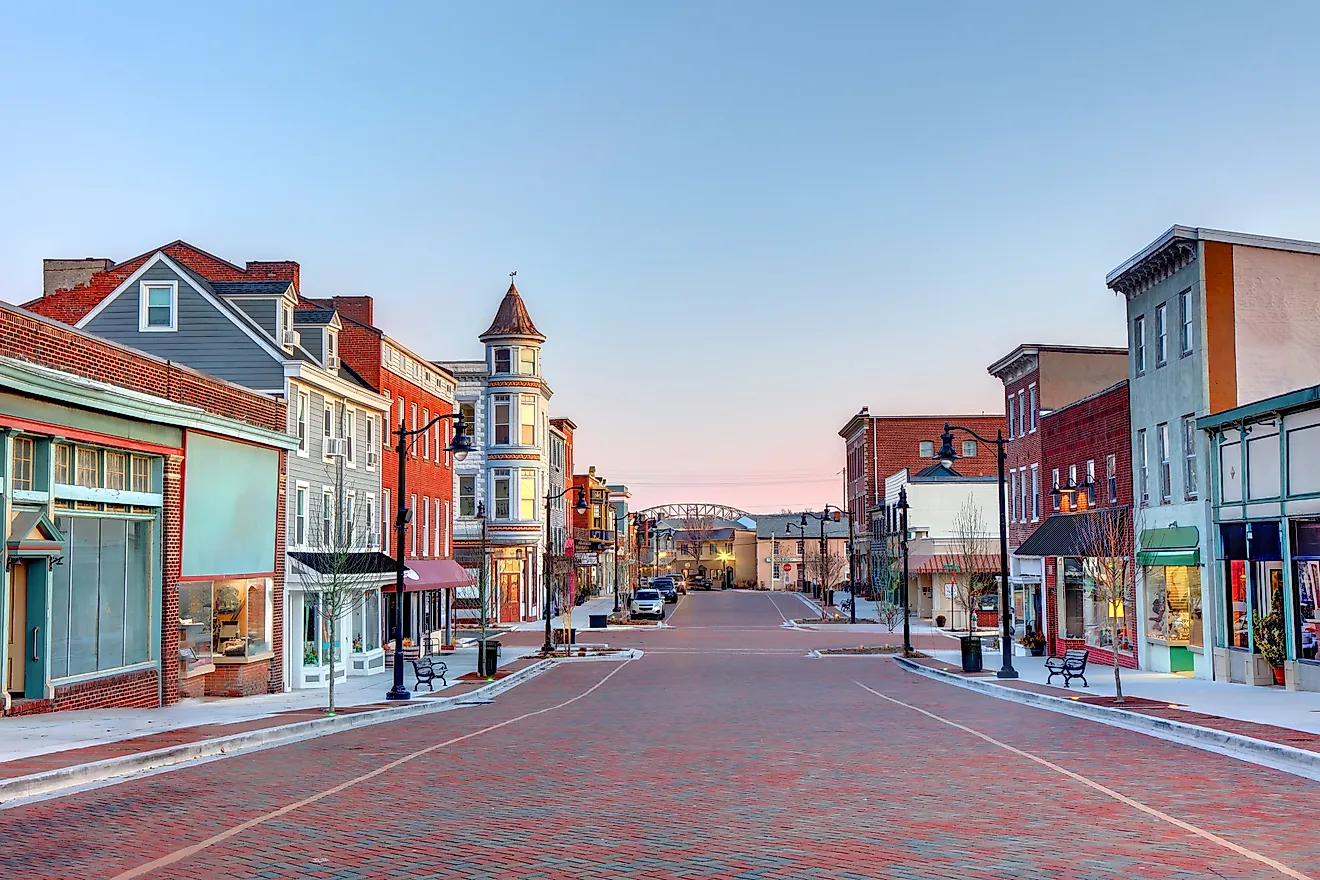
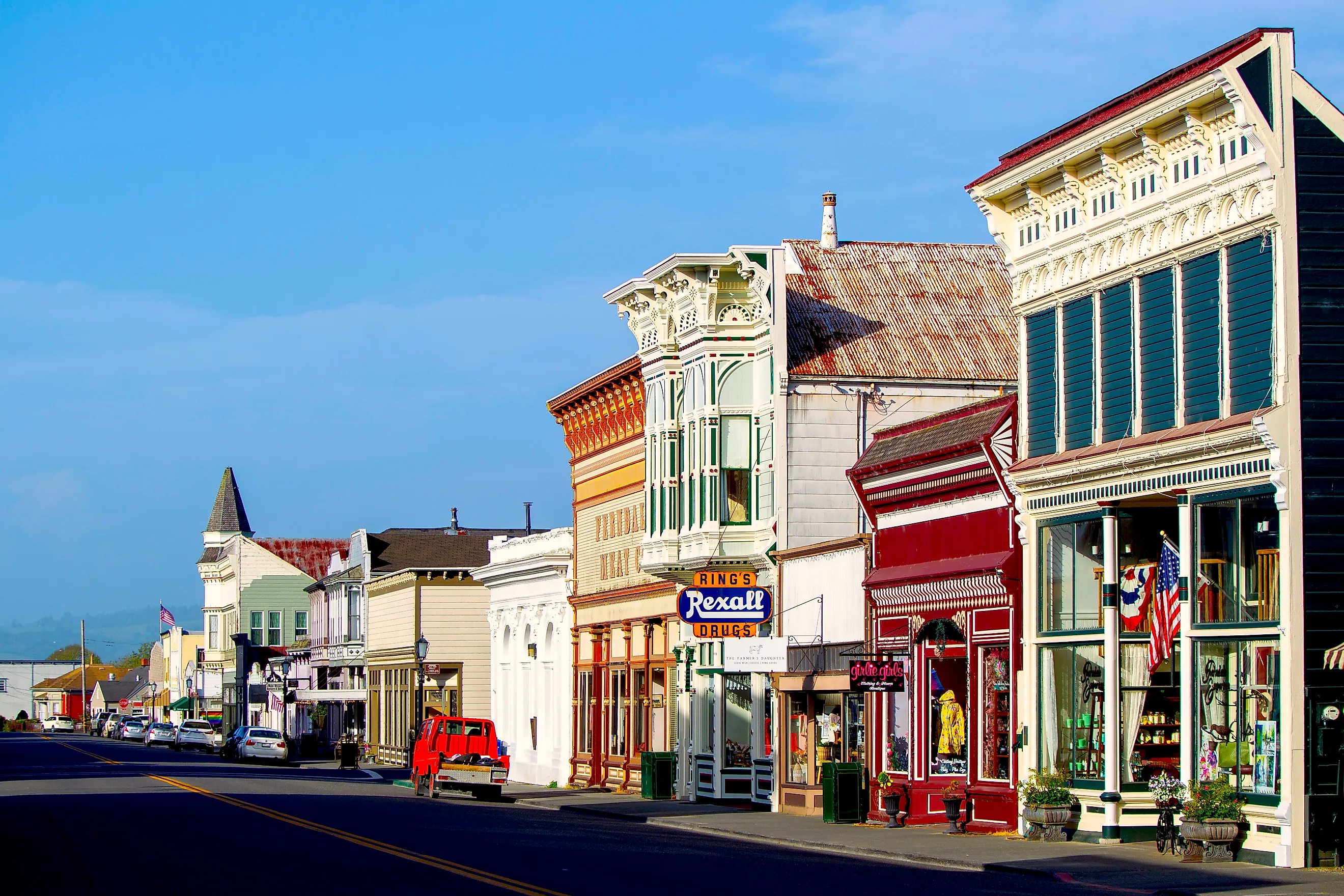
Ferndale, in Humboldt County's Eel River Valley, was designated a California State Historical Landmark in 1989 for the intactness of its Victorian commercial and residential architecture; almost no other community in the state has retained as much of its 1880s-1900s building stock at street level. The downtown's elaborate Victorian storefronts (Ferndale residents call the largest ones "Butterfat Palaces" because the dairy-farming Portuguese and Swiss-Italian families that built them paid in butter and cream profits) line a six-block historic district that has been used repeatedly as a film set, including the 1990s exterior scenes of Tim Burton's Edward Scissorhands location work and several other films. The Ferndale Museum on Shaw Avenue covers the dairy-and-immigration history in detail. Centerville Beach, four miles west of town, runs as a long stretch of driftwood-strewn black sand with the open Pacific behind it, used mostly by locals rather than the bigger crowds that go to the Mendocino coast farther south.
Grass Valley

Grass Valley sits in Nevada County's Sierra Nevada foothills and was, for nearly a century, one of California's most productive hardrock gold-mining towns. The Empire Mine operated from 1850 to 1956 and produced approximately 5.8 million ounces of gold from 367 miles of underground tunnels, making it one of the deepest and longest-running hardrock mines in the United States. Gold Rush-era buildings still line Mill Street downtown, and Empire Mine State Historic Park on the east edge of town preserves the surface workings, the mine owner's "cottage" (a manor designed by Willis Polk), and the formal gardens with surface tours running daily. The North Star Mining Museum on Mill Street covers the harder-edged industrial side of the operation, with the world's largest Pelton water wheel (32 feet in diameter) still in place. The Nevada County Narrow Gauge Railroad Museum a few blocks away documents the local railroad that hauled ore down from the mines until 1942.
Point Reyes Station

Point Reyes Station sits at the southern edge of West Marin's organic-agriculture belt and functions as the gateway town to Point Reyes National Seashore, the 71,028-acre coastal park established in 1962 to keep the peninsula from being developed into a subdivision. The seashore itself contains 80 miles of trails, the historic Point Reyes Lighthouse (operational from 1870 to 1975), and the elephant seal colony at Chimney Rock that has been growing steadily since the seals recolonized the area in 1981. The town itself supports an unusually concentrated food scene for its size: Cowgirl Creamery operates its original cheese-making facility on 4th Street, the Bovine Bakery turns out morning bread and pastries, and Toby's Feed Barn doubles as gallery, coffee bar, and farmers' market venue. Tomales Bay State Park, north of town, has the calm-water kayak access and the famous bioluminescence on summer nights when conditions are right.
Nevada City

Nevada City sits about four miles north of Grass Valley along Deer Creek in the Sierra Nevada foothills, and at one point in the 1850s was the third-largest city in California. The downtown National Historic Landmark District preserves a tight 19th-century commercial core almost intact, with gas lamps, plank sidewalks in places, and the Nevada Theatre (1865) operating continuously as one of the oldest standing theaters in California. The Firehouse No. 1 Museum on Main Street, in an 1861 building with a distinctive cupola, houses local Nisenan and Maidu artifacts, mining-era hardware, and the Donner Party relics that have made the museum a recurring stop for California history students. South Yuba River State Park is just outside town and offers swimming holes along the river along with the Bridgeport Covered Bridge, the longest single-span wooden covered bridge in the United States at 233 feet.
Calistoga

Calistoga is the northernmost town in Napa Valley and was named in 1859 by Sam Brannan, the entrepreneur who imagined turning the area's natural hot springs into "the Saratoga of California" (and reportedly slurred the line into "Calistoga of Sarafornia" at a champagne-soaked event). The town has been a hot-springs destination ever since, with about a dozen spa hotels and bathhouses currently operating mineral-water mud baths and geothermal pools fed by the same active geothermal field. The Old Faithful Geyser of California, two miles outside town, is one of only three natural geysers in the world considered "faithful" (it erupts approximately every 30 to 40 minutes, though intervals lengthen during periods of low aquifer pressure). The Petrified Forest preserves trees buried by Mount Saint Helena's eruption approximately 3.4 million years ago. Castello di Amorosa, completed in 2007 after fifteen years of construction, is a 121,000-square-foot replica of a 13th-century Tuscan castle that imports almost every architectural detail; the winery runs guided tours through the castle's torture chamber and great hall along with the tasting room.
Fort Bragg

Fort Bragg occupies a stretch of the Mendocino coast that was a military garrison from 1857 to 1864, then a Union Lumber Company town that ran on logging and rail-tied lumber transport for over a century. Glass Beach, just north of downtown, was the city dump from 1949 to 1967; the waves wore the glass shards smooth into rounded sea glass over the following decades, and the beach is now a state park where collecting glass is illegal but inspecting it is free. Mendocino Coast Botanical Gardens covers 47 acres on the bluffs south of town with one of the few coastal botanical gardens in North America, running plant collections through coastal pine forest down to the ocean cliffs. The Skunk Train runs from the Fort Bragg depot through the coast redwoods to Northspur and back, in operation continuously since 1885 (the smelly fuel-oil engines of the early 20th century gave it the local nickname). The redwood forest the train runs through includes some of the southernmost remaining old-growth coast redwoods on the Northern California coast.
Tiburon

Tiburon sits on a Marin County peninsula directly across San Francisco Bay from San Francisco, and the name (from the Spanish word for "shark") refers to the leopard sharks that historically schooled in the shallow waters of Richardson Bay. The town developed as a 19th-century railroad and ferry terminus and still operates a regular passenger ferry to and from the city. Old St. Hilary's Open Space Preserve protects the small wooden Carpenter Gothic church built in 1888 plus the surrounding wildflower meadows, which produce a spring bloom of the rare Tiburon mariposa lily (Calochortus tiburonensis) that grows nowhere else on Earth. Angel Island State Park is a short ferry ride from Tiburon's downtown dock and contains the immigration station that processed approximately 175,000 Chinese immigrants and 60,000 Japanese immigrants between 1910 and 1940, often under harsh detention conditions. Carved poetry by detained immigrants remains on the barracks walls and is a key piece of Asian-American history.
What These Eight Towns Have In Common
The eight towns above share a pattern of having retained their original economic identities (gold mining in Grass Valley and Nevada City, dairy and Victorian wealth in Ferndale, hot springs and wine in Calistoga, fishing and lumber in Fort Bragg, agriculture and the Pacific seashore at Point Reyes Station, viticulture in Healdsburg, ferry-and-rail terminus in Tiburon) into the present day at street level rather than letting them be replaced by tourism boilerplate. The combined geography also covers most of Northern California's variety in a relatively compact band: from the redwood-and-rugged-coast north to the wine-and-spa interior to the bay-edge ferry suburbs. None of these eight is the obvious headline destination, and that is what makes them work.