9 Unforgettable Small Towns to Visit in Alabama
Alabama is a state shaped by history, culture, and varied landscapes, and its smaller towns offer an intimate way to experience these qualities. Away from larger cities, these communities reflect local traditions, regional architecture, and everyday life that unfolds at a slower pace. Coastal towns provide access to bays, beaches, and waterfront parks, while inland destinations highlight historic districts, literary heritage, and outdoor recreation. Across the state, travelers encounter preserved courthouses, walking trails, lakes, and long-standing local businesses that reflect generations of continuity. For anyone interested in seeing timeless Alabama communities, these towns offer unforgettably rewarding experiences.
Fairhope

Located along the eastern shore of Mobile Bay, Fairhope has long drawn visitors for its walkable waterfront and strong arts presence. The Fairhope Municipal Pier stretches into the bay and serves as a gathering place for fishing, walking, and evening views over the water. Nearby, the Fairhope Museum of History documents the town’s early settlement, utopian roots, and civic development through photographs and artifacts. The Eastern Shore Art Center supports regional artists with rotating exhibitions that include painting, sculpture, and mixed media. Natural areas remain close at hand, particularly at the Weeks Bay National Estuarine Research Reserve, where boardwalk trails pass through wetlands and pitcher plant bogs found in limited areas along the Gulf Coast.
Fairhope’s downtown streets are lined with independent shops, galleries, and restaurants, including Panini Pete’s, known for beignets and muffuletta-style paninis. Flowerbeds, sidewalks, and public green spaces are maintained with care, contributing to a town center that stays active throughout the year.
Gulf Shores

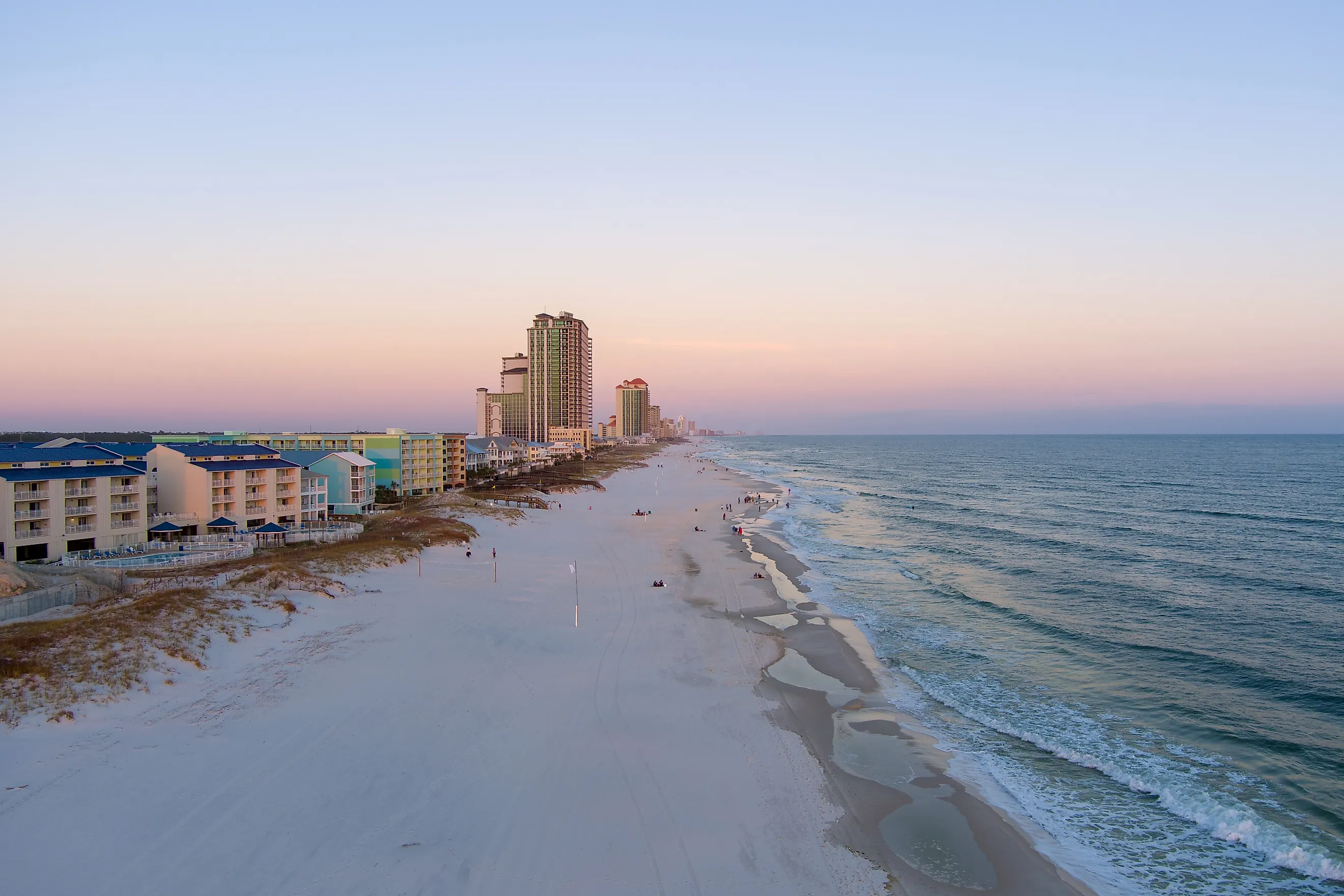
Gulf Shores sits along Alabama’s southern coastline and is known for public beach access and outdoor recreation tied to the Gulf of Mexico. Gulf State Park plays a central role in the area, offering hiking paths, freshwater lakes, and a fishing and education pier that extends into the Gulf. The park’s trail system connects multiple habitats, including dunes and wetlands, and provides access for walking and cycling. The Gulf Shores Public Beach remains a primary draw, with wide stretches of sand and maintained access points.
Wildlife areas extend beyond the shoreline at Bon Secour National Wildlife Refuge, which protects migratory bird habitats and coastal vegetation. Families often include the Alabama Gulf Coast Zoo, which emphasizes animal care and education. Dining, retail areas, and seasonal events support the local economy, including the National Shrimp Festival held each fall. Water activities such as kayaking, paddleboarding, and charter fishing offer additional ways to experience the coast. Gulf Shores combines public land access with recreational infrastructure that supports extended stays.
Orange Beach

Orange Beach, Alabama.
Orange Beach is positioned east of Gulf Shores and offers access to back bays, coastal trails, and active waterfront districts. Orange Beach Waterfront Park provides a bayfront setting with fishing piers, picnic areas, and shaded seating along Wolf Bay. Inland, the Hugh S. Branyon Backcountry Trail system connects multiple ecosystems through a network of paved paths that pass through marshes, pine forests, and coastal habitats. The variety of terrain makes the trail system a defining part of the town’s outdoor access.
The Wharf serves as a commercial and entertainment center with dining, shopping, marina access, and a large observation wheel overlooking the water. Boating and wildlife tours depart from Zeke’s Landing and nearby marinas, including dolphin cruises and fishing charters. Perdido Pass marks the connection between the bay and the gulf, with jetties and boat traffic visible from nearby shorelines. Restaurants such as GTs On The Bay focus on local seafood and bay views. Orange Beach balances recreational development with maintained access to natural areas.
Mooresville

Mooresville is one of Alabama’s oldest incorporated towns and retains a compact historic district with preserved nineteenth-century structures. The Mooresville Post Office, established in 1840, continues to operate and remains one of the oldest functioning post offices in the state. The Historic Mooresville Church, built in 1839, stands nearby and reflects early settlement patterns through its architecture and location. Walking through the town reveals original homes, gardens, and fencing that remain largely unchanged.
At 1818 Farms, visitors can observe heritage livestock, flower cultivation, and handcrafted goods produced using traditional methods. The Stagecoach Inn and Tavern offers insight into early travel routes and regional commerce. The town’s scale allows for quiet exploration without traffic or crowds. JaVa Mooresville provides a café stop within the historic district. Mooresville’s preservation efforts make it a destination focused on architectural history and rural heritage.
Eufaula

Eufaula, Alabama. Editorial Photo Credit: JNix via Shutterstock.
Eufaula is located along Walter F. George Lake, a large reservoir that supports boating, fishing, and wildlife observation. The Eufaula Historic District contains one of Alabama’s largest collections of preserved nineteenth-century homes, set along wide streets shaded by mature oak trees. Shorter Mansion, now operated as a museum, displays period furnishings and hosts rotating exhibits related to local history.
Outdoor recreation centers on Lakepoint State Park, which includes walking trails, a marina, and observation areas overlooking the water. The Eufaula National Wildlife Refuge protects wetlands that attract migratory birds throughout the year. Downtown Eufaula includes antique stores, local restaurants, and small retailers that reflect the town’s long-standing role as a regional hub. Shops such as Marilynn-Collectibles & Antiques offer a range of items tied to local and regional history. Eufaula combines architectural preservation with access to lake-based recreation.
Fort Payne

Fort Payne, Alabama. Editorial Photo Credit: Chris Pruitt, CC BY-SA 4.0 Wikimedia Commons.
Fort Payne lies at the base of Lookout Mountain and is closely associated with nearby protected landscapes. DeSoto State Park offers forested trails, waterfalls, and elevated viewpoints that highlight the area’s topography. Adjacent to the town, Little River Canyon National Preserve protects a deep gorge carved by a mountaintop river system, with overlooks and trail access managed by the National Park Service.
Cultural attractions include the Alabama Fan Club and Museum, which documents the career of the country band Alabama, formed in Fort Payne. The Fort Payne Depot Museum, housed in a restored railroad depot, presents exhibits on local transportation and early settlement. Downtown streets include brick storefronts, cafés, and locally owned shops. Dining options such as Vintage 1889 operate in renovated industrial spaces. Fort Payne offers a combination of protected landscapes and music history tied directly to its location.
Monroeville

Monroeville, Alabama. Editorial Photo Credit: VioletSkyAdventures via Shutterstock.
Monroeville is widely recognized for its literary connections and preserved courthouse square. The Old Courthouse Museum occupies the Monroe County Courthouse, which inspired the courtroom setting in To Kill a Mockingbird. The museum houses exhibits on Harper Lee and Truman Capote, both of whom spent part of their childhoods in the town. A stage adaptation of the novel is performed periodically in the courthouse, drawing visitors interested in American literature.
The Monroeville Literary Garden provides an outdoor space dedicated to reading and reflection, while the Monroe County Heritage Museum presents artifacts related to regional history. Veterans Memorial Park offers walking paths and shaded seating. Downtown Monroeville includes cafés, shops, and historic buildings arranged around the courthouse square. The Courthouse Café references the town’s literary legacy in name and decor.
Jasper

Jasper, Alabama. Editorial Photo Credit: Jud McCranie, CC BY-SA 4.0 via Wikimedia Commons.
Jasper is situated near the foothills of the Appalachian region and serves as a gateway to outdoor recreation. Lewis Smith Lake, known for its clear water and extended shoreline, supports boating, fishing, and paddle sports and remains a central draw for the area. Within the city, the Bankhead House and Heritage Center hosts rotating exhibits, educational programs, and community events focused on regional history and arts.
Public green spaces such as Gamble Park offer walking paths and picnic areas, while Walker County Public Fishing Lake includes designated areas for youth fishing and shoreline access. Jasper’s downtown area includes coffee shops, restaurants, and locally operated businesses. Warehouse 319 stands out for its contemporary menu and reuse of an older commercial building. Jasper presents a mix of water access, community spaces, and historical interpretation tied to its geographic setting.
Athens

Athens, Alabama.
Athens blends historic preservation with educational institutions and outdoor access. The Athens Courthouse Square anchors the town, centered around the Limestone County Courthouse and surrounded by historic buildings that reflect civic development over time. The Alabama Veterans Museum and Archives displays military artifacts and personal histories representing service members from across the state. The Donnell House, a Greek Revival residence from the nineteenth century, offers guided tours that focus on architecture and domestic life.
Outdoor opportunities include the Swan Creek Greenway, a maintained trail system used for walking and cycling. Athens State University contributes to the town’s activity level as the oldest continuously operating institution of higher education in Alabama. Community events, farmers’ markets, and seasonal festivals bring residents together throughout the year, including the Athens Saturday Market.
Alabama’s Small Town Treasures

Monroeville, Alabama. Editorial Photo Credit: VioletSkyAdventures via Shutterstock.
Across Alabama, smaller towns reflect the state’s history, landscapes, and cultural traditions through preserved streets, public lands, and long-standing institutions. Coastal communities offer access to bays and beaches, while inland towns highlight literary history, mountain terrain, and courthouse squares that continue to shape daily life. These destinations support a range of interests, including outdoor recreation, architecture, and regional storytelling. Exploring them allows travelers to engage with Alabama at a human scale, where local history and geography remain visible and accessible.