9 Small Towns In New Mexico With Big Charm
Defined by high desert plateaus, snow-capped mountain ranges, mineral-rich hot springs, and nationally significant monuments, New Mexico offers a landscape as varied as its cultural roots. Shaped by centuries of Native American, Mexican, and European American influence, and the Sangre de Cristo peaks, New Mexico is home to many small towns with big charm. Explore top destinations like Lincoln’s courthouse, where Billy the Kid escaped, Mesilla’s plaza anchored by a 1906 basilica, and Chimayó’s adobe sanctuary, reached by pilgrims on foot. In towns such as Taos, Socorro, and Chama, daily life still unfolds around pueblos, rail depots, acequias, wildlife refuges, and historic dining rooms. These nine charming small towns in New Mexico are ideal choices for your next road trip or getaway.
Lincoln

Lincoln has a single road lined by adobe buildings that witnessed one of the most famous conflicts of the Old West. Walking through the Lincoln Historic District brings you past the Old Lincoln County Courthouse, where Billy the Kid made his escape, the Murphy-Dolan Store that helped ignite the Lincoln County War, and a short walk uphill leads to San Juan Mission Church, still overlooking the valley much as it did in the 19th century.
Beyond town, Fort Stanton Historic Site adds depth with wide parade grounds and long trails through cottonwoods and hills. Nearby Bonito Lake, tucked into the Lincoln National Forest, provides a calm contrast to the town’s dramatic past, with picnic tables and shaded shoreline.
Mesilla

Mesilla Plaza, now recognized as a National Historic Landmark, has long been a focal point of life in the region, remaining in place as political control changed from Mexico to the United States and briefly to the Confederacy. The Basilica of San Albino, whose current structure dates to 1906, stands along the northern edge of the plaza, its bell tower rising above the surrounding Mesilla Valley. Nearby, the Old Mesilla Courthouse, once used during Billy the Kid’s trial, now houses small shops and galleries.
Restaurants such as La Posta de Mesilla draw locals and visitors alike with classic New Mexican dishes served in rooms built around historic adobe walls and shaded patios. Beyond the plaza, walking paths and quiet streets lead toward farmland and river corridors, while Mesilla Valley Bosque State Park, located just outside town along the Rio Grande, protects cottonwood bosque and wetland habitat tied closely to the area’s agricultural history. Mesilla’s calm pace shifts noticeably during its annual Cinco de Mayo celebrations, which commemorate Mexico’s 1862 victory at the Battle of Puebla.
Chimayo

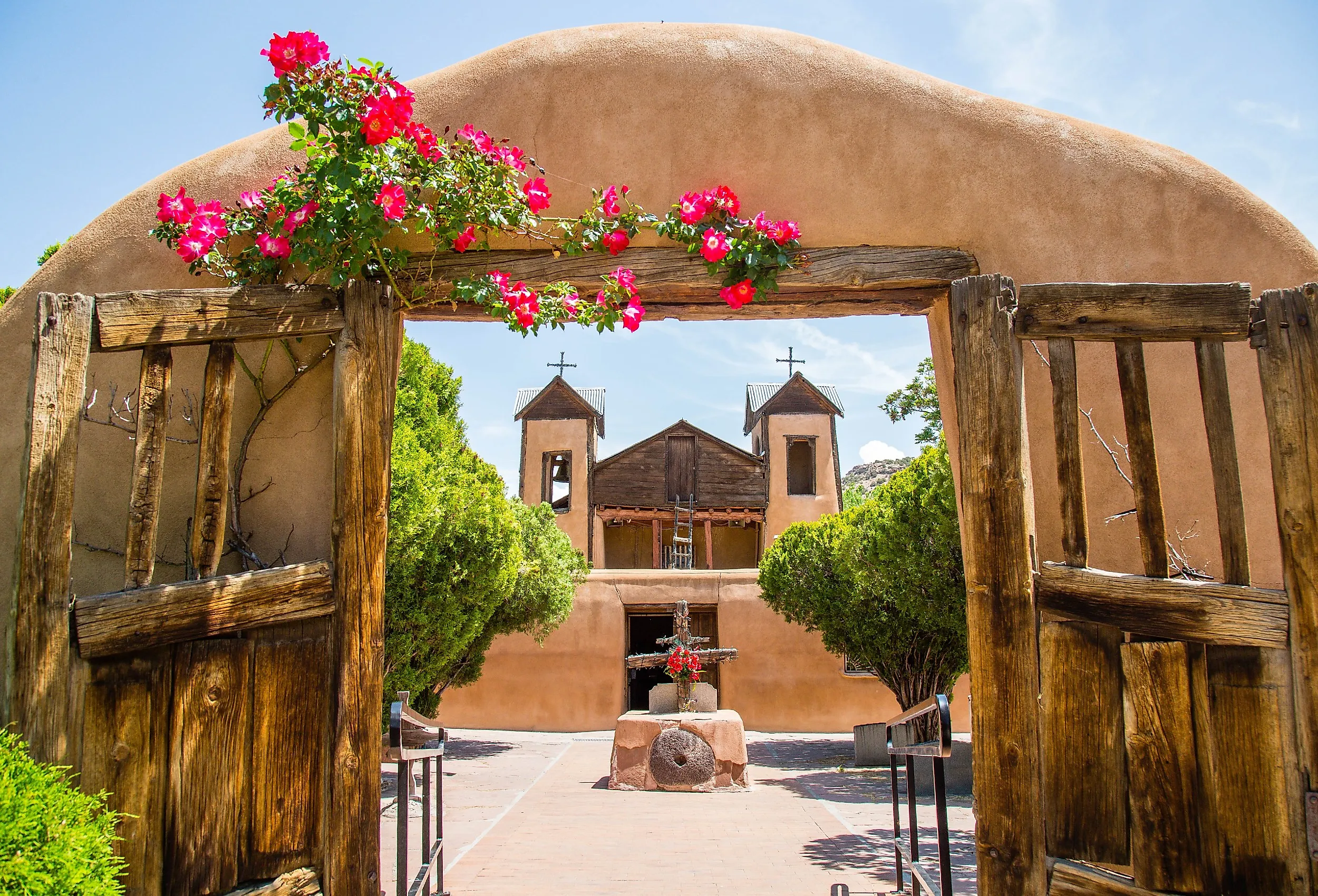
Chimayó unfolds along narrow roads lined with acequias, cottonwoods, and family farms that have remained part of the valley for generations. El Santuario de Chimayó draws pilgrims throughout the year, many arriving on foot during Holy Week, creating a powerful sense of shared purpose. The adobe chapel, which represents one of the finest examples of Spanish Colonial architecture in New Mexico, remains simple and quiet.
Nearby, the Chimayó Museum and local weaving studios showcase the village’s textile traditions, where handwoven rugs reflect patterns passed down through families. Rancho de Chimayó Restaurant provides a gathering place for meals rooted in local ingredients, while short drives lead to Santa Cruz Lake Recreation Area and gentle trails through the surrounding high-desert hills.
Cimarron

History sits close to the surface in Cimarron, shaping how the town is experienced day to day. The Aztec Mill Museum, built in 1864, still rises above the Cimarron River. Once a working flour mill, it now holds artifacts tied to Native communities, early ranching, and frontier life in northeastern New Mexico. A short distance away, Villa Philmonte adds a more personal chapter. The 1920s mansion offers guided tours that trace the life of Waite Phillips, whose oil fortune and later land donations helped establish Philmont Scout Ranch, leaving a lasting mark on the region.
Beyond town, the landscape quickly takes over. The Colin Neblett State Wildlife Area provides easy access to the outdoors, with the Clear Creek Trail following water through forest and rock on a 4.2-mile out-and-back hike. For meals, head to the St. James Hotel Dining Room, where classic Southwestern dishes are served in a setting as storied as the town itself.
Truth or Consequences

Truth or Consequences grew around water long before it adopted its unusual name. Originally called Hot Springs, the town remains closely tied to the mineral-rich waters that surface throughout its compact downtown. Along the Rio Grande, soaking spots such as Riverbend Hot Springs draw visitors into clear, odorless pools fed directly from the source. Long before modern bathhouses, Apache and Mimbres peoples considered these springs sacred, and that legacy still influences how the town is experienced today.
The landscape beyond town encourages exploration. The Geronimo Trail National Scenic Byway stretches roughly 138 miles through desert basins, forested mountain sections, and rolling hills, passing two large lakes and numerous pullouts where travelers often linger. Back in town, the Geronimo Springs Museum features exhibits that cover regional history and Sierra County’s largest collection of prehistoric pottery. After a day of soaking, driving, and wandering, check out Passion Pie Café, a relaxed local favorite known for homemade pies and simple comfort food.
Taos

At its core is Taos Pueblo, a UNESCO World Heritage Site and living community where multi-story adobe buildings have been continuously inhabited for more than a thousand years. In town, Taos Plaza works as a true gathering place, with cafés, small galleries, and street musicians overlapping with everyday errands. Taos has long drawn artists, and that legacy is visible at spots like the Taos Art Museum at Fechin House and the Harwood Museum of Art, which trace the town’s role in American modernism. Georgia O’Keeffe’s repeated stays helped establish a creative community that continues to influence Taos today.
History remains visible beyond the museums, with nearly two dozen buildings listed on the National Register of Historic Places. Just as present is the landscape that surrounds the town. The mountains provide year-round outdoor access, from winter skiing at Taos Ski Valley to warm-season hiking among towering pines and high-elevation trails. After a day spent exploring, meals often lead to The Love Apple, a small, locally focused restaurant known for seasonal New Mexican cooking.
Red River

In Red River, you are more likely to hear boots crunching gravel or engines climbing uphill than traffic idling at a light. Red River Ski & Summer Area is a family-friendly mountain with dozens of alpine runs spread across forested slopes, while nearby Enchanted Forest Cross Country Ski Area draws Nordic skiers, snowshoers, and fat bikers onto quieter terrain. Snowmobilers often head toward Greenie Peak, following wide trails that climb into open views above town. When the snow melts, the pace shifts, but the focus stays outdoors, with hikers, anglers, and cyclists spreading out along mountain paths and the banks of the Red River.
The town itself still reflects its mining roots, especially in places like Pioneer Canyon, where short walks pass old cabins and equipment tucked into the hillsides. Trails leading into Carson National Forest open access to alpine lakes, waterfalls, and high-country overlooks. After a full day outside, end your evenings at Red River Brewing & Distillery, where locally made beers, spirits, and hearty New Mexican fare draw skiers and hikers into long, relaxed meals.
Socorro

Known simply as Socorro, a Spanish word meaning aid or relief, the town earned its name by offering help to travelers moving along El Camino Real, the historic route linking Mexico to Spain’s northern frontier. Founded in 1598, Socorro still follows those early lines of movement, especially near the Rio Grande, which slips quietly past town beneath cottonwood groves. That ribbon of water creates calm spaces for walking, fishing, and birdwatching. South of town, the landscape opens into Bosque del Apache National Wildlife Refuge, where seasonal migrations fill the sky with cranes and geese. Back toward the center of town, the terrain tightens at Box Canyon, where volcanic walls rise close enough for hiking and climbing, offering a striking contrast to the open river corridor just minutes away.
The New Mexico Mineral Museum showcases crystals, fossils, and rare specimens tied to the state’s geology, while San Miguel Mission stands as one of the oldest churches in the region. Trails into the Magdalena Mountains offer cooler air and remnants of historic mining sites. Meals often end at El Camino Restaurant, a longtime local favorite known for classic New Mexican dishes and a steady, familiar atmosphere.
Chama

Set near the Colorado border in the San Juan Mountains, Chama combines frontier railroad heritage with a strong sense of remoteness. Much of town life revolves around the Cumbres & Toltec Scenic Railroad, where coal-fired steam engines still climb through deep canyons and high mountain passes. Winter brings the Chama Chile Ski Classic, when snowshoeing, wood-ski races, and bonfire-lined trails turn the surrounding hills into a shared celebration.

Below the slopes, the Rio Chama follows a quieter course, offering shaded paths and reliable trout fishing beneath cottonwoods. Nearby, Tierra Wools operates from an adobe storefront, supporting regional artisans through traditional weaving, dyeing, and spinning, craft traditions that remain closely tied to northern New Mexico’s rural culture. Foster’s Hotel & Bar is popular, where familiar New Mexican dishes and railroad-era history come together in an easygoing setting.
Where New Mexico Knows Your Name
These towns don’t rely on spectacle to make an impression. Life happens in open plazas, along rivers, beneath mountain shadows, and over plates of red chile and blue-corn enchiladas. Conversations start easily, time stretches comfortably, and visitors are often treated like familiar faces rather than passersby. Whether it is a railroad whistle echoing through Chama, evening light settling over Taos mesas, or a café table filling up in Mesilla, these places with big charm stay with you long after the drive away.