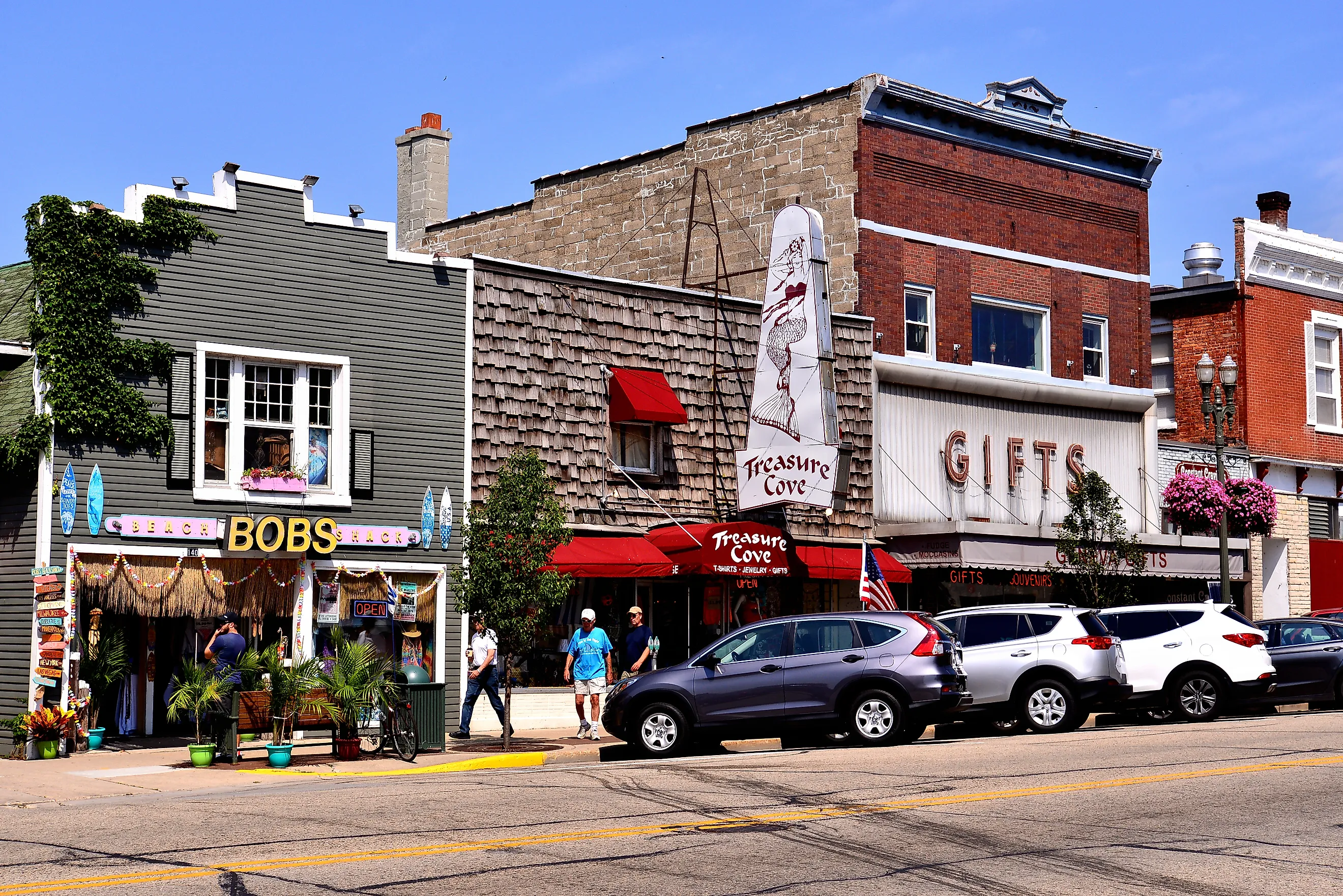
9 Of The Most Adorable Small Towns In Wisconsin
Boulder Junction proudly holds the trademark on the phrase "Musky Capital of the World," after a more than twenty-year effort. That’s just a glimpse of the deep local pride you’ll find in Wisconsin’s small towns. For example, a cozy tavern on Washington Island has been pouring shots of bitters nonstop since 1899, even during Prohibition. Meanwhile, Baraboo continues to set up a grand canvas big top every summer on the same grounds where the Ringling brothers once wintered their circus. These nine charming towns make for a wonderful weekend getaway, offering authentic experiences you can easily walk up to and touch.
Boulder Junction

Boulder Junction's Main Street is surrounded by 194 lakes within nine miles, and the town has official documentation supporting its fishing reputation. Securing the trademark took twenty years of effort from chamber officials, lawyers, and state politicians. The fiberglass fish named Marty the Muskie, located downtown, is a popular photo spot for visitors to document their visit.
The town of about a thousand people sits inside the Northern Highland-American Legion State Forest, so the woods start where the last building ends. The Heart of Vilas County Bike Trail runs 52 paved miles through that forest and connects several of the lakes. In winter the same country goes over to groomed snowmobile trails, and the population drops to the people who own snowblowers.
Minocqua
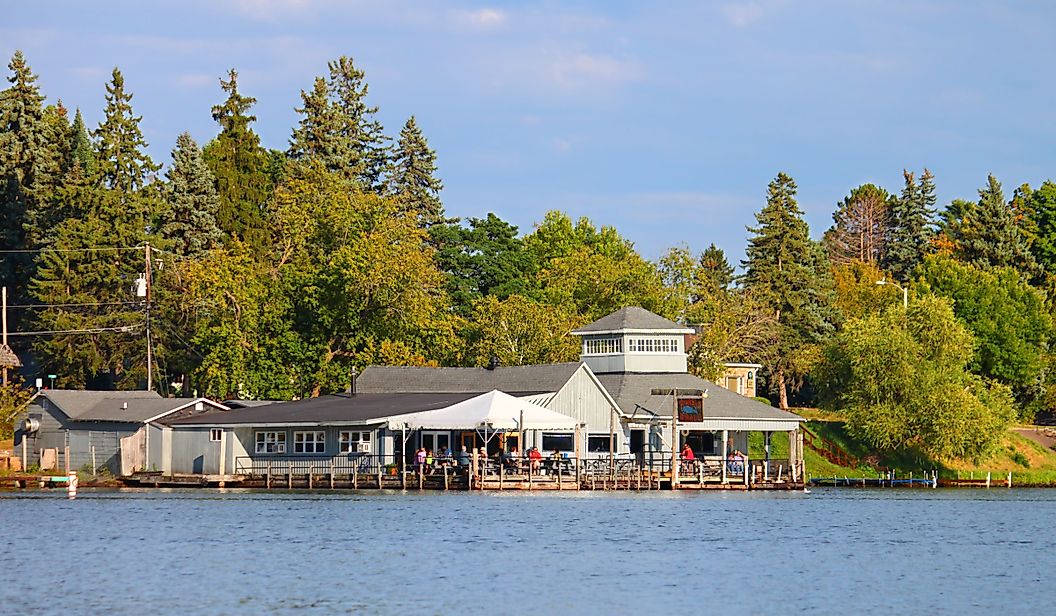
The Min-Aqua Bats have been putting on a water ski show on Lake Minocqua since 1950, which makes them the longest continuously running amateur ski show in the world. They perform Wednesday, Friday, and Sunday evenings, mid-June until the end of August, and the skiers are mostly local kids, some of them third and fourth generation in the same family. Admission is free and the seating is a grass bank.

Minocqua goes by "Island City" because the older part of town sits on an island in the lake, reached by a causeway. Torpy Park has the town beach, a stretch of sand at the north end with picnic tables behind it. Northwoods Zip Line Adventure Tours runs cables over the trees a few minutes out, and Wildwood Wildlife Park keeps giraffes you can feed by hand.
Baraboo

Five Ringling brothers launched their circus in Baraboo in 1884 and used it as winter quarters until 1918. These historic winter quarters still exist on 64 acres along the river, now known as Circus World, a National Historic Landmark managed by the Wisconsin Historical Society. The site houses the world's largest collection of restored circus wagons, with over 260 on display, and features a canvas big top for summer live performances. In downtown, the Al. Ringling Theatre opened in 1915, designed like a French opera house, and continues to host films and concerts beneath its gilded ceiling.

Three miles south, Devil's Lake State Park is the most visited park in the state. Quartzite bluffs rise approximately 500 feet above a 360-acre lake, which is surrounded by glaciers at both ends. The lake features two sandy beaches at the bottom and over 30 miles of trails along its rim. A section of the Ice Age National Scenic Trail passes through the area. Near the town, the International Crane Foundation is the only place worldwide where all fifteen crane species, including whooping cranes, can be observed.
Sturgeon Bay

Sturgeon Bay serves as the industrial hub of Door County. In the 1880s, a ship canal was excavated through the peninsula to allow freighters to bypass the lengthy passage around the tip. The shipyards established along this waterway continue to build and maintain boats. The Door County Maritime Museum, located directly on the waterfront, showcases both local shipbuilding history and maritime wrecks.

The Garden Door is a free demonstration garden located on the grounds of the agricultural research station, featuring paved paths and benches. About ten miles north along the Lake Michigan shoreline toward Jacksonport, Cave Point County Park showcases waves that have carved limestone into ledges and small caves. Standing at the edge in a north wind, you can hear the water hitting beneath you. It's a cliff area rather than a swimming beach, with Whitefish Dunes, located just south, offering sandy shores.
Bayfield

Boats leave Bayfield's docks all summer for the Apostle Islands, and the trip most people take is the narrated Grand Tour, about three hours through the middle of the archipelago. The sea caves everyone photographs are sandstone, cut into arches and passages by Lake Superior over a very long time. In a cold enough winter the lake ice sets hard enough to walk out to them, though the park posts conditions and the answer is often no.

The ferry to Madeline Island departs from the same waterfront, taking about twenty minutes to cross. Behind the town, hills are covered with orchards, and during the first weekend of October, the area hosts Applefest. Apostle Highlands Golf Course is situated roughly 500 feet above the lake, with thirteen of its eighteen holes offering views of the water.
Chippewa Falls

Jacob Leinenkugel started brewing on the north side of Chippewa Falls in 1867, and the brewery has been running on that spot ever since. The tour walks you through the working plant and ends in the Leinie Lodge. Downtown, the Heyde Center for the Arts puts on plays and concerts in a restored landmark building, and the Chippewa Falls Museum of Industry and Technology covers what the river and the mills did for this town.

Irvine Park offers a free zoo featuring bison and other native animals, along with a playground and picnic shelters. Locals often visit without viewing it as a tourist attraction. Nearby, Lake Wissota State Park is just a few minutes northeast, situated on a lake formed by a power dam in 1917. Its swimming beach is crowded around the Fourth of July but tends to be empty by Labor Day.
Washington Island

The ferry to Washington Island crosses Death's Door, the strait off the tip of the Door Peninsula known for shipwrecks. The journey takes roughly half an hour and transports cars. After crossing, Schoolhouse Beach features a shoreline of smooth white limestone stones instead of sand, one of few such beaches globally. Collecting these stones is subject to a fine.
Nelsen's Hall, established in 1899, is Wisconsin's oldest continuously operating tavern. It remained open during Prohibition because Tom Nelsen obtained a pharmacist's license and sold 90-proof Angostura bitters as a stomach tonic. Today, ordering a shot earns you a thumbprint on a Bitters Club card, with over 10,000 members joining annually. On the island, the Stavkirke is a handcrafted replica of a Norwegian stave church, and the boat from Jackson Harbor ferries visitors to Rock Island, home to Pottawatomie Light, the state's oldest lighthouse.
Lake Geneva

The Geneva Lake Shore Path spans 21 miles around the water, crossing the front lawns of estates built by Chicago wealth after the 1871 fire. The path predates the mansions, remaining open so gardeners work around walkers. Completing the entire loop takes a full day, but most people walk the out-of-town section and turn back when they've had enough.

Riviera Beach is located beneath the 1930s Riviera building at the end of Broad Street, the busiest beach area in town during a July afternoon. When the wind picks up, the Geneva Lake Museum offers a sheltered space for local history. Meanwhile, Lake Geneva Ziplines and Adventures sets up its cables in the hills north of the lake.
Port Washington

Port Washington features the most pre-Civil War buildings in Wisconsin, earning its downtown a place on the National Register. On the bluff above the harbor, the 1860 Light Station still stands. Its tower was lost in 1934, but in 2002, Luxembourg, a common origin of many county settlers, gifted a new one. The keeper's house now serves as a museum.

The Eghart House, built in 1872 by Louis Teed on Grand Avenue, was purchased by Judge Leopold Eghart in 1881. During summer Saturdays, volunteers open the house and guide visitors through rooms filled with items donated by local families. Nearby, South Beach Park offers sandy shores and views of the 1935 breakwater lighthouse at the harbor entrance. Coal Dock Park provides access to the old freight pier, a popular fishing spot in the evenings.
What Holds These Towns Together
What these nine places share isn't just scenery, which the entire state has, but rather a tradition of continuity. For example, a ski show has been held every summer for 75 years. A tavern has remained open since 1899. A circus town still sets up its tent, and a lakefront path crosses lawns whose owners might prefer it didn't. Most of these towns are a few hours away from Lake Michigan or Lake Superior, and they all have a sense of community where the coffee seller knows who manages the local museum. This sense of connection is harder to create than just a view, which is why these towns remain notable on future visits.