9 Best Small Towns In The Poconos For A Crowd-Free Summer
The Pocono Mountains cover Monroe, Carbon, Wayne and Pike counties, but the bulk of the summer crowd concentrates in a few resort hubs around the region. A summer in the Poconos can also mean an unhurried afternoon along an Upper Delaware boat launch in Milford or a quieter rail-trail town like Lehighton. Some lakes in the area handle their visitors without ever feeling congested. The nine towns below sit outside that cluster and each one keeps a recognizable summer draw of its own without the volume that defines the busier corners of the region.
Milford

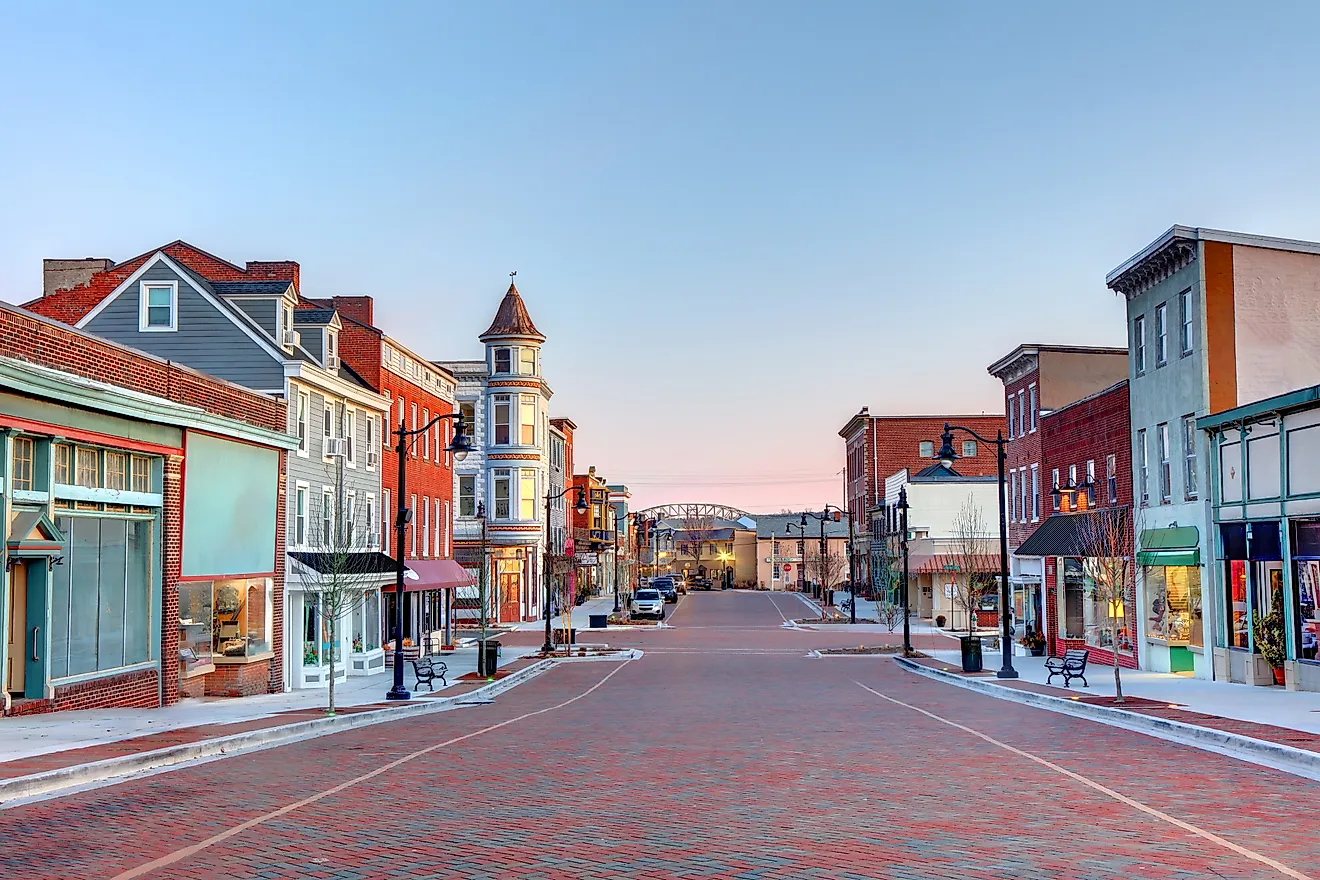
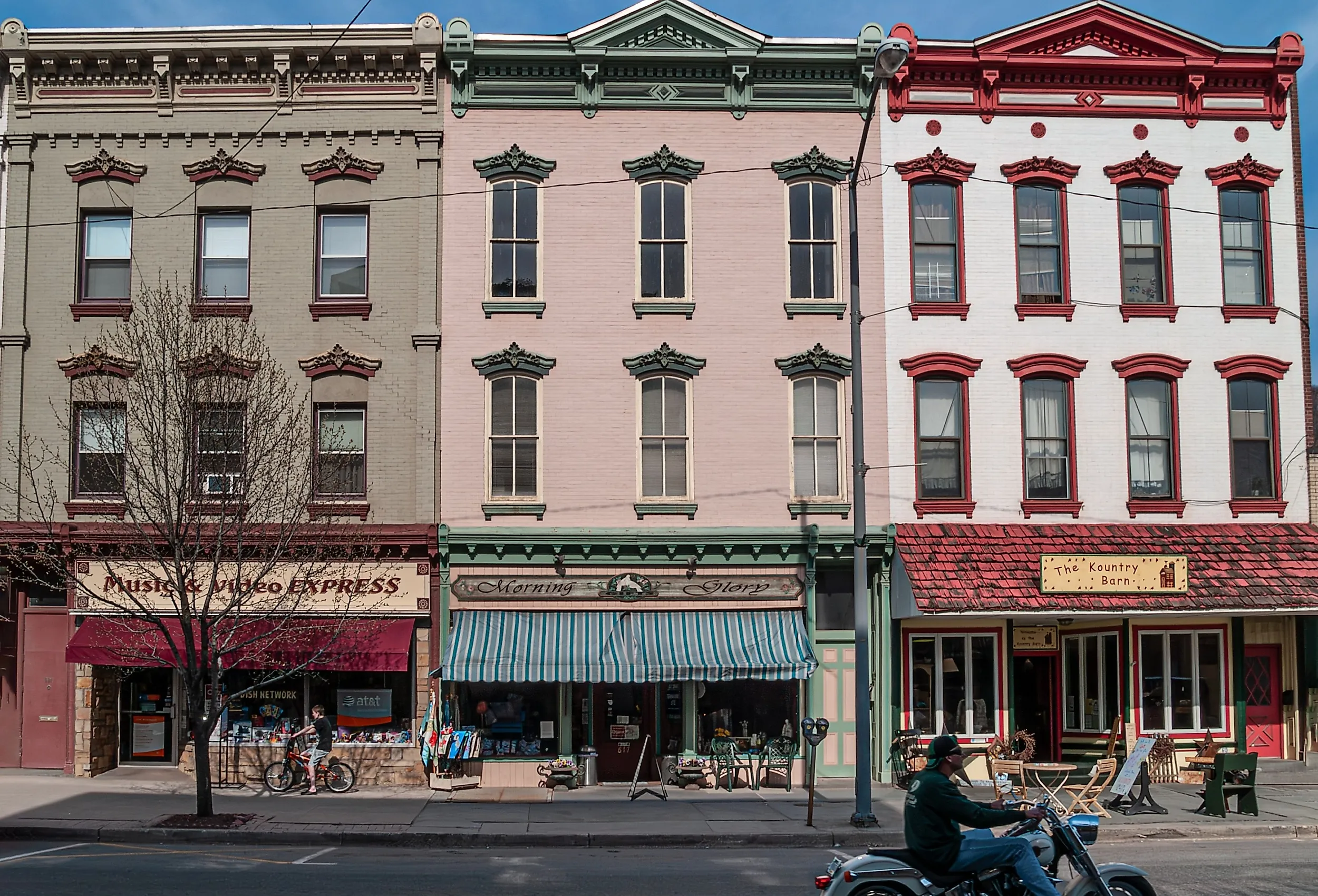
Milford is the seat of Pike County and the gateway to the Upper Delaware on the northern edge of the Delaware Water Gap National Recreation Area, with a population of around 1,000. The borough's downtown grid of Victorian buildings has been the centerpiece of a 50-year preservation effort, and the absence of any major resort keeps weekend foot traffic manageable. Just above downtown, Grey Towers National Historic Site sits on a hillside, home to an 1886 bluestone chateau by Richard Morris Hunt, built for Gifford Pinchot, the first head of the US Forest Service. The estate is open for walking, with guided interior tours from Memorial Day through October.
Back in town, the Columns Museum (headquarters of the Pike County Historical Society) holds the 36-star Lincoln Flag from Ford's Theatre. A short drive away, Raymondskill Falls drops over 150 feet in three tiers, making it Pennsylvania's tallest waterfall, and is reachable via a marked half-mile trail. The Milford Music Festival in mid-June fills the same downtown streets with a weekend of free outdoor performances.
Honesdale

Honesdale, the seat of Wayne County, stands at the head of the Lackawaxen River about 30 miles northeast of Scranton, and the summer crowd here is the regional kind rather than the bus-tour kind. The town carries the claim to being the birthplace of American commercial railroading: the Stourbridge Lion completed the first commercial steam locomotive run in the country here on August 8, 1829. That legacy anchors a day in town.
The Wayne County Historical Society Museum on Main Street preserves a full-scale replica of the locomotive and Delaware & Hudson Canal era records, and from the same Main Street, the Stourbridge Line departs on vintage-car excursions to Hawley along the Lackawaxen River on summer weekends. Outside the railroad-era core, Prompton State Park covers 2,000 acres around a 290-acre flood-control lake with kayak access and over 26 miles of trails. The summer caps off at the fairgrounds north of town with the Wayne County Fair, which dates back to an 1862 charter and is one of the oldest agricultural fairs in the country.
Delaware Water Gap

Delaware Water Gap shares a name with the national recreation area on its doorstep, but the borough itself has fewer than 700 residents and stays distinctly quiet through the summer. The village sits above a wider notch where the Delaware River breaks through the Kittatinny Ridge, and the Appalachian Trail runs along the town. The borough's cultural core is a short main street anchored at one end by the Antoine Dutot Museum and Gallery (named for the village's 1793 founder, with rotating local-arts exhibits) and at the other by the Castle Inn, a former hotel restored for retail and dining. Midway between them, the Deer Head Inn has hosted live jazz for more than half a century and holds the distinction of being the longest continually operating jazz club in the country, booking touring acts Thursday through Sunday.
Lackawaxen Township

Lackawaxen Township is the largest and northernmost township in Pike County, with 5,000 residents across 78 square miles of Upper Delaware River frontage. The summer draw here is decidedly literary: the Zane Grey Museum at 135 Scenic Drive preserves the 1905 home where the Western novelist did his most productive writing between 1905 and 1918, and the National Park Service operates the house and grounds free of charge from Memorial Day through October. Directly across the road, the Zane Grey/Lackawaxen Boat Launch puts paddlers onto the Delaware at the confluence with the Lackawaxen River and is one of the few public access points along this stretch.
The most striking piece of infrastructure in the township is Roebling's Delaware Aqueduct, an 1848 wire suspension bridge by John A. Roebling (later of Brooklyn Bridge fame), the oldest surviving wire suspension bridge in the country, which now carries one-lane vehicle traffic across the river. Twelve miles of the Lackawaxen River wind through the township and stay shallow enough in summer for unhurried fly fishing for smallmouth bass and rock bass.
Lehighton

Lehighton is a borough on the west bank of the Lehigh River in Carbon County, just three miles south of Jim Thorpe, and it benefits from being everything Jim Thorpe is not in summer. Parking remains free and available, the streets are walkable without the bus-tour bottleneck, and downtown sits on the same D&L Trail that draws the heavier crowds upstream. The trail, along the old Lehigh Canal route, stays flat and shaded through the borough and offers a 24-mile out-and-back to Jim Thorpe. When the trail crowd needs a swim, Beltzville State Park, five miles east, covers 3,000 acres around a 949-acre lake with a sand beach, a swim area, and several public boat launches, and rarely fills to capacity even on July Saturdays. The same Lehigh River corridor feeds the rafting trade: outfitters in town handle the Lehigh Gorge whitewater trips that bring the heaviest visitor numbers of the season. Lehighton Bike Night keeps the social calendar on the main commercial strip.
Hawley

Hawley is a Wayne County borough of 1,200 at the northern tip of Lake Wallenpaupack, and it makes a useful base that stays calmer than the lakeshore campgrounds and marinas to the south. The downtown centerpiece is the Hawley Silk Mill, an 1880s bluestone textile building regarded as one of the largest laid-bluestone structures in the world. The restored complex now houses independent shops, a coffeehouse, a gallery, and a college campus.
The Ritz Company Playhouse keeps a summer slate of community theater a short walk away. Lake Wallenpaupack, Pennsylvania's third-largest lake at 13 miles long, lies just south of town and provides opportunities for boating and swimming, while the heaviest crowds tend to stay near the dam and the main launches rather than in town. The Wally Lake Fest sends summer out with three days of music, markets, and a floating stage on the lake.
Shawnee on Delaware

Shawnee on Delaware is a riverside village in Smithfield Township, Monroe County, set along a calm bend of the Delaware River. The heart of the community is the Shawnee Inn and Golf Resort, opened in 1911 as the Buckwood Inn, with an A.W. Tillinghast golf course laid out on an island in the river. Live theater carries the summer evenings at the Shawnee Playhouse, the 1904 Worthington Hall, rebuilt after a 1985 fire, which runs a full season of musicals and youth productions.
The Delaware River remains the community's main summer attraction, with local outfitters renting canoes and kayaks for unhurried paddles past forested banks where bald eagles nest. Two miles downstream, Smithfield Beach has a guarded swim area and grassy picnic grounds, though it fills on summer weekends, so an early arrival is often the difference between finding a parking spot and turning around.
Dingmans Ferry

Dingmans Ferry is an unincorporated community in Delaware Township, Pike County, strung along the Delaware River inside the national recreation area. The signature summer walk is the loop through George W. Childs Park, a 1.4-mile trail that drops through a hemlock ravine past three waterfalls (Factory, Fulmer, and Deer Leap) and the stone ruins of a 19th-century woolen mill. The 56-foot Fulmer Falls, which spills into a curved rock basin, is the tallest of the three. River access comes at the Dingmans Ferry Bridge, one of the last privately owned toll bridges in the country. Visitors should note that nearby Dingmans Falls, the 130-foot cascade reached by an accessible boardwalk, has been closed for bridge and trail reconstruction, with reopening expected by mid-summer 2026, so its status should be confirmed with the National Park Service before visiting. Raymondskill Falls, Pennsylvania's tallest waterfall, is a short drive north toward Milford.
Pocono Pines

Pocono Pines is a village in Monroe County, set on the Pocono Plateau at roughly 1,800 feet, with a population of around 2,000. Elevation is one of the village's defining characteristics. Summer afternoons here run several degrees cooler than the river valleys, and the surrounding woods stay shaded and green through August. The village grew up around Lake Naomi and Pinecrest Lake, both ringed by the pine forest that gave the community its name.
Much of the lakefront belongs to the Lake Naomi Club, while public trails and quieter ponds can be found in the nearby Tobyhanna and Gouldsboro state forests. Tobyhanna State Park, ten minutes north, opens a 170-acre lake with a public beach, boat rentals, and a flat 5.1-mile loop trail that circles the water beneath hemlock and hardwood trees.
Planning a Summer Visit
These nine towns span much of the Pocono region. River communities such as Milford and Dingmans Ferry sit on the Upper Delaware while lake-oriented destinations like Hawley and Pocono Pines pull a different crowd. Delaware Water Gap and Lehighton offer easy access to trails and river scenery. Honesdale and Lackawaxen Township highlight the area's railroad and literary history. Across all nine, the appeal is not the absence of summer activity but the ability to enjoy rivers, lakes, trails, and historic downtowns without the congestion that defines the region's busiest resort areas.