8 Towns Perfect for Retirement in Tennessee
Retiring in Tennessee does not mean giving up the places and routines you already love. The real question is where in the state you want to slow things down. Maybe that means fishing on Kentucky Lake, walking to an old courthouse square for coffee, keeping Knoxville or Johnson City within reach, or finally living close enough to a favorite state park to visit on a weekday. These eight towns make a strong case with manageable housing costs, useful local services, and enough going on to keep retirement from feeling too quiet.
Paris

Paris does not take its name too seriously. The town has its own 60-foot Eiffel Tower in Memorial Park, and locals gather every spring for the World's Biggest Fish Fry, a long-running Henry County tradition involving catfish, parades, rodeo events, and plenty of visitors. Downtown is arranged around the Henry County Courthouse, with shops and restaurants occupying the surrounding blocks.
The stronger argument for retiring here sits a few miles east. Paris Landing State Park reaches the western shore of Kentucky Lake, where boating, fishing, swimming, and lakeside walking are easy additions to the week. Housing has also remained relatively inexpensive compared with many retirement markets. For someone who would rather spend Saturday morning fishing than navigating a packed suburb, Paris has the right ingredients and very little fuss about them.
Morristown

Morristown has one of the strangest downtown features in Tennessee. During an urban renewal project in the 1960s, elevated sidewalks were built along parts of Main Street, creating what is now known as the SkyMart. Shops can be reached from street level or from the second-story walkways above. Nearby, the Rose Center occupies a former school building and hosts art exhibits, classes, performances, and community events.
Then there is Cherokee Lake, a 30,000-acre reservoir just north of town. Fishing and boating are major local pastimes, while Panther Creek State Park spreads across more than 1,400 acres on the lake's shore. Its trails climb through wooded ridges with broad views across the water and surrounding East Tennessee countryside.
Morristown is larger and busier than several towns on this list, which can be useful in retirement. Shopping, medical services, restaurants, and everyday errands are available in town, while the Great Smoky Mountains remain close enough for regular trips.
Church Hill

Church Hill is small enough that its parks matter. Laurel Run Park follows the Holston River and has walking trails, picnic areas, river access, and a waterfall reached by trail. Jaycee Park provides another straightforward place to get outside, with walking space and tennis courts. None of this requires planning a major excursion. These are places residents can actually use on a regular afternoon.
The town also operates a public swimming pool, while local programs and community facilities create opportunities to stay involved without traveling far. Fast Pace Health Urgent Care provides care in town, with more medical services available in the larger Tri-Cities area.
Church Hill's median home price is about $299,500. For retirees looking at northeastern Tennessee, the combination of the Holston River, modest town size, and proximity to Kingsport gives Church Hill a practical advantage. It feels rural in places without putting every errand miles away.
Gallatin

Gallatin has enough history to fill several afternoons. Trousdale Place, completed in the early 19th century, was the home of Tennessee governor William Trousdale and now preserves furnishings and objects connected with the family. The Sumner County Museum goes much broader, with collections covering local military history, businesses, domestic life, and the county's development. For an evening out, the Palace Theatre still operates on the downtown square.
Outside town, Bledsoe Creek State Park covers 169 acres along the Old Hickory Reservoir. Its trail system runs for more than six miles, and the park also has campsites, fishing access, and wildlife viewing. Gallatin itself has grown considerably, so retirees are not moving somewhere isolated from supermarkets, restaurants, and health care.
That growth comes with a higher housing bill. Homes average around $460,900 in the figures used here, making Gallatin one of the more expensive entries on the list. Brookdale Gallatin and Charter Senior Living of Gallatin are among the local senior-living options for people considering alternatives to buying a house.
Loudon

Loudon sits beside the Tennessee River with a population of roughly 6,000, and water has a way of turning up everywhere around town. Loudon Municipal Park and Legion Park provide local green space, while the river and nearby lakes open up much larger possibilities for boating and fishing. This is also Tellico Lake country, an area that has attracted retirement communities for decades.
There is still a recognizable old downtown rather than a collection of subdivisions pretending to be one. The Shoppes on the Square occupy historic commercial buildings, and the Cook n Craft Academy runs cooking and craft classes. Tennessee Valley Winery, founded in 1984, is another nearby stop for tastings.
Loudon is roughly 30 miles southwest of Knoxville, which matters when specialist health care, an airport, or bigger-city shopping is needed. Closer to home, Loudon County Senior Citizens runs activities and services for older residents. Housing around Loudon can be more expensive than in several other towns here, particularly near the lake communities, so this is one place where retirees should compare neighborhoods carefully.
Jonesborough

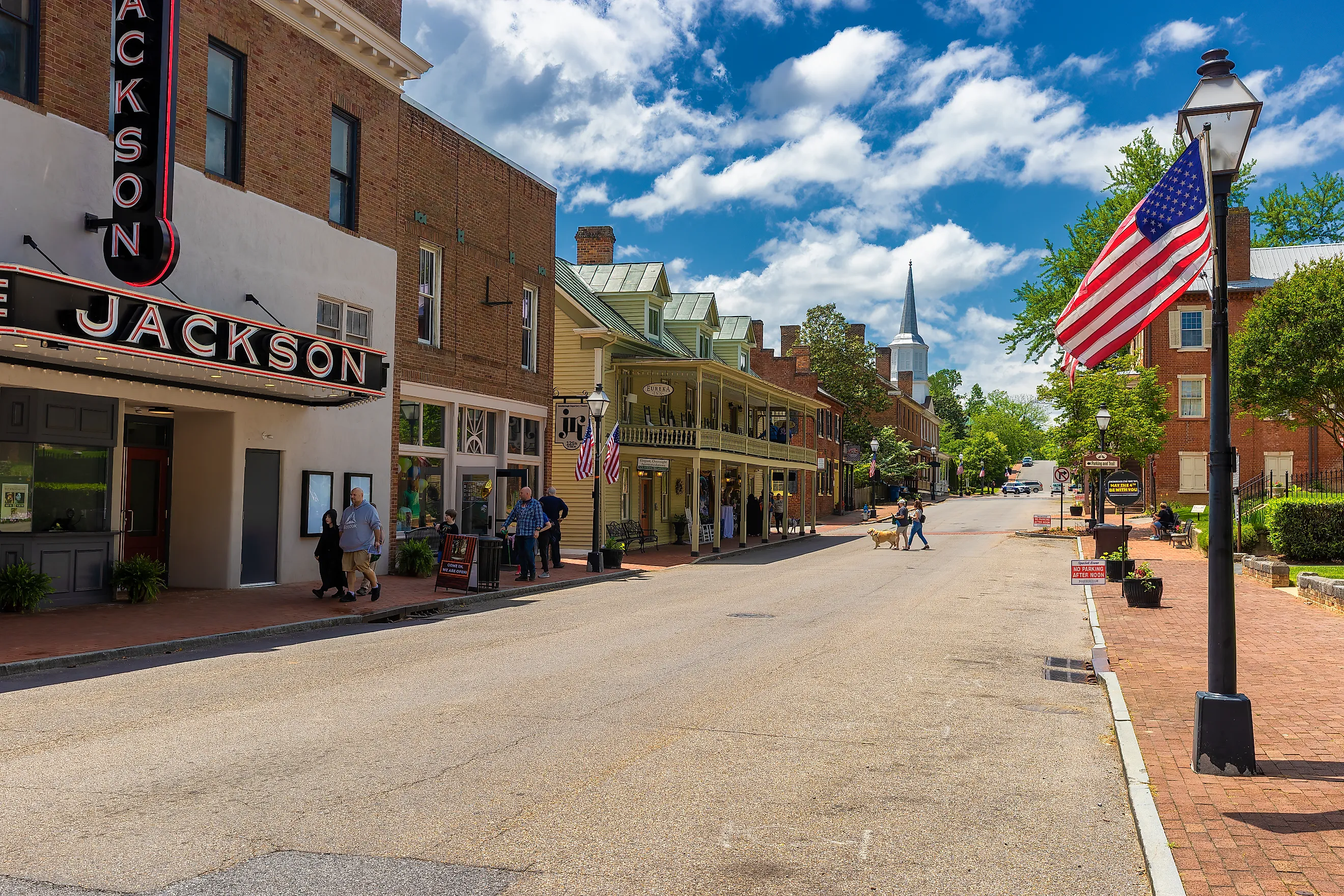
Jonesborough was founded in 1779, making it Tennessee's oldest town, and it has held onto an unusual amount of its early architecture. Brick storefronts, old houses, churches, and the Chester Inn sit within the historic center. The Chester Inn dates to the late 18th century and now contains a museum upstairs. Main Street is compact enough to explore without turning a morning walk into a driving tour between attractions.
The town's obsession with storytelling is even more fun. Jonesborough hosts the National Storytelling Festival every October, when tellers and audiences arrive from around the country. The International Storytelling Center keeps that tradition active beyond festival weekend with performances and programs during the year.
Johnson City is only a short drive away and provides access to larger hospitals and medical services. That proximity gives Jonesborough a useful retirement setup. Home can be in a small historic town, while the services of a much larger community remain nearby.
Dayton

Few Tennessee towns of Dayton's size have played such a visible role in American history. The 1925 Scopes Trial took place at the Rhea County Courthouse after teacher John T. Scopes was charged with violating a state law restricting the teaching of human evolution. The courthouse survives in the middle of town and contains a museum devoted to the case. That alone makes downtown more interesting than the usual collection of shops around a county square.
Dayton also sits near Chickamauga Lake, a reservoir on the Tennessee River used heavily for fishing and boating. To the west, Laurel-Snow State Natural Area protects more than 2,000 acres along the Cumberland Plateau. Trails follow Richland and Polecat creeks toward waterfalls, rock formations, and remnants of former mining operations.
Bryan College is based in town, and Dayton retains a compact commercial center for daily errands. Housing costs have generally remained below Tennessee's more expensive metropolitan areas, giving retirees another reason to look beyond the better-known towns around Knoxville and Chattanooga.
Lynchburg

Lynchburg is famous far beyond its size. The Jack Daniel Distillery has operated here since the 19th century and draws visitors to Moore County from around the world. Head a little farther into town, though, and Lynchburg becomes much smaller again. The Moore County Courthouse stands in the middle of the square, ringed by shops, restaurants, and old commercial buildings.
That scale will appeal to some retirees and rule Lynchburg out for others. There is no attempt to provide the endless choice of a larger suburb. Daily life is quieter, the surrounding county remains largely rural, and major-city amenities require a drive. Tims Ford State Park and Tims Ford Lake are within reach for boating, fishing, camping, and hiking.
Moore County has historically had a relatively low cost of living, and Tennessee does not levy a state individual income tax. For someone who genuinely likes a small county seat and does not need dozens of restaurants or stores nearby, Lynchburg's simplicity is part of the point.
Final Thoughts
The best retirement town depends on what you expect to do once you live there. Paris puts Kentucky Lake close to home. Church Hill has the Holston River and the Tri-Cities nearby. Gallatin has more services and a higher housing cost, while Jonesborough gives residents an old downtown with Johnson City just down the road. Dayton has serious hiking country outside town, and Loudon works particularly well for people who want to stay close to the water.
That variety is what makes Tennessee interesting for retirement. These are not eight versions of the same quiet small town. Some are growing, some remain decidedly rural, and some come with trade-offs in housing, services, or distance from larger cities. Knowing which of those trade-offs matters to you is a much better way to choose than chasing a generic idea of Southern small-town life.