8 Towns in Utah that are Frozen in Time
Spring City has roughly 1,000 residents and an entire town listed on the National Register of Historic Places. Not a district. The town. That is the trick these eight Utah places have pulled off: the boom ended, the money left, and nobody got around to knocking anything down. Some were mining camps that ran out of ore. One was a rail town named for the locomotives that shoved trains uphill. Another spent five decades doubling as the Old West for Hollywood film crews. Much of the land around them is federally managed, which is public land that never got developed either. Here is what is still standing.
Spring City

Settlers founded Spring City in 1852, and the town has since been listed on the National Register in its entirety, which is rare and deliberate. Strict preservation rules did the work. So did the local stone: builders quarried oolite limestone a few miles away and used it for houses, barns, and the schoolhouse, which is why the whole place shares one color palette.
Spring City sits in Sanpete County, and Sanpete County is where Utah's Black Hawk War started. On April 9, 1865, a dispute over slaughtered cattle turned violent at Manti, one valley over. Ute war chief Antonga Black Hawk led Ute, Paiute, and Navajo bands against Latter-day Saint settlements for the next several years, and settlers forted up or abandoned towns outright. Black Hawk made peace in 1867, raids continued without him, and federal troops finally intervened in 1872. Note that this is a different conflict from the 1832 war in Illinois led by the Sauk leader also called Black Hawk, and the two get confused constantly. The Daughters of Utah Pioneers museum covers the settlement years, and Heritage Day each spring brings out the crafts and the reenactors.
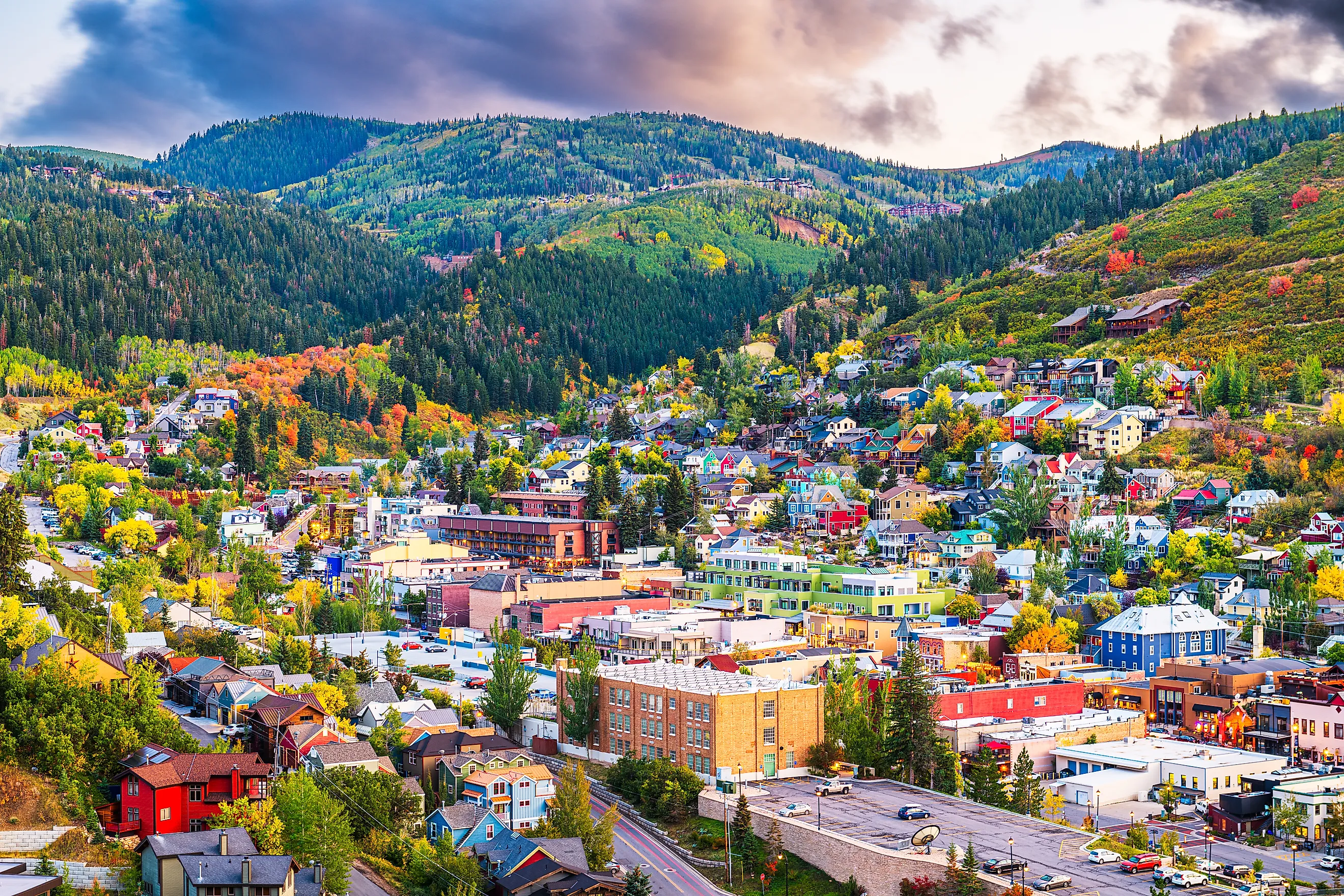
Park City

Park City was a silver town first. Prospectors hit ore in the 1860s, the mines made several fortunes, and the boom left behind the Main Street that everybody photographs now, a run of nineteenth-century storefronts climbing a hill. About 8,000 people live here full time. A great many more show up in February.
Two ski resorts sit at the edge of town, Park City Mountain and Deer Valley. The Utah Olympic Park nearby is not a resort but a training and competition venue left over from the 2002 Winter Games, where you can watch bobsled crews and ski jumpers work. The mining infrastructure never entirely disappeared either; old headframes and shaft buildings still stand up on the slopes, and skiers pass them on the way down.
Helper

The town is named after a piece of equipment. Coal trains coming out of Price Canyon could not manage the grade toward Soldier Summit on their own, so the railroad stationed extra locomotives here to push from behind. Those were the helper engines. The town took their name and never gave it back.
Coal and rail built the Main Street, and the architecture is early twentieth-century commercial brick rather than anything colonial, since Utah never had a colonial period in that sense. When both industries contracted, the buildings stayed because nothing replaced them. Artists have since moved into the cheap storefronts, and the Western Mining and Railroad Museum holds the mining equipment, the union records, and the photographs of the men who ran those engines.
Eureka

Eureka anchors the Tintic Mining District, one of the richest ore districts Utah ever had, though the metal was mostly silver and lead rather than the gold the name suggests. The Centennial Eureka was a single mine within that district and one of its heaviest producers, which is a distinction worth keeping straight.
The district peaked around the turn of the twentieth century and then declined for decades. What survives is a Main Street of stone and brick buildings well out of proportion to the current population, plus headframes and tailings on the hills above. The cemetery is the honest record: graves going back to the 1800s, a lot of them men who died young underground.
Kanab

Kanab made its screen debut in 1924, when Tom Mix shot The Deadwood Coach in Johnson Canyon just east of town. Director William Wellman is credited with tagging the place "Little Hollywood" while filming Buffalo Bill in 1944, and more than a hundred productions have worked the surrounding canyons since.
Credit the Parry brothers. Whit, Chauncey, and Gronway opened Parry Lodge in a converted farmhouse in 1931, then went to Hollywood and parked themselves on producers' doorsteps until somebody listened. It worked. John Wayne, Ronald Reagan, Frank Sinatra, and Maureen O'Hara all slept there, and the lodge still takes bookings. The Little Hollywood Museum keeps the standing sets and the memorabilia, the Kanab Heritage House occupies an 1894 Queen Anne home, and Coral Pink Sand Dunes State Park supplies the scenery that started all of it.
Midway

Swiss immigrants settled Midway, and the town has leaned into it ever since, down to the alpine detailing on the buildings and the Swiss Days festival every summer. Zoning rules have kept the valley from filling in with subdivisions, so the farmhouses and barns from the 1800s still have fields around them.
The strangest thing here is underground. Homestead Crater is a geothermal spring inside a limestone dome roughly fifty-five feet tall, and the water holds in the low nineties year-round. People scuba dive in it, in Utah, in February. Wasatch Mountain State Park covers the hills above town, and the Ice Castles installation has set up in the area in winter, which is worth checking before you drive out.
Morgan

Morgan sits on the Weber River about 35 miles northeast of Salt Lake City and serves as its county seat. Its best-known employer is Browning, the firearms company John Moses Browning and his brother started in Ogden in 1878; the headquarters is at Mountain Green, up the river. Browning made guns, not concrete. The cement operation belongs to Holcim, whose plant sits out at Devil's Slide.
Devil's Slide is also the county's landmark: two parallel limestone ledges running down a hillside above the river, close enough to the highway that people pull over for it. Elsewhere in the county there are pre-1900 mills and farmsteads still working, and a Union Pacific depot from the late 1800s. The Mormon Pioneer National Historic Trail, the 1,300-mile route from Nauvoo, Illinois, to the Salt Lake Valley traveled in 1846 and 1847, crosses this county on its last approach.
Parowan

Parowan was founded in 1851 and is called the mother town of southern Utah, because settlers staged out of here to establish most of the other towns down there. It was also the base for the Iron Mission, the territory's early attempt at producing its own iron, with the furnaces themselves down at Cedar City. The Old Rock Church, finished in the 1860s, is now the town museum.
A short drive out, Parowan Gap holds petroglyphs pecked into the rock over centuries, along with dinosaur tracks in the same area. Parowan also supplied families for the Hole-in-the-Rock expedition of 1879, when about 250 people blasted a wagon route down a crevice in the wall of Glen Canyon to reach the San Juan country. That crevice is roughly 250 miles from here, which is worth saying plainly, because Parowan gets credited with owning the landmark rather than sending the people who cut it.
What Kept These Towns Standing
Preservation is usually an accident before it is a policy. Eureka and Helper kept their Main Streets because the industry left and nobody had a reason to build over them. Spring City and Midway kept theirs on purpose, through ordinances and zoning that made tearing things down difficult. Park City managed both at once, selling lift tickets while the old mine works rust above the runs. The eight of them are worth seeing in that order of accident and intent, since the buildings tell you which kind of luck each town had.