8 New Mexico Towns Where Time Stands Still
Few states layer their history quite like New Mexico. Pueblo Native and Spanish colonial threads run through the small towns alongside Old West heritage. Taos Pueblo has welcomed its Native community for over 1,000 years. Silver City grew as an 1870s mining town near the Gila Wilderness. Socorro began as a Spanish missionary community before becoming a railroad and mining hub. Here are New Mexico towns where time stands still.
Taos

Spanish accounts of the Taos area date back to August 29, 1540, when Captain Hernando Alvarado, as part of the expedition of Francisco Vasquez de Coronado, arrived in the region. During this period, Spanish expeditions encountered long-established Indigenous communities in northern New Mexico. Just outside the town center, Taos Pueblo is both a UNESCO World Heritage Site and a National Historic Landmark, and it remains a living Indigenous community. The Town of Taos was incorporated as a municipality on May 7, 1934.
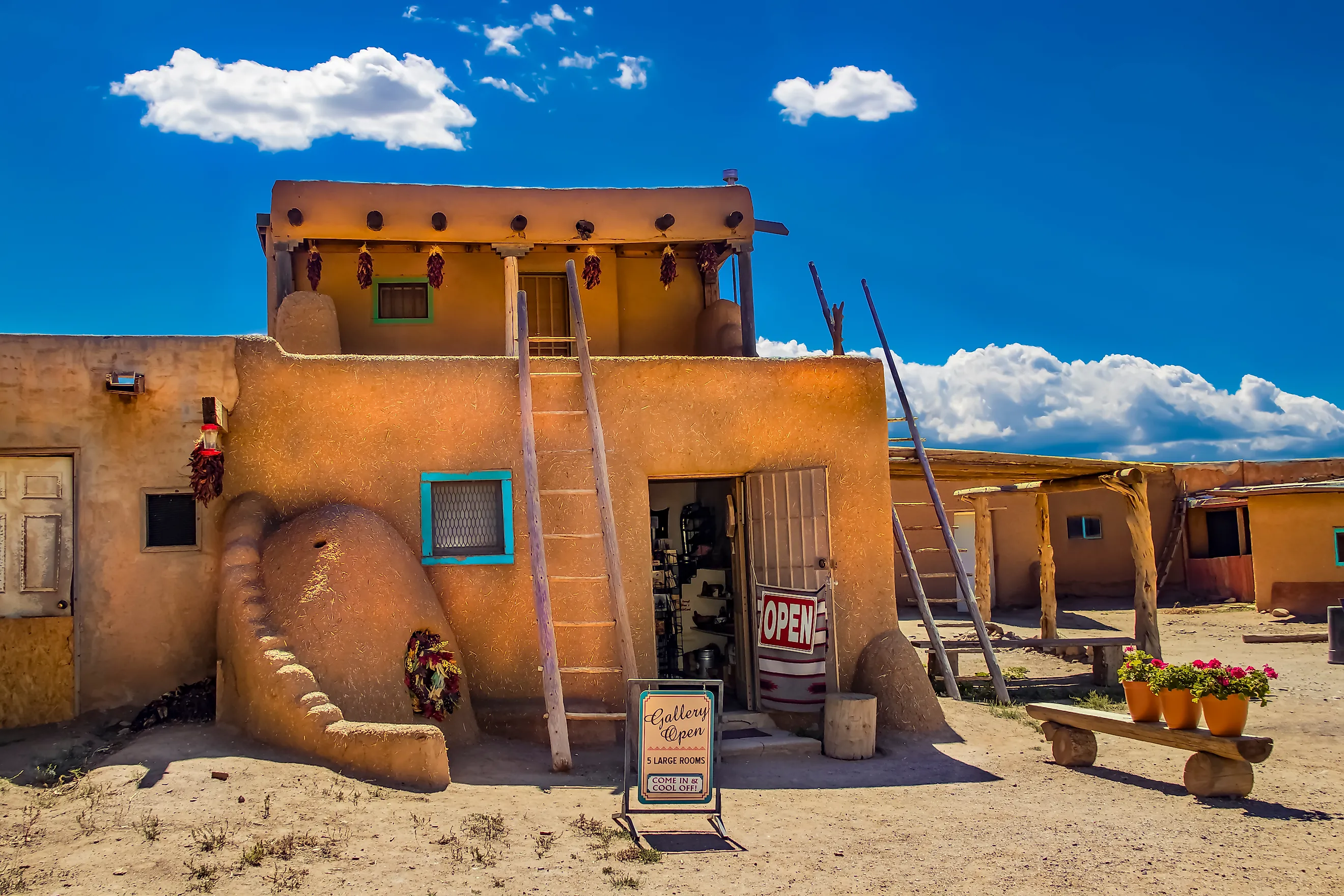
Visit Taos Pueblo, whose multi-storied adobe buildings reflect a living architectural tradition that has endured for centuries. They are made of adobe, earth mixed with water and straw. Join the Taos Pueblo Pow Wow, an annual event typically held in July. The event showcases Indigenous music, dance, food, and arts and crafts.
For outdoor adventures, try riding a hot air balloon. It will take you above the fantastic scenery of the Rio Grande Gorge, the Taos Plateau, and the Sangre de Cristo Mountains. Just outside of town, hikers can picnic at the Carson National Forest and follow trails near the Rio Grande River.
For New Mexico-made foods, gifts, jewelry, home goods, and regional specialties, browse Made In New Mexico. The shop includes colorful corn beads and candles. They even have snacks like spicy noodles, nuts, and chile powder.
Silver City

The town of Silver City was formed in the 1870s, after the discovery of silver in the surrounding area. Historically, the region has been home to Indigenous peoples, Hispanic communities, and Anglo settlers.
For history buffs, check out the Silver City Museum. The museum opened in 1967 and offers exhibits, educational programs, and events. Its rotating exhibitions change throughout the year, so check the museum’s current schedule before visiting.
Hikers will love the Boston Hill Trail System. At Boston Hill Open Space, trails pass La Capilla Heritage Park and more than half a dozen former mining sites just south of historic downtown Silver City. Boston Hill itself rises to about 6,380 feet, with sweeping views of town and the surrounding Gila region. It is a perfect place to take in the scenery and some photographs. After exploring the trails, visitors can head back into Silver City for meals, lodging, and other services.
After working up an appetite, stop at Adobe Springs, a great place for old-fashioned American favorites like burgers and fries. Relax with a beer in hand at the Little Toad Creek Brewery and Distillery with a variety of local ales, lagers, and stouts.
Socorro

The name of the town translates to "to give aid," and that’s what the town did for Spanish families traveling north from Mexico in 1598, led by Don Juan de Onate y Salazar. They gave aid by giving the group a large gift of corn.
Walk down memory lane and discover the Hammel Museum, a former brewery that became an ice plant and a soda bottling facility. The ice plant closed in the mid-1950s and is now a museum. The town also offers a walking tour that passes by the Old San Miguel Catholic Church.
For outdoor lovers, try the Apache Kid Wilderness for 44,650 acres of rough canyons and 68 miles of trails to explore. As a designated wilderness area, Apache Kid is best explored on foot or horseback, with hunting allowed in season.
After an exciting day out, try out some authentic cowboy steaks or smoked brisket at the Jackson Ranch Steakhouse. Feeling like Mexican food? Head down to Taquería Mi Jacalito for tacos, burritos, tortas, nachos, or quesadillas.
Truth or Consequences

Formerly known as Hot Springs, the town has long drawn people to its warm mineral waters. Nearby hot springs have temperatures that can range from about 98 to 115 degrees Fahrenheit, along with trace minerals that helped shape the town’s reputation as a relaxing resort destination.
Today, the town retains its history as a resort town. Visitors can find wellness treatments such as mud wraps, massage, reflexology, and Reiki. Visitors can relax at Blackstone Hotsprings, where walk-ins are welcome, and the facility is open daily from 9 AM to 9 PM.
In town, visit the Geronimo Springs Museum for a taste of the region’s history. Here, patrons can browse prehistoric pottery dating from 200 to 1350 CE, as well as Indigenous pottery and old mining photographs. Don’t miss the museum’s miner’s cabin, one of its historic displays.
Ruidoso

Before Ruidoso was a town, the region was home to the Mescalero Apache Tribe. When Spanish and later Anglo settlers arrived, ranches and communities were drawn to the area for its favorable climate and access to water. The town’s name roughly translates to "noisy," a reference to the Rio Ruidoso, or "noisy river."
There are various outdoor activities for the adventurer in you. The Grindstone Lake Loop is a 6.7-mile loop perfect for hiking, fishing for rainbow trout, catfish, or bass, and wildlife sightings of deer and birds of prey. Keep in mind that motorized boats are not allowed, but there are picnic sites and a disc golf course.
For a quirky and unique history lesson, explore the nearby Smokey Bear Historical Park. Just a short drive from downtown Ruidoso in Capitan, the park tells the story of Smokey Bear. Smokey became a national wildfire-prevention icon after surviving burns from the 17,000-acre Capitan Gap fire in 1950. Found with burned paws in the Capitan Mountains, Smokey lived at the National Zoo in Washington, DC, for 26 years, returning only to his home for burial.
If you are looking for souvenirs, your best bet is to stop by The Ruidoso Trading Post. On hot days, stop at Simple Sugars for frozen yogurt, smoothies, boba, and other sweets. Treasure hunters can find vintage clothing at Took and Johnnie’s Boutique, or collectibles at Yesterday Antiques.
Las Vegas

Not to be confused with Las Vegas, Nevada, this small town in New Mexico is home to more than 900 buildings listed on the National Register of Historic Places. It was founded in 1835 and later became known for its frontier history, railroad connections, and colorful cast of Old West figures. When the Atchison, Topeka and Santa Fe Railway reached the area, it helped bring new businesses, architecture, and cultural influences to the town.
Don’t miss out on the City of Las Vegas Museum and Rough Rider Memorial Collection. Housed in a 1940 historic municipal building, the museum features regional artifacts, art, and historical collections dating back centuries.
Outdoor adventurers can enjoy Storrie Lake State Park. The park has an elevation of about 6,607 feet. Amenities include camping and RV options, boating and paddle-sport access, fishing, bird watching, and windsurfing. Check the latest park conditions before visiting, especially if you plan to camp or use on-site facilities.
If you are hungry, try The Skillet, a Las Vegas art-bar and restaurant known for contemporary New Mexican food, cocktails, the Green Chile Skillet Burger, and Elote fries. If it gets too spicy, it is recommended to wash it down with a beverage from their bar, which offers a variety of alcoholic and non-alcoholic refreshments.
Portales

Portales was incorporated in 1909 and takes its name from the once-gushing springs southeast of the present-day city. Visitors can explore the Blackwater Draw Museum on the Eastern New Mexico University campus and the nearby Blackwater Draw National Historic Landmark archaeological site. The museum displays artifacts from Clovis times, over 13,000 years ago, through the recent historical period. Exhibits include Beaded and Beautiful, Casas Grandes Pottery, and Blackwater Draw in Black and White. The Casas Grandes pottery exhibit focuses on pottery associated with Indigenous communities in northern Mexico from roughly 700 to 1475 CE.
Nearby, take an easy walk on the Portales Recreation Trail. Great for families of young children, older adults, and anyone looking for a casual stroll, it offers a short, gentle loop through town. Rotary Park is great for a picnic or for playing baseball with the family.
Looking for some excitement? Swing by the Portales Country Club for a round of golf. For a nice steak, check out Cattle Baron, a local favorite and long-time Western-themed restaurant.
Corrales

Corrales comes from the Spanish word for corrals. It was home to the Tiguex people for centuries before Spanish explorers entered the region around 1540. By the 1900s, the town was known for vineyards, but by the 1930s, they had largely been replaced by orchards, pastures, and cornfields. Come to Corrales to learn more about the town’s history. Conveniently located near each other are the Casa San Ysidro Museum and the Old San Ysidro Church. The church was built in 1868 and added to the National Register of Historic Places in 1980.
New Mexico has a rich history, dating back to Indigenous traditions and cultures that predate Spanish settlement. In other towns, such as Silver City, precious metals were found, giving birth to mining towns. Truth or Consequences, formerly known as Hot Springs, has natural hot springs that helped fuel its long history as a resort destination. Not only do these towns have historical landmarks, but they also feature natural landscapes, including the Apache Kid Wilderness near Socorro. No matter which town you visit, it will take you back to a simpler time, as the towns preserve their historical landmarks, making it feel like stepping into a time capsule.