11 Best Places To Retire In North Dakota
Retirement in North Dakota means small towns, prairie quiet, and home prices that haven't caught up to the rest of the country. The statewide median home value sits in the mid $280,000s. Six of the eleven towns ahead come in below $240,000, and three are under $175,000. Hazen runs an annual Chalkfest where chalk artists turn sidewalks into 3D pieces. Wahpeton has a zoo with over 200 animals and a golf course that crosses two states. Walhalla has a working ski resort. These are eleven of the best places to retire in North Dakota.
Minot

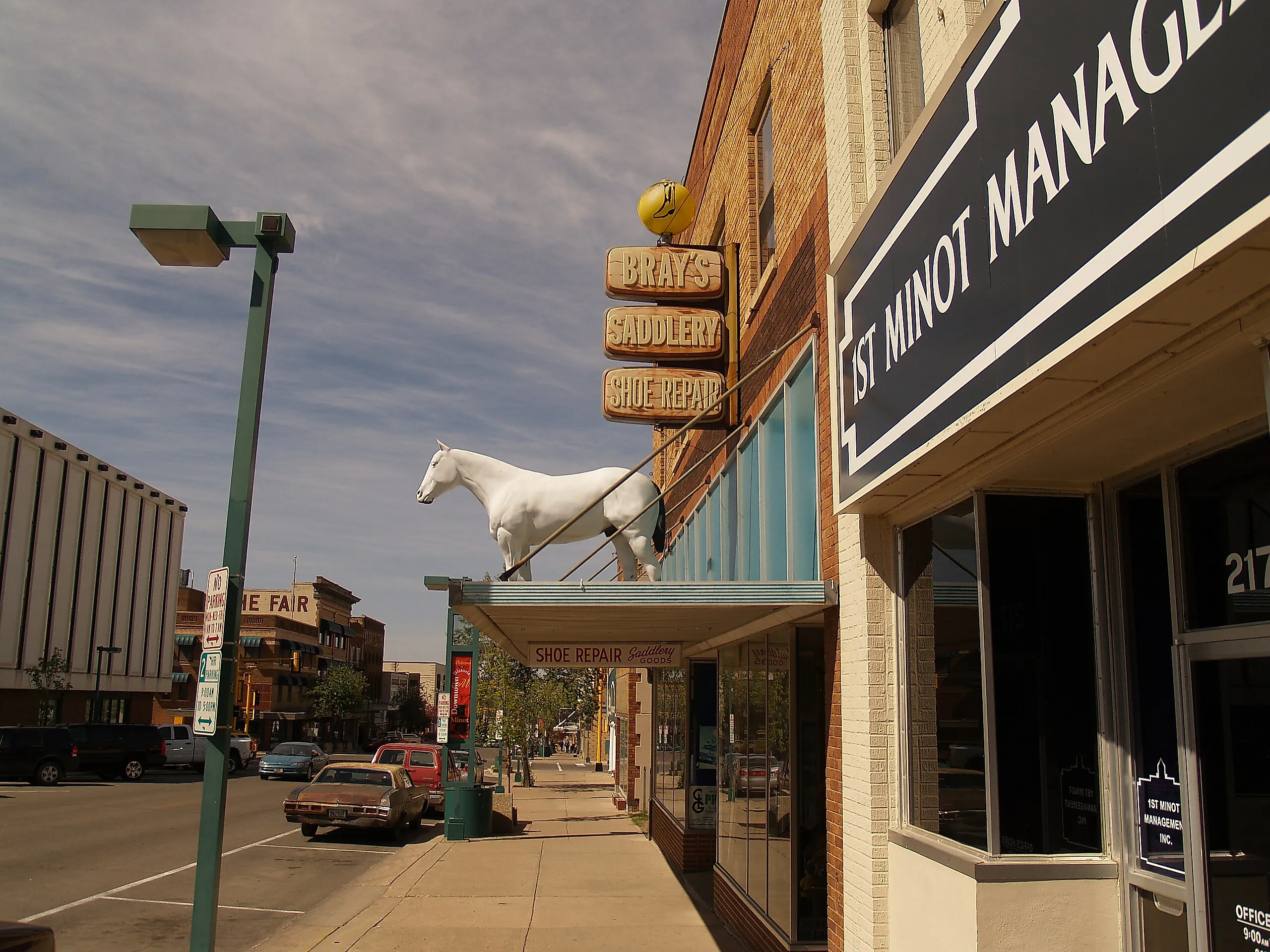
Minot is one of the larger landing spots on this list, with about 49,000 residents and median home values around $273,000. Scandinavian heritage runs through the town, with Norwegian, Swedish, and Danish roots most visible at the Scandinavian Heritage Park, which holds a traditional wooden stave church among its outdoor exhibits.
Minot's size means more options. The Roosevelt Park Zoo handles slow Sunday mornings and grandkid visits. Souris Valley Golf Course covers the green. Maysa Arena hosts hockey through the winter. North of town, the Dakota Territory Air Museum holds a vintage aircraft collection that runs from World War I through later 20th-century planes. For retirees who want enough city to support medical specialists and full-service shopping while keeping the costs manageable, Minot is the most balanced option in the state.
Devils Lake

Devils Lake takes its name from the body of water it sits on, in the northeast part of the state about 90 minutes west of Grand Forks. Median home values around $238,000 keep the town accessible, and the lake is the social anchor. Walleye fishing draws steady crowds in summer, ice fishing takes over in winter, and the shoreline runs miles for walking.

The Lake Region Heritage Center runs exhibits on the area's history, including a post office display and the town's first fire engine. The Sheriff's House Museum, in a 1910 brick house, fills in the legal-history corner. The Quentin Burdick Sports Arena handles game nights, and Black Paws Brewing Company and Anna's Cocina and Tequila cover the post-game meal.
Hazen

Population 2,100, median home values around $210,000, and the town's signature event is Chalkfest, where artists turn the sidewalks into 3D pieces every summer. That sums up Hazen pretty well. It is small, affordable, and turns its quiet on its head once a year for one big weekend.
Stanton, just across the Missouri, holds the Knife River Indian Villages National Historic Site. The reconstructed earth lodge and the museum cover the lives of the Indigenous tribes who lived along the river before European contact. Closer to home, Riverside Park sits along the Knife River for shaded walks, and the Hazen Golf Club runs a 9-hole course.
Washburn

Washburn sits on the Missouri River at the heart of the state, and Lewis and Clark history is the throughline. The Lewis and Clark Interpretive Center is dedicated to the expedition and the broader regional history. Just west of town, Fort Mandan State Historic Site holds a life-size replica of the fort where Lewis and Clark wintered in 1804-05. The McLean County Museum rounds out the local backstory through exhibits on the Sioux Ferry and the Nettle Creek one-room schoolhouse.
Median home values run around $236,000. The Missouri itself is the everyday draw, with fishing, boating, and hiking all close.
Turtle Lake

Turtle Lake comes in at one of the lowest medians on the list, around $133,000, with about 500 residents. The town sits among several national waterfowl production areas, and the bird life is the headline feature. The Haas, Stute, and Lake Williams Waterfowl Production Areas all sit close, and seasonal counts include sharp-tailed grouse, pheasants, white-tailed deer, and wild turkeys, with rare moose or mountain lion sightings.
For retirees who want trail access, the North Country Trail Association's latest maps and alerts are worth checking before setting out, since the McClusky Canal area is on a multi-year detour. Closer to home, Lake Williams and Lake Brekken cover the warm-weather end with boating and fishing, and Badlands Coffee handles the slow morning. This is the small, quiet end of the list.
Kenmare

The 30-foot red and white Danish Mill in Park on the Square is what most people remember about Kenmare, and the town builds the rest of its summer schedule around the open grounds beneath it. About 1,000 residents live here, with median home values around $240,000. The Des Lacs National Wildlife Refuge covers 10,500 acres just outside town for birding and walks, and Middle Des Lacs Lake handles the boating and fishing crowd.
The Lake County Pioneer Village Museum is the town's best indoor stop. Inside the broader campus, the Heidenberg-Peterson Military Museum holds memorabilia going back to World War I, and the V & R Toy Museum is a dependable hit when grandchildren visit.
Walhalla

Walhalla is the only town on this list with its own ski resort. Frost Fire Park brings winter traffic and gives retirees a winter sport without driving for hours. The Tetrault Woods State Forest just south of town picks up in summer for hiking and biking. Together, the two cover most of the year.
The Gingras Trading Post Historic Site north of town is one of the older preserved sites in the state. The Walla Theater on the National Register was built in 1949 by North Dakota architect Perry Crosier and still hosts shows. Football season brings games to the North Border field. Median home values are among the lowest in northeastern North Dakota.
Cavalier

Cavalier was founded in 1875, sits a short drive from the Cavalier Space Force Station radar installation built in the 1970s, and runs a quiet main street the rest of the time. Median home values around $159,000 keep it on the affordable end. Thompson's Cafe handles burgers and chicken plates, and Blue Fox Coffeehouse covers the morning sandwich-and-coffee shift.
Just outside town, Icelandic State Park brings the outdoor recreation and the Pioneer Heritage Center, where the homesteading-era exhibits cover much of the surrounding county's backstory.
Pembina

Pembina sits two miles south of the Canadian border with the Red River of the North running along its eastern edge. The Pembina State Museum and its 10-mile observation tower give the best overview of the surrounding country and the Indigenous tribes whose history defines the area.
The town runs about 500 people, which puts it on the small end of small. Bridgestone Bar & Grill is the place to catch a game and a meal. Fort Daer Landing & Recreation Area covers river access, picnicking, disc golf, and seasonal camping (the campground and restrooms close in winter). The LaMoure Memorial Golf Course on the south side rounds out the warm-weather schedule.
Wahpeton

Wahpeton has a zoo. That alone separates it from most towns on this list. The Chahinkapa Zoo holds over 200 animals across more than 70 species, including white rhinos, grizzly bears, zebras, bison, kangaroos, gibbons, cheetahs, honey badgers, and an alligator. Median home values come in around $229,000.
The other notable draw: the 18-hole Bois de Sioux Golf Course, which is the only US course that spans two states, with holes on both sides of the North Dakota-Minnesota line. The Red Door Art Gallery and Museum runs exhibits and adult arts and crafts classes. Hockey at the Ella Stern & Harry Stern Sports Arena and a coffee at 3 Bean Coffee Co. round out a typical week.
Hankinson

Hankinson runs around 900 residents, median home values around $171,000, and Lake Elsie just outside town for the walleye and crappie. The nearby Hankinson Hills Trail winds through the Sheyenne National Grassland's rolling sandhills, mixed-grass prairie, and scattered oak woodlands. Dakota Winds Golf Course covers the golfers, and Dakota Magic Casino sits just south of town along Interstate 29 right at the North Dakota-South Dakota border.
For meals, Church Bar & Grill and Hot Cakes Cafe handle the regular rotation. This is the version of small-town North Dakota where everything is within a five-minute walk and most weeks look about the same.
Good Community, Wide Views, and Affordable Living
North Dakota retirement is its own version of the math: home prices that almost nobody else in the country can match, low population density, and a calendar built around lakes, prairie, hunting, fishing, and small-town events. Minot covers the larger end and the Scandinavian heritage. Wahpeton has the zoo and the cross-state golf course. Walhalla runs the only ski hill on the list. Turtle Lake and Hankinson sit at the affordable, very-small end. The right pick depends on how big a town a retiree needs and whether the lake, the prairie, the museum scene, or the slope matters most.