8 Most Welcoming Towns In Alaska's Countryside
William Seward bought Alaska from Russia in 1867 for $7.2 million. Critics called the deal "Seward's Folly" and figured the secretary of state had wasted about two cents an acre on frozen nothing. The land turned out to hold gold, oil, salmon, and eight national parks. Today the towns scattered across it run on fishing boats and bush planes and a habit of treating strangers like neighbors. These eight do it better than most.
Talkeetna

Climbers headed up the tallest peak in North America stage out of Talkeetna, a frontier town about 115 miles north of Anchorage that sits at the confluence of three rivers. The mountain is 20,310 feet and federally named Mount McKinley again as of 2025, though almost everyone in Alaska still calls it Denali. Flightseeing operators run skiplanes onto its glaciers from the airstrip in town, and the view of the summit on a clear day fills the whole northern sky.
The town itself is one main street of log buildings, art studios, and cafes that run on a loose schedule. King salmon move through the rivers in June and July, which is when the fishing guides are busiest. The Talkeetna Chamber of Commerce keeps a small visitor center with trip information and a notably patient staff.
Homer

The Homer Spit runs 4.5 miles of gravel straight out into Kachemak Bay, lined with fishing charters, seafood shacks, and the boardwalk shops that give the town its end-of-the-road feel. Homer calls itself the Halibut Fishing Capital of the World, and the daily catch coming off the boats backs up the claim. The harbor is the busiest halibut port in the state.
Off the water, Homer runs on art. Galleries fill the downtown blocks, and the Pratt Museum covers the natural and cultural history of the Kenai Peninsula. A water taxi across the bay reaches Kachemak Bay State Park, where trails climb past glaciers and alpine meadows. Brown bear viewing flights to Katmai National Park leave from the same harbor.
Seward

Kenai Fjords National Park starts at Seward's doorstep, a 669,984-acre wilderness fed by the Harding Icefield. The icefield is the largest contained entirely within the United States and feeds close to 40 glaciers that spill toward the sea. Day cruises out of the small-boat harbor pass calving glacier faces and rafts of sea otters, and longer wilderness cruises reach the outer coast.
Resurrection Bay frames the whole town, with the harbor at its head and steep mountains rising on both sides. Visitors who want to stay out in the park take water taxis to remote cabins and yurts, then ride back into Seward for a meal and a bed.
Sitka

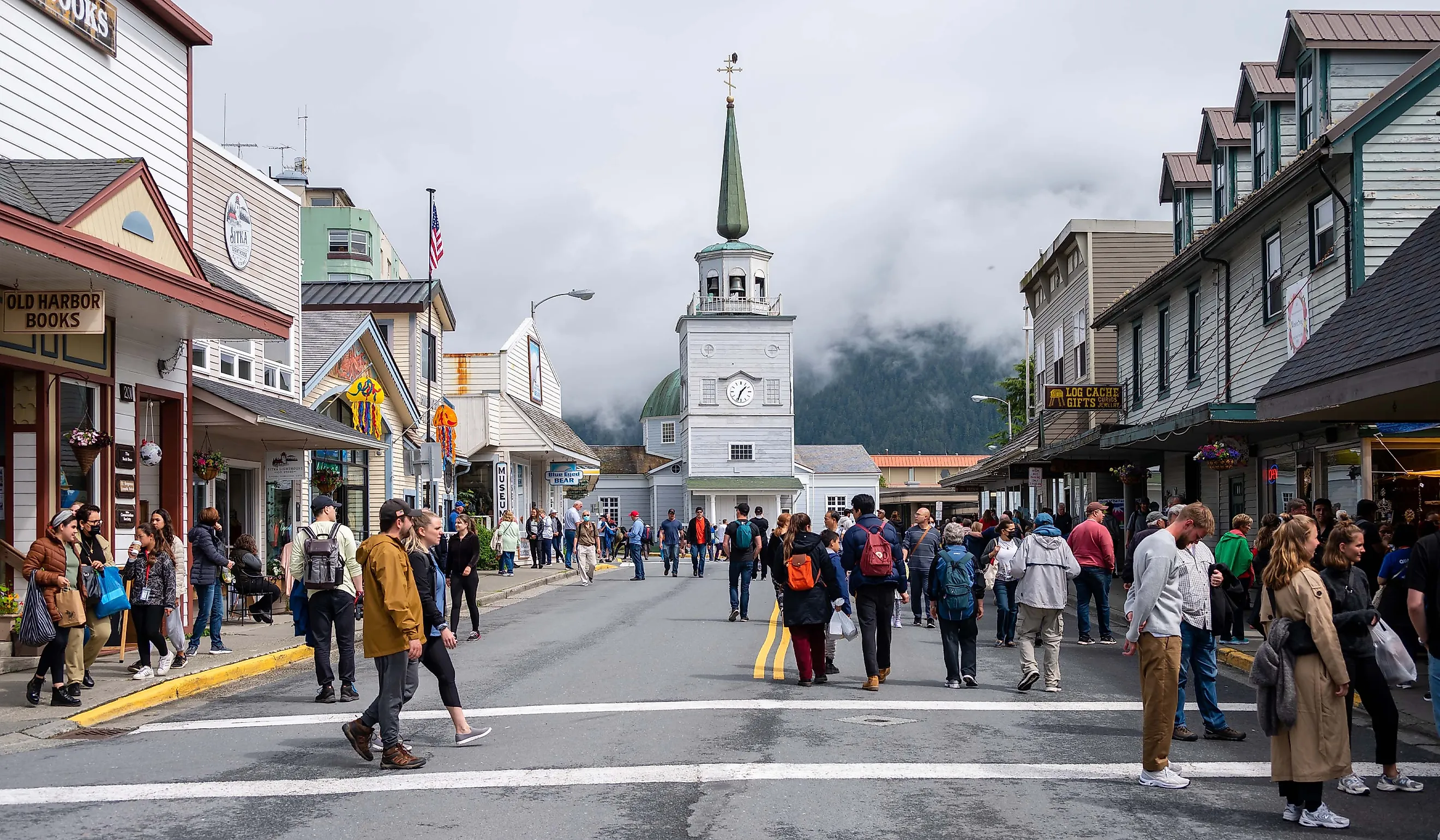
Sitka was the capital of Russian Alaska, and the Russian Orthodox cathedral and the Tlingit totems in Sitka National Historical Park still tell that twinned history side by side. The town sits on the outer coast facing the volcanic cone of Mount Edgecumbe, surrounded by the Tongass National Forest, the largest intact temperate rainforest in the world at nearly 17 million acres.
The setting makes Sitka a base for marine wildlife tours and sea kayaking, with whales, sea otters, and bald eagles regularly within view of the harbor. The historical park's coastal trail loops past the totem poles in under an hour, which makes it an easy first stop after the ferry or a cruise ship docks.
Haines

Every fall, thousands of bald eagles gather along the Chilkat River near Haines to feed on a late salmon run, one of the largest concentrations of the birds anywhere. The Alaska Chilkat Bald Eagle Preserve protects the river flats where they roost, and a slow drive up the highway in November or December puts hundreds of them in the cottonwoods overhead.
The town wears its history at Fort William H. Seward, a former Army post whose officers' homes and parade ground now hold galleries and inns. Wilderness presses in on three sides, with the sea in front, and the local outfitters run heli-skiing, brown bear viewing, and hiking depending on the season. Haines is 75 miles north of Juneau by water.
Girdwood

Alyeska Resort anchors Girdwood as the state's main ski town, a year-round resort community in the Chugach Mountains about 40 miles south of Anchorage. The tram climbs to Seven Glaciers restaurant and a view across the namesake peaks, while the Bake Shop down in the valley has been feeding skiers sourdough and soup for decades.
Girdwood sits in a coastal rainforest, so the hiking trails out of the valley stay green and wet through summer. The town fills up for its art and music festivals in the warm months, when the lifts give way to mountain bikes and the days run nearly to midnight.
Skagway

Skagway was the gateway to the Klondike Gold Rush in 1898, and the boardwalks and false-front buildings downtown survive so completely that the National Park Service runs the historic core as part of Klondike Gold Rush National Historical Park. Rangers lead free walking tours through the old district, laying out how 100,000 stampeders passed through on their way to the Yukon goldfields.
The White Pass & Yukon Route railway still climbs the pass the prospectors struggled over, now carrying passengers up switchbacks to the summit. Back in town, the Red Onion Saloon serves drinks in a building that ran as a gold-rush brothel, with the upstairs preserved as a small museum. The surrounding mountains keep the harbor wrapped in fog most mornings.
Kodiak

Roughly 3,000 Kodiak brown bears, the largest bears on earth, live on the island that shares their name. Kodiak National Wildlife Refuge covers the southern two-thirds of the island, and the bears draw photographers and hunters to its rivers when the salmon run. The town anchors a working fishing fleet and hosts Base Kodiak, the largest Coast Guard base in the country.
Kodiak is remote even by Alaska standards, reachable only by plane or ferry, with a handful of smaller villages spread around the rest of the island. The water is the real draw. Charters run for trophy halibut and salmon, and humpback and gray whales pass close to the coast on their migrations, often visible from shore.
The Common Thread
What links these towns is not their size or their setting but their stance toward outsiders. A place that survives on fishing seasons and bush flights learns to take people in, because the next boat or plane might carry a customer, a deckhand, or someone who decides to stay. The glaciers and gold-rush streets are the reason to come. The welcome is the reason people remember the trip.