8 Most Walkable Town Centers In Kansas
The best way to get to know a town is on foot, and these Kansas downtowns are built for walking. Whether tracing presidential history in Abilene, discovering Scandinavian heritage in Lindsborg, or following the Yellow Brick Road in Wamego, these downtowns invite visitors to slow down and look around. Each of these communities has compact main streets, historic buildings, and big attractions just a few blocks apart. With easy access to sites like McPherson’s 1888 Opera House, Emporia’s Granada Theatre, and Atchison’s Amelia Earhart Birthplace Museum, these downtowns in Kansas are made for exploring on foot.
McPherson

Named after Union Civil War General James Birdseye McPherson, the founding fathers of McPherson had visions of this Central Kansas town becoming the state capital. When Topeka was chosen, they went to plan B and grew into a railroad town. Reminders of those early years are still evident in the preservation of many 1800s buildings in the downtown. Notable examples within walking distance include the beautifully restored 1888 McPherson Opera House, known for its architectural excellence, and the 1893 McPherson County Courthouse, built in a Romanesque style with its iconic clock tower.
Telling the story of McPherson's history are six murals adorning downtown buildings. Five of the murals are on Main Street buildings, while the sixth is one block over at Ash Street and Kansas Avenue. Independent retailers line Main Street, making for easy window-shopping and unique finds at specialty shops like Sunflower Mercantile, which sells accessories, bath products, and home goods while operating as a nonprofit that provides employment opportunities for individuals with disabilities. Throughout the year, activities sponsored by McPherson Main Street bring visitors out to explore. The district’s welcoming atmosphere makes it a lively destination for shopping and community events.
Abilene

Abilene’s downtown is all within a few walkable blocks and has several attractions, historic buildings, and plenty of shopping. Abilene’s Downtown Historic District was listed on the National Register of Historic Places and includes 75 contributing buildings. Among them, the Abilene Union Pacific Railroad Passenger Depot, built in a Spanish Colonial Revival style, was where, in 1911, Dwight D. Eisenhower left his boyhood home and headed out to West Point. 41 years later, he would stand on a balcony of the eight-story red brick Hotel Sunflower and watch a parade held in honor. Now an apartment, Hotel Sunflower still towers over the downtown.
Other historic buildings are now home to antique stores carrying treasures from more than 150 vendors and specialty shops like Cypress Bridge, where hand-poured candles are made and sold alongside carefully curated home goods.
Also, in the heart of downtown is the Jeffcoat Photography Studio Museum, which explores the history of Abilene and Dickinson County through photographs. Dotted throughout the downtown and beyond are decorative cowboy boots and murals that add color, creativity, and give a nod to the city’s history.
Lindsborg

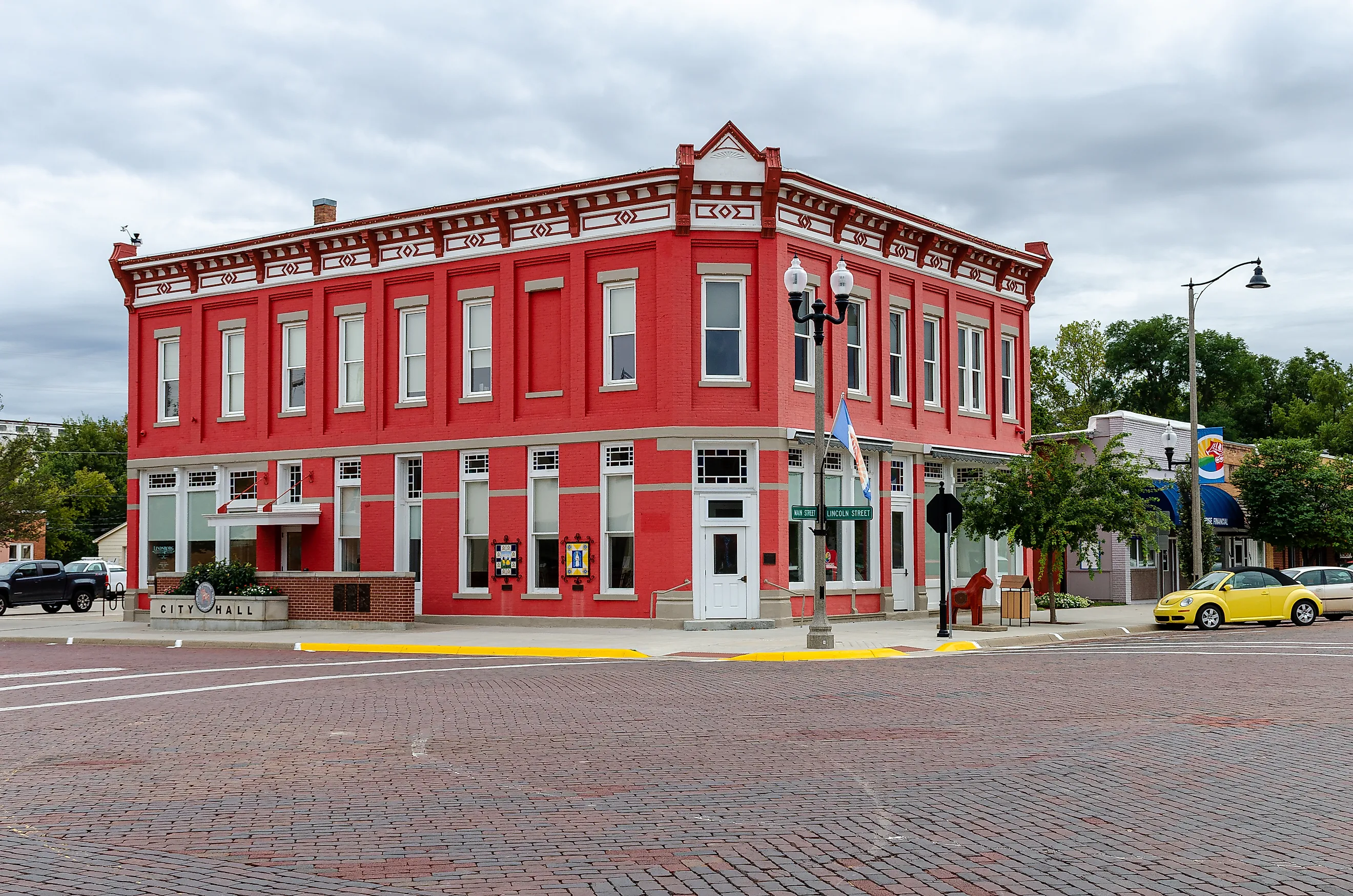
Known as “Little Sweden USA,” Lindsborg’s downtown is colorful and compact, offering a distinctly Scandinavian atmosphere set against the Kansas prairie. Main Street is the heart of the downtown Lindsborg district, where bright Dala horse statues line the sidewalks and Swedish flags flutter from storefronts. The Birger Sandzén Memorial Art Gallery is dedicated to sharing the art and vision of Birger Sandzén. From there, it is about a 20-minute walk to the Lindsborg Old Mill & Swedish Heritage Museum, which sits along the Smoky Hill River. That walk is lined with independent bookstores, art galleries, and heritage shops, many celebrating the community’s immigrant roots through handcrafted goods and traditional décor.

As you make your way to the Old Mill & Museum, the walk transitions from bustling storefronts to a quieter riverside setting, with historic buildings and shaded paths. Once you arrive at the museum, you will find Heritage Square and the historic 1904 World’s Fair Swedish Pavilion waiting for you to explore.
Emporia

The nine blocks that comprise downtown Emporia are home to locally-owned shops, restaurants, and attractions. The arts are celebrated at the Emporia Art Center, which is next to the 1929 Spanish Colonial Style Emporia Granada Theatre and has a full calendar of events. One block over, find a varied assortment of art from local artists and gallery exhibits at Trox Gallery and Gifts.

Through the heart of the district are murals that celebrate the city’s cycling roots and reflect Emporia’s status as a hub for cross-country riders and gravel racing enthusiasts. If you are a bike enthusiast, you’ll want to check out Eclectic Bikes. Holding up to its name, this shop services and sells everything from vintage bikes to modern electric styles. For more activity, Reality Check features virtual reality gaming, an assortment of board games, Nintendo, and a snack bar, and the Axe Shedd has axe-throwing lanes, corn hole, and a disc golf putting basket. Downtown is also home to many events, including the monthly First Friday Art Walk, block parties, parades, music, and theatre shows.
Wamego

Click your heels three times and be transported to the Land of OZ in the Central KS town of Wamego. Take in the full Frank Baum experience at the whimsical Oz Museum, where memorabilia and colorful displays celebrate all things Oz. Before jumping on the Yellow Brick Road, visit boutiques, gift shops, and bakeries all clustered within a few compact blocks. Your Oz experience continues with a stop in at the Oz Winery, which features a tasting room where you can sample Oz-themed wines or enjoy handmade chocolates and gourmet cheese. You won’t run into any flying monkeys on the Yellow Brick Road, but you will feel like you are on your way to Oz as you pass murals and two of the Totos Around Town.

The Yellow Brick Road ends at Wamego City Park. A green oasis featuring walking paths, playgrounds, and the historic Dutch Mill that adds European flair to the prairie landscape. If you plan your visit during the spring, you will find it park alive with the bright colors and floral aroma of hundreds of tulips in bloom.
Atchison

Settled along the Missouri River, Atchison’s downtown sports beautifully preserved 19th-century buildings of Richardsonian Romanesque, Italianate, and Second Empire architecture. Many of the grand old homes now house museums, galleries, and shops. Among them is the Amelia Earhart Birthplace Museum. This stately home overlooks the Missouri River and honors the famed aviator’s early life.

You can also tour the Sallie House, which is just one of several homes in Atchison believed to be haunted, and browse the Muchnic Art Gallery, an 1885 Queen Anne revival house. With 10 to 15 minutes on foot, visitors can reach scenic overlooks near Benedictine College, whose hilltop campus and historic architecture add to Atchison’s skyline.
Hays

The Bricks is the downtown district of this western Kansas town; its name pays homage to beautiful brick roads that Hays residents have been driving on for more than 80 years. Downtown, several art galleries showcase the works of individual artists or collections, such as the Moss-Thorns Gallery of Art, where you can see the work of Emporia State University students and faculty.
Many of the restored downtown buildings still have the original tin ceiling, exposed brick walls, and wooden floors. While they give a nod to the past, today they are filled with coffee shops, local eateries, and specialty shops, like Simply Charmed, which caters to women’s fashion needs, and Be Made Mercantile, where you will find everything from home décor to gifts for the Kansas City Chiefs fan. Western-themed murals and public art line the corridor, and wide streets with clearly marked crossings make for an easy and comfortable walk. Just steps from Main Street, the Ellis County Historical Society operates the Ellis County Historical Society Museum. The campus of historic buildings brings the region’s frontier, railroad, and agricultural stories to life and connects to the history reflected in downtown’s architecture.
Salina

In Salina, downtown energy radiates along Santa Fe Avenue, where historic brick buildings frame a lively arts and dining scene. Just up the street from the Salina Art Center, where rotating exhibits are always new and fresh, is the beautifully restored Stiefel Theatre for the Performing Arts, a 1930s landmark whose glowing marquee hints at concerts, comedy shows, and classic film nights inside. Salina’s love for the arts is also evident in the colorful street murals, public sculptures, seasonal events, art walks, and live music that fill the downtown sidewalks.

The Garage Automotive Museum features a rotating collection of custom-built and classic cars. It showcases 60 automobiles and explores automotive history and culture. Also downtown is The Smoky Hill Museum, a hands-on, interactive history museum that preserves Salina’s history.
In Kansas, the journey isn’t measured in miles; it’s measured in footsteps. The most memorable moments are found by slowing down and exploring the downtowns that celebrate history, arts, and culture. Whether it's Abilene with its ties to the 34th president, Hays, which celebrates the beauty of brick roads, or Wamego, where you can disappear into the fantasy world of OZ, Kansas downtowns hold magic, treasures, and memories around every corner.