8 Most Hospitable Towns In Arkansas
Although Arkansas is landlocked, the mighty Mississippi River forms its eastern border. Additional rivers include the Arkansas, Mississippi, Ouachita, Red, and White. Combined with the state’s two mountain ranges, the Ozarks and the Ouachitas, these waterways help create a landscape rich in natural beauty and resources. And some of the state's greatest treasures are its small and medium-sized towns; these communities offer warm hospitality, thriving historic districts, fascinating museums, rich heritage, and popular annual festivals.
Harrison

Located in the Ozark Mountains of north-central Arkansas, Harrison is a welcoming gateway to many of the state’s best-known natural attractions, including Buffalo National River. With a population of about 13,000 and serving as the seat of Boone County, the city blends outdoor recreation, local history, and small-town charm. Visitors enjoy easy access to forests, rivers, scenic drives, and locally owned businesses.
The Baker Prairie Natural Area preserves a rare, 71-acre tallgrass prairie right next to Harrison High School, offering scenic walking loops through vibrant native wildflowers. Nearby, the Lake Harrison Park and Walking Trail winds along Crooked Creek in the heart of town. This is a scenic, paved three-mile pathway that should provide an ideal space for walking, biking, and observing nature.
Paragould

Self-proclaimed “The Friendly City,” Paragould is a welcoming community in northeastern Arkansas with about 30,000 residents. Its location provides convenient access to major regional destinations, including Memphis (88 miles), Little Rock (153 miles), and St. Louis (208 miles). The town’s origins trace to 1882, when the Missouri Pacific Railroad and St. Louis Southwestern Railway built lines into Greene County. Established in 1883 at their strategic junction, Paragould quickly developed into a thriving railroad town supported by timber, travel, and commerce.
Today, it combines its historic roots with modern amenities, offering an affordable cost of living, a vibrant downtown, and a notable historic home district featuring many late-19th- and early-20th-century residences. Paragould takes particular pride in preserving and repurposing its historic landmarks. Built in 1925, the Collins Theatre remains a cultural centerpiece, hosting music, theater, visual arts events, and, for the first time in more than three decades, movies once again.
The restored former Greene County Courthouse is among more than a dozen local sites listed on the National Register of Historic Places. Then there's the Paragould War Memorial, which honors military service through educational plaques on local veterans and a miniature bronze Statue of Liberty. The city’s commitment to preservation extends to other structures as well, including the former Paragould Municipal Utilities building, now repurposed as an event center. Visitors can also support distinctive local businesses, such as Something Pawsitive Cat Café and Juniper Tree Meadery.
El Dorado

Situated in south-central Arkansas, El Dorado blends historic charm with modern revitalization. Once defined by its oil boom history, the city has grown into a vibrant cultural destination with a thriving arts scene, earning recognition as USA Today’s Best Small-Town Cultural Scene. Its revitalized downtown and Main Street reflect a commitment to preserving heritage while embracing the future, offering a mix of restaurants, bars, and locally owned shops. Public art is featured throughout the city. At the center of this cultural renaissance is the Murphy Arts District, a state-of-the-art venue hosting world-class performances, festivals, and year-round community events.
El Dorado’s event calendar offers attractions for all ages, including Mayhaw, the award-winning MusicFest, the SouthArk Outdoor Expo, Bream, May on Main, Summer on the Square, and SoulFest festivals. Visitors can play video games at Excalibur, savor Southern favorites at Abe’s Ole Feed House, or unwind at The Haywood Hotel Bar. The city’s welcoming spirit is also reflected in the South Arkansas Arts Center, which provides classes in disciplines ranging from dance to photography while serving the bi-state region through artistic education, appreciation, and collaboration. Its inclusive mission welcomes people of all ages, backgrounds, social groups, and faiths.
Mountain Home

Mountain Home is known for its relaxed pace, outdoor recreation, and welcoming residents. With a population of just under 13,000 in the 2020 census, the town serves as a gateway to some of Arkansas’s finest lakes, rivers, reservoirs, and scenic landscapes. Its blend of natural beauty and small-town hospitality creates a comfortable atmosphere year-round. Mountain Home also maintains a strong connection to its past.
Downtown features historic buildings, including the Baxter County Courthouse, completed as part of President Franklin D. Roosevelt's Works Progress Administration (WPA), a project aimed at reducing unemployment during the Great Depression. Visitors can further explore local history through antique destinations such as Earl’s Antique Mall and Rusty Rooster Flea Market & Antique Mall.
Bull Shoals Lake, one of the largest lakes associated with Arkansas and the largest by total surface area when including its Missouri portion, spans over 48,000 surface acres with more than 820 miles of shoreline. Managed by the US Army Corps of Engineers, it was created primarily for flood control and is the farthest downstream in a chain of four artificial lakes that includes Beaver Lake, Table Rock Lake, and Lake Taneycomo, several of the most beautiful lakes in the state and shared with Missouri. Bull Shoals supports a diverse ecosystem where warm-water fish thrive in shallow coves and tributaries while cold-water species inhabit deeper waters.
West Memphis

Although West Memphis is often viewed as a gateway to Tennessee because of its proximity to Memphis and its location along the Mississippi River, the city offers attractions in its own right. One of its most notable landmarks is the Big River Crossing (BRX), a pedestrian and bicycle bridge connecting West Memphis and Memphis. Managed by a nonprofit conservancy focused on protecting river wetlands and promoting outdoor recreation, the crossing is free to the public and limited to non-motorized transportation.
Connected to a 10-mile trail network that includes Ducks Unlimited Park and the Big River Trail System, the BRX provides sweeping views of the Mississippi River Delta and the surrounding landscape. Often recognized as the longest public pedestrian and bicycle bridge spanning the Mississippi River, it is ideal for walking, cycling, photography, and wildlife observation.
Magnolia

Magnolia offers a classic small-town Arkansas experience, complete with well-maintained public spaces, an endearing downtown, and Southern hospitality. Home to approximately 11,000 residents, the town serves as an educational and cultural hub for southern Arkansas. Its welcoming downtown and annual events foster a strong sense of community that visitors quickly notice.
The Magnolia Blossom Festival (and its World Championship Steak Cook-Off) was established in 1989 but began as the Sidewalk Art Show in 1950. This festival supports, honors, and exhibits original youth and adult art, featuring ceramics, 3D sculpture, mixed media, painting, photography, and functional art - And provide prizes and honorable mentions. In addition to the art, steaks, and floral celebration, the town features a 5K race and 1K fun run, vendors market, canine fun show, treasure hunt, car show, and a non-traditional pageant.
Several fun, tasty, and funky places to dine include The Flying Burger for you guessed “it”, Backyard BBQ for mouthwatering smoked meat and home-made pies, Antigua’s Grill for quality tacos and enchiladas, My Kitchen Table for spectacular veggies and home cooking, Blue Bull Grill for build-your-own-baked-potato, and MuleKick for pizza.
Searcy

Searcy, a growing city of roughly 23,000 residents in central Arkansas, blends a rich history with modern amenities and a strong sense of community and truly is one of the most scenic towns in the state. As a college town, it is home to Harding University — often recognized as the largest private university in Arkansas — and the Searcy campus of Arkansas State University-Beebe.
The city’s welcoming atmosphere is reflected in its attractive downtown district, where historic buildings and monuments preserve its heritage. Notable landmarks include the White County Courthouse, built in 1871, and the timber-frame Smyrna Methodist Church, dating to the 1850s and considered to be one of the state’s oldest standing churches.
Berryhill Park stands among Searcy’s premier recreational amenities and reflects the city’s commitment to quality of life. The 7.2-acre park features an all-inclusive playground, splash pad, walking trails, picnic areas, open green space, updated sports facilities, pickleball and tennis courts, and modern restrooms, making it especially popular with families and visitors. Beyond its recreational offerings, the park serves as an important gathering place for the community and hosts the annual Holiday of Lights display, a cherished Christmas tradition that showcases Searcy’s warmth and hospitality.
The surrounding region offers exceptional outdoor recreation, highlighted by Greers Ferry Lake, a reservoir created following construction of Greers Ferry Dam under the Flood Control Act. Covering approximately 31,500 acres with hundreds of miles of shoreline, the lake provides opportunities for fishing, swimming, sailing, wakeboarding, and exploring numerous coves, creeks, and tributaries.
Eureka Springs

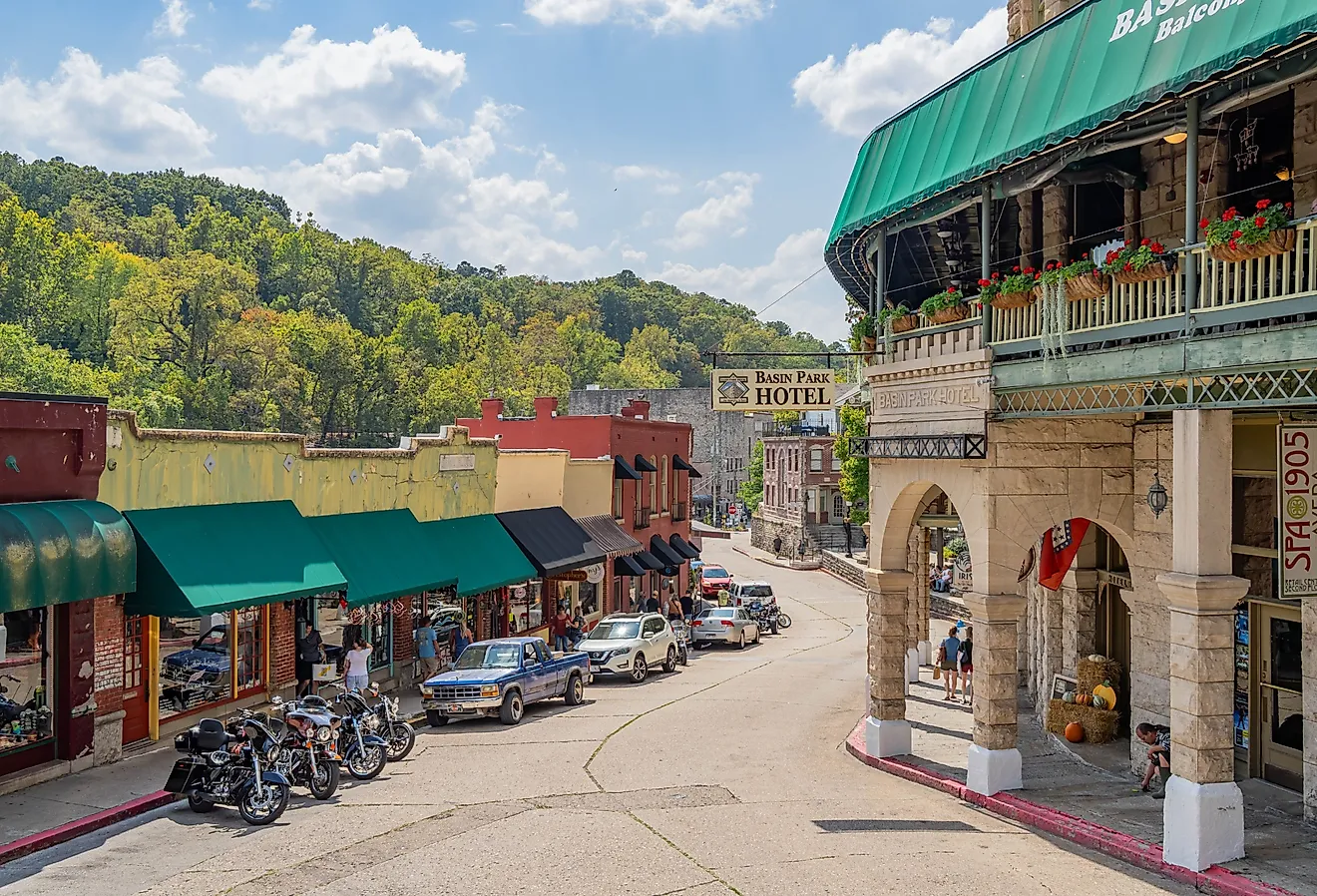
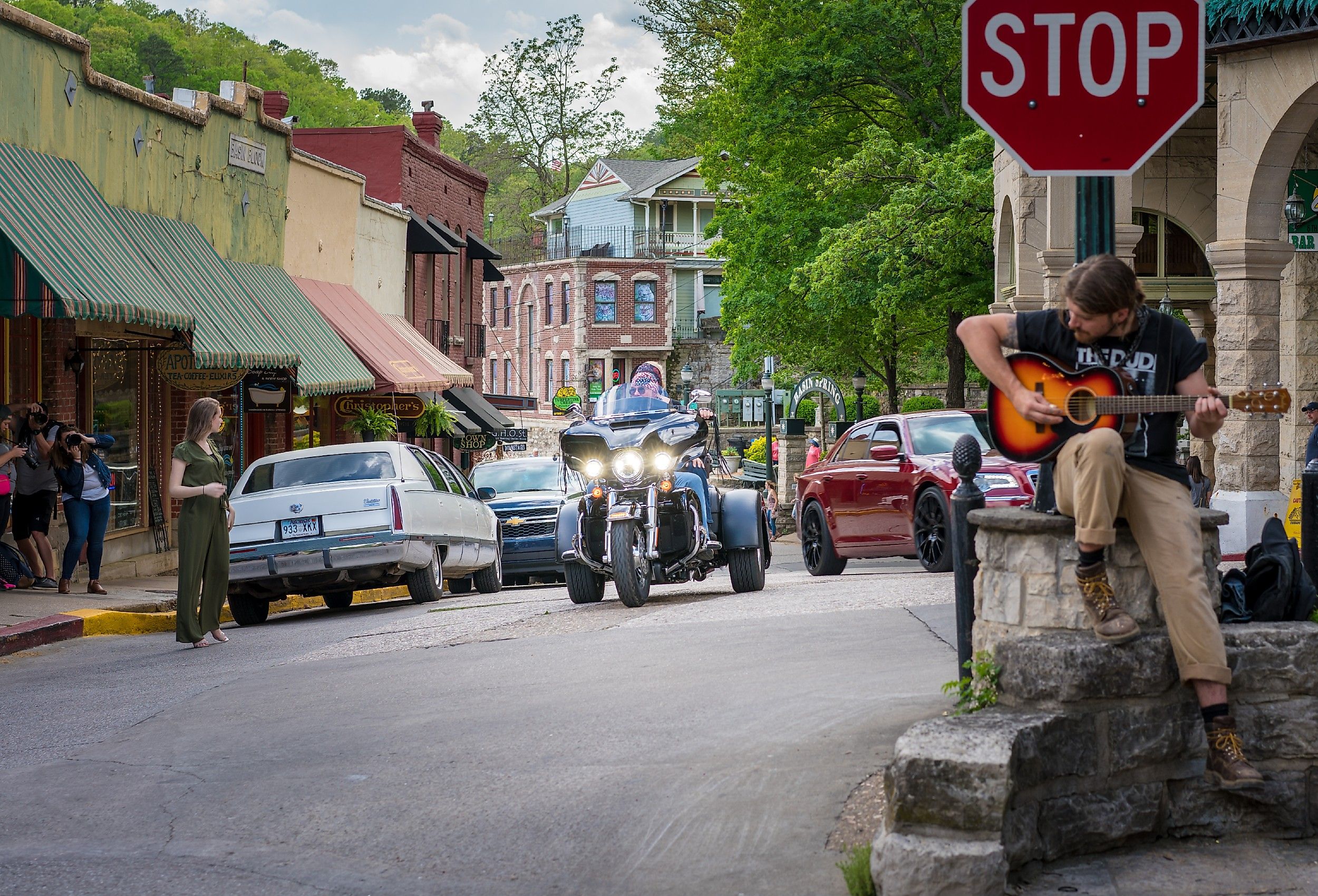
Known for its abundance of well-preserved Victorian-era architecture and natural beauty, Eureka Springs, nestled in the folds of the Ozark Mountains, offers far more than historic charm. With a population of roughly 2,400, this mountainside town showcases an impressive collection of architectural styles, including ornate Queen Anne, romantic Italianate, picturesque Second Empire, and sturdy Richardsonian Romanesque buildings.
Visitors can choose from several guided walking tours that explore the town’s rich history, dramatic cliffs and caves, notable landmarks, and remarkable architecture. Highlights often include the Carnegie Library, the Grand Central Hotel, and numerous public art installations, all contributing to Eureka Springs’ unique character and enduring appeal. For a striking architectural contrast, visit Thorncrown Chapel, a breathtaking glass-and-wood structure completed in 1980 and tucked into the surrounding forest. While vastly different from the town’s colorful Victorian homes, the chapel’s minimalist (Ozark Gothic) design makes it a worthwhile and inspiring stop. Admission is free, though donations are appreciated.
Outdoor enthusiasts will also find plenty of adventure in and around Eureka Springs. Visitors can enjoy the playful tradition of shouting “Eureka!” from a nearby cliff and listening for the echo. Lake Leatherwood City Park offers hiking trails, a marina, floating dock, beach, cabins, primitive campsites, RV accommodations, and historic recreational structures. Nearby Beaver Lake, the first of several flood-control lakes on the White River, boasts approximately 480 miles of shoreline and excellent canoeing opportunities.
Warmest Communities of Arkansas
Arkansas’s smaller towns demonstrate that hospitality is not measured by population size. Each community offers visitors a unique glimpse into the Natural State’s culture and character. These destinations provide memorable experiences through their historic districts, outdoor adventures, local festivals, and welcoming residents. Travelers who venture beyond Arkansas’s larger cities often discover the state’s most authentic experiences in these smaller communities. Whether planning a weekend getaway or an extended road trip, these eight hospitable towns showcase the warmth, beauty, creative adaptability, and enduring charm that make Arkansas such a rewarding destination to explore.