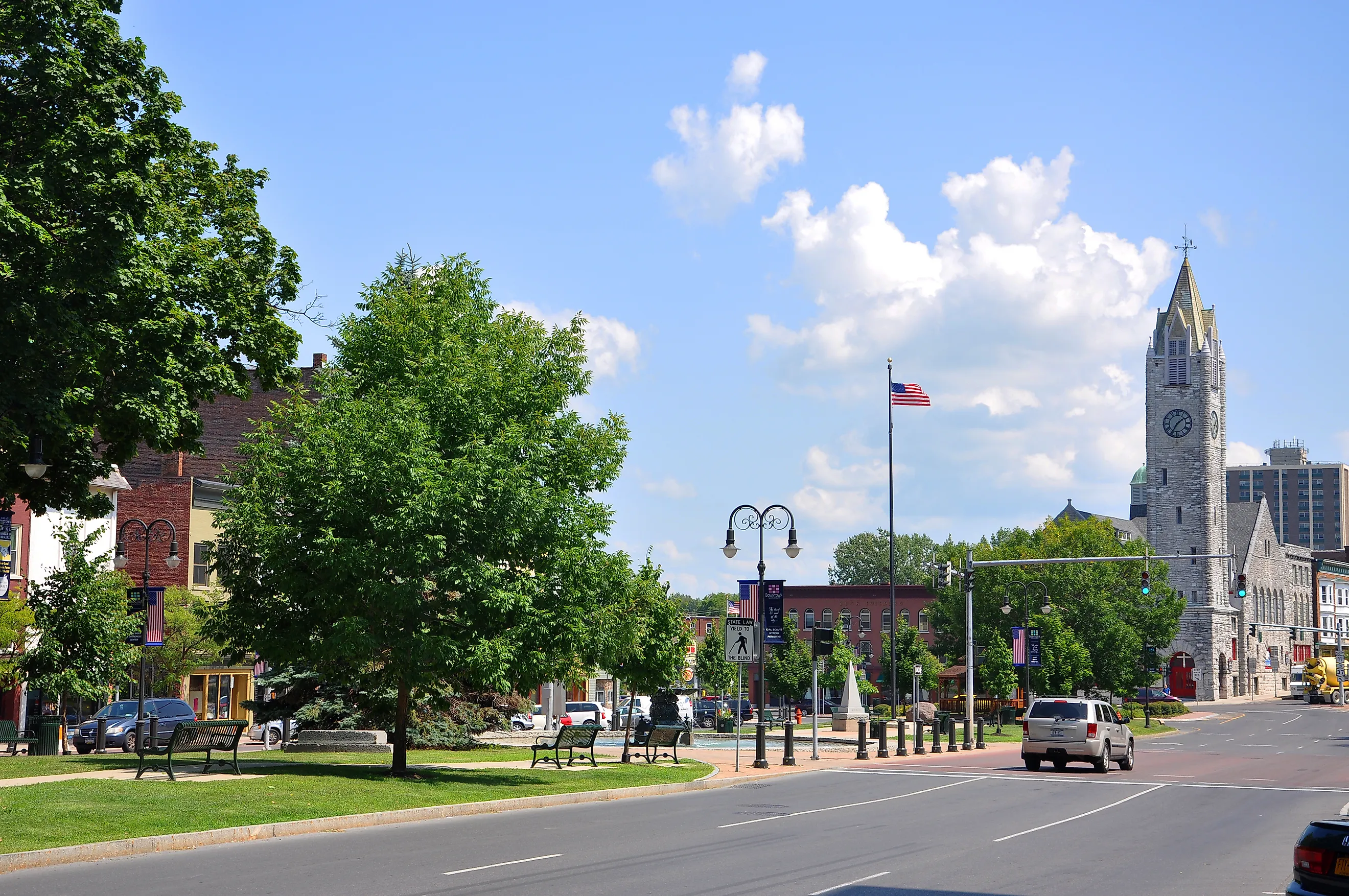
8 Best Towns In New York To Retire Comfortably
Spend a Saturday morning in Corning and you will probably pass a few retirees nursing coffee along Market Street, a short walk from the largest glass museum on the planet. It is the kind of scene that repeats across upstate New York: a walkable downtown, something genuinely worth doing nearby, and a cost of living that does not punish a fixed income. The state also treats retirement income better than its tax reputation suggests, leaving Social Security untaxed and exempting most public pensions, with an extra shelter for people 59 and a half and older, though high property taxes mean an affordable house still counts for a lot. About one in six New Yorkers is now 65 or older, and many of them are skipping the costly downstate suburbs for smaller cities where homes sit well under the state's roughly $500,000 median. Here are eight of them where retiring comfortably is realistic, each with its own reasons to stay busy.
Lockport

Lockport sits about a half-hour northeast of Niagara Falls, and it built its whole identity around the Erie Canal that still runs through the middle of town. The canal's Flight of Five locks climb the escarpment downtown, and the towpaths beside them double as easy walking and biking routes that never ask much of your knees. The Lockport Cave and Underground Boat Ride floats visitors through a tunnel blasted out to power 19th-century mills, and the Erie Canal Discovery Center fills in the rest of the story. When the weather is good, Arrowhead Spring Vineyards pours dry, barrel-aged reds out on the Niagara Escarpment, and Blackman Homestead Farm hands over u-pick apples, fresh cider, and a petting zoo a few minutes away.
Homes here run well below the state average, which is most of the reason retirees give Lockport a look in the first place. Healthcare got a major upgrade in late 2023, when Lockport Memorial Hospital opened on South Transit Road as a campus of Catholic Health's Mount St. Mary's, replacing the older hospital that had closed earlier that year. Assisted living is handled close to home at Briarwood Manor, family-run since 1982, and at Heritage Manor, and the Lockport farmers market keeps a weekly rhythm of produce, baked goods, and live music going through the season.
Cortland

Cortland makes the math easy: a house here generally runs around $195,000, which leaves a retiree plenty of room for the parts of life that actually fill a week. When extra help is needed, Walden Place handles assisted living and Crown Park Rehabilitation and Nursing Center covers skilled nursing, while the Cortland County Area Agency on Aging runs the meals, screenings, and senior programs that keep people connected year-round. Guthrie Cortland Medical Center sits a few miles from most homes for everything else.
Downtown gives you reasons to leave the house. The 1890 House Museum preserves the mansion of industrialist Chester Wickwire, and the Central New York Living History Center packs local, military, and farm history under one roof. Grandkids tend to make a beeline for Shipwreck Amusements, whose pirate course holds the Guinness World Record for the longest mini-golf hole on Earth, a 459-foot monster of an 18th. For a slower afternoon, Walden Oaks Country Club opens its public course to anyone who wants a relaxed round, and Lime Hollow Nature Center keeps roughly 600 acres of trails just outside town.
Ogdensburg

Ogdensburg sits where the Oswegatchie meets the St. Lawrence, about as far north as New York goes, and it rewards anyone willing to trade winter weather for a low cost of living. Homes here often run around $110,000, among the most affordable in the state, which stretches a retirement income further than almost anywhere on this list. The riverfront and the wide St. Lawrence views are the daily payoff, and Eel Weir State Park gives locals a quiet stretch of water for afternoons outdoors close to home.
For a small city, Ogdensburg keeps a real cultural pulse. The Frederic Remington Art Museum holds original paintings, sketches, and bronzes by the artist who made his name on scenes of the American West, and the public library anchors the usual round of books and discussion groups. United Helpers, a North Country institution since 1898, runs independent senior living, assisted living, and rehabilitation along the river, so care stays close. The Ogdensburg-Prescott International Bridge crosses the St. Lawrence into Ontario, putting Ottawa about an hour away for a cross-border day trip.
Batavia

Batavia was laid out in 1801 as the headquarters of the Holland Land Purchase, and that long history still shows in a downtown built for walking. Homes average somewhere around $195,000, and the community keeps older residents busy: the GLOW YMCA has the pool and the year-round fitness classes, while the Batavia Senior Center fills its calendar with cards, chair fitness, crafts, workshops, and day trips. When more support is needed, the Manor House offers assisted living in a comfortable, well-kept setting.
There is plenty to do outside, too. The DeWitt Recreation Area packs trails, fishing, and a kayak launch into about 64 acres on the edge of the city, and Terry Hills Golf Course has drawn golfers to its 27 holes and easygoing clubhouse for decades. The Holland Land Office Museum tells the story of how the region was settled, and when the grandkids visit, Palm Island Indoor Waterpark keeps a full afternoon handled regardless of the weather.
Oneonta

Oneonta has the easy energy of a college town without the college-town prices: homes generally run around $205,000, and two campuses keep a steady supply of lectures, concerts, and ball games for anyone who wants them. The Oneonta Family YMCA runs senior wellness programs, and Heritage at The Plains at Parish Homestead offers independent living, assisted living, and memory care under one roof, with Hampshire House and Robynwood as additional assisted-living options nearby. A.O. Fox Hospital, part of the Bassett system, keeps trusted care a short drive away.
The surroundings invite a slower pace without feeling sleepy. Fortin Park spreads across a big stretch of city green for walkers, picnickers, and cross-country skiers when the snow comes. The Delaware-Otsego Audubon Society sanctuary is a favorite with birdwatchers, and Emmons Pond Bog adds a pocket of wild, quiet beauty at the edge of the area.
Gloversville

Gloversville once turned out as much as ninety percent of the dress gloves sold in America, and the money from that era left behind a downtown worth strolling: the restored 1914 Glove Theatre still books live music and films, and a 1904 Carnegie library anchors a small but active arts district. Homes here are among the cheapest on this list, often around $170,000, which goes a long way toward an easy retirement budget. The Fulton County Office for the Aging coordinates senior activities and support, and the walkable, tree-shaded center of town makes it simple to stay social.
As the southern gateway to the Adirondacks, Gloversville keeps the outdoors close. More than ten city parks include Herman Meyers Park, fifty wooded acres near the center of town, while Trail Station Park runs a year-round slate of events, including Fallfest, Railfest, and summer concerts along the old rail trail. When the grandkids are in town, Adirondack Animal Land turns a simple outing into a full day with its drive-through safari and walk-through wildlife park. The Gloversville Free Library, a Beaux-Arts landmark, makes a fine rainy-day refuge for readers.
Watertown

Watertown sits on the Black River with just under 25,000 residents, big enough to carry a real hospital and a busy calendar, small enough that people still know their neighbors. Samaritan Medical Center serves as the area's main hospital, and the Jefferson County Office for the Aging runs the kind of weekly programming, beginner tai chi, memory games, and guided arts sessions, that keeps minds and hands busy. Homes generally land around $200,000, which keeps ownership within reach for retirees planning years ahead.
The town earns its keep on weekends. The New York State Zoo at Thompson Park is the only zoo devoted to species native to the state, with grey wolves and wolverines among its residents, set inside an Olmsted-designed park. Winter, which arrives early and heavy this close to the Tug Hill Plateau, fills Dry Hill Ski Area with snow tubers and beginner skiers, and the downtown Public Square still anchors the Paddock Arcade, the oldest continuously operating indoor mall in the country. When the day winds down, Boots Brewing Co. pours a rotating set of craft beers in a laid-back room.
Corning

Corning packs an unusual amount of culture into a town of about 10,500 on the Chemung River. The Corning Museum of Glass holds the largest collection of glass and glassmaking in the world, with live glassblowing demonstrations running through the day, and the Rockwell Museum, a Smithsonian Affiliate, covers American and Western art a few blocks away. Both sit alongside the Gaffer District, a restored 19th-century Market Street that planners have singled out as one of the country's best, lined with shops, galleries, and restaurants built for walking. Homes here run around $190,000, well within reach for a Finger Lakes address with this much going on.
The calendar stays full, with GlassFest over Memorial Day weekend and a Harvest Festival each October drawing crowds downtown. For quieter days, Spencer Crest Nature Center keeps wooded trails, ponds, and birding routes on a rise just above the city. Guthrie Corning Hospital handles everyday and specialty care in town, with Guthrie's larger Robert Packer Hospital about twenty minutes south in Sayre, Pennsylvania. Watkins Glen and Seneca Lake wine country are a half-hour north when family comes to visit.
Wrapping Up
None of these eight will be confused with a downstate suburb, and that is the point. Each pairs a house you can actually afford with a downtown worth walking, a hospital within reach, and enough going on to fill a calendar, whether that means a record-setting round of mini-golf in Cortland, an afternoon with the glassblowers in Corning, or a quiet morning by the water in Ogdensburg. Comfortable retirement in New York turns out to be less about the famous places and more about the smaller cities that still run on everyday community life.