10 Best Small Towns on the Chesapeake Bay For A Crowd-Free Summer
Steamed crabs hit the deck tables at Rock Hall while a band warms up just steps from the water. Summer plays out this way all along the Chesapeake Bay, where the small towns swap beach traffic for easy afternoons. Chesapeake City lights up Pell Gardens with fireworks every Fourth of July. Oxford runs a ferry across the Tred Avon River for the price of a few quiet minutes on the water. St. Michaels throws open its maritime museum for Family Fun Sundays and August crab feasts. These ten towns serve up a summer of sunset cruises and waterfront patios beside the Chesapeake Bay.
Chesapeake City

The Fourth of July is the day to be in Chesapeake City. Fireworks light up Pell Gardens after an evening of live music and food along the waterfront. The town also runs an Antique and Classic Boat Show at the Chesapeake Inn and Restaurant in midsummer, a draw for sailors and landlubbers alike. Anyone arriving outside those dates still finds plenty to fill a weekend.
The C and D Canal Museum stays open through Labor Day and lays out the town's role on the waterway that splits the Delmarva Peninsula from the mainland. To get onto the canal itself, the Chesapeake City Ferry and a handful of cruise operators run trips through the season. Walkers can stretch their legs on the Ben Cardin C and D Canal Recreational Trail, a 1.8-mile route along the north bank. Cap the day at the Blue Anchor Inn, then order the Eastern Shore peel-and-eat shrimp at Schaefer's Canal House and watch the working barges slide past.
Charlestown

Charlestown was laid out in 1742 as Charles Town, and it once outranked Baltimore as a regional port. Benjamin Franklin and George Washington both passed through in its early decades. Town Foot Log Park still carries walkers over a small wooden bridge to the beach, and Long Point Park draws the sunset crowd most clear evenings. Summer concerts turn up at Avalon Park when the timing works out. The Wellwood Restaurant anchors the dinner hour here, an 1895 landmark on the North East River where the fried oyster sandwich and a Charlestown Mule have outlasted generations of regulars.
Perryville

The Continental Army staged here during the Revolution, ferrying troops across the mouth of the Susquehanna. Six miles down the road from Charlestown, Perryville was first settled by Europeans in 1622 and counts roughly 4,400 residents today, which makes it the second-largest municipality in Cecil County. Rodgers Tavern Museum tells the town's story as a colonial ferry crossing and later a railroad hub. Hikers can pick up the Star-Spangled Banner National Historic Trail, which threads through the War of 1812 sites of the Chesapeake campaign. Families tend to make for the Great Wolf Lodge, the chain's largest resort, with its indoor water park, arcade, and mini golf. The Perryville Diner, opened in 2026, hands over a six-page menu that takes longer to read than to eat from.
Havre de Grace

Havre de Grace came one vote short of becoming the national capital. During the First Congress in 1789, a tie between this Susquehanna town and a site on the Potomac was broken in Washington's favor by the Speaker of the House. The town took its French name in 1785, after the Marquis de Lafayette remarked that the harbor reminded him of Le Havre. It has weathered hurricanes, served as a hub for waterfowl hunting, and ran wide open as a racetrack town when Maryland looked the other way during Prohibition. Start at Concord Point Park, where the Susquehanna meets the bay beside the 1827 Concord Point Lighthouse, the second-oldest in Maryland.
For something with a pulse after dark, the Havre de Haunts Ghost Tours cover a mile of downtown in about an hour. Anyone less inclined to be spooked can head to the Havre de Grace Promenade, a boardwalk that traces the waterfront from Tydings Park to the lighthouse. The seasonal Farmers Market rounds out a morning with local produce, honey, and cut flowers steps from the river.
Chestertown

Chestertown began in 1706 as a colonial port of entry on the Chester River, and its 18th-century customs house and brick mansions still line the waterfront. The Visitor's Center makes a logical first stop for bearings and walking-tour maps. On First Friday, the downtown galleries and shops stay open late, and the streets fill with residents as much as visitors. The town's Common Tables gathering, held in late summer, sets long communal tables downtown for a shared meal that doubles as a community reunion.
The town marina sits within easy walking distance of the historic district, with docks open to anyone who wants to stroll them. A few miles out, Rolphs Wharf Marina runs a quieter operation on the river, with the casual Sandbar for drinks and the River Inn for an overnight. Washington College, founded in 1782 with George Washington's blessing, keeps a steady cultural calendar running through the warm months.
Rock Hall

Rock Hall has been a working waterman's town since 1707, and the harbor still launches crab and oyster boats every morning. Fewer than 1,300 people live on this tongue of the upper Eastern Shore, which keeps the summer pace closer to a nap than a rush. The Waterman's Museum at Haven Harbour lays out the trade with a replica shanty, carved decoys, and old oystering gear. Many of the marinas lend bikes for free, and Main Street rewards a slow ride with antique shops and a Saturday farmers and artisans market.
Evenings belong to The Mainstay, a 120-seat nonprofit music hall in a century-old Main Street building that books jazz, blues, and folk most weekends. Waterman's Crab House serves steamed crabs on a waterfront deck with live bands rolling into the night. A short drive south leads to the Eastern Neck National Wildlife Refuge, a 2,285-acre island sanctuary that shelters more than 240 bird species and the endangered Delmarva fox squirrel.
St. Michaels

The Chesapeake Bay Maritime Museum spreads across an 18-acre waterfront campus in St. Michaels, anchored by the 1879 Hooper Strait Lighthouse that visitors can climb. The museum runs Family Fun Sundays through the season and guided lighthouse tours in July. In August, Watermen's Appreciation Day honors the crews who still bring in the bay's catch, with boat-docking contests and a crab feast. The town's Saturday farmers market draws growers and bakers from within a 60-mile radius.
The Inn at Perry Cabin overlooks the Miles River and rents out the kind of afternoon that erases a calendar. Sailing charters leave from its dock, and the kitchen turns out crab bisque worth lingering over. Back in the compact downtown, Talbot Street packs galleries, an old-fashioned ice cream counter, and the Crab Claw, a waterfront mainstay that has been cracking steamed crabs for decades.
Easton

Easton built its reputation on the arts long before the bay towns turned touristy. The Chesapeake Chamber Music Festival fills June, and the Plein Air Easton competition sends painters into the streets each July to work against the clock. The Academy Art Museum holds the town's largest collection, with the Avalon Theatre and a cluster of galleries within a few blocks. For a change of register, the Tuckahoe Steam and Gas Association fires up restored tractors and engines on a 60-acre site north of town for its annual show the weekend after the Fourth.
Easton's Old Tyme Fourth of July fills the carnival grounds with rides, food, and a fireworks finale. The Tidewater Inn has put up guests downtown since 1949, a brick landmark with the polish of an older era and the comforts of this one. Goldsborough Street and Harrison Street carry most of the town's restaurants and shops, all walkable from the inn's front door.
Oxford

Chartered in 1683, Oxford ranks among the oldest towns in Maryland and wears its age in white picket fences and tree-lined lanes. Fewer than 700 people live in this riverside village, which makes it the quietest stop on the list. The Oxford Museum sketches the town's run as a colonial tobacco port, and its shop stocks local histories and prints for anyone who wants to dig deeper. The Robert Morris Inn, parts of which date to the early 1700s, claims a spot among America's oldest inns and still serves dinner.
The Oxford-Bellevue Ferry has crossed the Tred Avon River since the 1680s, one of the oldest privately run ferries in the country, and the short hop to Bellevue and back is reason enough to ride. Near the landing, the Tred Avon Yacht Club runs sailing programs and weekend races with a family-friendly streak. Bikers often link Oxford to the crossroads village of Royal Oak along a flat, scenic route past antique shops and a clapboard post office.
Cambridge

Cambridge sits across the Choptank River a few miles south of Oxford, founded in 1684 on ground that makes it one of the oldest settlements in the state. The Cambridge Conundrum Caper, a two-hour scavenger hunt, doubles as a crash course in the town's layout and lore. Long Wharf Park holds a memorial garden honoring the Dorchester County residents who served in World War I, alongside a replica lighthouse on the pier. The Harriet Tubman Museum and Educational Center downtown marks Cambridge as the heart of Tubman's home county.
Just outside town, the Blackwater National Wildlife Refuge protects more than 28,000 acres of tidal marsh, where bald eagles nest in numbers rarely seen on the East Coast. Five miles of trails and a wildlife drive open the marsh to walkers, cyclists, and paddlers. Migrating geese darken the sky here each fall, but summer brings ospreys, herons, and the slow churn of the Blackwater River through the reeds.
A Summer That Stays Quiet
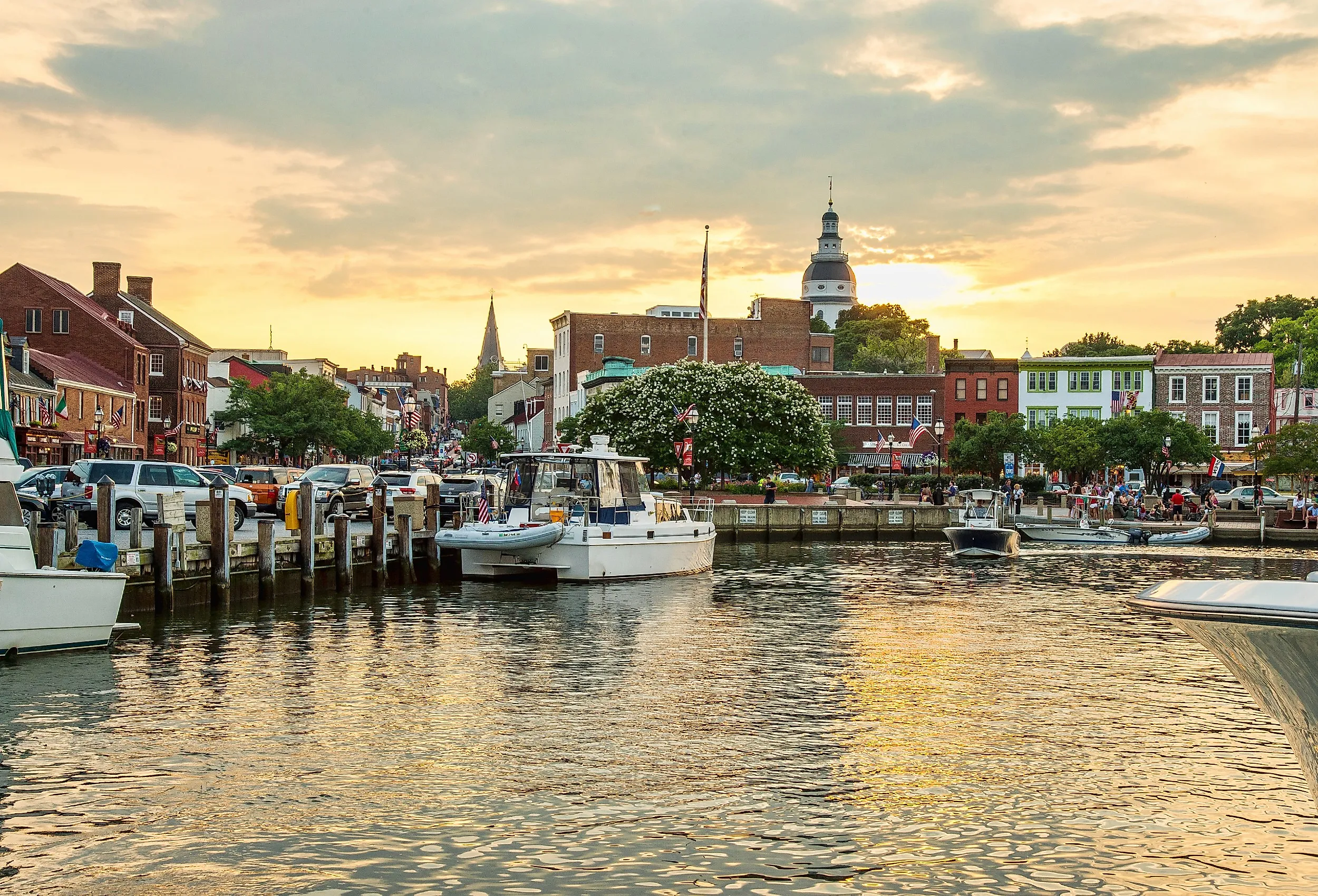
The pull of these towns lies in what they leave out. There are no boardwalk crowds and no bumper-to-bumper crawl toward a parking lot, only working harbors, century-old inns, and bay water that turns gold at dusk. A traveler can spend a morning watching crab boats unload in Rock Hall and an evening listening to jazz a block from the dock. The Chesapeake rewards the people who slow down to its pace, and these ten towns make slowing down easy.