8 Best Towns In Arizona For A Two-Day Recharge
Arizona’s best two-day escapes come with a clear reason to leave the city. Fountain Hills fires a 560-foot fountain into the desert sky, while Payson and Pine-Strawberry trade pavement for ponderosa forest and rim-country trails. Williams sends trains toward the Grand Canyon, and Winslow keeps Route 66 alive at La Posada and Standin’ on the Corner Park. Farther east, Pinetop-Lakeside and Greer cool off beside trout water and pine-ringed lakes. Bisbee finishes the map with mine tours, steep staircases, and old hotels built into the Mule Mountains.
Fountain Hills

On the hour, a plume of water climbs out of a lake on the northeast edge of the Phoenix area and hangs there, briefly, as tall as a 40-story building. Fountain Hills built its identity around that spray, which reaches 560 feet when all three pumps run and held the title of world's tallest fountain for more than a decade after it debuted in 1970. The show plays in Fountain Park, ringed by a lakeside path and the bronze sculptures of the Avenue of the Fountains, where a farmers' market sets up weekly. The town earned International Dark Sky Community status in 2018, so the McDowell Mountains to the west block the city's glow, and the stars arrive on schedule after dusk. Trails climb into McDowell Mountain Regional Park to the north for anyone who wants to work before the evening light show.
Payson

Ninety minutes up the Beeline Highway, the Sonoran Desert gives out, and the ponderosa pines take over at 5,000 feet. Payson sits at that handoff, cool enough in July to make the drive worth it on the hottest weekends. Green Valley Park has three stocked lakes, a walking loop, and enough shade to spend an afternoon with a fishing rod and no agenda. The same park holds the Rim Country Museum and a rebuilt version of the hunting cabin that Western novelist Zane Grey kept nearby before a 1990 wildfire took the original. North of town, the Mogollon Rim marks the edge of the Colorado Plateau, where a forest road links a series of far-reaching overlooks. Payson also stages what it bills as the World's Oldest Continuous Rodeo, running every August since 1884. The Majestic Mountain Inn keeps rooms a short drive from both the park and the Rim.
Pine-Strawberry

A travertine arch 183 feet high spans Pine Creek a few miles south of Pine, the centerpiece of Tonto Natural Bridge State Park and reputed to be the largest natural travertine bridge in the world. Four short, steep trails drop to it. Pine and Strawberry themselves are twin hamlets 15 miles north of Payson, sharing a ZIP code and a slower clock in the surrounding forest. That Brewery pours its Arizona Trail Ale in Pine, and the Pine-Strawberry Museum fills in the pioneer story down the road. Up the highway in Strawberry stands a one-room pine-log schoolhouse built in 1885, opening on select warm-weather weekends when volunteers are available; locals bill it as the oldest still standing in Arizona. For a harder day, the Bob Bear Trail drops four miles and 1,500 feet to Fossil Creek, a spring-fed stream that pools into a turquoise grotto and requires a summer permit through Recreation.gov. The Strawberry Inn rents cabins, cottages, and a restored Airstream, with a windmill coffee bar out front.
Williams

A restored train pulls out of the Williams depot each morning and runs straight to the South Rim of the Grand Canyon, then rolls back the same day. That railway made Williams, the last Route 66 town bypassed by the interstate, in 1984, and it still runs the town's rhythm. Book the Grand Canyon Railway Hotel next to the platform. Bearizona Wildlife Park runs cars past bears, wolves, and bison on the edge of town. The six-block downtown keeps its diners, saloons, and vintage neon in working order along the old road. Behind Main Street, trails climb toward Bill Williams Mountain in the Kaibab National Forest, the volcanic peak that gave the town its name. Grand Canyon visitors get a livelier base here than anything waiting at the rim.
Winslow

Architect Mary Colter considered La Posada her finest work, and the hotel is reason enough to point the car at Winslow. It opened in 1930 as the last of the great Fred Harvey railroad hotels, faded into railroad offices, then came back in a 1990s rescue with courtyard gardens and the well-regarded Turquoise Room restaurant. Downtown, Standin' on the Corner Park stages the scene from the Eagles' "Take It Easy" with a statue and a flatbed Ford mural. A few miles north, Homolovi State Park protects ancestral Hopi villages from the 1300s under skies dark enough for serious stargazing. McHood Park surrounds Clear Creek reservoir, where visitors can fish in the high desert. Winslow rewards the traveler who slows down to take in the details rather than blowing through on the interstate.
Pinetop-Lakeside

Water in the pines at 7,000 feet is the whole pitch here, and it is a good one on a triple-digit weekend in the Valley. Pinetop-Lakeside rides the rim of the White Mountains, summer-cabin country for generations of heat-weary desert families. The two old towns merged into one in 1984. Woodland Lake Park sets a lake, a paved loop, picnic ramadas, and a disc-golf course minutes off the highway. Past it, the White Mountains Trail System threads more than 180 miles of paths through the Apache-Sitgreaves National Forest, with trout lakes scattered along the way. Anglers can work dozens of stocked lakes and streams within a short drive. Northwoods Cabins has kept fireplace cabins under the pines since 1977, with a trail to Woodland Lake running from the door.
Greer

At 8,400 feet, Greer is the highest community in Arizona, and the thermometer shows it, running 20 to 30 degrees below the desert on a summer afternoon. The Little Colorado River runs cold and clear through the center of the village, stocked with trout and lined with cabins, 40 miles east of Pinetop-Lakeside. Molly Butler Lodge has fed and housed visitors here since 1910 and calls itself the oldest lodge in the state. Three reservoirs sit just outside town for anglers who prefer stiller water to a moving stream. Trails climb out of the valley into the Apache-Sitgreaves National Forest, where the aspens turn gold in early October.
Bisbee

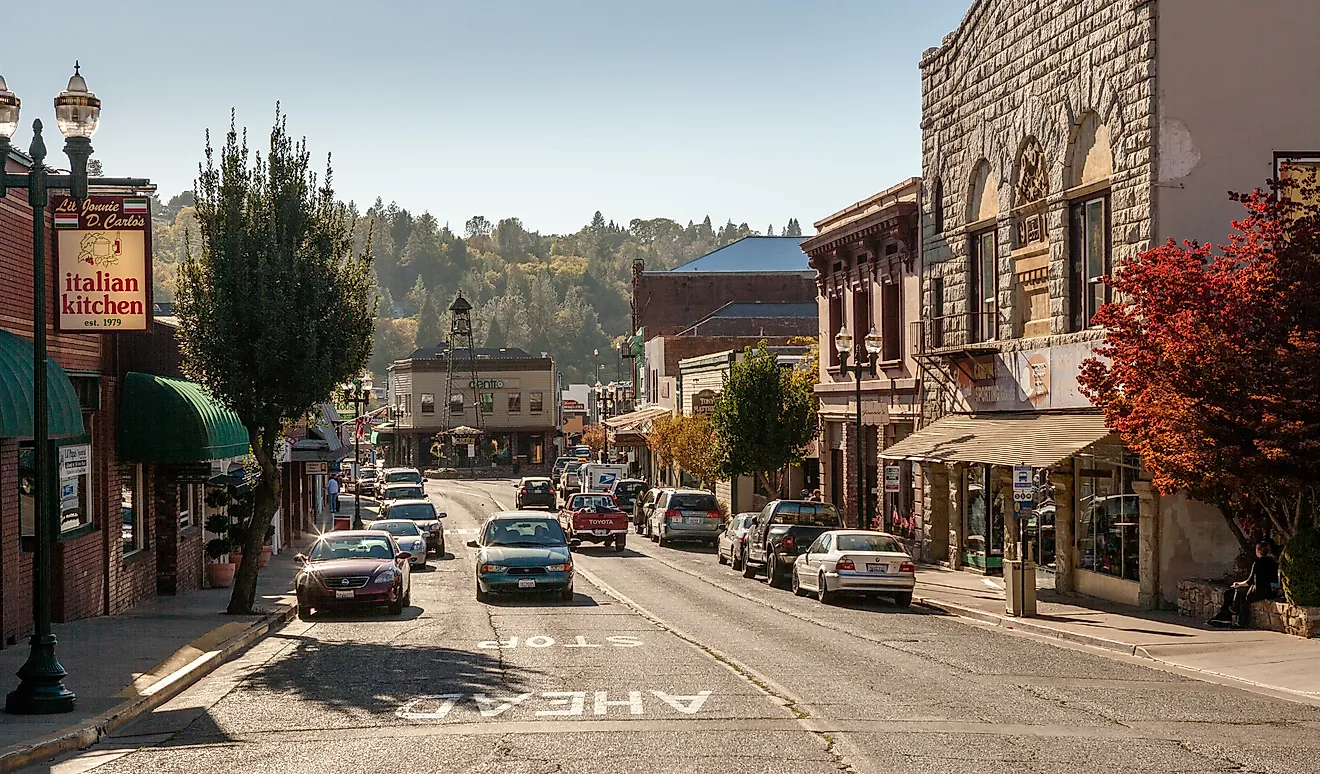
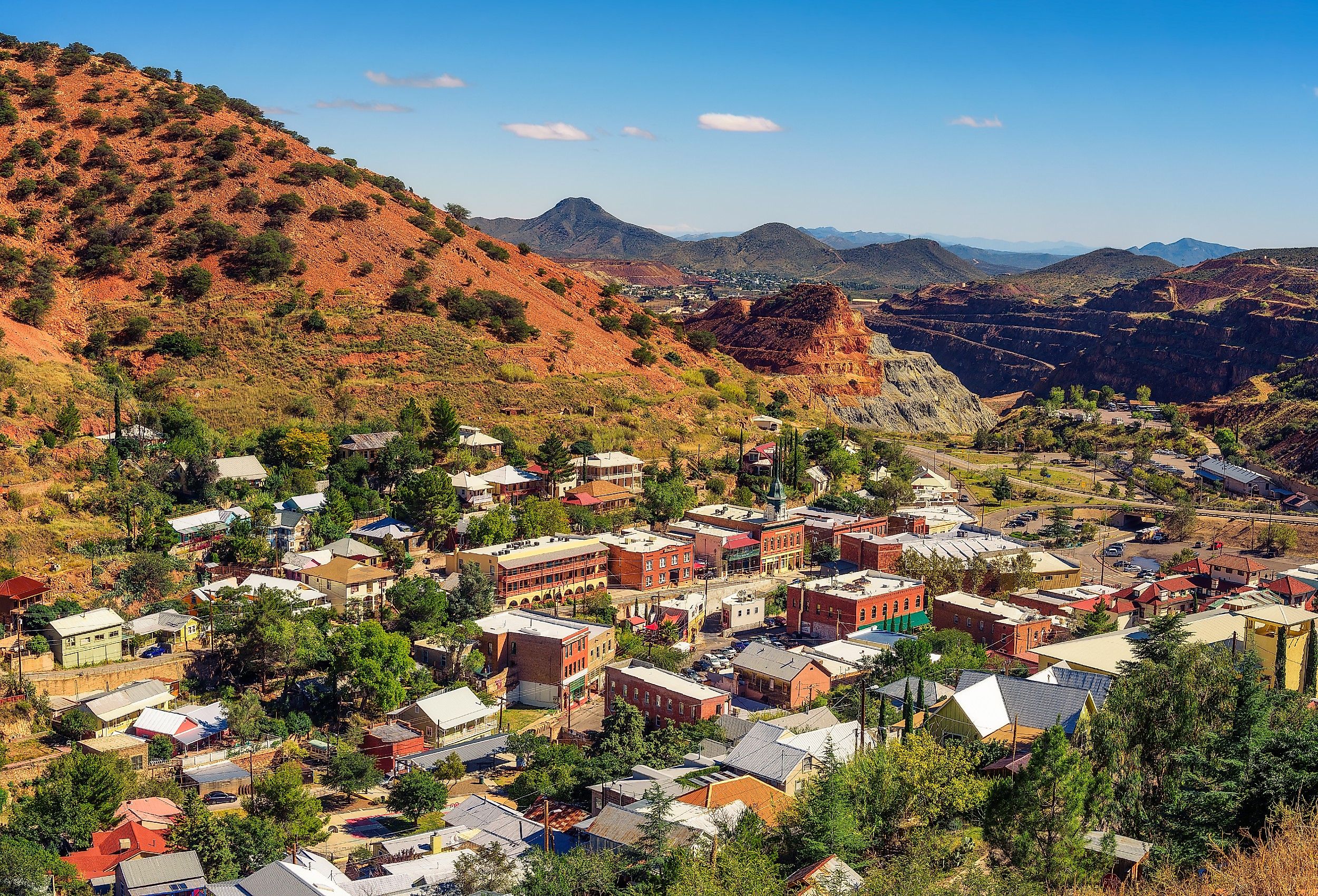
A rail cart carries visitors about 1,500 feet into a former copper mine on the Copper Queen Mine Tour, with guides who worked underground explaining how the ore was brought up. That mine built Bisbee, a mile-high town hung on the slopes of the Mule Mountains in the state's far southeast corner. Above ground, the old town stacks Victorian storefronts up steep staircases, and the Bisbee 1000 Stair Climb turned those steps into a race. Galleries, a Brewery Gulch bar or two, and the Bisbee Mining and Historical Museum fill an afternoon on foot. Copper played out in the 1970s, and artists moved into the cheap Victorian houses, which is the town you walk through today. The Copper Queen Hotel has stood in Old Bisbee since 1902, though the retro Airstreams at The Shady Dell make a stranger place to spend the night.
Several Towns, One Full Tank
The common thread across these towns is proximity plus contrast: each one sits close enough for a weekend yet feels nothing like the city you left. Fountain Hills swaps traffic for a desert fountain and certified dark skies. Payson and the Pine-Strawberry pines hold down Rim Country. Williams and Winslow keep Route 66 and the Grand Canyon traffic moving. The White Mountains give Pinetop-Lakeside and Greer their lakes and rivers. Bisbee turns a spent copper mine into a walkable art town in the far south. The distance is short, the reset is real, and the hardest part is choosing which one gets the weekend.