7 Towns In South Carolina That Are Ideal For Seniors
Three things make South Carolina particularly workable for retirement. The state does not tax Social Security income at all. It grants a retirement-income deduction of up to $10,000 for residents 65 and over. Property taxes stay well below the national average. The seven small towns below each pair that statewide tax math with walkable downtown infrastructure that holds older adults through their 70s and 80s.
Aiken

Aiken became the winter training ground for American thoroughbred racing in the 1880s, and that wealth shaped the town's neighborhoods, oak canopies, and cultural infrastructure for over a century. The Aiken Thoroughbred Racing Hall of Fame and Museum in Hopeland Gardens still covers that history. South Boundary Avenue, named by USA Today as one of the country's most beautiful streets, runs under a continuous live oak canopy that meets in the middle of the road. Hopeland Gardens itself covers 14 acres of formal beds and hosts free summer concerts.
The cultural calendar runs unusually deep for a town of 30,000. The Etherredge Center at USC Aiken hosts the Aiken Symphony's regular season alongside touring performances. The Aiken County Historical Museum and the Aiken Center for the Arts each anchor their own corner of the downtown. Aiken Regional Medical Centers handles acute care in town. Median home values sit near $250,000. Aiken State Park, 16 miles east, has camping, hiking, and canoeing on the South Edisto River.
Beaufort

Beaufort's entire downtown core received National Historic Landmark District designation in 1973, one of only about 200 such districts in the country. The designation covers tabby-and-brick storefronts along Bay Street, antebellum homes draped in Spanish moss, and a colonial street grid that has not been substantially altered since the 18th century. Beaufort is the second-oldest city in South Carolina (founded 1711 on Port Royal Island) and runs about 13,500 residents in the city proper.
The flat sidewalks and short blocks make daily errands manageable into older age. Henry C. Chambers Waterfront Park anchors the water end of Bay Street, with the Spanish Moss Trail (a 10-mile paved rail-trail) running through Beaufort and Port Royal as the everyday walking infrastructure. Beaufort Memorial Hospital handles in-town acute care. The Pat Conroy Literary Center on Charles Street honors the late novelist with a year-round reading series. Hunting Island State Park, 16 miles east, has 5 miles of beach and the climbable (but decommissioned in 1933) Hunting Island Lighthouse.
Bluffton

The May River runs as the working axis of Bluffton. The river still supports a small commercial oyster industry, and the Bluffton Oyster Factory at the foot of Wharf Street has shucked oysters from the same dock since 1899, making it the oldest continuously operating oyster shucking house in South Carolina. Old Town Bluffton keeps its 19th-century street grid and the Church of the Cross, an 1857 Gothic Revival building overlooking the river. The historic core sits compact enough to handle on foot for daily routines.
SOBA (the Society of Bluffton Artists), a cooperative gallery of more than 100 local artists, rotates new work monthly out of a building on Boundary Street. The Calhoun Street area runs a tourist mix of cafes and shops with the May River side-by-side. Coligny Beach Park on Hilton Head Island sits about 15 miles south for a saltwater day. Beaufort Memorial Bluffton Medical Campus handles local primary and specialty care, with Hilton Head Hospital just over the bridge for acute care.
Camden

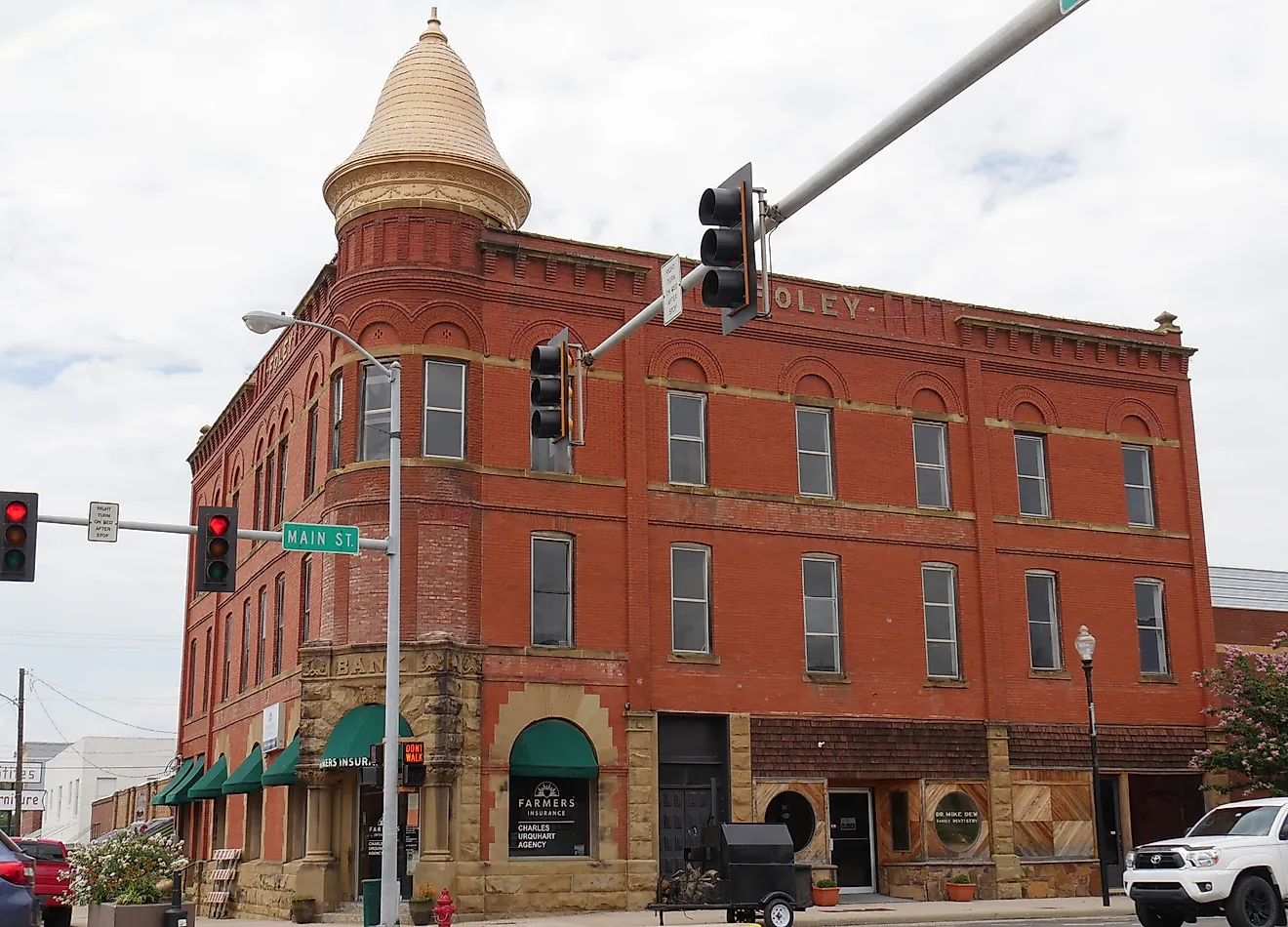
Downtown Camden, South Carolina
The Carolina Cup steeplechase at Camden's Springdale Race Course pulls about 70,000 spectators each spring, which is unusual for a town of 8,000 residents. Camden has held the title "Steeplechase Capital of the World" since the 1930s, with the Carolina Cup in March and the Colonial Cup in November as the two annual fixed dates. The town itself is the oldest inland city in South Carolina, established in the 1730s along the Wateree River about 33 miles northeast of Columbia.
The walkable downtown holds more than 60 buildings on the National Register of Historic Places. Broad Street runs through the heart of town with antique shops and the Robert Mills Courthouse (designed by the architect who later designed the Washington Monument). Historic Camden Revolutionary War Site preserves 107 acres of the August 1780 battlefield and reconstructed wartime buildings, including the Joseph Kershaw House that served as Cornwallis's headquarters during the British occupation. MUSC Health Kershaw Medical Center handles in-town acute care. The Quaker Cemetery near downtown dates to 1759.
Conway

The major downtown fire of 1901 took out most of Conway's commercial buildings along Main Street. The reconstructed early-1900s brick blocks have stood ever since, and the rebuild is what makes the current historic core read as a single architectural moment. The town runs about 24,000 residents and sits 15 miles inland from Myrtle Beach on the Waccamaw River. Conway was founded in 1734 as Kingston Township and was renamed Conwayborough in 1801, later shortened to Conway.
The Riverwalk along the Waccamaw is the everyday senior walking infrastructure through the downtown. The Waccamaw National Wildlife Refuge to the south draws older retirees who want longer outdoor time, with more than 200 bird species using the refuge through the year. Coastal Carolina University runs facilities open to the public. In town, Bonefire Smokehouse and Groucho's Deli handle the daily lunch list at reasonable prices. Theatre of the Republic on Main Street runs locally produced shows year-round.
Georgetown

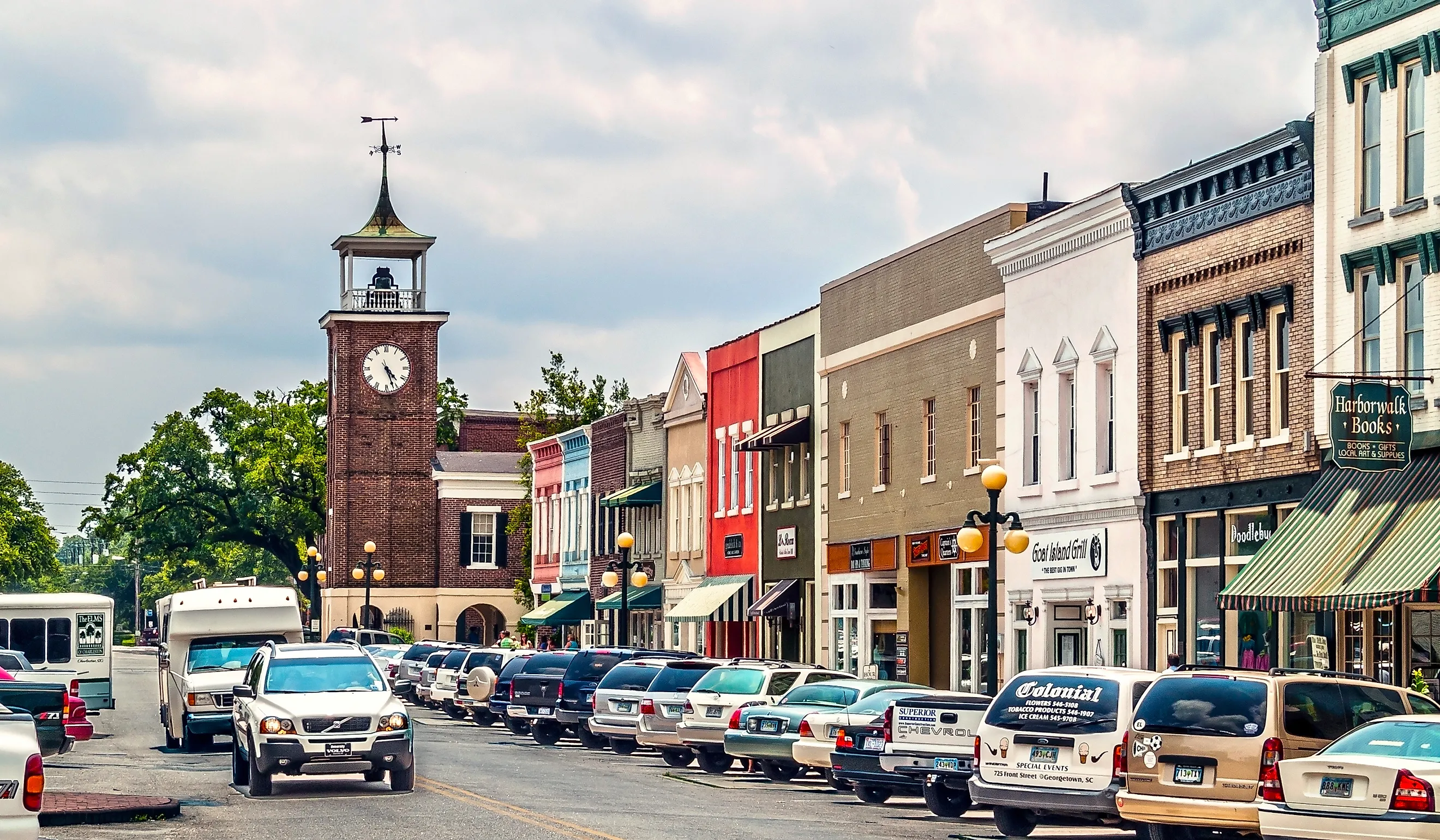
Most American retirees cannot afford beachfront. Georgetown works as the practical compromise: median home prices in the mid-$300,000s and a location 12 miles from Pawleys Island and Litchfield Beach. Both Myrtle Beach and Charleston sit within an hour by car. Georgetown itself was founded in 1729 on a high bluff above Winyah Bay and is the third-oldest city in South Carolina after Charleston and Beaufort.
The Georgetown Historic District holds the Rice Museum (housed in the 1842 Old Market Building and Town Clock) and the Georgetown County Museum as the two most-visited institutions. East Bay Park has outdoor exercise stations, a playground, and a dog park. Wedgefield Country Club gives the local senior-golfer set a flat course framed by live oak and azalea. Tidelands Georgetown Memorial Hospital handles in-town acute care.
Newberry

The Newberry Opera House on Boundary Street, an 1882 Second Empire and Romanesque Revival building, runs a year-round program of touring shows, country and bluegrass concerts, ballet, and opera. The opera house is the single biggest cultural anchor in this town of 11,000 and pulls a regional audience from across the central Midlands. Newberry sits near Sumter National Forest in the western part of the state and was originally a cotton-and-railroad town through the 19th century.
The Country Club of Newberry runs an inclusive membership covering golf, tennis, swimming, and lessons at a price point active retirees can absorb. The Palmetto Trail (the cross-state hiking trail running about 500 miles from the mountains to the coast) passes through Newberry County. Figaro Dining Room handles the pre-show dinner crowd in the heart of downtown. Bill and Fran's Diner covers the everyday breakfasts and lunches. Newberry County Memorial Hospital sits in town for healthcare.
How These Seven Add Up
The seven split along familiar lines. Aiken, Conway, and Newberry give the inland and upstate options at lower home prices. Beaufort, Bluffton, and Georgetown bring the Lowcountry and the saltwater rhythms that come with the coast. Camden brings the Revolutionary War and steeplechase history without the price point of the bigger historic cities. All seven have walkable municipal downtowns, in-town or near-town hospitals, and the South Carolina retirement-tax structure that does most of the everyday-budget work for older households.