12 Cutest Small Towns In New York For 2026
The Beekman Arms in Rhinebeck has operated as an inn since 1766. The Old Dutch Church of Sleepy Hollow dates to 1685. Cooperstown's National Baseball Hall of Fame opened in 1939. The 12 small New York towns below each hold this kind of specific historical anchor, paired with the walkable downtowns that have kept them photogenic into the 2020s. Cute is the marketing label. The historical depth is the actual draw.
Aurora

Aurora made national news in April 2024 when Wells College, the small liberal-arts college that had operated on the village lakefront since 1868, announced it would close after 156 years. The college's historic campus buildings and lakefront boathouse still stand. Wells College Land Holdings is working through the future of the property. The village itself runs about 700 residents along the western shore of Cayuga Lake, with a narrow main street parallel to the shoreline and lake views from nearly every block.
The Aurora Inn, a restored 1833 building directly on the lake, anchors the small commercial section. MacKenzie-Childs, the design studio and working farm on Route 90 just outside the village, occupies a 65-acre Victorian-farmhouse property and runs daily tours of its studios. The handcrafted ceramics, furniture, and home goods are still made on-site. The annual MacKenzie-Childs Barn Sale each July draws thousands of visitors to the surrounding fields.
Cold Spring

Cold Spring's Main Street runs perpendicular to the Hudson River. Every block looks straight down to the water and the Hudson Highlands on the opposite bank. The compact commercial district sits in preserved 19th-century buildings, with Dockside Park anchoring the waterfront end. The village holds about 2,000 residents in Hudson Valley Putnam County.
Breakneck Ridge just north of the village draws hikers from across the New York City metro area with a steep scramble that opens onto elevated views back toward Cold Spring and the river corridor below. The Foundry School Museum on Chestnut Street covers the story of the West Point Foundry, an ironworks that operated from 1818 to 1911 and produced the Parrott rifle, the standard Union artillery piece of the Civil War. The Metro-North Hudson Line stops in the village, which makes Cold Spring one of the easier upstate weekend destinations from Grand Central.
Cooperstown

The National Baseball Hall of Fame and Museum opened on Main Street in Cooperstown in 1939, built on the largely mythologized claim that Abner Doubleday invented baseball in town in 1839. The myth has not held up to modern historical scrutiny. The Hall of Fame has. The permanent galleries cover the full history of the sport, with rotating exhibits and the annual Hall of Fame Classic game weekend each summer at the adjacent Doubleday Field.
Cooperstown itself runs about 1,800 residents on the southern end of Otsego Lake in central New York. The Fenimore Art Museum on Lake Road sits directly on the water in a 1932 Neo-Georgian building, with a major collection of American folk art and the Eugene and Clare Thaw Collection of American Indian Art as the headline holding. Glimmerglass State Park a short drive north has an open sand beach and wooded trails along the lake.
Skaneateles

Skaneateles Lake holds some of the clearest water of the Finger Lakes and supplies drinking water to the city of Syracuse with no filtration treatment, only chlorination. The village of Skaneateles sits at the northern tip of that lake, holding about 2,500 residents (with the surrounding town pushing past 7,000). The main commercial street runs directly toward the water, with Clift Park at the foot providing public lake access and a pier extending several hundred feet out.
Mid-Lakes Navigation operates lake cruises from Clift Park, including a daily mail boat run that still delivers mail to private docks along the shoreline. The Dickens Christmas celebration runs weekends from Thanksgiving through Christmas Eve with costumed performers throughout the downtown. Skaneateles Brewery, which uses lake water in its beer, sits a few blocks back from the waterfront.
Lake Placid

Lake Placid hosted the Winter Olympics twice. The 1932 Games were a smaller affair. The 1980 Games produced the Miracle on Ice and made the village permanently famous outside the Adirondack region. Most of the original venues still operate, with the Olympic Center on Main Street housing the speed skating oval and several ice rinks. The Lake Placid Olympic Museum covers both Games.
The village runs about 2,300 residents in the Adirondacks. Main Street runs alongside Mirror Lake, with most storefronts looking directly onto the water and a 2.7-mile walking path circling the lake's perimeter year-round. Whiteface Mountain rises to 4,867 feet about 13 miles east of the village and can be partially driven via the Whiteface Mountain Veterans Memorial Highway, which climbs to within a short walk of the summit.
Saranac Lake

Dr. Edward Livingston Trudeau founded the Adirondack Cottage Sanitarium in Saranac Lake in 1885 as one of the first open-air tuberculosis treatment facilities in the United States. The village spent the next 70 years as the country's most important TB recovery destination, with patients arriving by train from across the country. The open-air cure cottages built to house them are still visible on residential streets today, and the Historic Saranac Laboratory on Church Street covers that history in depth.
The village runs about 5,000 residents across multiple bodies of water, with bridges connecting its sections over the Saranac River. Lake Flower runs directly alongside Broadway in the central district. Riverside Park provides open green space along the water within walking distance of the main commercial strip. The Wild Center, the major natural history museum with the elevated canopy walk known as the Wild Walk, is in nearby Tupper Lake about 30 miles southwest and runs as a regional day trip from Saranac Lake.
Beacon

Dia Beacon opened in 2003 in a former Nabisco box-printing factory on the Hudson River waterfront and transformed the surrounding city of Beacon within a decade. The museum occupies the 1929 factory building with about 240,000 square feet of total floor space and around 160,000 square feet of gallery. Works by Andy Warhol, Dan Flavin, Louise Bourgeois, and Richard Serra anchor the permanent collection.
The city itself runs about 15,000 residents with Main Street rebuilt around the Dia foot traffic since the mid-2000s. Long Dock Park at the western edge of town is a restored 14-acre peninsula on the former industrial railroad terminal, with kayak rentals through Hudson River Expeditions. Mount Beacon rises behind the city to 1,610 feet, with a trail network leading to a fire tower summit and a long view down the river toward the Hudson Highlands.
Rhinebeck

The Beekman Arms at the center of the village has operated continuously since 1766 and claims status as the oldest continuously operating inn in the United States. Wide-plank floors and low ceilings still reflect the colonial construction, and George Washington reportedly stayed there during the Revolutionary War. Rhinebeck the town runs about 7,600 residents in Dutchess County, with the village proper holding around 2,600 of those. Closely spaced historic buildings line Market Street and the surrounding commercial blocks.
The Old Rhinebeck Aerodrome on Stone Church Road, a few miles from the village, houses a collection of World War I-era aircraft and holds weekend air shows featuring open-cockpit biplanes from mid-June through mid-October. Ferncliff Forest provides 220 acres of trails and a fire tower with views over the surrounding Hudson Valley countryside.
Hudson

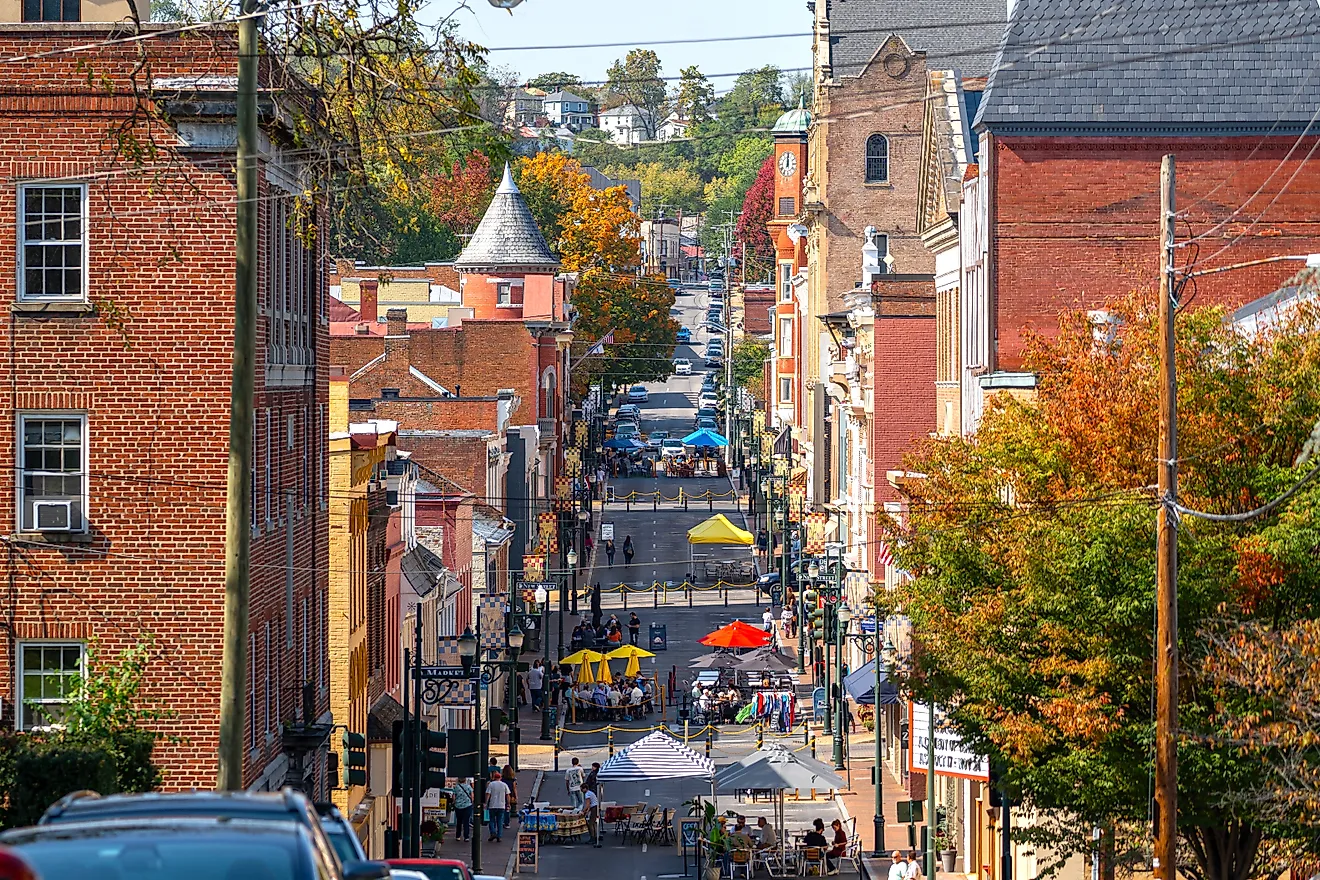
Warren Street in Hudson runs uphill from the Hudson River waterfront for about eight walkable blocks. The corridor functions as one of the more concentrated antique-dealer and contemporary-art-gallery streets outside New York City. The buildings range across Federal, Victorian, and Art Deco styles. New York City weekenders have driven the commercial transformation here over the past two decades.
The city itself runs about 6,000 residents and was, in the late 18th century, an unlikely whaling port. The city's whaling industry briefly rivaled Nantucket's. Hudson Hall on Warren Street, originally the Hudson Opera House, is housed in an 1855 Italianate building and hosts performances and film screenings year-round. The Robert Jenkins House and Museum at the upper end of the street preserves furniture and documents from the whaling era. Hudson River Waterfront Park at the base of the hill provides docks and walking paths with views north toward the Catskill Mountains.
Greenport

The North Ferry between Greenport and Shelter Island runs every 12 minutes year-round, departing the Wiggins Street terminal with a crossing time of about seven minutes. The ferry is the daily anchor of the village. Greenport itself sits at the eastern end of Long Island's North Fork with about 2,000 residents, organized around the working harbor where almost every street leads toward the water.
Mitchell Park at the waterfront holds a marina, a restored 1925 Stein and Goldstein carousel, and a seasonal skating rink. The East End Seaport Museum on Front Street documents the area's commercial fishing and maritime trade history. Claudio's on Main Street has served seafood from a Greenport waterfront setting since 1870 (with operations continuing under new ownership after a 2020 sale). The surrounding North Fork wine region holds dozens of wineries within a short drive of the village.
Ithaca

"Ithaca is Gorges" is the local marketing line and it is geographically accurate. Cascadilla Gorge runs directly through the Cornell University campus with stone pathways following the stream past waterfalls. Ithaca Falls at the end of Falls Street drops about 150 feet into a pool accessible from a short trail off Lake Street. The city sits at the southern tip of Cayuga Lake with about 32,000 residents.
The Ithaca Commons, a two-block pedestrian-only section of State Street, organizes the downtown's shops and restaurants. Cornell's campus rising above the city adds architectural variety. The Herbert F. Johnson Museum of Art at the hilltop was designed by I.M. Pei in 1973 and holds a permanent collection of over 40,000 works. The Apple Harvest Festival each fall and the Finger Lakes GrassRoots Festival of Music and Dance up the road in Trumansburg each July keep the calendar full.
Tarrytown

The Old Dutch Church of Sleepy Hollow, immediately north of Tarrytown's village center, dates to 1685 and is one of the oldest surviving church buildings in New York State. The adjacent Sleepy Hollow Cemetery is the resting place of Washington Irving, Andrew Carnegie, William Rockefeller, and Walter Chrysler. Washington Irving used the area as the setting for "The Legend of Sleepy Hollow," published in 1820, and the connection still drives much of the local October tourism.
Tarrytown itself runs about 11,500 residents along the Hudson River in Westchester County. The Hudson RiverWalk Park runs along the shoreline below the commercial district, with views of the Tarrytown Lighthouse (an 1883 cast-iron structure on a small island in the Hudson). Lyndhurst Mansion on Broadway, a Gothic Revival estate built in 1838 and expanded in 1865, sits on 67 acres overlooking the river and operates as a museum under the National Trust for Historic Preservation.
How the Twelve Add Up
The 12 each earn the cute label on a different specific. Aurora has the Wells College legacy and MacKenzie-Childs. Cold Spring has the river sightline. Cooperstown has the Hall of Fame. Skaneateles has the lake clarity. Lake Placid has the 1980 Olympic rinks. Saranac Lake has the tuberculosis cure-cottage history. Beacon has Dia. Rhinebeck has the 1766 inn. Hudson has Warren Street. Greenport has the North Ferry to Shelter Island. Ithaca has the gorges and Cornell. Tarrytown has the Old Dutch Church and Sleepy Hollow Cemetery. Twelve villages, twelve different reasons to look.