7 Prettiest Small Towns In Louisiana
The prettiest small towns in Louisiana each look the part for a different reason. Natchitoches has brick storefronts, wrought-iron balconies, and gaslight-style lamps running along the Cane River. St. Francisville sits on rolling hills under oak canopies that are rare elsewhere in the state. Grand Isle is all Gulf water, marsh, and sunset sky. Breaux Bridge has cypress swamps and old Cajun dance halls. These seven towns are worth a visit because of how they look, not just their histories.
St. Francisville

St. Francisville sits on a ridge of rolling hills above the Mississippi River, one of the few genuinely hilly pockets of Louisiana. The streets are shaded by massive live oaks draped in Spanish moss, and the historic district runs through blocks of 19th-century churches, white-columned homes, and garden-lined porches. The Tunica Hills just outside town look closer to southern Appalachia than the rest of the state, with steep ravines and hardwood forest that turn brilliant in fall.
Rosedown Plantation and Oakley House, both state historic sites, are within a short drive. The West Feliciana Historical Society Museum sits downtown alongside antique stores, galleries, and independent restaurants that fill out the commercial strip.
Natchitoches

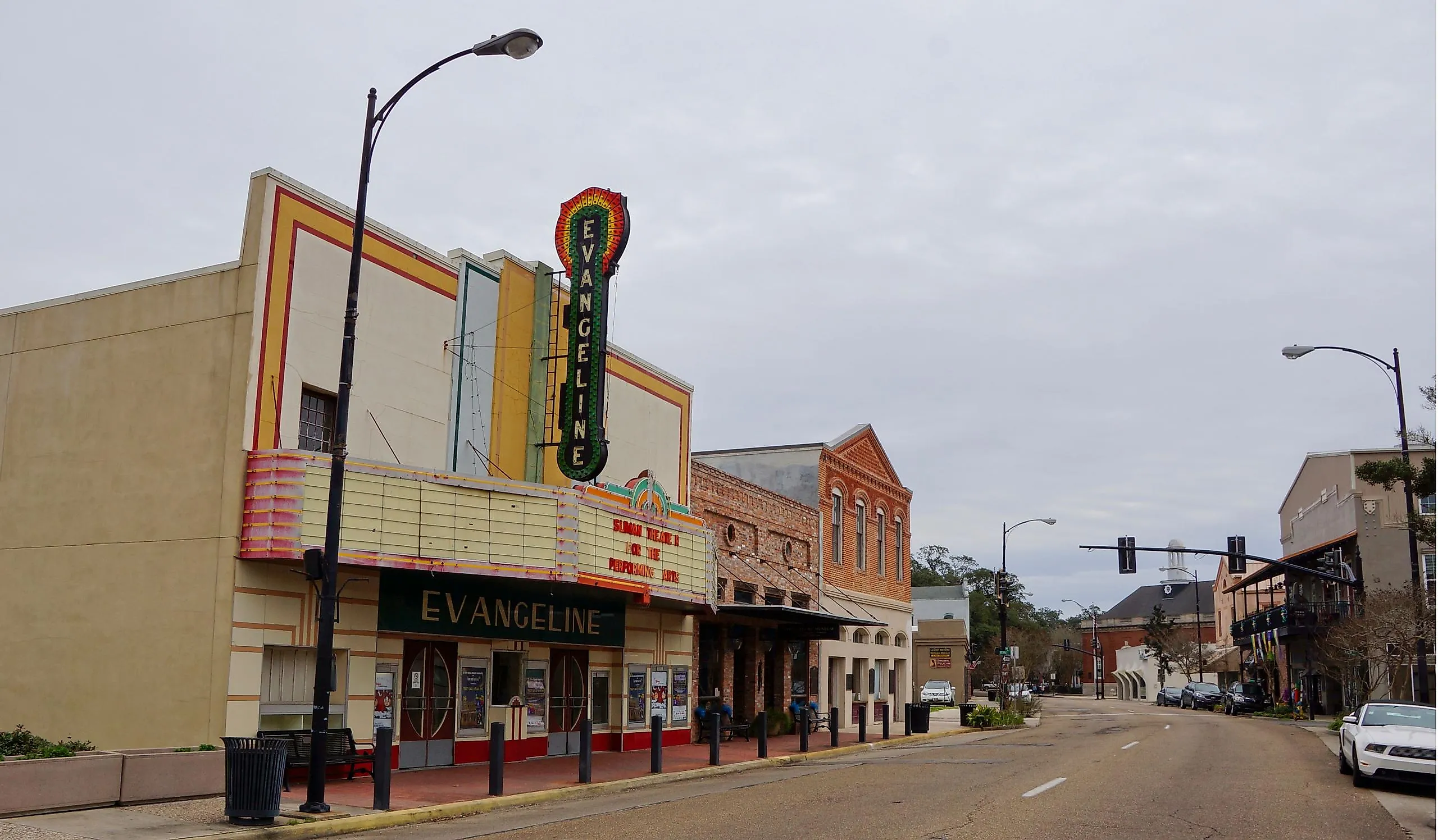
Pronounced NACK-uh-tish, Natchitoches is photographed more than almost any small town in Louisiana, and once you see it you understand why. The Cane River runs through the middle of town, and the historic district along Front Street sits right on the water. Brick storefronts, wrought-iron balconies, and gaslight-style lamps line the riverfront, and a stone-paved walkway runs directly along the bank. Small riverboats dock a few feet from the restaurants and cafes.
Founded in 1714, Natchitoches is the oldest European settlement in the state, and the Christmas Festival of Lights (mid-November through early January) lights up the riverbank with hundreds of thousands of lights that reflect off the water. The Melrose Arts and Crafts Festival each June brings vendors to the nearby Melrose Plantation. The Roque House, a Creole-style cottage right on the river, is small but one of the best preserved examples of early Cane River architecture.
Abita Springs

Abita Springs sits on the north shore of Lake Pontchartrain among longleaf pines and hardwood forest. The town has an old-Louisiana pavilion park at its center, with a historic bandstand, a cover for the original artesian spring, and brick sidewalks that wind under the shade of mature trees. Smaller streets nearby are lined with raised Creole cottages and Craftsman-style bungalows that give the residential side of town its look.
The Abita Mystery House, a folk-art attraction filled with homemade oddities, eccentric inventions, and roadside curiosities, is the town's best-known draw. The Abita Springs Trailhead Museum covers the town's history as a Victorian-era health resort, and the Abita Springs Opry hosts six Louisiana roots music concerts a year. The Tammany Trace, a 31-mile paved rail-trail, runs directly through town for biking and walking.
Breaux Bridge

Breaux Bridge sits at the edge of the Atchafalaya Basin, and the town is surrounded by cypress swamps draped in Spanish moss. Bayou Teche runs along the downtown, and the old metal bridge over the bayou is the town's visual centerpiece and namesake. The historic downtown has colorful storefronts, classic Louisiana dance halls, and tin-roofed Creole cottages scattered through the surrounding streets.
The town was officially designated the "Crawfish Capital of the World" by the Louisiana state legislature in 1959, and crawfish étouffée is widely credited as having been created here. The Breaux Bridge Crawfish Festival, held every May since 1960, is the town's signature event, with three days of Cajun food, zydeco music, and dance competitions featuring over 30 performance groups. Swamp tour operators run daily boat trips into the Atchafalaya Basin, the largest river basin swamp in North America at roughly 900,000 acres, where alligators, water birds, and cypress groves are all on routine view.
Covington

Covington sits on the north shore of Lake Pontchartrain among tall pine forest, directly across from New Orleans via the 24-mile Lake Pontchartrain Causeway. The downtown has brick buildings painted in soft pastels, covered sidewalks, and the Bogue Falaya River running along one edge of town. Live oaks and magnolias shade most of the streets, and Bogue Falaya Park offers direct river access from within the downtown core.
H.J. Smith & Sons General Store, family-owned and operating continuously since 1876, doubles as a free museum of 19th- and 20th-century Americana. Local outfitters run canoe and kayak tours into the surrounding swamps and bayous. The town hosts multiple annual festivals including the springtime Antiques and Uniques Festival and an active Mardi Gras celebration each Fat Tuesday.
New Iberia

New Iberia sits along the winding Bayou Teche, with Spanish-moss draped oaks and pastel cottages along Main Street. The historic Shadows-on-the-Teche, an 1834 sugar plantation home right in the middle of town, is surrounded by oak trees that are some of the most photographed in the state. New Iberia was named one of America's Prettiest Towns by Forbes in 2013, and the downtown architecture, bayou views, and mature tree canopy are the reasons.
Downtown shops and restaurants line Main Street, and the Teche Area Farmers Market runs every Saturday. A short drive south, Jungle Gardens on Avery Island, created by Edward Avery McIlhenny of Tabasco sauce fame, covers 170 acres of bamboo groves, bird rookeries, and seasonal flowering plants, with self-guided driving tours available year-round. The Creole heritage runs deep here and shapes the local food, music, and architecture.
Grand Isle

Grand Isle, Louisiana's only inhabited barrier island, is pretty in a completely different way than the rest of this list. The island stretches along the Gulf of Mexico at the end of LA-1, with open water on one side, marsh on the other, and colorful raised stilt houses lining the beach road. Sunrises and sunsets over the Gulf are the main draw, and the drive in along LA-1, a thin causeway crossing open water and marsh, is one of the more distinctive coastal drives in the country.
The island is known for offshore and inshore fishing, with more than 280 fish species documented in surrounding waters and multiple public fishing piers open to anglers. Lafitte Woods Nature Preserve, maintained by The Nature Conservancy, is a major migratory bird stopover with nearly 100 species documented during peak migration. Local restaurants serve shrimp, oysters, and blue crab caught within a few miles of the docks. The island was heavily damaged by Hurricane Ida in 2021 and remains in active recovery.
Seven Towns, Seven Different Louisianas
What makes these Louisiana towns pretty is not one look but seven different ones. The oak-canopied hills of St. Francisville are nothing like the stilt houses and open Gulf of Grand Isle. The brick-and-iron riverfront of Natchitoches is nothing like the pastel downtown of Covington or the cypress swamps surrounding Breaux Bridge. That variety is the real answer to why Louisiana has so many small towns worth visiting for the scenery alone.