7 Most Welcoming Towns In The Rockies' Countryside
Hot air balloons floating over the Tetons at sunrise. A guy in a fur suit leading a parade down Main Street to thank the snow. Wildflower hikes through fields of lupine that go on for miles. The Rockies have plenty of polished resort towns where the lift tickets cost more than your boots. These seven aren't those. The welcome here is loud and weird in the best way and almost always involves a parade.
Golden, British Columbia, Canada

Freight trains from CP Rail still cut through the valley, a reminder that Golden is a working town first and a tourist town second. The community sits where the Kicking Horse and Columbia Rivers meet, and the feel is more lived-in than you get at the polished resort spots up the road. Right downtown, the Kicking Horse Pedestrian Bridge spans 151 feet and holds the title of longest freestanding timber-frame bridge in Canada.
For wildlife, the Northern Lights Wildlife Wolf Centre lets visitors watch its resident pack from outside the enclosure and runs a 25-minute interpretive program about how wolves shape mountain ecosystems. To grasp the scale of this corner of British Columbia, ride the Golden Eagle Express gondola at Kicking Horse Mountain Resort up more than 3,700 feet to Eagle's Eye, where the wraparound deck looks out over the Purcell and Rocky Mountain ranges and Yoho National Park to the east. Back in town, the Turning Point Restaurant is a reliable spot for ribs and a beer with locals at the bar.
Crested Butte, Colorado

Altitude and isolation define Crested Butte, sitting at the head of the Colorado State Highway 135 valley with no through-route to the south or east in winter. Residents have spent decades pushing back against the standard resort-town playbook, and you can see the result in a downtown that still leans on independent shops and Victorian storefronts rather than chain logos and parking decks.
The Wildflower Festival is the standout summer event. The 10-day gathering each July, designated by the state legislature in 1990 as a celebration of Crested Butte's status as the Wildflower Capital of Colorado, leads guided hikes through meadows of lupine and brings together artists, photographers, and home cooks for workshops. For dinner, The Secret Stash builds inventive pizzas inside a building packed with thrift-store oddities. The Crested Butte Mountain Heritage Museum holds the town's mining and skiing past, including a model train, vintage mountain bikes, and a world-record elk rack.
Driggs, Idaho

Driggs sits in the broad Teton Valley, where the Tetons rise sharply on the eastern horizon and farmland stretches everywhere else. The street grid still follows the late-1800s townsite layout, which keeps downtown compact and walkable.
The Teton Valley Balloon Rally each Fourth of July weekend launches roughly a dozen to two dozen hot air balloons from the Teton County Fairgrounds at sunrise, with evening glow events back near town. South of Main, the Spud Drive-In still screens movies under the stars, with a giant concrete potato perched on a 1946 Chevrolet truck out front as a nod to the area's farming roots. La Conchita Bakery is a longstanding local favorite for Mexican baked goods. The Teton Valley Museum walks through pioneer cabins and Native American artifacts, with enough hands-on detail to make a half-hour stop turn into two.
Fernie, British Columbia, Canada

Fernie sits in the Elk Valley, ringed by the limestone slopes of the Lizard Range. In the early 1900s, two separate fires nearly wiped the town off the map. Residents rebuilt in brick and stone, and those buildings still define the streetscape downtown.
The community calendar revolves around Griz Days, held each March. The festival celebrates the Griz, a folkloric mountain man local lore credits with bringing heavy snow to the valley, and packs in parades, live music, and a beard-growing contest. On 2nd Avenue, Polar Peek Books is a reliable place to talk to locals over a paperback. On the edge of town, a short trail leads through cedars to Fairy Creek Falls, a narrow ribbon down a steep rock face. In summer, the Timber Bowl Express chairlift at Fernie Alpine Resort runs uphill to alpine trails with broad views of the valley.
Pinedale, Wyoming

The peaks of the Wind River Range tower over Pinedale, a Wyoming town shaped by cattle, deep snow, and an outsized fur-trade history. Pine Street is the central road, and the Cowboy Shop has been selling saddles and Stetsons there since 1947, well before the area became a draw for hikers.
History sits at the edge of town at the Museum of the Mountain Man, where you can see a rifle that belonged to mountain man Jim Bridger and walk through exhibits on the 1820s-1840s Rocky Mountain fur trade. North of town, Fremont Lake fills a glacial trough; even in summer the water stays cold, and the Bridger-Teton National Forest reflects clean across its surface on still mornings. Most days end at Wind River Brewing Company, where a Fire Burger and a beer can stretch into a long conversation with whoever sits down at the bar.
Kimberley, British Columbia, Canada

Kimberley began as a mining town after the Sullivan Mine was discovered in 1892, drawing workers from across Canada and Europe. In the 1970s, with mining winding down, residents redesigned the downtown around a Bavarian theme to draw tourists. The look stuck, and today the renovated buildings and the pedestrianized Platzl reflect that pivot. Modern community events like the Kimberley Snow Fiesta each February keep the town's calendar busy with parades, snow sculptures, live music, and winter competitions.
The Platzl is the pedestrian-only heart of downtown, anchored by what's billed as Canada's largest free-standing cuckoo clock, which chimes on the hour and pops out a wooden figure. Kimberley Alpine Resort runs the slopes in winter and opens select lifts and trails for hikers and bikers in summer when conditions allow. Cominco Gardens follows Mark Creek with stone paths and flower beds that peak in mid-summer, and Kimberley Nature Park covers 1,800 acres of forest with routes leading to viewpoints above town.
Salida, Colorado

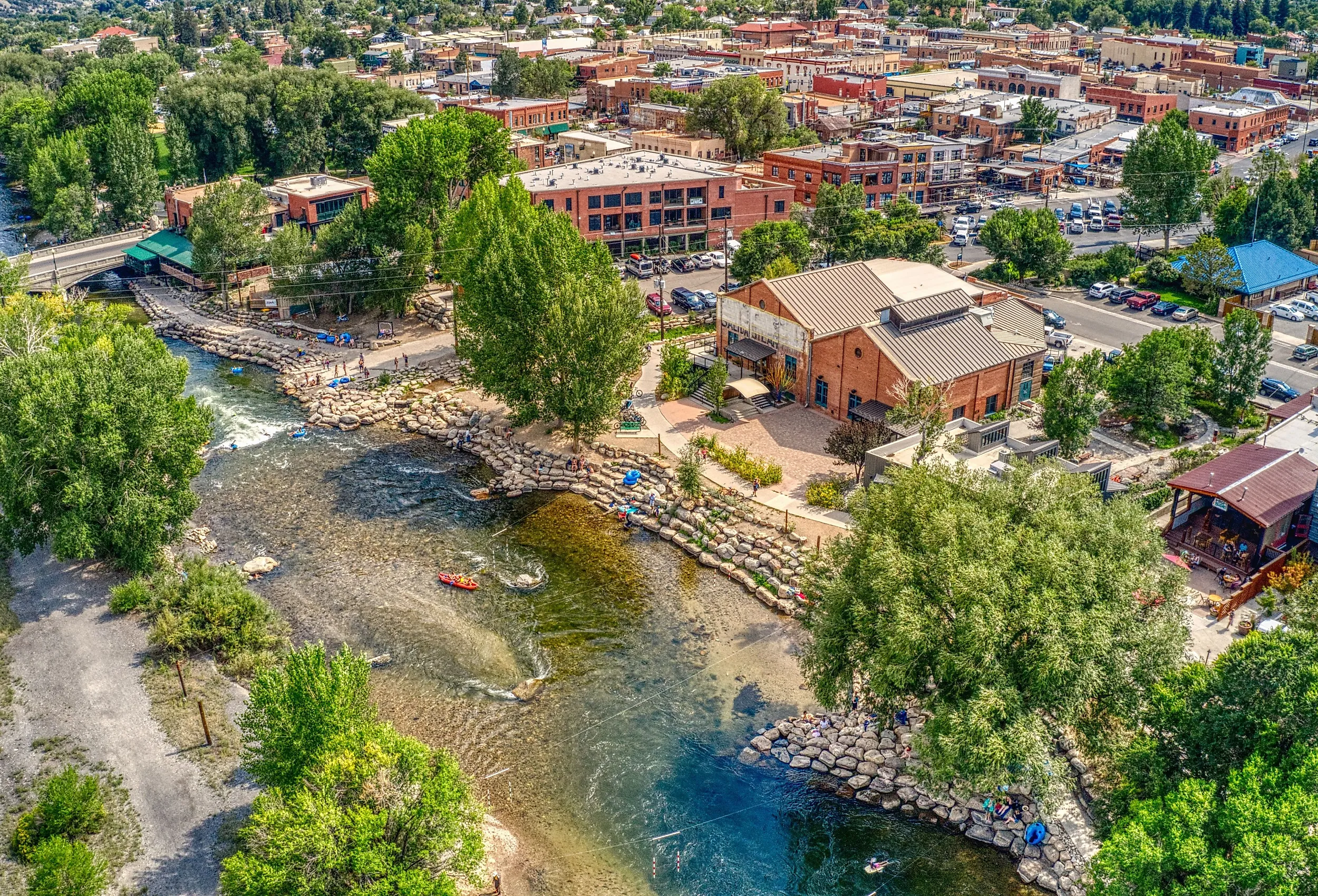
Salida is another mining-and-railroad town that found a second life. Smelting and rail work supported the local economy through the late 1800s, then declined through the 20th century. Artists moved into the empty downtown, opened studios, and gave the place a new identity. F Street is now lined with active studios where artists work in view of the street.
The Salida SteamPlant Event Center hosts year-round markets and gatherings in a former power plant on the river. The Salida Museum holds artifacts from the railroad era and the first settlers, including tools and household objects. Riverside Park follows the Arkansas River and includes a kayak training feature on a stationary wave. When the snowmelt is right, the Arkansas Headwaters Recreation Area runs raft launches that drop straight into Browns Canyon National Monument.
Where to Land in the Rockies' Quieter Half
Across the seven, the pattern is consistent: a downtown that stayed the right size, real outdoor access steps from Main Street, and locals who genuinely seem to want you there. Towns like Driggs and Kimberley pull people in with festivals, while Pinedale and Fernie offer direct access to lakes, trails, and alpine terrain without resort gloss. Pick one and you'll likely come back.