12 Best Places To Live In Virginia In 2026
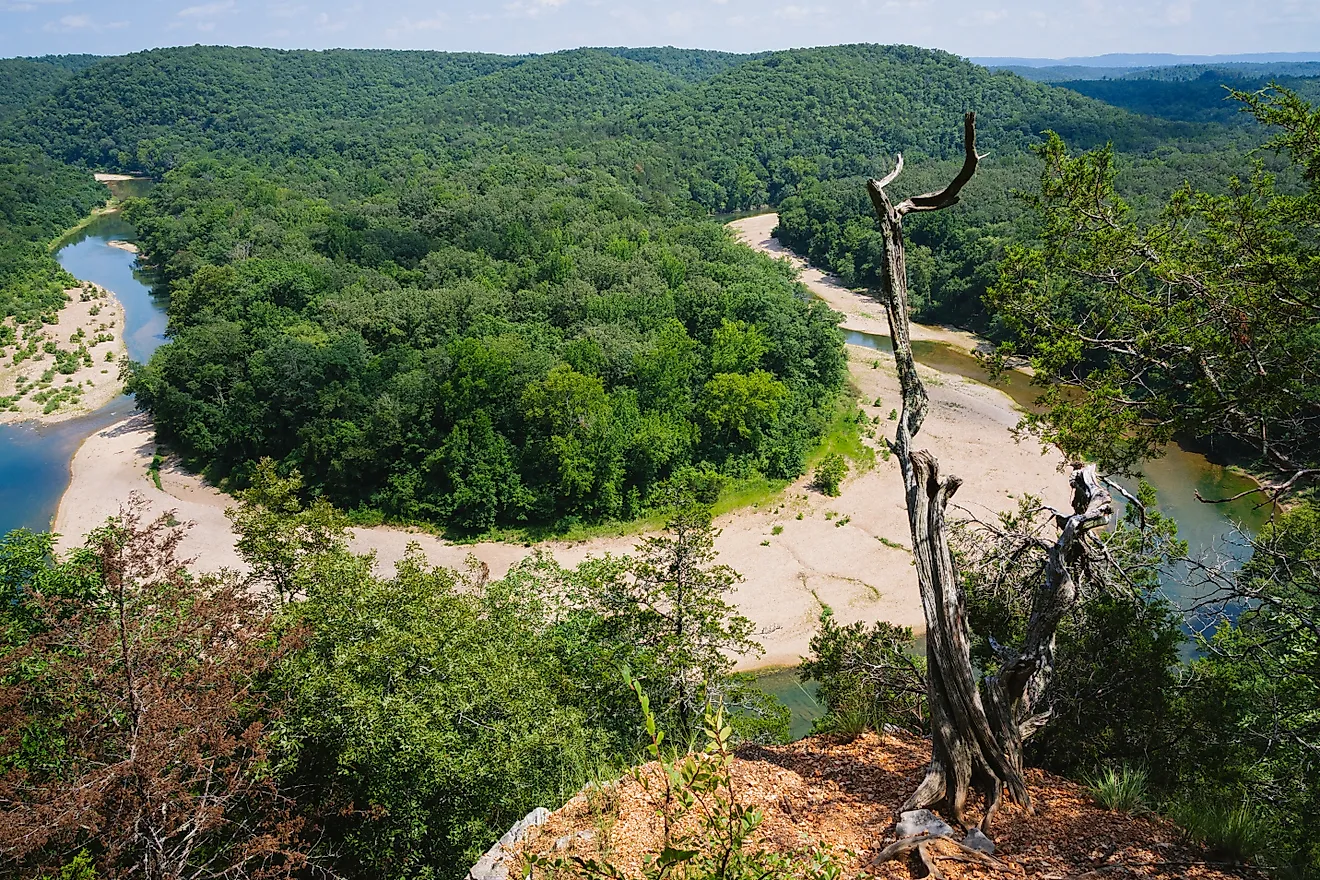
Virginia consistently ranks among the better states to live in. Higher-than-average household incomes meet a skilled workforce in major employment hubs. Coastal communities along the Atlantic Ocean and the Chesapeake Bay sit within easy reach of mountain towns in the Blue Ridge. Fairfax and Reston anchor the government and technology corridors near Washington. College towns like Charlottesville and Blacksburg run on campus life and research. Coastal cities such as Virginia Beach and smaller towns like Cape Charles trade pace for water access. The twelve places below are the best places to live in Virginia in 2026 whether you are starting fresh with family or settling into retirement.
Roanoke

Outdoor enthusiasts gravitate to this Blue Ridge Mountain town for its accessible outdoor spaces. Roanoke is full of trails and parks, with the Blue Ridge Parkway a short drive from town. Carvins Cove is popular, especially among mountain bikers, while some hikers head straight for the Appalachian Trail. Roanoke is one of the larger cities along the trail and provides access to some of its most scenic viewpoints, including Dragon's Tooth, McAfee Knob, and Tinker Cliffs. Above town, the world's largest free-standing illuminated star sits atop Mill Mountain, the local equivalent of the Hollywood sign. You can see it from much of the town, and locals often hike up to its base for views over Roanoke.
Beyond the outdoor appeal, Roanoke functions as a regional hub for healthcare and connectivity. Carilion Roanoke Memorial Hospital, often cited as one of Virginia's top hospitals, provides advanced medical care and major employment. Interstate 81 runs through the city, making travel to other parts of Virginia and beyond more accessible. With an average home value of about $277,000, Roanoke's housing market is more affordable than most of the state, where the average is about $412,000.
Charlottesville

Home to the University of Virginia, one of the state's most prominent institutions, Charlottesville has a strong academic and economic foundation. Founded by Thomas Jefferson, the university is also a research facility and a major regional employer. The university also provides healthcare to the town through UVA Health University Medical Center, a major medical system with multiple LEED-certified spaces. The Leadership in Energy and Environmental Design certification system is based on both human health and environmental sustainability, meaning that this facility's efficient use of water and energy adds to environmental stewardship rather than wasting resources.
Living in Charlottesville also offers regional connectivity, with two Amtrak routes (the Crescent and the Cardinal) and significant highways like I-64 and US-29 making regional travel manageable. The surrounding Monticello Wine Trail adds another layer to local life, with more than 40 wineries in a 25-mile radius. Jefferson Vineyards is especially popular for its Blue Ridge Mountain views and easy atmosphere.
Fairfax

Fairfax is in Northern Virginia, putting it in one of the state's strongest job markets. The city benefits from access to a large regional employment base, with opportunities in technology, government, and healthcare, creating high earning potential. Federal contractors and major companies are a major presence, contributing to consistently low unemployment rates around 3.3%. That access shows up in the city's median household income of about $132,000. Fairfax also maintains crime rates below the state average per the Crime Data Explorer. The dining scene reflects a mix of cultures, from Indian and Italian to more eclectic spots like Bebop Korean-Mexican Grill.
Alexandria

Living in Alexandria has a different feel than most Virginia cities, with one of the nation's oldest historic districts at its center. The walkable layout connects residents to waterfront paths along the Potomac River and to shops, restaurants, and public spaces along King Street. Proximity to Washington, DC, also plays a major role, and housing prices run higher than the state average, with average home values over $600,000. Alexandria's job market is closely tied to the federal government, with agencies and contractors providing consistent employment, including organizations connected to the Department of Defense.
Staunton

Staunton sits in the Shenandoah Valley roughly 20 to 25 miles west of the Blue Ridge Parkway and combines a walkable downtown with serious cultural anchors. The American Shakespeare Center's Blackfriars Playhouse is the world's only re-creation of Shakespeare's indoor theater and runs a year-round repertory schedule. The Frontier Culture Museum is an open-air living history complex of working farms representing the European, African, and Indigenous communities that shaped the valley. The Woodrow Wilson Presidential Library and Museum occupies Wilson's birthplace just across the street from Mary Baldwin University. Median home values run well below Northern Virginia rates, and Staunton's six historic districts hold some of the most intact 19th-century commercial architecture in the state. The pace is slower than the suburbs near DC, with the trade-off being a longer drive to a major airport.
Leesburg

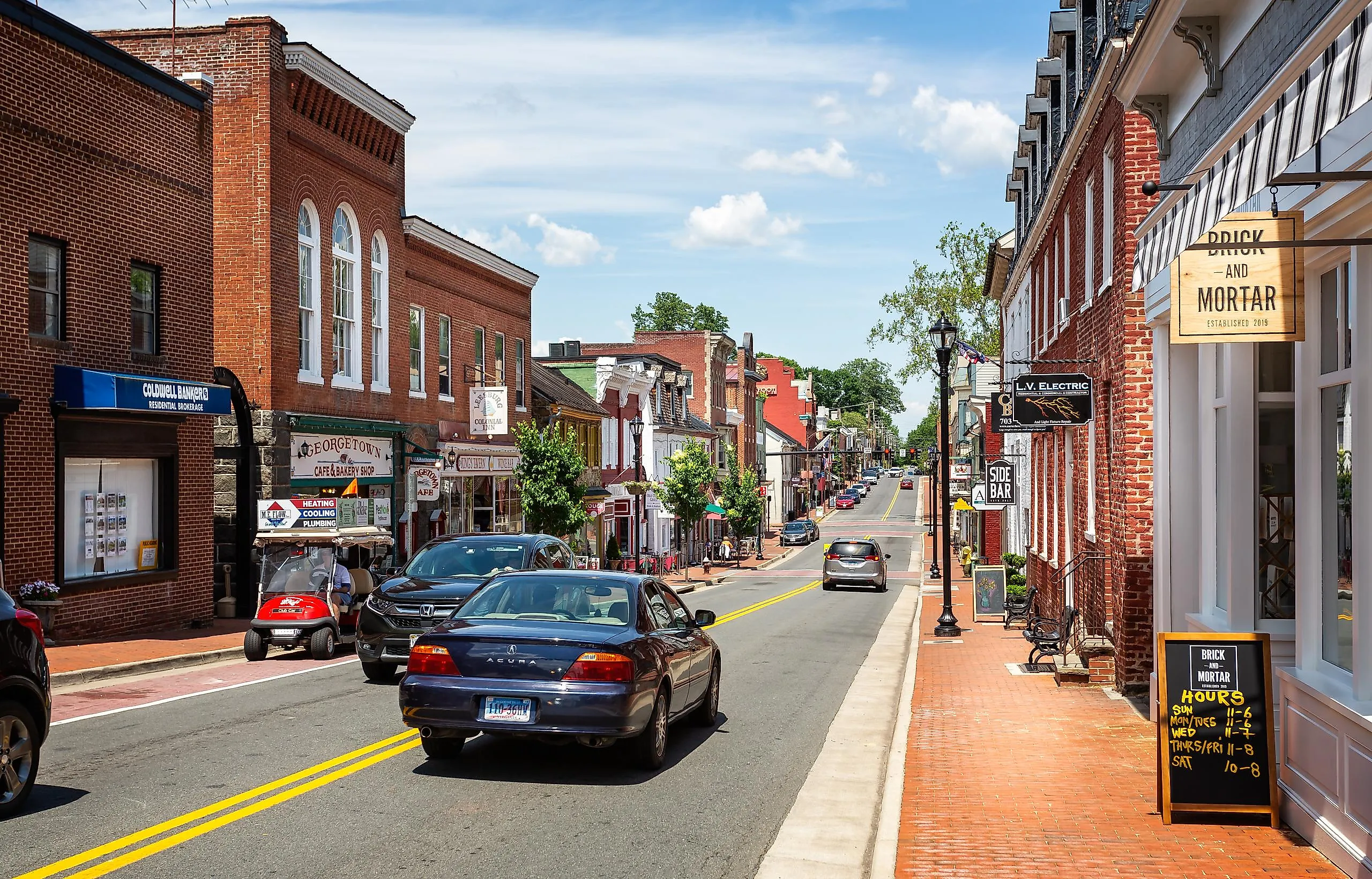
Leesburg sits right in Loudoun County's wine country, giving residents easy access to wineries like Stone Tower Winery and Casanel Vineyards & Winery. Their rolling hills and vineyard views make for an easy weekend without leaving the area. Along with the wine country positioning, Leesburg benefits from being in one of the wealthiest counties in the country. Loudoun County has a high concentration of data centers, major technology firms, and government contractors, creating a wide range of high-paying jobs nearby. Home values run higher than the state average at over $800,000, but strong homeownership rates point to long-term stability.
Richmond

Richmond has a strong creative presence, with institutions like the Virginia Museum of Fine Arts and the Richmond Symphony running year-round exhibitions and performances that draw both residents and visitors. That artistic energy is reinforced by Virginia Commonwealth University, a top public research university that contributes to the city's culture as well as its workforce.
Several Fortune 500 companies are based in Richmond across industries like healthcare, finance, and technology, offering people a range of ways to work and live. Home values hover around $340,000, which keeps Richmond within reach compared to other parts of the state. Downtown has been shifting in recent years. The mural-clad district holds 300+ restaurants and shops, along with places to indulge the senses. Alwaha House of Fragrance creates one-of-a-kind perfumes and oils in-house. Over 25 art galleries, like the 1708 Gallery and Antennae Gallery, show work across all mediums.
Virginia Beach

Virginia Beach has roughly 35 miles of beaches along the Atlantic Ocean, the Chesapeake Bay, and the Sandbridge area, giving residents access to both lively oceanfront stretches and calmer bay waters. The town's seafood market is beloved for its oysters, crabs, and scallops, plus other catches straight from the Atlantic. Along with hosting rodeos and concerts, the military is one of the main sources of local employment.
Naval Air Station Oceana is the second-largest employer in town, with over 10,000 military and civilian employees who support numerous military units. Healthcare is another leading local industry, with Sentara Health operating major facilities including Sentara Virginia Beach General Hospital and Sentara Princess Anne Hospital, as part of a regional health system. Despite its size and coastal appeal, the average home value here is about $427,000, only about $15,000 higher than the state average.
Chesapeake

Located along the Atlantic Intracoastal Waterway, Chesapeake offers many water recreation options. Many locals spend warm days kayaking on Lake Drummond, a shallow freshwater lake that connects to the Great Dismal Swamp. Watersports are central to this town, with annual events like Paddle for the Border and Paddle the Peake keeping the community close. Beyond the water, the Chesapeake Arboretum (a farmhouse-turned-classroom) teaches horticultural and environmental awareness. That outdoor connection is matched by a more residential feel, since many residents own their homes. Those who rent can expect average monthly costs around $1,500.
Blacksburg

Blacksburg has a strong sense of community shaped by Virginia Tech, a school that offers hundreds of undergraduate and master's programs. Though the campus comprises 221 buildings on 2,600 acres, the 13:1 student-faculty ratio keeps classrooms intimate. The campus brings many things to the community, including jobs in education and research.
Healthcare needs are supported by facilities like LewisGale Hospital Montgomery, which provides emergency and specialized care to the region with a Level III trauma center and a cardiovascular center featuring robot-assisted surgeries. Compared to other Virginia college towns, Blacksburg offers more moderate housing costs while maintaining access to education and outdoor recreation. The average home value is just about $10,000 over the state median at about $420,000.
Cape Charles

Cape Charles has many beloved businesses like Brown Dog Ice Cream, the Historic Palace Theatre, and Lemon Tree Gallery and Studio, all award-winning spaces where locals gather. Along with independent shops and boutiques, the historic district has a public beach. Soft sand meets the shallow waters of the Chesapeake Bay at Cape Charles Beach. Rather than the rolling waves of the nearby Atlantic Ocean, the bay has a gentle current that welcomes swimmers of all skill levels.
That setting draws visitors throughout the year, with more than 340,000 people arriving in 2025 to experience the town's beaches and historic district, creating jobs in hospitality and retail. The town is also part of the broader Eastern Shore economy, where agriculture and seafood industries play a major role. Despite its small size, Cape Charles remains well-connected. The Chesapeake Bay Bridge-Tunnel connects the town to Virginia Beach, expanding access to jobs, shopping, and services.
Williamsburg

Though it has a fairly small population of about 16,000, Williamsburg is home to one of the oldest universities in the U.S., bringing culture, research, and employment to the town. As a university, William & Mary has a lot to offer. The school is a public research facility as well as a liberal arts and science institution, with over 100 majors and about 45% of students pursuing STEM fields. Beyond campus life, residents stay connected through spaces like the Williamsburg Community Building, where locals can rent rooms for club meetings or attend civic meetings held by the city government.
Sitting along Interstate 64 also makes it easy to travel to nearby cities like Richmond or vacation spots like Virginia Beach. Crime rates remain low, with FBI data showing fewer violent and property crimes than in many areas across the state.
From the high-energy job centers of Northern Virginia to the quieter coastal and mountain towns spread across the state, Virginia offers a range of places to settle in 2026. Each location brings its own pace, shaped by local industries, landscapes, and community spaces. Whether life revolves around commuting into Washington, hiking through mountain trails, or lounging by the water, these places show how differently life in Virginia can take shape depending on where you land.