13 Prettiest Downtown Strips In Michigan
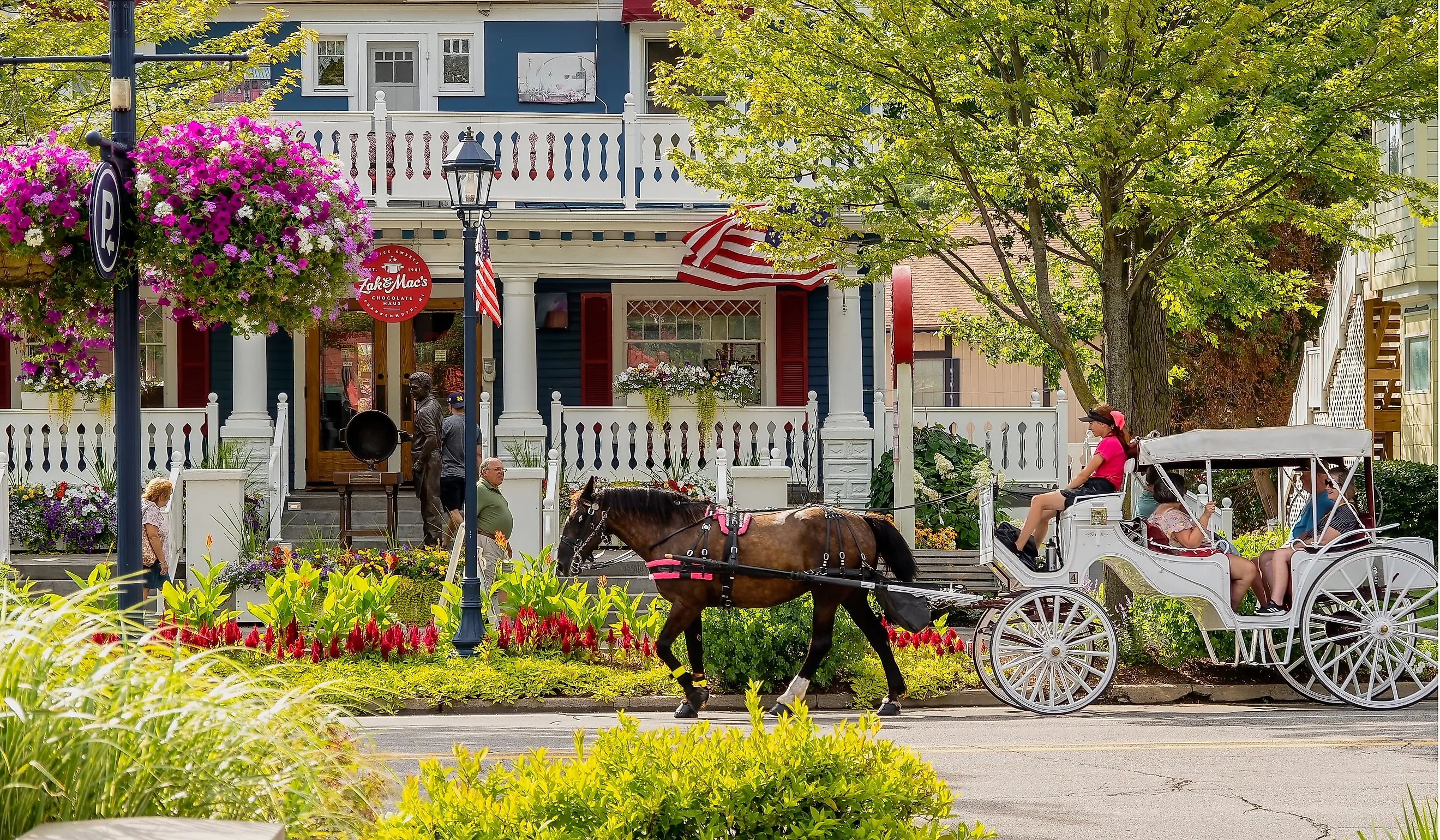
Michigan's downtowns pack a lot into a few walkable blocks. In Holland, tulip beds line 8th Street each spring. Frankenmuth pairs Bavarian buildings with river cruises and Bronner's, the world's largest Christmas store. Grand Haven draws visitors to its musical fountain and harbor views. Whether you want to tour Alpena's maritime heritage or spend a day on Mackinac Island where horses outnumber cars, these thirteen downtown strips deliver.
Holland

Holland's downtown stands out for the dozens of tulip beds planted along 8th Street. During the annual Tulip Time Festival in early May, the entire neighborhood explodes into color as millions of flowers bloom across the city. This side of town is also where the Holland Farmers Market takes place. More than 50 vendors set up shop in the area to display fresh flowers, cheeses, meats, vegetables, and jams.
A short walk brings you to the Holland Civic Center, a 40,000-square-foot cultural hub known for hosting sporting events, expos, concerts, and live performances. Its 2,000-seat capacity makes it a prominent gathering spot for locals and tourists. Holland's walkability is enhanced by multiple green spaces downtown, including Windmill Island Gardens. This 36-acre area offers walking pathways and garden exhibits, with the focal point being De Zwaan, a working 18th-century Dutch windmill brought over from the Netherlands in 1964.
Frankenmuth

Frankenmuth is known for Bavarian-style architecture inspired by the community's German heritage. The Bavarian Inn Lodge serves as a strong example. It features a German-themed construction style with murals drawn from traditional folklore. The family-friendly establishment offers European-themed rooms, whirlpools, indoor and outdoor pools, water slides, a golf course, and other entertainment amenities. Flowing through the heart of downtown, the Cass River is another aspect of Frankenmuth worth a stop. Guests can climb aboard the Frankenmuth FunShips for a tour of the river while tasting chocolates, wines, and other beverages.
Downtown Frankenmuth hosts the world's largest Christmas store. Bronner's CHRISTmas Wonderland remains open 361 days a year and packs its showroom with more than 50,000 trims, gifts, ornaments, trees, lights, and collectibles. Spread across roughly 7.35 acres of building space, it draws over two million visitors annually. Newcomers will love the culinary offerings at Zehnder's of Frankenmuth, with a down-home atmosphere and a menu featuring family-style chicken dinners, seafood, baked goods, and European desserts.
Petoskey

The waters of Little Traverse Bay form the backdrop for downtown Petoskey. Visitors can take in the waterfront from the lawns of Bayfront Park, a former industrial site converted into a park with a promenade, walking trails, a pavilion, and an open public shoreline. From the park, guests can access the Historic Gaslight District directly. It is a walkable neighborhood defined by Victorian brick storefronts that house art galleries, dining spots, and boutique stores. Art connoisseurs are welcome to view works by regional artists at Somebody's Gallery. For a deeper cultural experience, head to the Crooked Tree Arts Center. The establishment harbors two fine art galleries where local creatives exhibit year-round, art classes, a movie theater, and a performance stage for dance and music concerts.
Traverse City

Traverse City has a vibrant downtown strip that reaches its peak during the National Cherry Festival. This summer event runs eight days of parades, fireworks, air shows, wine tastings, and live music, drawing over 500,000 attendees. The area stays busy with tourist traffic outside the festival period thanks to the Village at Grand Traverse Commons. This restored 1800s state hospital complex features dozens of old buildings now occupied by eateries, boutiques, shops, galleries, and other businesses.
Vacationers who wish to explore on foot can walk down East Front Street, whose brick-lined sidewalks provide access to watering holes and dining areas. Many love the Little Fleet for its open-air setting, draft beers, craft cocktails, live music, and overall good atmosphere. Meanwhile, Clinch Park lies on the more natural side of downtown, where tourists can picnic on a sandy beach and take in views of Grand Traverse Bay.
Charlevoix

Lakefront beauty and historic homes combine in Charlevoix to make for one of Michigan's most distinctive downtown strips. The town sits between Lake Charlevoix and Lake Michigan, offering swimming opportunities for vacationers. Michigan Beach Park is a favorite spot conveniently located near downtown. Here, you can find picnic tables, a shade pavilion, walking paths, basketball courts, and other public amenities, with lifeguards on hand. From the shores, the Charlevoix South Pier Lighthouse makes for a fine sight worth photographing. The Charlevoix Mushroom Houses are an iconic landmark in downtown. Designed by architect Earl Young between the 1910s and 1950s, these stone homes sport a unique mushroom-like shape. By taking the Mushroom House Tours, newcomers can examine their cedar shake roofs and unusual interior design.
Marquette

The walkable streets of downtown Marquette are lined with preserved mid-19th-century brownstone architecture that hints at the community's mining and shipping heritage. One of the most notable landmarks in the area is St. Peter's Cathedral. This Catholic church was completed in 1936 after a fire destroyed the previous structure, and features twin bell towers. All aspects of Marquette's storied past come into focus inside the Marquette Regional History Center. Art lovers in downtown Marquette can find the largest collection of local art at Zero Degrees Artists Gallery. Over 30 artists exhibit their works here, including jewelry, paintings, woodwork, ceramics, fiber art, and illustrations. In the evenings, tourists can head to Drifa Brewing Company for fresh lagers and ales in a waterfront spot while watching the sun set over Lake Superior.
Rochester

Rochester's downtown district holds a dense lineup of restaurants, salons, boutiques, and service businesses. It is a good neighborhood for casual walks, and parents will find an ideal stop at Rochester Play. This indoor playground invites kids to jump, climb, bounce, and run alongside their peers. Meanwhile, the Roxy Rochester is the go-to entertainment hub in the area. It hosts an array of events including film screenings, concerts, and tribute performances. Downtown Rochester boasts multiple green spaces, such as the Rochester Municipal Park, a quiet escape with mature trees, open fields, paved walkways, and a creek winding through. Finally, the strip comes into its own during the Big, Bright Light Show, when more than 1.5 million lights cover the buildings each holiday season.
Grand Haven

Grand Haven sits at the mouth of the Grand River along Lake Michigan, with a waterfront downtown and beach access nearby. The area frequently attracts public gatherings, with people sitting on the shore to watch the Grand Haven Musical Fountain. This water-and-light show is synchronized to the beat of popular songs and runs nightly during the summer season. Another option for tourists is a walk down the boardwalk linking the city marina to the Grand Haven Lighthouse and South Pier. The promenade stretches along the Grand River channel out to the lighthouse.
The Midwest Miniatures Museum showcases the town's quirky side. It has a collection of miniature displays including dollhouses, home replicas, antique toys, and other artifacts. Every August, more than 350,000 festivalgoers descend on downtown Grand Haven for the Coast Guard Festival. The 10-day function brings young and old together with parades, vessel tours, and other events.
Rockford

Rockford's downtown comprises a busy shopping district and pockets of nature spaces along the winding Rogue River. The main thoroughfare leads to the Rockford Dam Overlook, where travelers can take in views of geese and ducks on the river. While walking around the town center, stop at the Rockford Area Museum for some local history. Inside the facility, old photographs, military artifacts, recorded stories, and short videos help chronicle the region's history. For family-friendly fun, Rockford Lanes hosts the town's only bowling alley. Alternatively, head to the Rockford Brewing Company for a dining experience featuring pub fare and craft beers next to the Rogue River.
Alpena

A string of 19th-century buildings, including museums and theater venues, makes downtown Alpena a hub. The district features a compact cluster of attractions, including the Great Lakes Maritime Heritage Center. Alpena's maritime heritage is chronicled inside this 10,000-square-foot exhibit area with a theater, a shipwreck gallery, and an archaeology lab. The Alpena Civic Theatre is one of several performance venues in downtown. It often attracts hundreds of theater fans who come to watch local creatives perform plays, dramas, concerts, and other live shows. Meanwhile, Alpena's waterfront is accessible at Bay View Park. This getaway offers miles of walking and biking paths along the shore of Lake Huron.
Houghton

Houghton's downtown district straddles the Keweenaw Waterway, creating a walkable waterfront accessible via Shelden Avenue. Besides the calm waters, vacationers enjoy views of the Portage Lake Lift Bridge. The double-decked steel structure is a major landmark and one of the largest lift bridges in the country, built with more than 35,000 tons of concrete and 7,000 tons of steel. Several historic buildings in the town center preserve important monuments, such as the A.E. Seaman Mineral Museum. This facility exhibits a fine collection of minerals from the Great Lakes region and around the world while paying tribute to Houghton's copper mining heritage. The Carnegie Museum of the Keweenaw is equally prominent, exhibiting cultural and natural artifacts inside an early 20th-century brick building. After the history lesson, remember to unwind with local brews at the Keweenaw Brewing Company.
Sault Ste. Marie

Downtown Sault Ste. Marie combines a legacy of shipping and engineering to tell the story of one of the oldest cities in the Midwest United States. It has a waterfront on the banks of the St. Marys River, home to the famous Soo Locks. The locks handle one of the continent's busiest waterway traffic patterns, and from the observation deck, tourists can watch massive freighters lock through between Lake Superior and the lower Great Lakes. The region's maritime history is documented at the Great Lakes Shipwreck Historical Society through historic shipwrecks, lighthouses, vessel models, and other artifacts. Beyond history, Sault Ste. Marie welcomes newcomers to try its brews and wines at the Soo Brewing Company and Winery, which has been handcrafting beers for decades. Lastly, be sure to fit in a bowling session at Dondee Lanes before calling it a day.
Mackinac Island

Cars have been banned on Mackinac Island since 1898, leaving horse-drawn carriages, bikes, and feet as the way to get around. Tourists can take a ride with Mackinac Island Carriage Tours to find historic landmarks across the island. Fort Holmes is a great place to start. The British built it as Fort George in 1814 during the War of 1812, and the Americans renamed it Fort Holmes after retaking the island. It is impossible to miss Sainte Anne's Catholic Church, whose white facade complements the Victorian elegance of its interior. The current building was constructed in the 1870s, but the parish's records date back to 1695, making it one of the oldest continuous parish records in the interior of North America. Beyond history, downtown Mackinac Island offers spots to relax, especially Marquette Park. This outdoor area has grassy fields and landscaped gardens next to Mackinac Island's harbor. Those who plan to spend the night are guaranteed a memorable lodging experience at the Grand Hotel.
Why These Downtowns Stand Out
Whether you are drawn to Mackinac Island's car-free streets or the floral scenery in Holland, the prettiest downtown strips in Michigan reflect the state's range. Thanks to their pedestrian-friendly design, travelers can leave their cars behind and explore at a walking pace. The streets are full of dining outlets, shops, museums, art venues, and entertainment worth a visit. By the time you are done, you will have a good idea of what makes Michigan a special state.