7 Most Idyllic Small Towns in Arizona
Arizona's diverse ecosystem spans from the desert conditions of the Sonoran Desert to the pine-covered mountain ranges in the north. Former mining camps have transformed into close-knit communities where historic districts, preserved landmarks, and surrounding nature remain central to daily life. In towns like Bisbee, hillside streets wind around sites like the Copper Queen Mine, while Prescott’s Whiskey Row and nearby Watson Lake combine frontier history with outdoor activities. Sedona’s red rock formations and Oak Creek Canyon influence both the town’s layout and its pace. These destinations show how geography, heritage, and isolation have helped Arizona’s charming small towns maintain their character.
Bisbee

Bisbee, Arizona, is located in the Mule Mountains of southeastern Arizona, with origins dating back to 1880. It was initially founded as a mining camp after massive copper deposits were discovered. By the early 20th century, Bisbee had become one of the Southwest's largest and most culturally diverse cities. Its unique landscape, featuring steep canyon walls and historic buildings rising up the hillsides, gives Bisbee a distinctive appearance unlike any other town.
For those visiting Bisbee, delving into its mining heritage is a must. The Copper Queen Mine, one of Bisbee's most famous mines, has underground mine tours led by retired miners who provide firsthand information on mining life and techniques. Visitors don a hard hat, lantern, and yellow slicker to journey into the mine's depths. Just outside the downtown area, the Lavender Pit is a stark contrast to the underground tunnels—a massive open-pit mine that speaks to the scale of copper mining operations in Bisbee. The Bisbee Mining & Historical Museum, a Smithsonian Affiliate, further explores the town's mining legacy through exhibits on geology and mining technology.
Prescott

Prescott is located in the Bradshaw Mountains of central Arizona. Established in 1864, it served as the Territorial Capital of Arizona. The town's rich history is showcased through its Victorian architecture, historic Whiskey Row, and various landmarks that highlight its frontier heritage. Prescott enjoys a mild climate, and its scenery varies from dense ponderosa pine forests to rugged mountain terrain.
The Sharlot Hall Museum in Prescott is essential for history buffs, showcasing Arizona's territorial past with well-maintained buildings, exhibits, and gardens. Meanwhile, Watson Lake's granite boulders and clear blue waters create a scenic backdrop for kayaking, hiking, and bird-watching. Prescott National Forest, covering more than 1.25 million acres of diverse terrain, provides ample opportunities for outdoor pursuits such as hiking, camping, and mountain biking along its extensive trail system.
Sedona

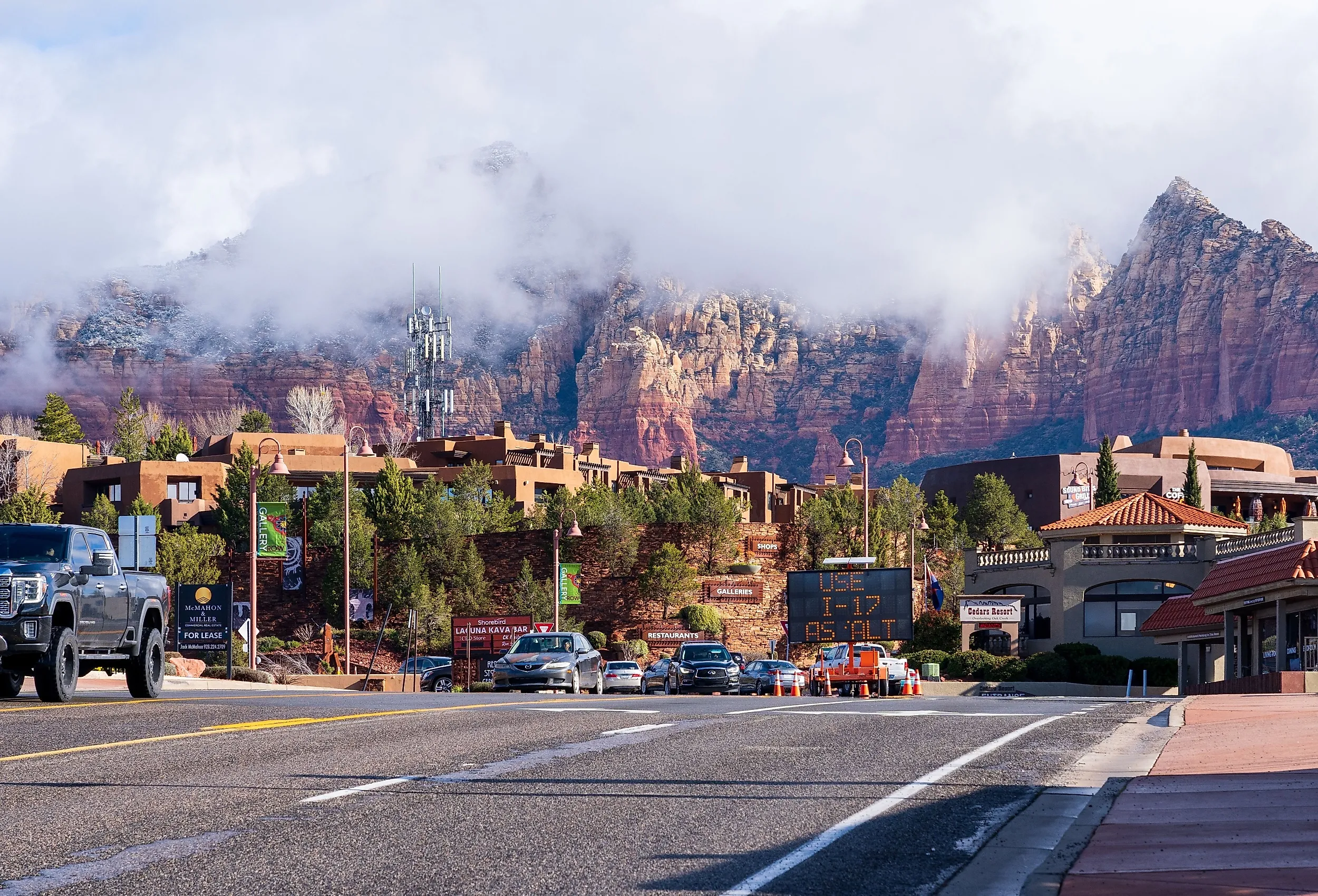
Sedona, Arizona, is often called a "geological wonderland." Located at the southern end of Oak Creek Canyon, its landscape has been molded over millions of years, featuring towering red rocks and jagged canyons that shift color with the sun's position. The region has been inhabited for thousands of years, initially by Paleo-Indians and later by the Sinagua, Yavapai, and Apache tribes, each leaving their imprint on the land with petroglyphs and settlements.
For visitors exploring Sedona, the Red Rock Scenic Byway (SR 179) is renowned for its stunning views of red rock formations. Along the route, there are many pullouts and trailheads perfect for photography, hiking, or simply enjoying the vistas. The Chapel of the Holy Cross, an impressive architectural marvel built into the red rocks, provides a peaceful spot for reflection. Additionally, Slide Rock State Park is a favorite destination, featuring natural water slides created by Oak Creek, offering a fun and refreshing way to escape the heat amid canyon walls.
Winslow

Winslow, Arizona, is a historic town located on the western edge of the Little Colorado River Plateau in Navajo County, surrounded by the vast high desert. Founded in 1882 as a railroad hub on the Santa Fe Railway, it became a key stop for travelers and a lively community in the Southwest. Its significance increased with the rise of Route 66, known as the "Mother Road," which introduced a wave of American road culture and tourism to the town.
Visitors to Winslow can explore the Meteor Crater Natural Landmark, situated just west of the town. This crater, formed by a meteor impact over 50,000 years ago, ranks among the most well-preserved impact sites globally. The Old Trails Museum offers a comprehensive look at local history, showcasing exhibits from Winslow's early days as a railroad hub to its heyday along Route 66. For wide-open views of colorful badlands, the Little Painted Desert Scenic View—an unmaintained former county-park overlook north of Winslow—offers dramatic photo-worthy vistas (with limited facilities).
Tombstone

Tombstone, famously known as "The Town Too Tough To Die," is a significant part of American Western history. Established in 1879 during a silver mining boom, it rapidly became one of the last frontier towns, embodying the wild and lawless spirit of the Old West. Situated in southeastern Arizona in desert surroundings, its remote location helped foster its reputation for lawlessness, drawing miners, entrepreneurs, and outlaws alike.
The O.K. Corral, site of the notorious 1881 gunfight with Wyatt Earp, Doc Holliday, and the Clanton-McLaury gang, remains one of Tombstone's top attractions. Daily reenactments and exhibits enable visitors to step back in time and witness one of Western history's most famous moments. Boothill Graveyard is the burial site of many early residents, including those who died in the gunfight; their grave markers tell stories of sudden deaths and frontier justice. The Bird Cage Theatre, once a theater, saloon, gambling hall, and brothel, now offers self-guided ghost tours for visitors.
Patagonia

Patagonia, Arizona, is a small town located in the Sky Islands region of Southern Arizona. Known for its rich biodiversity and diverse ecosystems, its history begins in the 19th century as a mining and ranching hub that exploited local natural resources. As mining waned, Patagonia evolved into a sanctuary for artists, birdwatchers, and nature enthusiasts, attracted by its scenic landscapes, mild climate, and unique microclimate flora and fauna.
The Patagonia-Sonoita Creek Preserve is celebrated as one of the top birding spots in the United States. Its extensive trails along Sonoita Creek wind through cottonwood-willow forests that host over 300 bird species, including the rare Gray Hawk and Violet-crowned Hummingbird. The Arizona Trail stretches across the state from Mexico to Utah, passing close to Patagonia, making it popular with hikers, cyclists, and horseback riders. And the Patagonia Museum, housed in the historic 1914 Patagonia Grammar School building, chronicles the town's history.
Jerome

Jerome, Arizona, situated high on Cleopatra Hill overlooking the Verde Valley, reflects the classic boom-and-bust cycle of the American West. Established in 1876, it was once a lively copper mining town dubbed the "Wickedest Town in the West" because of its many saloons, gambling halls, and unruly reputation. During its peak in the early 1900s, Jerome's population exceeded 10,000 residents, fueled by copper demand in World War I. Yet, the town's prosperity waned as the mines ran out. By the late 1950s, it had become mostly deserted. Today, Jerome has transformed into a vibrant artist community.
Jerome State Historic Park, focusing on the Douglas Mansion, showcases the history of mining magnates and the town's golden era with exhibits on mining technology, geology, and miners' daily lives. The Sliding Jail highlights Jerome's mining-related geological instability; initially built in the town center, it shifted over 200 feet from its original spot due to ground movement and now stands as a distinctive historical landmark. The Gold King Mine and Ghost Town, just outside Jerome, serves as an open-air museum where visitors can enter the mine and view vintage vehicles and machinery.
Arizona's charming small towns each have unique stories, stunning architecture, and breathtaking landscapes that leave lasting impressions on visitors. Towns like Bisbee, celebrated for its mining history, and Prescott, known for its Victorian-era buildings, showcase the state's rich cultural and historical heritage. Sedona's iconic red rocks are a natural marvel, adding to the area's outdoor appeal. Meanwhile, Jerome and Tombstone vividly depict the rugged, lawless spirit of the Old West, each with tales of prosperity and decline. These picturesque towns, among others, offer a window into Arizona's history and current way of life, inviting visitors to discover the beauty and stories woven into the state's smaller communities.