7 Best Towns In Croatia To Retire Comfortably
Croatia can offer retirement in very different settings, from stone harbors and UNESCO-listed old towns to greener inland streets where home prices and pace feel easier to live with. In Šibenik, the Cathedral of St. James and St. Michael’s Fortress rise above a harbor that still feels tied to ordinary routines. In Varaždin, Stari Grad, and easier access to Zagreb point to a steadier inland rhythm. The towns below were chosen for that range. Some stand out for walkability, and others make their case through lower purchase prices.
Šibenik

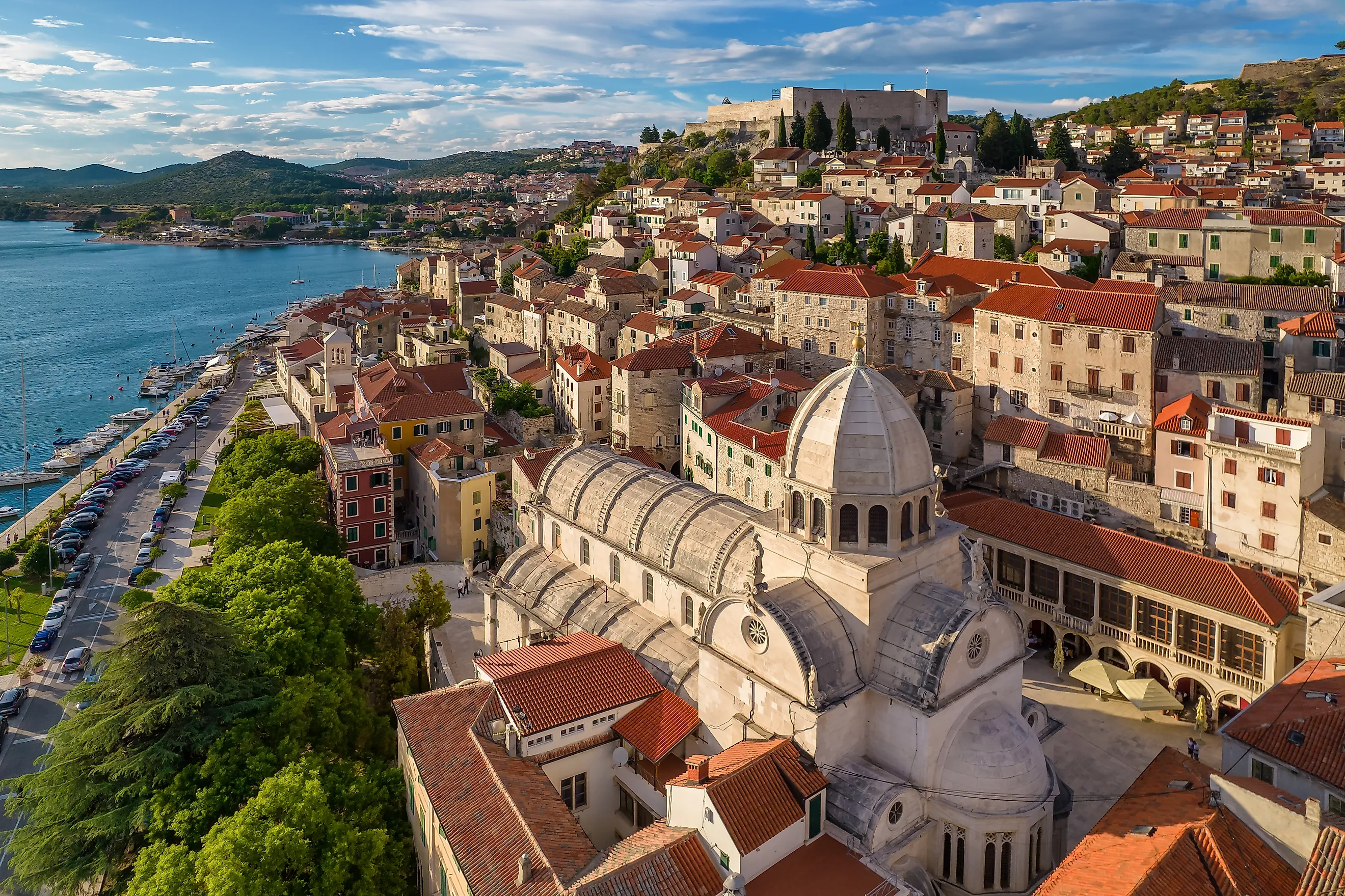
Šibenik has a little more weight to it than some resort-driven coastal towns. First mentioned in 1066, it is widely recognized as the oldest native Croatian town on the Adriatic, which immediately sets it apart from places defined more heavily by later Venetian or Roman layers. That history still feels present in the steep old center, in which streets climb and narrow around stone facades rather than opening into refined spaces designed mainly for visitors.
The landmark that anchors the place is the Cathedral of St. James, a UNESCO World Heritage Site recognized for its major architectural value and distinctive stone construction. Above the center, St. Michael’s Fortress looks out over the harbor and islands, and together the two landmarks give Šibenik a sense of built permanence that helps it feel like a real town first, a beautiful one second. That matters in retirement, because beauty wears better when it is tied to structure and daily use. In February 2026, residential property in Šibenik averaged €3,508 per square meter on Nekretnine, which keeps the town within reach by Adriatic standards while still reflecting its strong coastal demand.
What makes Šibenik especially workable is how compactly life gathers. Daily errands can be handled on foot through the old core and surrounding streets, and the town remains close to major regional assets. General hospital care is available locally, while Krka National Park and the wider coastline keep nature close without making the town feel remote. For retirees who want a coastal town with history, daily walkability, and a setting that still feels grounded, Šibenik is one of the strongest options in Dalmatia.
Poreč

Poreč feels orderly in a way many old towns do not. Its Roman street plan still shapes the center, with the decumanus and cardo pattern legible enough that moving through town feels intuitive rather than staged for effect. That underlying structure gives Poreč a kind of ease that matters more in retirement than spectacle alone.
Trogir

Trogir compresses an unusual amount of history into a very small footprint. UNESCO describes it as an outstanding example of urban continuity, with a street plan dating back to the Hellenistic period and later layers added by Roman, Venetian, and medieval rulers. That continuity is not abstract. It is what makes the town feel dense, coherent, and remarkably easy to navigate on foot.
The Cathedral of St. Lawrence, with the celebrated portal by Master Radovan, remains the town’s defining landmark, but Trogir’s retirement value is not purely architectural. It is also logistical. The historic center lies close to Split Airport, and the University Hospital of Split is within practical reach by road. That combination gives Trogir an advantage many small towns cannot match. It feels intimate without leaving retirees cut off from major transport links and advanced care.
This is the kind of place that works especially well for retirees who want old stone, a waterfront setting, and daily walkability without giving up access to larger city infrastructure. Trogir works well because it combines small-town scale with larger-city support close enough to matter.
The housing market strengthens that argument. In February 2026, residential property in Trogir averaged €3,583 per square meter on Nekretnine, a level that still makes sense for retirees prioritizing a UNESCO-listed core, airport access, and proximity to Split’s larger medical network.
Varaždin

Varaždin breaks the coastal pattern. It is inland, Baroque, and more visibly defined by Central European influence than by the Adriatic. Historically, it served as Croatia’s capital in the 18th century, and much of the center still carries that legacy in its townscape, facades, and civic layout.
The town’s main visual anchors are Stari Grad and the remarkable Varaždin Cemetery, which is often described less as a burial ground and more as a meticulously designed landscape. Official tourism material emphasizes its park-like quality, which says something important about Varaždin more broadly. It is orderly, cultivated, and calm without feeling static.
For retirement, Varaždin’s strength resides in its steadiness. It is not dependent on a coastal season, and its daily life is tied more to institutions, markets, and regional routines than to visitor turnover. General hospital care is available locally, and Zagreb remains close enough to widen medical and cultural access when needed.
That steadiness is matched by a stronger affordability case than in most of the coastal towns in this article. In January 2026, residential property in Varaždin averaged €2,420 per square meter on Nekretnine, which gives it one of the strongest home purchase cases in this lineup.
For retirees who prefer greenery, seasonal change, and a more grounded urban life, Varaždin is one of the strongest inland choices in Croatia.
Korčula

Korčula suits a more deliberate kind of retirement, which is exactly why it belongs here. It is one of the best-preserved medieval towns in the Mediterranean, and its herring-bone street pattern was designed to improve air circulation while providing shelter from stronger winds. That kind of practical intelligence in urban design tends to age well.
Samobor

Samobor works because it sits close to Zagreb without being absorbed by it. That is its real advantage. It gives retirees access to the capital’s infrastructure and major hospitals, but lets them live somewhere smaller, greener, and less pressured day to day.
Its center gathers around King Tomislav Square, and the town’s texture comes from the way greenery, low-rise architecture, and the Gradna stream soften the urban core. Samobor Castle, set above the town, adds both historic character and a natural vantage point, while its signature custard cake, kremšnita, and annual carnival, Samoborski Fašnik, give the place a local identity that feels lived in rather than curated.
Samobor is especially persuasive for retirees who want everyday calm without isolation. It has enough local character to feel distinct, but it does not require a major compromise on access. That combination is rare, and it is what makes Samobor one of Croatia’s smartest retirement choices.
It also makes one of the clearer affordability cases in this lineup. In January 2026, residential property in Samobor averaged €2,108 per square meter on Nekretnine, a figure that reinforces its appeal as a smaller base near Zagreb with easier buy-in costs than many coastal towns.
Makarska

Makarska makes an immediate impression, but it also holds up over time. The town sits between the Adriatic and Biokovo, and that geography gives it a scale and drama that few coastal towns can match. The mountain rises immediately behind town, while the harbor, waterfront, and old center stay close together enough that daily life still feels compact rather than sprawling.
That compactness is a real retirement asset. Makarska is scenic, certainly, but it is also functional. The old center around St. Mark’s Cathedral gives the place weight, while the Franciscan Monastery’s Malacological Museum adds a quieter cultural dimension through a collection of more than 3,000 shell specimens.
Healthcare support is available through the Split-Dalmatia County health network, including Makarska branch services, with more advanced hospital care available in Split. Makarska suits retirees who want a coastal life in full view, without sacrificing daily comfort. The housing market is one of the pricier ones listed here, but the town still makes sense for retirees willing to pay more for direct sea access and a dramatic setting. In January 2026, residential property in Makarska averaged €4,159 per square meter on Nekretnine, making it the most expensive purchase market in this article. Those figures do not make Makarska cheap, but they do help explain its appeal as a smaller coastal town with real services rather than a purely seasonal fantasy. It is beautiful, yes, but it also has access and enough substance to feel viable beyond the summer season.
Croatia does not offer a single ideal retirement town, and that is part of its appeal. Some retirees will want the sea close at hand, while others will prefer an inland base with stronger links to major cities and less seasonal fluctuation. The towns here are not interchangeable. Their value lies in how differently they answer the same question: where can retirement feel manageable, grounded, and still genuinely rewarding?