6 Quietly Charming Towns In Massachusetts
Massachusetts is a state of rocky Atlantic shorelines and picturesque colonial town centers that make it easy to find your next quiet destination. If you are looking for coastal relaxation, there is no place on the East Coast quite like Rockport, where its historic harbor perfectly captures the charm of Cape Ann. And for those who prefer an inland stay, Stockbridge has one of the state's best main streets in the state, with the iconic Red Lion Inn that looks as if it were lifted straight from a Norman Rockwell painting
Rockport

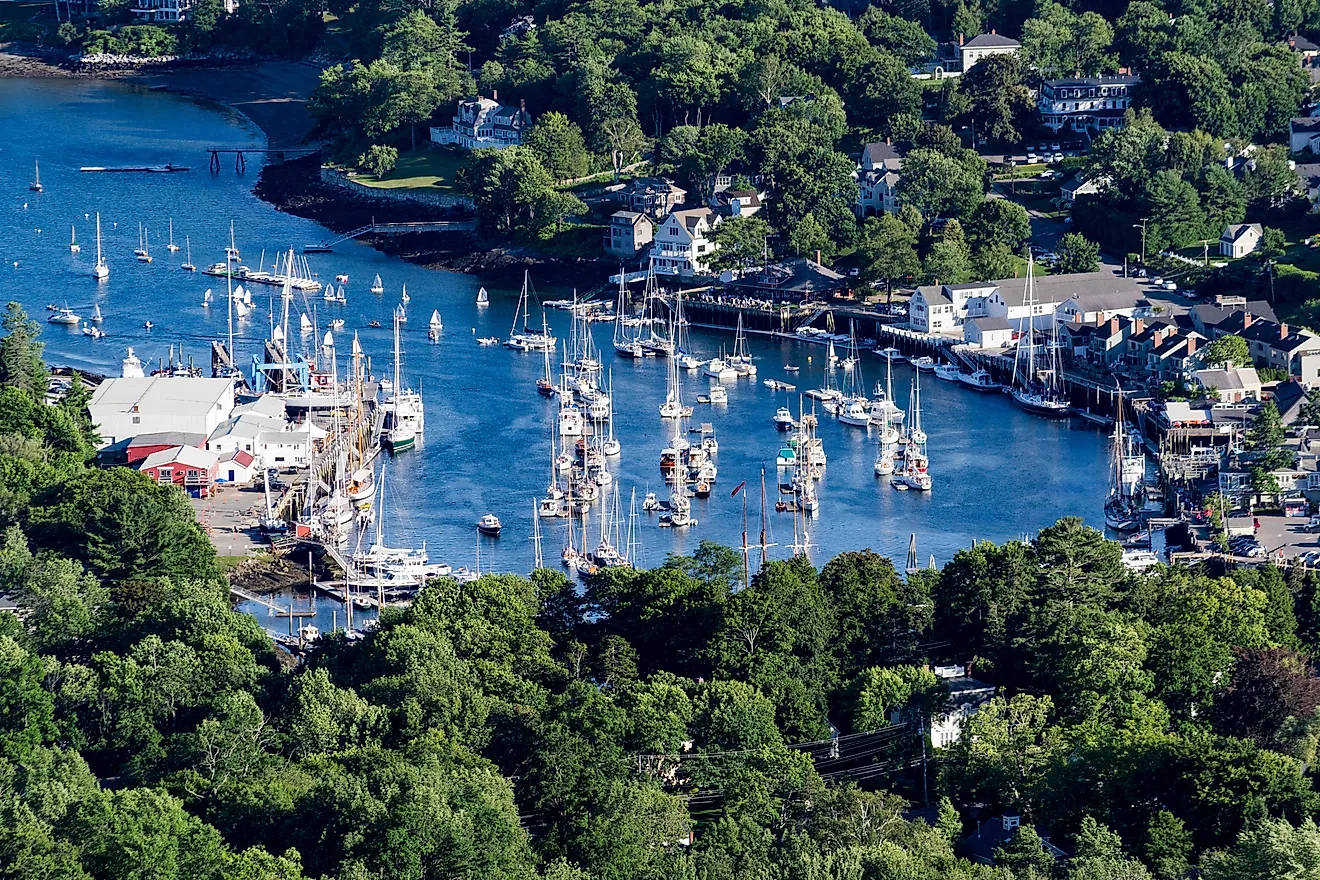
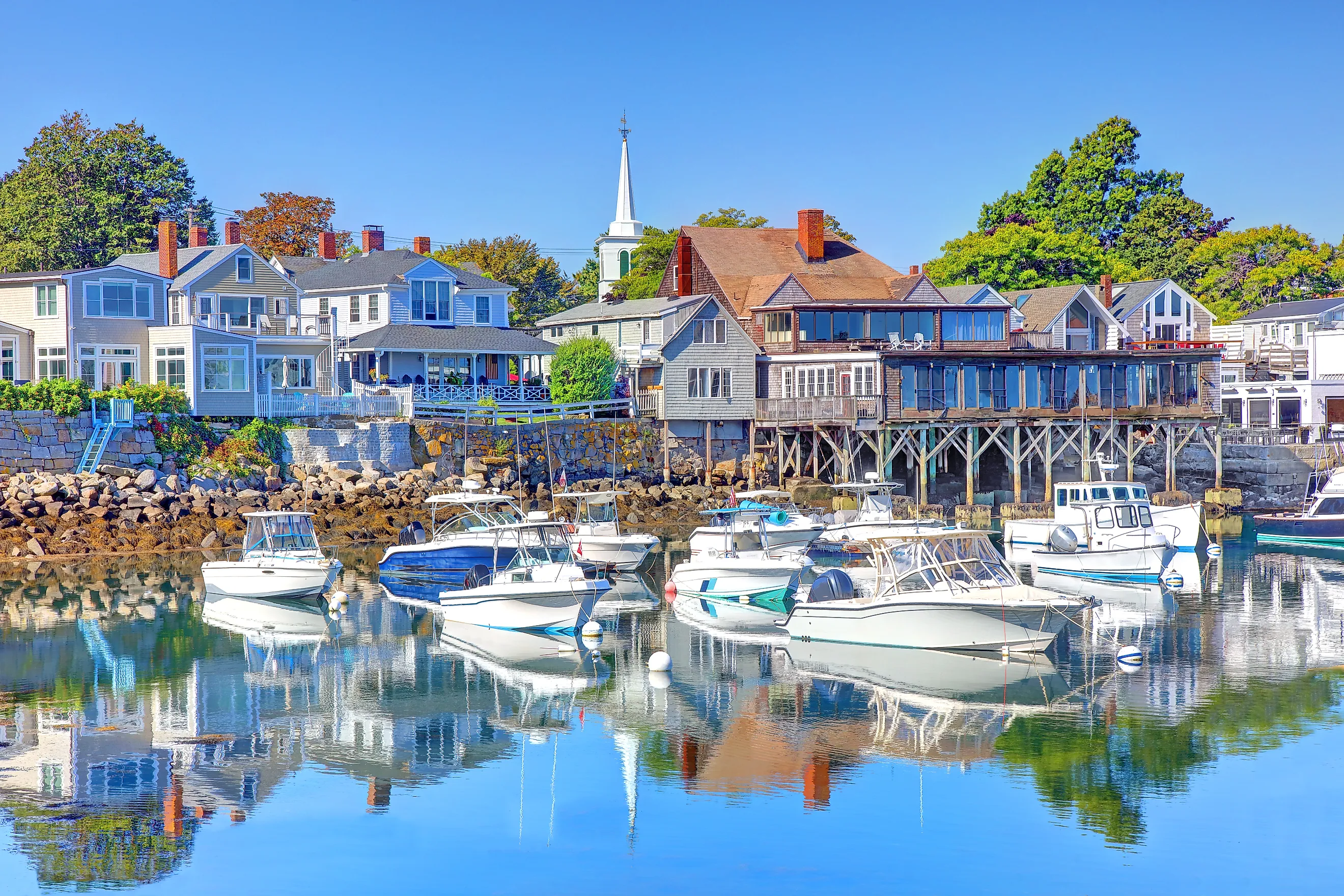
Located at the tip of the Cape Ann peninsula, Rockport is a quaint seaside town that has been popular among artists since the early 1900s. And it’s easy to see why. Its compact harbor is home to lobster boats and is ringed by attractive old clapboard buildings, an idyllic setting that has changed little over the years. It’s here you’ll see a red fishing shack on Bradley Wharf. Known as Motif Number 1, it’s said to be the most-painted (and most-photographed) building in America, and is an unofficial symbol of Cape Ann that attracts artists from far and wide.

Bearskin Neck is equally fun to wander. This slim peninsula was once a working dock for granite shipping and fishing, but is now home to artist studios, galleries, and seafood counters. Pay a visit to the iconic Roy Moore Lobster Company, in business since 1918 and still serving fresh lobster on the wharf.
Further along Main Street, the Rockport Art Association & Museum holds rotating exhibitions and works dating back over a century. For a different perspective of this beautiful stretch of quiet coast, head to nearby Halibut Point State Park. Set in a former granite quarry at the northeastern tip of Cape Ann, a short trail leads from the parking area to a rocky overlook where, on a clear day, you can see as far as Maine and New Hampshire.
From Stockbridge’s artsy pedigree to the harbor town of Rockport on Cape Ann (plus a few stops in-between), these five quietly charming communities tell a different chapter of New England’s most fascinating stories.
Stockbridge

If the pretty town of Stockbridge seems strangely familiar, well, that’s because it is. The one-time home of legendary illustrator and painter Norman Rockwell, Stockbridge and its idyllic Main Street served as the model for some of the artist’s most iconic Saturday Evening Post covers.

A resident of the town for the last 25 years of his life, his legacy lives on at the Norman Rockwell Museum, a 36-acre attraction just outside of town that displays all 323 of those covers, alongside nearly 1000 original artworks. It provides a fascinating look at the man and his art through rotating exhibitions, along with his preserved studio with its original easels, brushes, and his personal library.
Stockbridge’s other major attraction has a cultural twist to it, too. Chesterwood was the summer home and studio of sculptor Daniel Chester French, whose most famous work is the seated figure of Abraham Lincoln in the Lincoln Memorial. You can tour the home, walk through the studio where hundreds of French’s plaster models and bronze works are displayed, and even explore the surrounding gardens and woodland paths.
The Red Lion Inn is another must-see. Welcoming guests since 1773 and one of the oldest continuously operating inns in the country, it looks like something straight from a Rockwell painting. And yes, you can stay there!
Lenox

Located in the heart of the Berkshires, the charming town of Lenox is most famous as the home of Tanglewood, the 500-acre summer residence of the Boston Symphony Orchestra. Established in the 1930s, more than 350,000 music lovers every year have spread blankets on the lawns to enjoy classical symphonies, as well as contemporary acts. Author Nathaniel Hawthorne lived on the Tanglewood grounds around 1850 and wrote The House of the Seven Gables here.
Lenox’s other essential stop is The Mount, the country estate that Pulitzer Prize-winning author Edith Wharton designed and built in 1902. Wharton, the first woman to win the Pulitzer for fiction for her 1920 novel The Age of Innocence, drew on local people and settings for many of her most famous works. Tours of the home and formal gardens are available, and nearly 50 acres of grounds can be explored (ghost tours are available). Ventfort Hall, a nearby Jacobean Revival mansion built in 1893, now operates as the Gilded Age Museum and served as a filming location for The Cider House Rules.

Downtown Lenox is a compact, pleasant stroll. The Lenox Library is a local landmark, and its collection includes an apology note from Wharton for returning a book late. The Church on the Hill overlooks the town center, and Shakespeare & Company, one of the largest Shakespeare festivals in the country, stages performances year-round on Kemble Street.
Concord

Concord fits this list easily, with a population of about 18,500 and a town center lined with historic buildings, literary landmarks, and Revolutionary War sites. The town is home to the Old North Bridge, where the famous “shot heard round the world” was fired, and the walkable Concord Center Cultural District also includes Concord Museum, Sleepy Hollow Cemetery, and several National Historic Landmarks.
Literary history runs just as deep here. Louisa May Alcott’s Orchard House, where Little Women was written and set, remains open for visits, while The Old Manse offers tours of the house where Ralph Waldo Emerson and Nathaniel Hawthorne both left their mark. For an equally atmospheric stay, Concord’s Colonial Inn has welcomed guests since the early 18th century and still overlooks Monument Square in the middle of town.
Essex

Just 30 miles north of Boston on the North Shore, the small town of Essex is known as the birthplace of the fried clam. It was back in 1916 that Lawrence “Chubby” Woodman took a suggestion from a local fisherman and dropped a handful of clams into a vat of hot oil. More than a century later, Woodman’s of Essex still occupies the same spot, still serving gallons of clam chowder in the same no-frills, eat-in-the-rough style that put it on the map.
Prior to the clams, Essex was known for its shipyards. More than 4,000 vessels were built here from the 1660s through to the 20th century, more than any other town in America. In fact, by 1852, one in every 28 vessels sailing under the American flag could be traced back to Essex. You can learn more about this heritage at the Essex Shipbuilding Museum, with its artifacts, tools, and ship models, as well as a working shipyard that still builds and restores wooden boats using traditional methods.

Another must-see here is Cogswell’s Grant, a restored 18th-century farmhouse that’s now a museum of American folk art. Set overlooking the Essex River estuary, the collection includes painted furniture, hooked rugs, and ceramics. Fall’s Essex ClamFest is a local highlight and features a popular chowder tasting competition.
Deerfield

Set in the scenic Connecticut River Valley of western Massachusetts, the charming town of Deerfield is home to one of the best-preserved colonial streetscapes in the country. Old Main Street, a mile-long road lined with centuries-old homes, looks much as it did 300 years ago. Historic Deerfield, the nationally recognized outdoor museum that anchors the street, features 12 period house museums dating from 1730 to 1850. It’s also where you’ll find the Flynt Center of Early New England Life with its displays of furniture, textiles, silver, and decorative arts from the region’s earliest days.
Memorial Hall Museum tells the story of the region through a collection that was begun in 1797, making it one of the oldest in the state. Highlights include local artifacts, quilts, and Native American objects. Be sure to also visit the Hall Tavern Visitor Center, an authentic 18th-century tavern with its original bar still in place, as well as the 1747 Wells-Thorn House. Visited as part of a tour of the property, highlights include rooms furnished to represent different periods from the 1720s through the 1850s.

Historic Deerfield also operates the Deerfield Inn, a Federal-period building from 1884 that still offers first-rate accommodations. For dining, book a table at Champney’s Restaurant & Tavern. And for a little quiet time to yourself, the Channing Blake Footpath offers a third-of-a-mile walk past a working farm and meadows to the banks of the Deerfield River; it’s the perfect place to enjoy a little solitude.
Quiet, Please: You’re in Massachusetts
Together, these six charming small towns offer something that’s increasingly difficult to come by these days. Whether it’s time spent on the porch of a 250-year-old inn, the sound of a symphony drifting across a lawn, or the sound of waves lapping against the shoreline, these communities offer a pace and an authenticity that bigger destinations simply can’t match.