5 Ozarks Towns Where Time Stands Still
The Ozark Plateau ranges across Missouri, Arkansas, and Oklahoma, its forested hills concealing towns that refuse to surrender their identities to homogenized culture. Unlike resort towns built around seasonal tourism, these settlements developed from necessity rather than leisure, with histories rooted in survival, displacement, and cultural preservation. French winemakers, Cherokee survivors, Victorian health seekers, and German colonists each established distinct communities among limestone bluffs and river valleys, shaping the region’s character.
That determination to maintain tradition continues today. Spring-fed rivers run cold through ancient forests. Victorian storefronts line courthouse squares. Traditional crafts pass between generations much as they did before interstate highways connected these once-isolated hollows to the outside world.
Hermann, Missouri

It was in 1837 that the German Settlement Society of Philadelphia founded Hermann to create a new Saxon homeland in America, where German language and culture could flourish away from Anglo-American influence. The town succeeded, becoming home to Stone Hill Winery, which produced the second-largest winery in the United States and won eight World’s Fair gold medals. Prohibition shut down the wine industry in 1920, triggering an economic collapse that paradoxically preserved Hermann’s architecture and German traditions as other communities assimilated.

Deutschheim State Historic Site preserves houses that show how German colonists recreated domestic spaces from their homeland in the Missouri wilderness. The Hermann Historic District includes more than 150 buildings listed on the National Register of Historic Places, with street names such as Schiller, Goethe, Mozart, and Gutenberg reflecting that legacy. Hermannhof Winery’s arched stone cellars tunnel into the hillside, where constant temperatures protected wine before electric refrigeration.
Mountain View, Arkansas

A quintessentially isolated Ozark community, Mountain View has earned the nickname “Folk Music Capital of the World” for its efforts to preserve mountain music and traditional crafts. This cultural focus never erased the rural character that predated tourism. Ozark Folk Center State Park keeps Ozark heritage active through daily craft demonstrations. Blacksmiths hammer iron. Weavers work on looms. Musicians play dulcimers and fiddles as their ancestors once did.

The White River meanders through limestone bluffs, its clear waters well-suited for fishing, with rainbow trout thriving in cold Ozark currents. Courthouse Square becomes an informal concert space on Friday and Saturday nights when local musicians gather for jam sessions, drawing passersby into circles of banjos, guitars, and harmonized ballads. Each April, the Arkansas Folk Festival features workshops on traditional instruments alongside performances by established and emerging musicians.
Tahlequah, Oklahoma

An inseparable part of the Ozarks, the Cherokee people rebuilt their nation in these foothills after the Trail of Tears chased them out of their homeland, eventually leading them to Tahlequah. The Illinois River cuts through forested valleys, its gentle current perfect for float trips where canoes drift past bluffs and wildlife. The Terp Float Festival, held annually in August, transforms the Illinois River into a cannabis-friendly haven. Crowds of people, floating in rafts and kayaks, enjoy music and riverside camping amidst the vibrant atmosphere. The following month, Cherokee National Holiday brings tens of thousands back to Tahlequah for powwows, art markets, and celebrations of Cherokee culture.

Tahlequah's history reflects both tragedy and resilience, with the Cherokee language and traditions bouncing back from persecution and relocation. Since 1869, the Cherokee National Capitol has remained a functioning judicial headquarters where tribal representatives meet. The Cherokee Supreme Court Museum revitalizes Oklahoma's oldest government building still standing, where judges administered justice according to Cherokee law even when the United States government tried to dissolve tribal sovereignty.
Van Buren, Missouri

Van Buren thrived on logging until timber companies depleted the surrounding forest, leaving the Carter County seat economically static until the creation of the Ozark National Scenic Riverways positioned it as a gateway for nature tourism. Big Spring releases 286 million gallons of water daily from the largest single-orifice spring in the United States, forming a deep pool before flowing into the Current River. The river winds through limestone bluffs and gravel bars, its cold waters still supporting smallmouth bass and rainbow trout.
The Carter County Courthouse, a two-story pine structure, continues to conduct county business from the same rooms where circuit judges presided during the Reconstruction era. Jolly Cone has served ice cream since 1947, its counter and stools largely unchanged across generations. Pop’s River Jam & Fall Festival brings music and river culture to Riverfront Park, recognizing the Current River’s long role in shaping Van Buren’s identity.
Eureka Springs, Arkansas

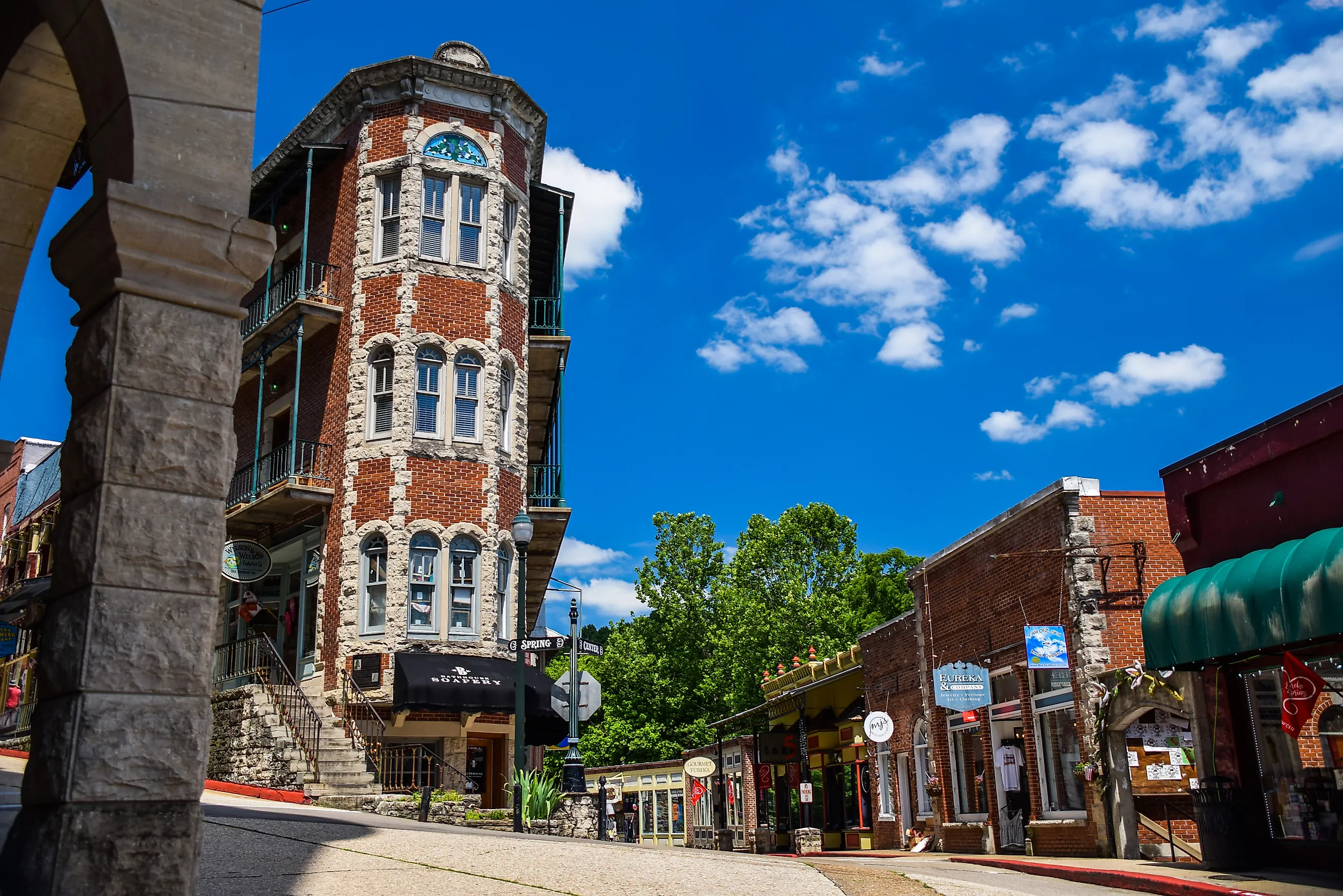
Word spread quickly in 1879 about a Great Healing Spring said to cure illness, and a Victorian mountain village soon formed around it in the Ozark hills. Preservation ordinances later restricted development, leaving the town largely intact as its identity shifted from health resort to arts community. Basin Spring Park occupies the original spring site where the town first took shape, with water still flowing from limestone depths. While the springs are no longer used for drinking, the town’s cultural connection to them remains intact.

Thorncrown Chapel rises through the forest canopy, its walls of glass blurring the boundary between structure and woodland. Turpentine Creek Wildlife Refuge stretches across Ozark terrain, providing a sanctuary for rescued big cats. The Crescent Hotel, long associated with reports of hauntings, continues to draw visitors interested in its layered past. Each spring, the May Festival of the Arts fills downtown streets with artists and handcrafted works.
The Ozarks' Distinct Settlements Resist Homogenization
The Ozark Mountains shelter communities where time remains closely tied to their founding histories. Ste. Genevieve’s French settlers built vertical log homes that disappeared elsewhere. Hermann’s German winemakers recreated a Saxon homeland in the Missouri hills. Tahlequah became the Cherokee capital following forced removal from ancestral lands. Eureka Springs formed around the promise of healing waters, while Van Buren’s economy once depended on timber that floated downstream when forests still covered these hills.
Together, these towns reflect the Ozarks’ blend of Lake States timber culture, Midwestern German heritage, and Southern storytelling traditions. Their survival preserves a regional identity shaped by geography, memory, and continuity rather than modern uniformity.