6 Oldest Incorporated Towns In Wisconsin
After the American Revolution, what would eventually become the state of Wisconsin began attracting settlers from all over, most of whom worked in the local dairy, lumber, and mining industries. In fact, Wisconsin’s nickname, the Badger State, comes from the mining industry, more specifically, the white lead miners who chose to burrow into hills to find shelter instead of building homes.
While it can be difficult to determine when the first actual towns were established, versus temporary trading posts or pre-existing Native American territories, it is widely accepted that Green Bay and Prairie du Chien were the first two permanent, year-round settlements. Green Bay was officially incorporated in 1854, and Fountain City in 1860, making them two of the oldest incorporated towns in the state. These founding communities, along with the ones below, are thriving centers today that attract visitors from all over the US who want to learn more about their history and experience the best of what the state of Wisconsin has to offer.
Mineral Point

Mineral Point is where Wisconsin began. European settlers arrived here in 1827, making the town one of the oldest in the state. The area quickly became a large mining destination for zinc and lead, and these metals were mined until the start of the 20th century. In 1836, Henry Dodge was inaugurated as the first governor of the Wisconsin Territory in downtown Mineral Point. By 1849, the California Gold Rush stalled the growth of this barely-started town, but the discovery of zinc near the bottom of empty lead mines helped turn things around. Agriculture helped grow the economy, and the dairy industry in Mineral Point was an established fixture by 1900.
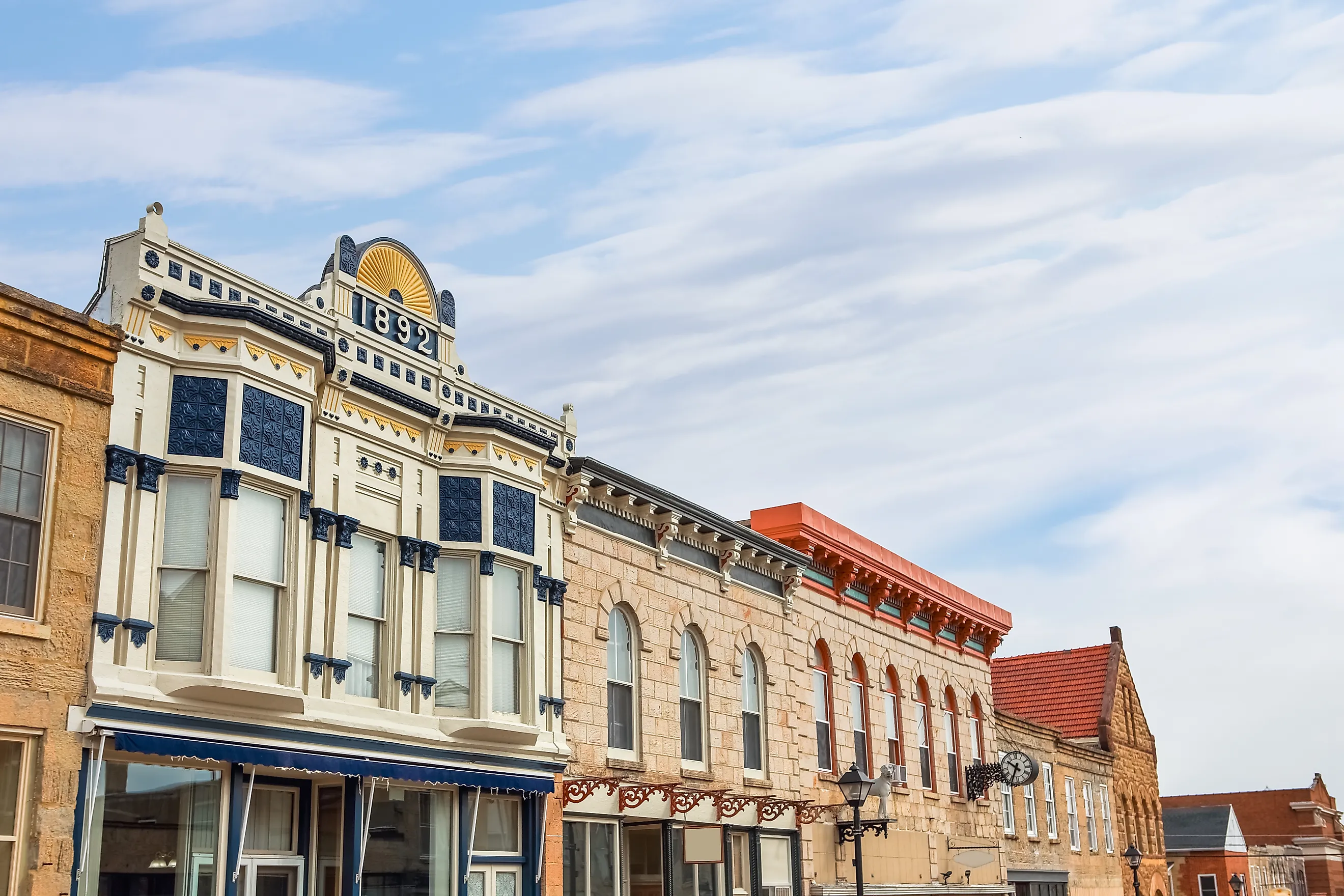
Mineral Point is a beautiful destination to visit today and was also the first in Wisconsin to be listed on the National Register of Historic Places. Echoing the origins of its early settlers, you will find architecture here that resembles that of Cornwall, England, right in the heart of Wisconsin’s Driftless Area. There are 500 historic buildings here, so the best way to see them is to book a local walking tour. The tour will include a visit to Pendarvis, a group of stone houses built by Cornish miners in the 1830s. Across from Pendarvis is Merry Christmas Mine Hill, where there are two short trails to explore, the aptly named Lead Trail loop and the Zinc Trail loop. Remember to stop by the Mulberry Pottery to see and purchase wood-fired stoneware, porcelain, and pit-fired earthenware made by local potter, Frank Polizzi.
De Pere

De Pere is a suburb of Green Bay in Brown County, founded as a mission in 1671 and first incorporated in 1857. French fur traders controlled the region until the transfer of territory by the British in 1763. The British got dealt the same hand by the Americans in 1783. The Oneida people settled in De Pere in 1821, but six years later, they were forced to move west. By 1850, there were three sawmills, one flour mill, and two lathe mills in De Pere. The vast forests in the area produced excellent wood, such as white pine, oak, maple, and hickory, which were processed into paper and lumber before being exported by steamers on Lake Michigan. In 1890, East and West De Pere formed the unified City of De Pere.
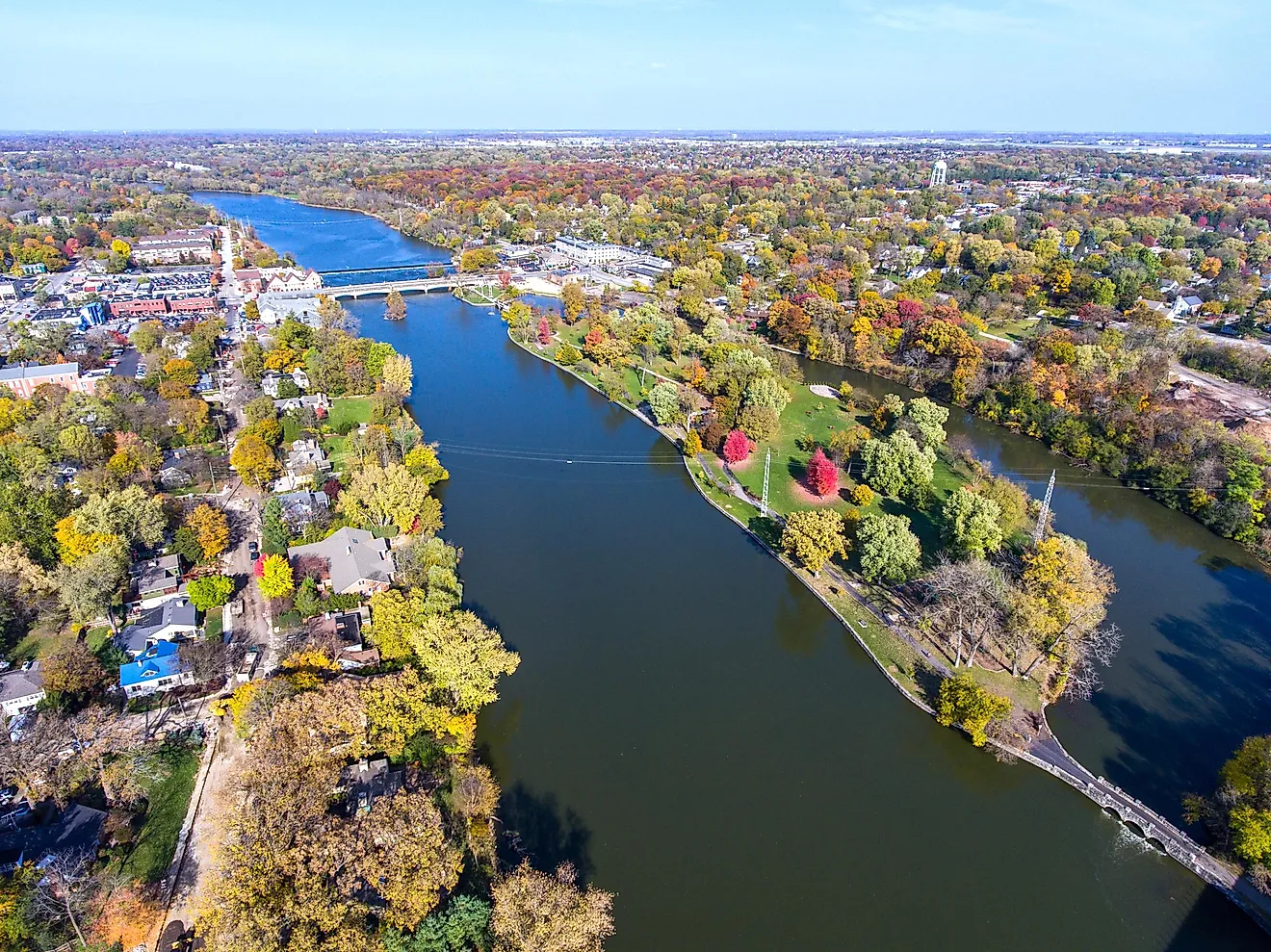
Today, you can almost relive De Pere’s rich history by strolling through downtown, much of which is recognized by the National Register of Historic Places. Here, you will see 19th-century architecture, especially evident in the historic homes and storefronts. If you take a walk to Voyageur Park, along the Fox River, you can spend a day picnicking and fishing on the shore. Or, you can hike the Fox River Trail, which connects De Pere to Green Bay. If you visit during the winter months, you can also use the trail for snowshoeing or cross-country skiing.
Platteville

In 1827, a group of miners found themselves gathered around the Rountree Branch Creek in what would become the town of Platteville. There was nothing here but hazel bushes and a handful of buildings at the time, but by 1835, the town was surveyed, and space was made for 19 lots in addition to the City Park. Platteville continued to grow after mining declined in the area. Over time, many more buildings were constructed, and the arrival of the railroad ensured faster growth during the 1870s and 1880s. In 1990, Platteville’s Main Street Commercial Historic District was listed on the National Register of Historic Places, though many of its buildings were demolished to make room for more parking and other modern facilities. Therefore, before it was protected by a Historic Preservation Ordinance and a Historic Preservation Commission, Platteville lost several historic buildings, including a Masonic Temple, a clock tower church, and a theater.
Fortunately, there is still a lot to see and do in Platteville today. You can visit the Mining and Rollo Jamison Museums, which feature a lead mine dating to 1845, and you can also go for a ride in a 1931 mine train. You can also hike or bike in the area around the Rountree Branch or visit Katie’s Garden, where you will find more walking paths and picnic areas.
Sauk City

Sauk City began as staked-out claims in 1838, and it took only two years for the first settlements to spring up at what are now the nearby Prairie du Sac and Baraboo. But long before the town was incorporated in 1854, making it the oldest incorporated village in Wisconsin, Sauk City was the site of a large Native American village. Today, there is no official museum in this small village where you can learn more about its history, but many of its historic sites still stand, including the 1862 Sauk City Fire Station.
Aside from viewing the historic buildings, you can also spend a couple of hours along the Wisconsin River, and even kayak or canoe during the summer months. The local parks also offer playgrounds for the kids, while you will find hiking trails and gorgeous bluffs at the Devil’s Lake State Park, not far from town.
Prairie du Sac

The small town of Prairie du Sac lies a mere seven minutes away from Sauk City, and here you will find the Tripp Heritage Museum inside the Tripp Memorial Library and Hall. The building was constructed in 1912, and the Sauk Prairie Area Historical Society took up the second floor in the 1970s before buying the building from Prairie du Sac in 1997. The museum is dedicated to both the culture and history of the Wisconsin River community as a whole. As such, you will find several collections of photographs, documents, artifacts, and art to explore here.
If you want to see what the outdoors has to offer in this part of Wisconsin, head to the beautiful Ferry Bluff Eagle Council Overlook, where you can look out over the river and watch the bald eagles perch on Eagle Island. Or you can take the Great Sauk State Trail, which runs through both Sauk City and Prairie du Sac, as it parallels the Wisconsin River on a former railroad bed. The trail is paved, making it a good option for walking, biking, and even in-line skating.
Shullsburg

Shullsburg is located in Lafayette County and was founded during the 1820s. The Northeast section of the town was platted in 1841 by Missionary Priest Smauel Mazzuchelli, who named the streets after virtues. The town’s brick and limestone buildings were mainly constructed after the railroad arrived in the 1880s, and the high school was built in 1900. Mining helped the town grow, and the last working lead mine closed in 1979. When that happened, the town’s growth stalled, and the restoration of existing buildings and the construction of new ones became a strong focus.
As one of Wisconsin’s oldest incorporated towns, Shullsburg bounced back and offers several things to see and do today. The historic buildings are well preserved and a delight to view. The Water Street Commercial Historic District spans seven acres and includes the Brewster House and the Greek Revival Methodist Episcopal Church. For outdoor fun, you can drive to the nearby Yellowstone Lake State Park, around 20 minutes away, where you will find more than 1,000 acres of beautiful landscapes that invite you to fish, picnic, hike, and explore.
Journey Through Wisconsin’s Living History
Wisconsin’s oldest incorporated towns give you the opportunity to experience the state beyond the usual tourist stops. You will learn more about each town’s history while seeing first-hand what makes each one special. There are outdoor views, trails, historic buildings, and museums wherever you look, so you will never run out of things to see or do. Whether you live in Wisconsin or come from another state, you will be amazed at what you will learn about America in this often-overlooked place. So, make some space on your next travel list for the oldest towns in Wisconsin and prepare to be wowed.