6 Of The Oldest Incorporated Towns In Nebraska
Nebraska’s oldest incorporated towns reveal how the state actually developed. Many began as river landings, railroad stops, or county seats that anchored settlement across the prairie. Steamboat traffic on major rivers, followed by expanding rail lines, brought people, goods, and permanent communities to what had been sparsely populated land. When transportation routes shifted or industries declined, some towns struggled while others adapted through manufacturing, agriculture, or tourism. Today, their historic districts, courthouses, depots, and museums show how Nebraska towns endured economic change while maintaining a visible connection to their 19th-century origins.
Brownville

Brownville’s history begins at the edge of the Missouri River. The town was founded in 1854 by Richard Brown as a river trading post and flourished as a gateway to the West. It was incorporated in 856 and by the 1880s was one of the largest river towns in the territory. Before the railroads took over, Brownville was a crucial center for trade, settlement, and steamboat traffic.
If you want to visit a museum in Brownville in 2026, you should get there early, as you will likely want to spend a couple of hours at each. Some of the best ones include the Brownville Depot and Railroad History Museum, the Carson Home Museum, and the rumored-to-be-haunted Captain Bailey House. Many of the museums are free to visit, and at the Carson Home, you can view a 1877 square grand piano. After visiting the museums, you can walk the Whiskey Run Creek Nature Trail and see the folk art and sculptures along the way to the Whiskey Run Creek Winery. Plus, if you visit at the end of May, you can catch the Annual Spring Flea Market, which offers a little bit of everything for every type of shopper.
Plattsmouth

Plattsmouth is a small town that sprang up almost overnight as settlers and river traders eyed its position near the confluence of the Platte and Missouri Rivers. They also saw opportunity in the area’s fertile bottomlands. The town was incorporated in March 1855, creating one of Nebraska’s earliest municipal governments.
You can find out more about the town’s local history at the Cass County Historical Society Museum. If you visit during winter, sledding and ice skating are available for the whole family in Plattsmouth’s local parks. You can also take a short drive to the Schramm Park State Recreation Area to visit the nature center and discover the area’s wildlife or hike the multiple trails. Most visitors take the trails along the Missouri River or get out on the water to fish and canoe.
Florence

Before Omaha became a dominant settlement, what is now known as Florence was already busy and bustling. Florence was built around what remained of the Mormon Winter Quarters and was one of the first notably sizable European-American settlements in the state. Florence was incorporated in 1857 by the Nebraska Territorial Legislature. The town attempted to become the capital of Nebraska the following year, but was unsuccessful. Today, Florence is a historic neighborhood in North Omaha, annexed by the city in 1917. It is the oldest community in Omaha, and the place where some of the first buildings and structures were built in Nebraska.
You can visit the Winter Quarters Mill Museum, built in 1846 and listed on the National Register of Historic Places. It is registered under the name Weber Mill, in honor of the Weber family, who were Florence millers for over 100 years. The mill, also called the Florence Mill, is the oldest of its kind in the state. At 3017 Mormon Street, you will find Keirle House, built by the owner and founder of the Keirle Ice Company. After visiting this historic house, stop by the Pioneer Mormon Cemetery, also called the Winter Quarters Cemetery, to see the last resting places of the Mormon pioneers who lived in Winter Quarters.
Nebraska City

Nebraska City has its roots in 1854 and was officially incorporated in March 1855. This river town was once a central transportation point for westward expansion and freight routes across the frontier. In 2026, there is a lot of history to explore in the area, including at the Missouri River Basin Lewis & Clark Center. You can explore interactive exhibits on plants, medicine, animals, birds, and more here. You can even climb aboard a keelboat replica, exactly like the one explorers used more than 200 years ago. After visiting the center, you can head to the Kregel Windmill Factory Museum to see what an industrial revolution factory used to look like. There are more than 1 million artifacts in this museum, and it also still houses all the equipment used to produce the ELI windmills.
Other things to do in Nebraska City include participating in the Annual AppleJack Festival, which celebrates the town’s apple harvest. The festival includes parades, carnivals, and, of course, lots of apples and apple-themed foods. You can also learn more about the inaugural Arbor Day on Arbor Day Farm, which includes great walking trails and interactive exhibits.
Columbus

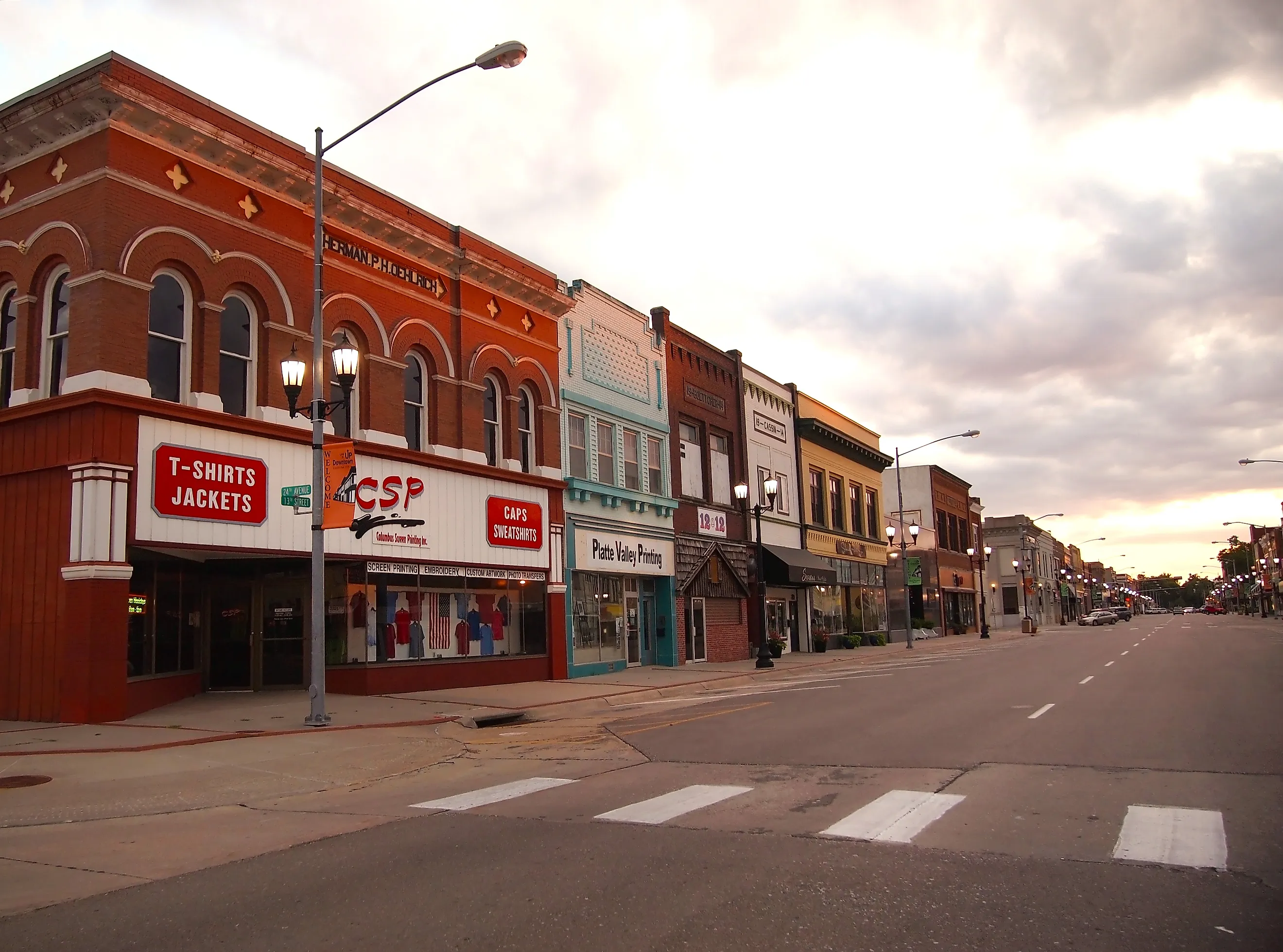
Columbus was an early frontier town platted in 1856 and incorporated by the Platte County Commissioners in 1865. It was founded by settlers from Columbus, Ohio, and quickly benefited from its strategic location on the route to Colorado and the transcontinental railroad. There are plenty of historical sites to see in Columbus today, including the Andrew Jackson Higgins National Memorial. The memorial features a full-size replica of a ‘Higgens’ boat and several bronze statues of soldiers. You can also visit the Quincentenary Belltower, which houses ten large church bells. They peal every 15 minutes, paying tribute to the 500th anniversary of Christopher Columbus’s journey to the New World.
Remember to book a spot on a guided tour for the St. Michael’s Catholic Church complex, around 20 minutes away from Columbus. The site includes museum artifacts and incredible interior design and architecture. And if you want to spend some time outdoors, you will find Lake North Campground just four miles north of Columbus. There is a 200-acre lake and a 12-acre beach here, perfect for boating and fishing.
Tecumseh

Tecumseh was founded as Frances in 1856, a settlement laid out to serve the surrounding agricultural region. Unlike some other old towns, Tecumseh’s early growth was thanks to local governance instead of river or rail trade. When it was still called Frances, it was selected as the county seat of Johnson County. The residents voted to rename the town Tecumseh, which highlights the community's fascination with Native American leaders at the time.
In 2026, you can visit the Johnson County Historical Society Museum to see exhibits that detail the town’s past. There are also several 19th-century buildings downtown, including the 1880 Tecumseh Opera House and the 1889 Johnson County Courthouse. At the Tecumseh City Park, you can take a breather or go for a leisurely walk. If you want to combine a history outing with a nature experience, head to Homestead National Historical Park, around 30 minutes away from Tecumseh. The site preserves the Homestead Act history and also offers great hiking trails. For water activities, you can fish and boat at the Pawnee Lake State Recreation Area, an hour away.
Old Towns That Helped Build Nebraska’s Foundation
Nebraska’s oldest incorporated towns tell a fascinating story of how the state started taking shape long before the different settlements were linked by highways and interstates. These places developed from river landings and courthouse squares thanks to determined settlers who wanted order and community on the frontier. Today, the historic districts and museums carry on this legacy and invite visitors to find out more. When you visit them and explore the towns as a whole, you will see how Nebraska moved from territory to state through everyday small-town decisions and hard work.