6 Old-Timey Mining Towns In Arizona
There is a 3,000-year history of mining in what is now Arizona, with early natives mining for copper, silver, and turquoise. Industrial mining came with European colonization, and with California’s Gold Rush, miners made their way West, many stopping in Arizona. Some stayed to pan for gold along the Colorado River, while others returned after failing to strike it rich in California. By the 1870s, silver was discovered in Arizona, and the population soared. In the 1880s, a copper rush was underway. Until the 1950s, copper mining was a key economic industry in Arizona, and as a result, towns developed around these mines. With the decline of mining, many towns retained their frontier image, either as part of their commercial districts or as ghost towns that drew tourists to see the original cities and how people lived.
Jerome

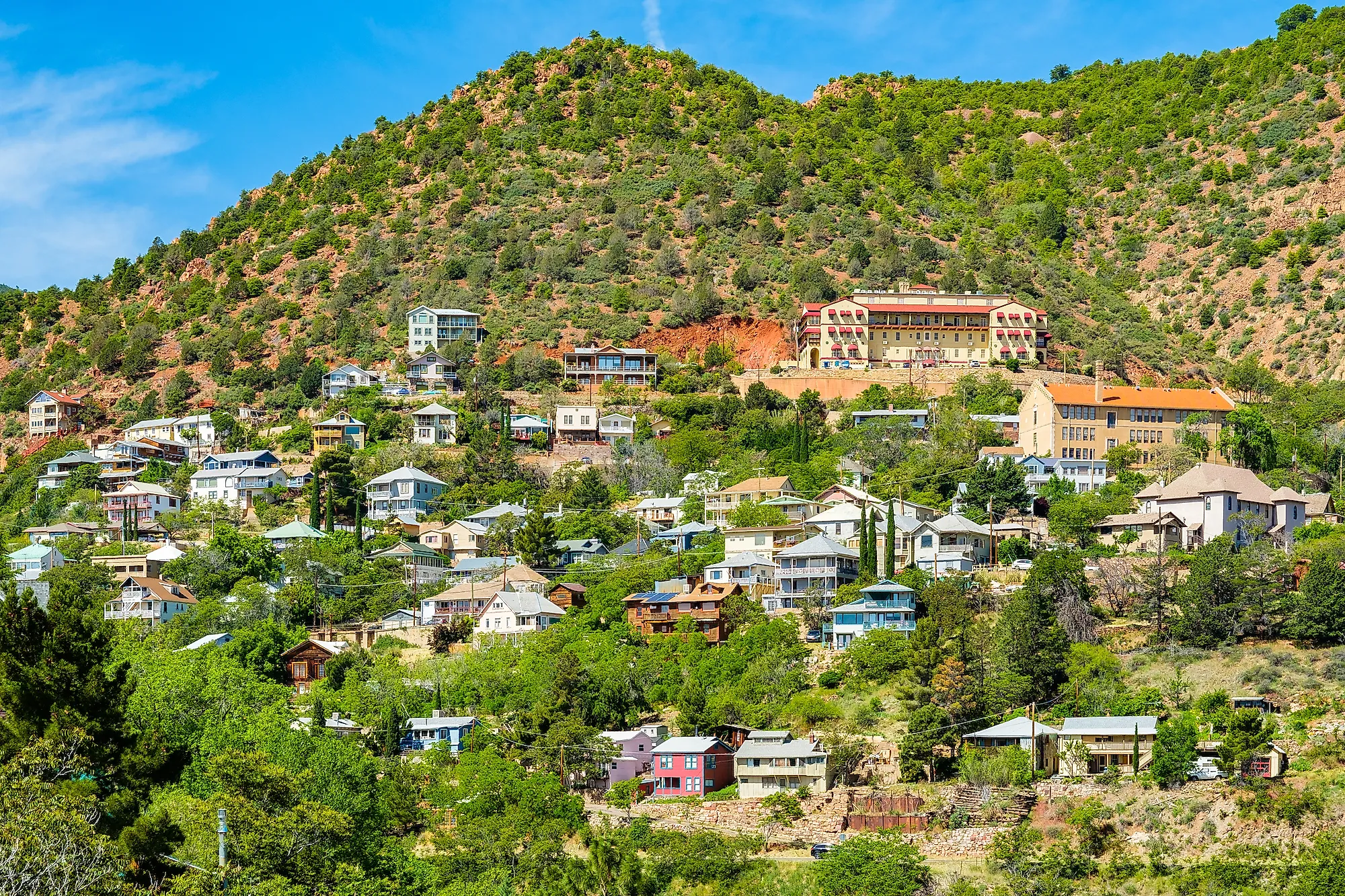
A town of 464, Jerome has a rich history in mining. During its copper mining heyday, the population reached 10,000 by the 1920s. Two ore deposits were discovered in the 19th century: one contained copper, gold, silver, and other metal deposits, while the other had among the richest copper deposits ever found. By the 1950s, the mining industry was in decline, and the residents turned to tourism to keep the town alive. The Jerome Historic District is a former mining community preserved in the 1960s. A National Historic Landmark, the district was also included in the National Register of Historic Places. Originally a hospital built in 1926 in a Mission Revival style of architecture, the Jerome Grand Hotel was opened in 1996 in the preserved building.

The Gold King Mine & Ghost Town is a former gold mining camp founded in 1890. By the 1920s, the gold was depleted, and the town was abandoned and forgotten. It was revived as a tourist ghost town in 1981, with renovated historic buildings, mining equipment, and a stamp mill. Jerome State Historic Park is located in the Verde Valley, built around the Douglas Mansion, which was constructed in 1916 by the Douglas family, a prominent mining entrepreneur. The mansion is now a museum. Audrey Headframe Park, managed by the Jerome Historical Society, features a glass floor above a 1,900-foot-tall mining shaft.
Bisbee

The town of Bisbee was founded in 1880, following the discovery of copper, gold, and silver deposits. The name itself is after one of the area’s financial backers, Judge DeWitt Bisbee. The population grew to 9,019 by 1910, and the town became the county seat, replacing Tombstone. A by-product of copper mining was the turquoise found in the area, which was promoted as Bisbee Blue. By 1975, the big mines had closed, and the town transitioned to a tourist economy. The current town population is 4,957. The Bisbee Historic District is listed on the National Register of Historic Places, featuring over 80 historical buildings in a variety of styles, including Colonial Revival, Mission Revival, and Italianate. The streets of the district are European-style, narrow, with buildings built closely together. The Copper Queen Hotel, built in 1902 in an Old West style, remains in operation as a hotel to this day.

The Bisbee Mining & Historical Museum is a Smithsonian-affiliated institution located in the Bisbee Historic District, focusing on local history and offering underground mine tours. Brewery Gulch was once home to 47 rough saloons and was also known as Hell's Half Acre. It is now a revitalized arts and shopping district. The Old Bisbee Ghost Tour takes you through the historic areas of Bisbee, providing a thorough history of the town within the context of its ghost lore. The Bisbee Visitor Center is a great place to start, offering both guided and self-directed tours of the city.
Douglas

Douglas is named after Dr. James Douglas, a mining pioneer in the area, and the father of James S. “Rawhide” Douglas, who built the Douglas Mansion in nearby Jerome. The town, incorporated in 1905, was established as a smelting center for the copper mined in Bisbee and is situated on the US-Mexico border. The Calumet and Arizona Company Smelters, built in 1902, were in operation until 1987. The current population sits at 15,819. The town’s Historic Downtown is also known as Church Square, as it features four different churches in a single block. There are walking tours of the area, and many of the historic buildings have been repurposed as shopping and dining establishments.

Just outside the Church Square but within the larger Historic Downtown district, the Gadsden Hotel was built in 1907 by architect Henry Trost, noted as the leading architect in the Southwest. It is famed for its Italian marble staircase, the stained glass, and Tiffany-style windows. Outside of town, the Whitewater Draw Wildlife Area is an essential home for sandhill cranes, and during wet seasons, many species of waterfowl. Hunting is permitted during the season, and the area is closed to the general public from November to early December. With its location on the border with Mexico and its large Mexican American community, Douglas is known for its Mexican cuisine. There are many choices for authentic Mexican fare, including El Rinconcito Del Sabor, which is highly rated for its tacos, and Asadero El Guero, renowned for its mesquite-grilled meats.
Wickenburg

With a gold strike in 1862 on the Colorado River, prospectors flocked to the area. One prospector, the German Henry Wickenburg, discovered the Vulture Mine, which became the most productive mine in Arizona history. Between 1863 and 1942, the mine produced 340,000 ounces of gold and 260,000 ounces of silver. The area around the mines was fertile and attracted ranchers and farmers. The town of Wickenburg was founded in 1863. Its location on the Colorado River made it an ideal supply point for mines and army posts located in the Arizona Territory. The population is currently 8,301, and much of its early growth was attributed to the railroad built in 1895. The historic district features many buildings constructed in the late 19th and early 20th centuries, with much of the downtown area comprising repurposed landmark buildings that house shopping, galleries, and restaurants.

The Sigler Western Museum exhibits the history of the area and its Western heritage. On Frontier Street, an unusual historical landmark stands in the form of The Jail Tree. In the 1800s, prisoners were chained to a 200-year-old mesquite tree. In 2009, a life-sized statue of a chained prisoner clad in prison stripes was added. The place remains a major tourist attraction for photo opportunities. The Hassayampa River Preserve is a 770-acre riparian nature reserve that is an ideal spot for bird watchers, with 280 species, as well as javelinas, lizards, and bobcats. Sophie's Flat Trailhead is a 6-mile loop trail through the Sonoran Desert.
Bagdad

Bagdad is a mining town with a population of 1,876, and is one of the two remaining company towns in Arizona. In 1882, two prospectors staked a claim for gold, silver, and lead along Copper Creek. In 1907, after the claim was transferred once, it was purchased by the Giroux Syndicate. In turn, it was acquired in 1944 by John C. Lincoln, who converted the mine into an open-pit operation. Freeport-McMoRan currently owns the mine, which operates 24 hours a day. The name of the town is lost to legend, with the most common explanation coming from a conversation between a father and son prospecting team. The father dug while the son loaded the ore into bags. When the bag was complete, he asked, “Do you have a bag, Dad?”

Legends aside, Bagdad is a chance to see a copper mining operation today. Bagdad Open Pit Mine is the area’s 2,000-foot-deep copper mine. Not directly open to the public, tours can be arranged upon request. However, there is also a great deal of history to see. Just outside Bagdad is the town of Congress, a historic mining town and a former ghost town. The original mining town remains but is not restored. The city was repopulated and now serves as a retirement and bedroom community. The Robson's Ranch & Mining Camp is situated at the Nellie Meda Gold mining camp, a ghost town and hotel surrounded by saguaro cacti. The ranch offers trails for horseback riding. There are also the remains of an ancient Native American camp. The Bagdad Museum focuses on the town’s mining history and local life.
Globe

Globe is a city with a population of 7,176. Its name in Western Apache is Bésh Baa Gowąh, meaning Place of Metal. That name and description are apt for an area rich in mining history. It was founded in 1875 as a mining camp when silver was discovered. Copper was later discovered, and copper mining was the economic engine for the town of Globe. Declining ore quality and flooding took their toll on the mining operations, and mining ceased in 1931. The Globe Downtown Historic District includes commercial, religious, and government buildings, including three churches and the Gila County Courthouse. This Renaissance Revival-style building, constructed in 1909, currently houses the Cobre Valley Center for the Arts.

Old Dominion Historic Mine Park features a series of trails that lead through the remains of historic mining camps. For a sense of the original inhabitants of the area, the Besh Ba Gowah Archaeological Park and Museum features a partially reconstructed 200-room Salado culture pueblo. The museum features exhibits on the Salado peoples, who inhabited the area from 1225 CE to 1400 CE, before European encroachment. The Salt River Canyon Scenic Drive is a winding scenic route that offers incredible panoramas of the deep Salt River Canyon. There is the historic Old Bridge, which provides pedestrians with views of the river, as well as rest stops with washrooms and picnic areas. The drive is around seven miles in length.
Combining the spirit of the Old West with the rich history of mining for copper, gold, silver, and more, Arizona's mining towns offer a glimpse into the past, featuring ghost towns, former mines and mining camps, and a wealth of historical architecture. Experience the cultures of the original Native inhabitants and the current Mexican American population. These towns offer a rich history alongside contemporary amenities. If you want authentic Mexican cuisine, learn how to pan for gold, or take a walking tour of a historic district, Arizona offers plenty of options.