5 Copperhead Snake Hotspots In Georgia
Georgia supports solid populations of eastern copperheads, and your odds of an encounter go up in a few well-known places where rocky terrain, leaf litter, and thick ground cover give them perfect camouflage. In this article, we zero in on parks, forests, and seashores where sightings are most plausible for hikers and outdoor travelers. Knowing these locations and the exact habitats they use can reduce surprises and keep the focus on enjoying the outdoors. Up next, we break down why each spot supports copperheads and the seasons and conditions when you’re most likely to see them.
Tallulah Gorge State Park

Tallulah Gorge State Park in the far northeastern corner of Georgia is a place where you can encounter the eastern copperhead on a regular basis. This steep, 1,000-foot-deep canyon provides a number of ideal habitats/conditions, from rocky outcrops to mixed hardwood forest and abundant small prey.
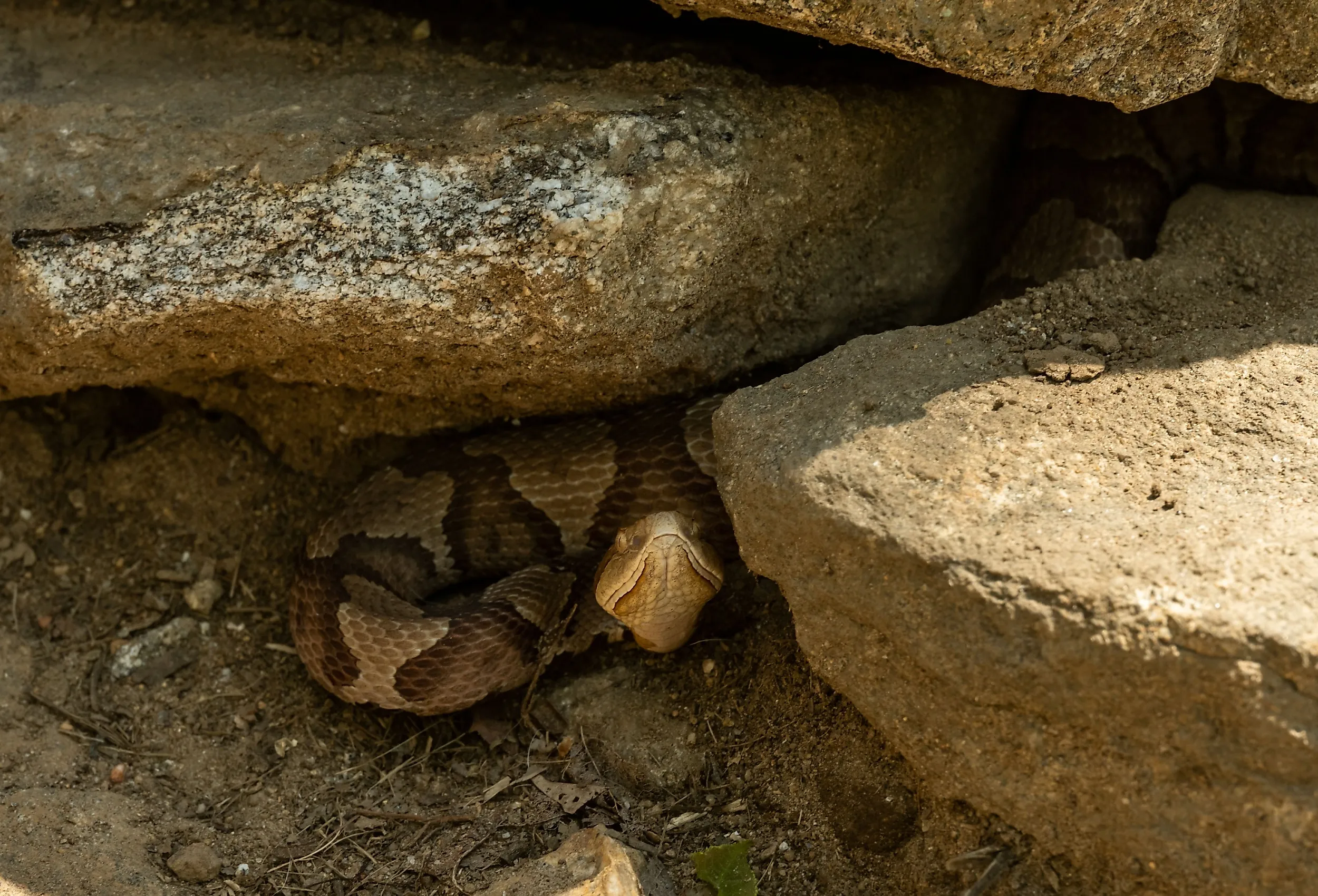
Like usual, local copperheads rely on camouflage among leaf litter and sun-warmed stone ledges in this region, especially along the rim trails and near Talullah River shoals. And while sightings are not always 100% guaranteed, late spring through early fall sees the highest levels of activity, particularly during warm evenings after rain.

Managed by the Georgia Department of Natural Resources, the area is a big draw for hikers, climbers, and even whitewater kayakers during scheduled dam releases. The park protects nearly 3,000 acres in total, and is also known for its suspension bridge, which sways 80 feet above the gorge floor.
Providence Canyon State Park

Often referred to as “Georgia’s Little Grand Canyon,” Providence Canyon State Park, on the complete other side of Georgia from Tallulah Gorge, is another rugged yet consistent habitat for copperheads. Spanning just around 1,1000 acres, it is relatively small but geologically striking, with vivid orange and pink canyon walls formed by 19th-century farming erosion rather than eons of wind and rain.
The park’s lofty gullies and exposed clay slopes create warm, dry microhabitats where a variety of snake species, like the timber rattlesnake, too, hunt small rodents and lizards. Be sure to double-check around fallen logs, eroded ravines, and shaded forest edges that provide cover during the heat of the day.

Hikers using the popular Canyon Loop Trail or backcountry sites should watch for snakes blending into thick brush and along trail margins, and while generally non-aggressive, copperheads will rely on blending in and may remain motionless until you get too close!
Chattahoochee National Forest

Covering about 867,000 acres across much of north Georgia and other neighboring states, Chattahoochee National Forest provides extensive space for the northern and eastern copperhead. The forest’s blend of hardwood stands, rocky ridgelines near the beginning of the famed Appalachian Trail, and meandering waterways creates the idyllic habitat for these ambush predators.

As mentioned, copperheads love the selection of forested slopes and sunlit clearings that can be found here, as well as the abundant elevation changes in the area, especially along the Appalachian foothills, which offer varied microclimates that support steady snake activity during the warmer months. Moreover, renowned recreation areas such as Anna Ruby Falls and Blood Mountain draw heavy foot traffic, increasing the likelihood of incidental sightings along trails.
Managed by the U.S. Forest Service, this lively woodland also supports notable numbers of black bears, birds, and streams full of brook trout.
Cumberland Island National Seashore

Along the state's southern coast, Cumberland Island National Seashore boasts a markedly different setting for the copperhead snake. Here, the species occupies maritime forests, palmetto thickets, and the banks of freshwater wetlands tucked behind the park's many dunes. Above all, the island’s isolation and limited development have preserved nearly 36,500 acres of habitat, allowing a large amount of native wildlife to thrive with minimal disturbance.
Resident copperheads may use the parkland's dense ground cover and fallen live oak limbs for concealment, particularly in shaded interior trails rather than open beaches (thankfully for vacationers). However, access is limited to ferry service from St. Marys, which keeps visitor numbers quite controlled.
The island is perhaps better known for its feral horses, the historic Carnegie-era ruins, and its array of backcountry campsites, although snake spotting is clearly an understandable pastime here, too.
Stone Mountain Park

Just east of Atlanta, Stone Mountain Park combines one of Georgia's biggest tourist attractions with surprisingly suitable copperhead habitat. However, they are mainly known to occupy the parks' more wooded margins, rocky crevices, and transitional zones between forest and open granite outcrops. Furthermore, its namesake 825-foot quartz monzonite dome, while incredibly scenic, is also great at absorbing heat, creating warm spots where snakes may bask when the weather gets cool.

Stone Mountain is most famous for its massive bas-relief carving and network of paths, including the Walk-Up Trail to the summit. With that, high foot traffic also means the chances of incidental sightings are particularly high along quieter side trails and near tall grasses.
Stay Aware While Exploring these Deep South Wildlands
Staying on marked trails, watching foot placement, and avoiding leaf litter and downed logs reduce the risk of a negative rin-in with venomous copperhead snakes in Georgia. With these basic precautions, the often gorgeous landscapes described above remain safe to explore throughout the year, particularly from the busy spring to fall seasons. Are you planning an outdoor escape in this classic Deep South state this year? If so, keep your eyes peeled for other fascinating snake species in these scenic wildlands!