5 Beautiful Lumber-Era Towns In Washington
Washington’s timber-rich history is woven into the character of its small towns, where sawmills, logging operations, and deepwater ports shaped communities and daily life for generations. From Aberdeen’s bustling harbor to Hoquiam’s iconic wooden structures, Raymond’s riverside mills, Shelton’s preserved mill-town streetscapes, and Port Townsend’s Victorian waterfront, each town tells a story of industry, resilience, and craftsmanship. These communities thrived on the lumber trade, leaving behind a lasting legacy that is visible in their historic architecture, local museums, and annual festivals. Exploring these towns offers a rich glimpse into the people, landscapes, and traditions that defined Washington’s timber era, preserving the state’s enduring logging heritage.
Aberdeen

Aberdeen, home to about 17,000 residents, sits at the confluence of the Chehalis and Wishkah rivers at the head of Grays Harbor on the southern tip of the Olympic Peninsula. Founded in 1884, the town grew around its sawmills and deepwater port, earning the nickname "Lumber Capital of the World." A Northern Pacific Railroad spur added in 1895 helped establish it as a regional hub for trade and shipping.
Today, Aberdeen is a charming town to explore. Start at Morrison Riverfront Park for fishing, picnicking, or waterfront views, then visit the Grays Harbor Historical Seaport, home to the Lady Washington, a replica of the first American tall ship to reach the West Coast. Modeled after a vessel sailed by explorer Captain Robert Gray, the ship was featured in "Pirates of the Caribbean: The Curse of the Black Pearl" and offers seasonal sailing and self-guided tours. Nearby, Billy’s Bar & Grill is not only a great place to grab a bite but also a spot rich in local lore. The 1904 building is closely tied to Aberdeen’s maritime past, once associated with Billy Gohl, a legendary figure in the region’s history.
Hoquiam

Situated along the Hoquiam River and bordering Aberdeen in Grays Harbor County, Hoquiam is home to about 8,000 residents and offers a vivid look at Washington’s lumber heritage. Its early growth began in 1882 with the North Western Lumber Company, built by lumber baron A. M. Simpson and his agent, George H. Emerson, later known as “the Father of Hoquiam.” Emerson purchased 300 acres from early settler Johnny James to establish the mill, setting the stage for decades of logging, river commerce, and industry.
Hoquiam comes to life at the Polson Museum, the area’s oldest museum, with exhibits on locally made goods, the town’s shipbuilding industry, and logging and sawmilling. For another glimpse into the past, drive past the historic Hoquiam’s Castle. Also known as the Lytle Mansion, the home, built by Robert F. Lytle, features ornate oak woodwork and sandstone steps. Though it no longer operates as the bed-and-breakfast it once was, its exterior remains one of the town’s standout landmarks. Another notable landmark is the Olympic Stadium, an all-wood structure built from old-growth fir that hosts events such as the annual Loggers’ Playday, featuring a parade and a logging competition.
Raymond

Home to roughly 3,000 residents, Raymond on the Willapa is a small town in Pacific County, located along the Willapa River near Willapa Bay. Incorporated in 1907 and named for its first postmaster, L.V. Raymond, the town was built on tidelands with wooden sidewalks and structures perched on stilts over sloughs. Surrounded by old-growth forests, Raymond originally thrived as a lumber mill hub, with mills running constantly, freshly cut logs filling trains, and ships departing loaded with timber, while a few farms dotted the surrounding landscape.
Today, Raymond is home to the Willapa Seaport Museum, which highlights the town’s maritime and lumber history through tugboats, shipyard tools, fishing vessels, and hands-on artifacts. Nearby, the Northwest Carriage Museum showcases historic horse-drawn vehicles, reflecting early life in Washington’s timber towns, and features a one-room schoolhouse, a wheelwright shop, and a gift shop. For outdoor recreation, the Willapa Hills State Park Trail offers a scenic route along a former Northern Pacific Railway line once used to transport timber.
Shelton

Located just 20 miles from Olympia in Mason County, Shelton is a mill town of roughly 10,000 residents with deep roots in Washington’s timber industry. Incorporated in 1890 and named for territorial legislator David Shelton, the town developed around the Simpson Lumber Company, which played a central role in its early economy and growth. When Simpson split into two entities, Green Diamond Resource Company continued operating from its downtown offices.
Shelton’s timber heritage is reflected in community events such as the annual Mason County Forest Festival, which honors the loggers and mill workers central to the town’s history. Additionally, Shelton carries the nickname “Christmastown USA” due to its long tradition of producing high-quality Douglas-fir trees, a legacy marked each year during Mason County’s Festival of the Firs. For a landscape tied to its lumber past, Oakland Bay and the surrounding forests offer shoreline trails and wooded paths that showcase the area’s natural setting.
Port Townsend

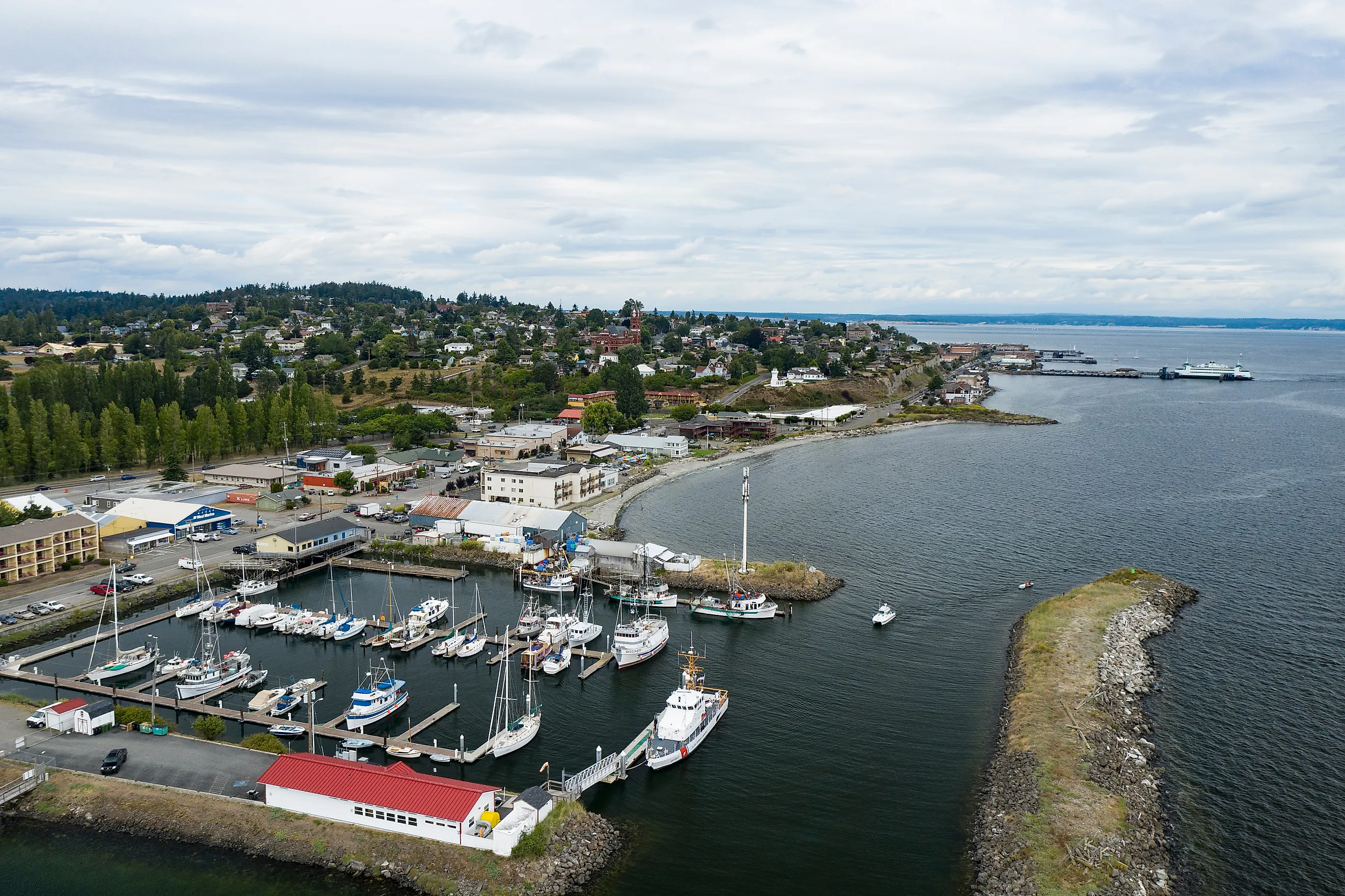
Port Townsend, a community of about 10,000 in Jefferson County on the northeastern tip of the Olympic Peninsula, grew into a thriving port in the late 19th century, driven by the lumber industry. Ships carrying timber, coal, and other resources teemed in Port Townsend Bay, and the wealth from the timber trade funded many of the Victorian buildings that still stand downtown.
Today, Port Townsend draws many to its waterfront, where the Northwest Maritime Center features a working wooden boat shop where traditional boatbuilding techniques are preserved and demonstrated. For further exploration, the Port Townsend Marine Science Center at Fort Worden Historical State Park offers exhibits and programs that explore the region’s coastal ecosystems and marine life. Another prominent landmark is the historic Point Wilson Lighthouse. At 46 feet tall, its tower supports a focal plane 51 feet above the ground, making it one of the highest lights in Puget Sound.
Discovering Washington's Most Historic Lumber-Era Towns
These five towns offer a window into Washington’s timber history, where logging shaped communities, landscapes, and architecture for generations. Strolling historic streets, exploring local museums, and wandering waterfronts and forested trails reveal how timber influenced daily life, from Victorian storefronts to iconic lighthouses. Aberdeen, Hoquiam, Raymond, Shelton, and Port Townsend each tell a distinct story of mills, rivers, and the people who built them, while festivals and preserved landmarks celebrate the industry and heritage that helped define the region. Together, they stand as enduring reminders of the state’s logging era.