4 Snake Hotspots In New Mexico
One of the visual and auditory emblems of the American Southwest is a coiled rattlesnake shaking its tail - warning of its presence. Fixed between Texas and Arizona, and sharing a border with the Mexican states of Chihuahua and Sonora (after which the corresponding, snake-filled deserts take their names), New Mexico is a treasure trove of such pit-vipers, as well as dozens of additional non-venomous serpents. So, from the crumbling mountains to expansive reservoirs, and all the sandy landscapes in between, these are four snake hotspots across New Mexico.
White Sands National Park

Southwestern New Mexico's White Sands National Park spans a whopping 275 square miles of the Chihuahuan Desert, making it the largest gypsum dunefield on the planet. Here, in the Tularosa Basin, wave after wave of shimmering, almost preternaturally-white mounds are backdropped by the San Andres and Sacramento Mountains. So while one's eyes are tempted to scan ever skyward, the dried-up floor of Lake Otero harbors even more surprises - namely, the most extensive collection of fossilized footprints belonging to Ice-Age megafauna, and fossilized human footprints dating back at least 23,000 years (i.e., some of the earliest evidence of human activity in North America).
Despite its now arid and intensely exposed landscape (even by desert standards), White Sands National Park is far from a has-been in terms of diverse habitation. As you hike, drive, and toboggan across the crystalline dunes, you will spot patches of green oases, wildflowers, and colorful cacti. Look closer still, and you will see some of the 800+ animal species that call White Sands home.

As one might expect, cold-blooded reptiles are particularly well-adapted to this enigmatic ecosystem. Joining the desert box turtle and scores of camouflaged lizards are the venomous prairie rattlesnake (Crotalus viridis) and western diamondback rattlesnake (Crotalus atrox), as well as the long and hefty (but non-venomous) Sonoran gopher snake (Pituophis catenifer affinis) and the harmless (though temperamental when tampered with) western coachwhip (Masticophis flagellum).
Organ Mountain-Desert Peaks National Monument

If snakes are what you seek (a strange concept for some, I know), then be sure to explore some of Organ Mountain-Desert Peaks National Monument on your way back to Las Cruces from White Sands. This 497,000-acre sandy, shrubby, and craggy section of the Chihuahuan Desert contains four distinct areas (i.e., the Organ Mountains, Desert Peaks, Potrillo Mountains, and Doña Ana Mountains) and was designated in 2014 because of the copious amounts of prehistoric archeological sites, notable aeronautics history, recreational possibilities, and ecological importance. That's right, between the dusty desert floor and the high-altitude spires, life has once again found its niche. Here, mountain lions, bobcats, and coyotes prowl, eagles and falcons soar, the rare Organ Mountain pincushion cacti stand stoically, and snakes aplenty slither.

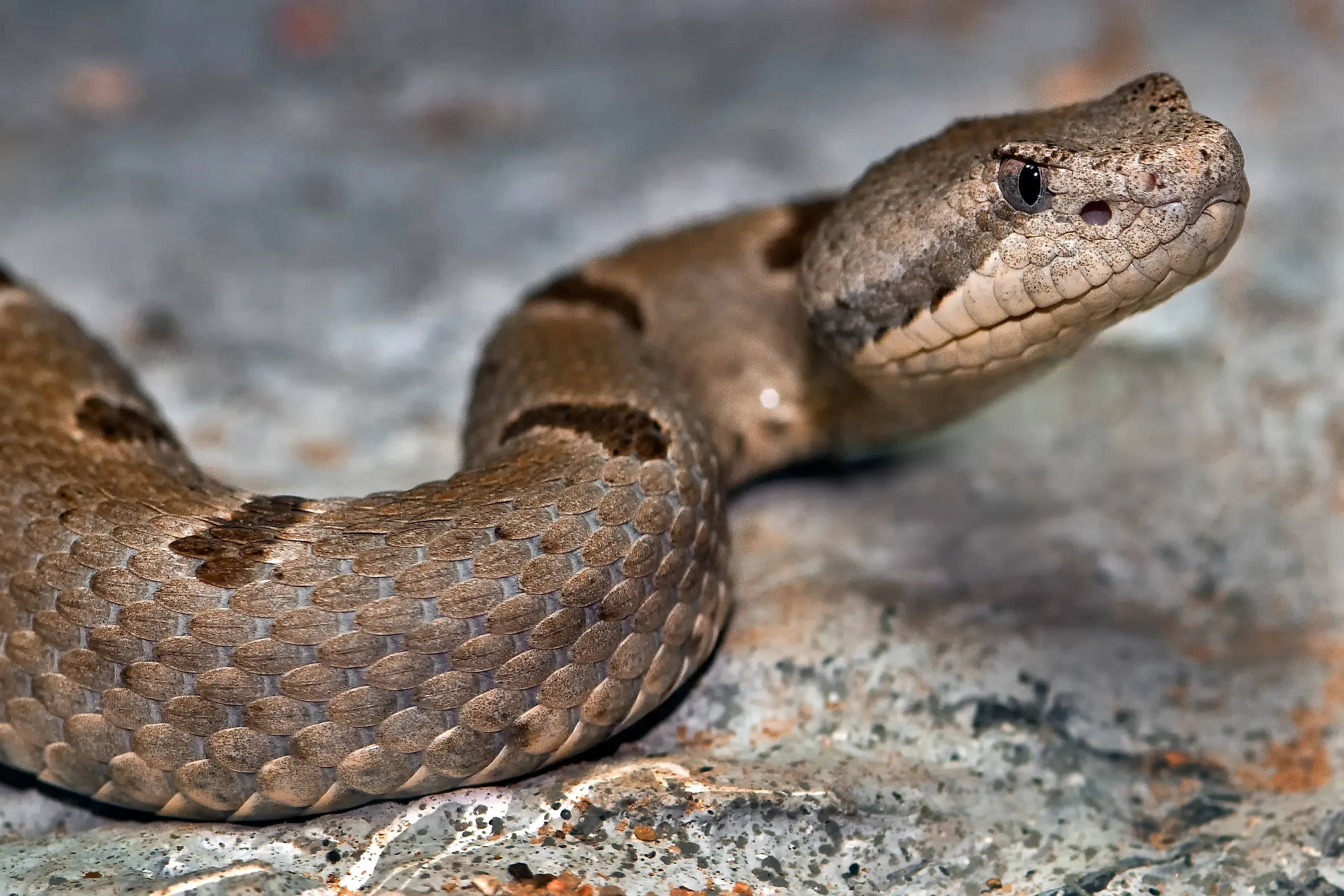
Just as in White Sands National Park, visitors to Organ Mountain-Desert Peaks National Monument may encounter audible, heat-sensing, and venomous pit-vipers in the form of prairie rattlesnakes, western diamondback rattlesnakes, and banded rock rattlesnakes (Crotalus lepidus). The former has the most extensive range of any rattler and can be distinguished by its body blotches that morph into rings toward its tail. The middle character is the largest subspecies of western rattlesnakes and possesses a distinct black and white tail. And the latter exudes dark bands across its entire light gray (hence the name) - though it should be noted that males and females differ in their coloration. Sharing space with these rattlers are non-venomous varieties of bull snakes (often mistaken for rattlesnakes) and whipsnakes.
Río Grande del Norte National Monument

Spanning hundreds of thousands of acres of north-central New Mexico's Rio Grande Valley, in the shadow of the southernmost subrange of the Rocky Mountains, Río Grande del Norte National Monument marries high-desert landforms, enshrines disparate histories, and unites sapiens with snakes. Accessible just north of Taos, this federally protected site showcases an 800-foot-deep volcanic basalt gorge, petroglyphs, and early Indigenous dwellings, in conjunction with circa-1930s homesteads. It also provides playgrounds for hiking and biking, whitewater rafting, hunting and fishing, and camping of all kinds.
Since the usual suspects (i.e., the prairie and western diamondback rattlesnakes) once again show their triangular faces and rear their rambunctious tails, let's take this opportunity to learn how to co-exist with such serpents. Across the Taos Plateau, rattlesnake season typically occurs between April and September, with sightings spiking in August. In the spring, they can be seen sunning themselves at any time, whereas in the heat of the summer, they typically only emerge during the bookends of the day. They tend to stay close to the Rio Grande, or lie low in the surrounding desert, but Bureau of Land Management (BLM) staff have reported seeing rattlesnakes above 8,000 feet.

Bites occur when a snake is accidentally stepped on (so be vigilant, wear sturdy footwear/loose pants, and keep your dog on a leash), or when intentionally handled/attacked (so just leave them be - it's illegal to kill rattlesnakes in protected areas anyway). Should you spot one of these rattlesnakes in the coiled position, note that it can strike upwards of two-thirds its body length (prairies grow to be five feet in length; western diamondbacks as much as seven). It is also worth noting that approximately 80% of bites result in "dry bites," meaning no venom is injected. This is because rattlesnakes need this limited hemotoxin to subdue edible prey, of which we wandering bipeds are not. With that said, if you are struck, always seek medical attention and consult reliable resources, such as the SnakeBite911 app, for advice in the interim.
In addition to its rattlesnake icons, Río Grande del Norte National Monument provides sanctuary for many non-venomous snakes. Some fresh faces include the western terrestrial garter snake (Thamnophis elegans), striped whipsnake (Masticophis taeniatus), eastern patch-nosed snake (Salvadora grahamiae), western milksnake (Lampropeltis gentilis), and Great Plains ratsnake (Pantherophis emoryi). Of this lot, the milksnake of the west is most likely to catch one's attention - owing to its red, black, and yellow stripes, which resemble, but don't exactly match, the pattern of the venomous coral snake. In this instance, the adage "Red touches Yellow, you're a dead fellow. Red touches Black, friend of Jack" rings true.
Elephant Butte Lake State Park

Snakes don't just keep to the deserts and plains. Given their surprising swimming abilities and appetite for fish and amphibians, New Mexico's larger bodies of water also attract their share of serpents, as is the case in point: Elephant Butte Lake State Park. Located just north of Truth or Consequences, the namesake feature of New Mexico's largest state park was created in 1916 when this part of the Rio Grande was dammed. Now, this 40-mile-long (and totalling over 200 miles of shoreline) is not only the largest lake in the state, but also its most popular. But despite all the human activity, snakes are still common - heck, there's even an outcrop called Rattlesnake Island.

In and around Elephant Butte Reservoir, the prairie and western diamond-backed rattlesnakes continue their streak, but the (visually) striking and aptly-named eastern black-tailed rattlesnake (Crotalus ornatus) also occurs in this part of Sierra County. Other recently reported, and thus far unexamined, species in the area include the ground snake (Sonora semiannulata), which, with its black and red stripes, would be easily spotted if not for the fact that it's nocturnal, and the small but speedy Big Bend patch-nosed snake.
Stalking freshwater shorelines, summiting craggy peaks, and basking on the open plains, the snakes of New Mexico exhibit incredible resilience. And while they can seemingly slither into any ecosystem, these four national and state-level sites stake their claim as the veritable hotspots. So if you are curious about these creatures, then you know where to go this spring/summer. But if you wish to avoid these intimidating reptiles, then consider yourself warned.