7 Snake Infested State Parks In Vermont
Vermont’s lakeshores, river corridors, and forested trails create the classic sun-meets-shelter conditions that many snakes use for warmth, cover, and movement. Vermont does have a venomous species, the timber rattlesnake, but it is rare and restricted in range, and most visitors will not routinely encounter venomous snakes in state-park settings. In everyday park visits, snake awareness is more likely to involve nonvenomous species such as garter snakes, milk snakes, and smooth green snakes, especially along warm trail margins, brushy edges, and shoreline vegetation.
Here is a closer look at a few of Vermont’s most notable snakes, and what makes each one distinctive. The common gartersnake is the one most people see. It typically shows three yellowish stripes running lengthwise over a background that can range from green to black to brown, and it thrives statewide because it gives live birth, a real advantage in colder climates. It also eats a wide mix of prey, from amphibians and fish to insects and worms. The eastern milk snake looks bold with reddish-brown blotches outlined in black, a pale Y-shape on the back of its head, and a checkered black-and-white belly. When it feels threatened, it can vibrate its tail as a bluff (which is one reason it is often mistaken for a rattlesnake). It is a powerful constrictor that commonly targets rodents and will take other small animals when the opportunity arises.
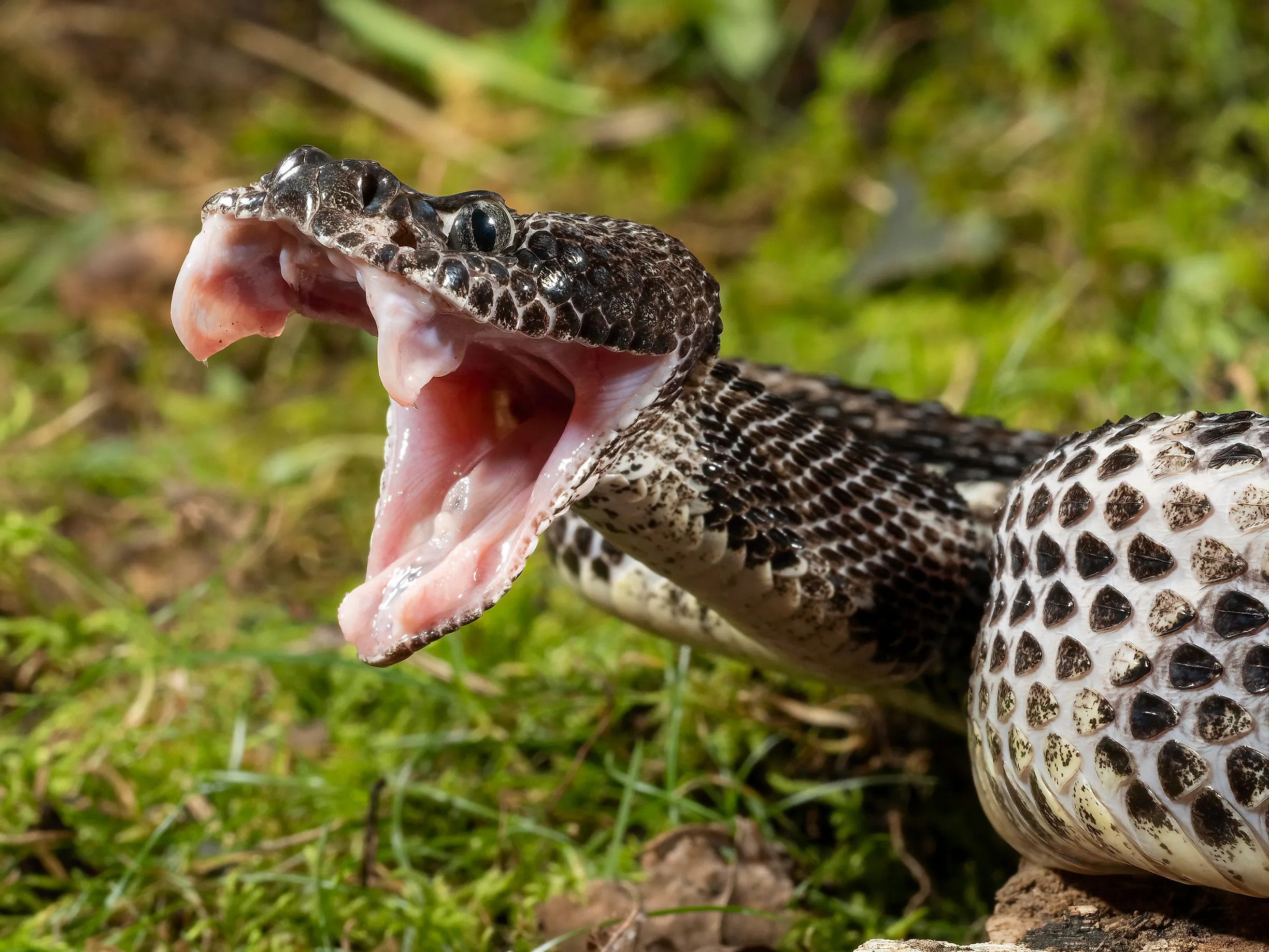
The smooth green snake has bright green coloration above its pale belly, allowing it to blend into meadows and overgrown fields. Unlike rodent-focused snakes, they are an insect-and-invertebrate hunter, with most of their diet made up of insects and similar small prey. And then there is Vermont’s only venomous snake, the timber rattlesnake, a rare, range-restricted resident of rocky ledges and nearby woodlands, patterned with dark W-shaped bands and a segmented rattle. These snakes are not aggressive (but still never something to handle), and they primarily eat small mammals such as mice and squirrels. While garter snakes and milk snakes are the most commonly observed, Vermont’s parks also support less obvious species such as water snakes, ribbon snakes, and forest-dwelling snakes that spend much of their time concealed in vegetation or leaf litter.
Bomoseen State Park

Bomoseen State Park can be a realistic place for snake awareness because Lake Bomoseen shorelines and nearby vegetation create the kind of warm, sheltered edge habitat where nonvenomous snakes may travel and rest. Camping and day use naturally bring visitors near the water, which is also where reptiles often seek cover, such as grasses, leaf litter, and fallen branches. In practical terms, watch for snakes in the same places people pause near the beach, along sunny paths, and beside brushy shorelines.

It is advisable to watch your footing near reeds, avoid stepping into thick lakeside vegetation, and check the ground before sitting on a log. Vermont’s commonly encountered snakes, including garter snakes and milk snakes, are nonvenomous and generally avoid people when given space. Lake Bomoseen’s warm, weedy shallows and rocky shoreline edges can also support northern water snakes, a nonvenomous species that spends much of its time near water and often basks on banks, driftwood, or sunlit stones before slipping back into cover. Another species in this setting is the eastern ribbonsnake, a slimmer relative of the garter snake that favors wet habitat and tends to travel quickly through reeds and shoreline grasses while hunting small fish, tadpoles, and frogs. These species are well-suited to the park because lakes create reliable thermal edges where quick access to sun, water, and dense vegetation supports both hunting and hiding.
Quechee State Park

Quechee State Park can create conditions where snakes may be spotted because visitors spend time in a landscape of forest cover, sunlit openings, and popular walking areas near Quechee Gorge, where people naturally slow down and scan their surroundings. When parks combine viewpoints, short trail segments, and wooded edges, the result is a steady mix of shade and sun that can support reptile activity during warm months. It is quite possible to enjoy brief sightings of nonvenomous snakes that use ground cover and trail-edge vegetation for shelter, as in other areas of Vermont, including the Green Mountains and nearby cultural destinations such as Woodstock.

People often stop for photos, step toward railings or path margins, and then return to the main tread. Following practical advice, visitors are encouraged to stay on established walking surfaces, watch where their feet land near brushy borders, and avoid placing their hands into crevices or under rocks that are not clearly visible. Beyond the commonly mentioned milk snakes and garter snakes, a gorge-and-forest landscape like Quechee can also support ring-necked snakes, a small, secretive species that often hides under rocks, leaf litter, and fallen trees along moist woodland edges. They are nonvenomous and typically feed on soft-bodied prey such as salamanders, worms, and slugs, which aligns with the shaded, damp pockets created by forest cover near the gorge.
Gifford Woods State Park

Gifford Woods State Park can be a good setting for snakes because it offers a shaded forest with sunny breaks, trail edges, and ground cover where nonvenomous snakes may move between shelter and warmth. Forest-floor habitat can support species such as garter snakes and milk snakes, especially where a path meets leaf litter, low vegetation, and small clearings. Even in a cool, wooded park, snakes may use brief sun exposure for thermoregulation, then retreat into cover.

This park also supports a slower style of recreation, including camping, short walks, and picnicking. That rhythm keeps visitors close to the ground for longer periods, when wildlife is most likely to be noticed. Visitors can remain on the main walkway, step carefully over fallen branches, and look before sitting at the edge of a clearing. In addition to milk snakes and garter snakes, a shaded park with leaf litter and low forest-floor cover can also support red-bellied snakes, a small, nonvenomous species that spends much of its life hidden under logs, rocks, and forest debris. Its name comes from its often reddish or pinkish underside, and it tends to feed on prey found in damp ground cover, including earthworms and small slugs.
Niquette Bay State Park

Niquette Bay State Park can support snake sightings because the Lake Champlain shoreline habitat and nearby woods create travel corridors and cover where nonvenomous snakes may be present. Shoreline parks often mean there is concentrated activity in a narrow band, with water on one side, vegetation on the other, and sunny openings in between. That is a common pattern for reptiles that use cover to move while taking advantage of warmth near open ground.
Visitors frequently stop near the water, step off the pathway to look out over the lake, or move through brushy areas between the trail and the shoreline. The most practical guidance is consistent with Vermont’s reality of nonvenomous snakes. As long as visitors watch their footing near tall grass, avoid reaching into thick shoreline vegetation, and give any snake space to move away, there is nothing to worry about. Niquette Bay State Park is another treasure of Vermont, near Burlington and the Green Mountains. Ring-necked snakes fit this setting, along with common garter snakes.
Lake St. Catherine State Park

Lake St. Catherine State Park can be a good place for shoreline-based snake awareness because lakefront recreation keeps visitors near warm banks, grassy areas, and driftwood zones that can provide quick cover for nonvenomous snakes. The park is in the New England region of the Green Mountains and the broader Appalachian Mountains. When people spend time swimming, launching boats, or walking near the beach, they remain in the same habitat that many small animals use for travel and shelter.
To proceed with caution, visitors should stay on established paths, watch their step near brushy areas, and look before sitting on shoreline logs or rocks. In Vermont, garter snakes are widespread and commonly occur in habitats with water edges and wet vegetation, while milk snakes often use cover such as downed wood and forest-edge ground cover. In a lakefront park like Lake St. Catherine, eastern ribbonsnakes favor damp ground near water and often hunt frogs, tadpoles, and small fish along reedy margins. Northern water snakes frequent shoreline recreation areas, where driftwood, rocks, and dense vegetation provide both basking sites and quick escape cover. These nonvenomous water-edge snakes may be spotted since the areas people use for beach access and lakeside walking overlap with their natural habitats.
Smugglers’ Notch State Park

Smugglers’ Notch State Park can be a strong place for snake awareness because a mountain pass environment often combines rock edges, forest cover, and rapid shifts between shade and sun, conditions that reptiles can use to regulate body temperature. Even in a cooler, mountain-pass environment, species besides garter snakes can occur in sheltered, sun-warmed edge habitat. Ring-necked snakes are small, nonvenomous, and well-suited to forest-floor cover, using rocks, leaf litter, and downed wood as hiding places while feeding on salamanders and other small prey. DeKay’s brownsnakes can also appear in protected, lower-elevation pockets where ground cover stays damp and prey such as slugs and earthworms are abundant. These species match the park’s pattern of quick shade-to-sun transitions, where reptiles can warm briefly and retreat into cover.

In Vermont’s montane zones in the Stowe and New England regions of the Green Mountains, garter snakes can be seen near damp ground and streams. Visitors are advised to avoid reaching into rock crevices without, stay on the main pathway, and step carefully along trail edges bordered by stones and vegetation.
Little River State Park

Little River State Park can support snake activity because the Waterbury Reservoir shorelines and wooded edges provide consistent cover-and-sun transitions where nonvenomous snakes can travel, warm up, and retreat into shelter. This park’s facilities and recreational amenities keep visitors near the water for extended periods, including beach access, boating, and short walks along shoreline vegetation. The park also includes remote shoreline campsites that are accessible by boat, which naturally puts some visitors even closer to the reservoir-edge habitat where wildlife activity concentrates.

Since this park already highlights common garter snakes, another species to watch for is the ring-necked snake, which is also commonly found throughout many regions in Vermont. In nearby wooded pockets, red-bellied snakes remain hidden under leaf litter and logs and feed on soft-bodied prey common in damp forest-floor conditions. This mix of shoreline and woodland species is one reason reservoir parks can support multiple nonvenomous snakes at once.
Snake awareness here is not about expecting a close encounter. It is about watching where feet land near tall grass and rocks, avoiding driftwood and brushy pockets, and giving any snake room to move away. In Vermont, northern water snakes and milk snakes are both nonvenomous examples that fit this kind of park setting because they use ground cover and edge habitat to move through the Green Mountains landscape in Waterbury and near Lake Champlain.
Snake awareness matters most in Vermont’s state parks, where sun meets shelter, including trails beside tall grass, driftwood along shorelines, rock edges that warm quickly, and brushy transitions between forest and open ground. Most park visitors will only encounter nonvenomous snakes, and the state’s venomous timber rattlesnake is rare and restricted in range rather than a routine park feature.