12 Stress-Free South Carolina Towns For A Weekend Retreat
South Carolina has several towns where a weekend can stay concentrated in one small area. In Beaufort, the riverfront and historic district are within walking distance. Georgetown has several museums near Front Street. Travelers Rest is directly on a long paved greenway, while Aiken has public gardens near downtown and more than 2,000 acres of woodland inside the city. These places work for short trips because the main reasons to visit are easy to identify before you arrive.
Beaufort

Henry C. Chambers Waterfront Park is the easiest place to understand Beaufort's layout. The park is below Bay Street beside the Beaufort River, with a promenade along the water and porch swings facing the river. A few blocks inland, streets in the historic district pass 18th- and 19th-century houses beneath mature live oaks. The Beaufort History Museum is inside the old Arsenal on Craven Street, where exhibits cover the city's colonial period and later Civil War history.
The Spanish Moss Trail gives cyclists and walkers a longer route outside the downtown grid. It follows a former railroad corridor for roughly ten paved miles, with marsh visible along parts of the way. Hunting Island State Park is farther east across the sea islands and has a largely undeveloped Atlantic beach. The striped Hunting Island Lighthouse is the park's most recognizable structure. For travelers who want to stay downtown, the Beaufort Inn uses several historic buildings near Bay Street, so the waterfront and older residential blocks are close enough to reach on foot.
Georgetown

Most of Georgetown's main historic stops are on Front Street or within a short walk of it. The Rice Museum occupies the Old Market Building beside the clock tower and explains how rice production shaped the port and nearby plantations. The South Carolina Maritime Museum is close by, with exhibits on regional boats and waterways. Behind the downtown buildings, the Harborwalk follows the Sampit River and gives visitors an easy route between restaurants along the waterfront. Kaminski House Museum is an 18th-century house overlooking the river, furnished with period antiques. The George is a boutique hotel on Front Street beside the marina, useful for anyone who wants those museums and the Harborwalk within a few minutes on foot.
Murrells Inlet

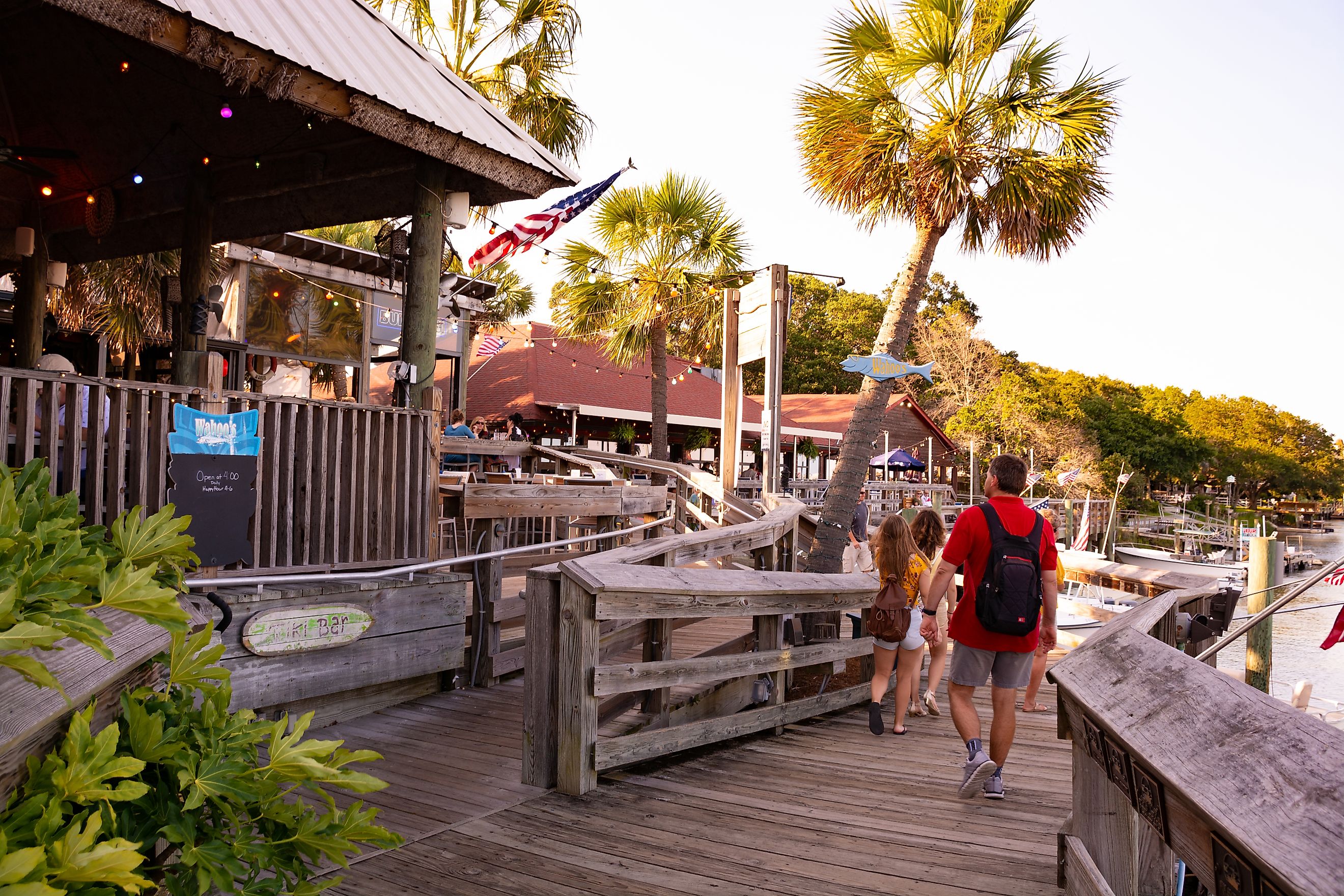
The Murrells Inlet MarshWalk is a half-mile boardwalk beside a tidal creek, with seafood restaurants on the landward side and working docks along the water. The marsh looks different over the course of a few hours as the tide covers and exposes mudflats. Fishing boats use the same inlet, so the waterfront feels connected to the local charter fleet rather than built only for pedestrians.
Huntington Beach State Park is just south of town. Its strongest historical stop is Atalaya, the winter residence Archer and Anna Hyatt Huntington built in the 1930s. The house has brick courtyards and narrow interior passageways. Anna Hyatt Huntington's former sculpture studio is still inside, which makes the building more informative than a quick exterior stop.
Brookgreen Gardens is across US 17 on land once associated with rice plantations. The collection includes American figurative sculpture displayed throughout the property. Fishing charters and dolphin trips also leave from Murrells Inlet. Willow Lodge is a small hotel near the MarshWalk, convenient for travelers who want dinner and charter docks within walking distance.
Pawleys Island

Pawleys Island is narrow enough that the Atlantic and salt marsh are never far apart. Most of the island is residential, with public beach access between older houses raised on pilings. Plantation families began using the island as a summer retreat in the 18th century, partly to avoid mosquito-borne disease in inland rice-growing areas. Sea View Inn is an oceanfront inn directly on the island, which makes it a practical choice for travelers planning to spend most of the weekend at the beach.

The area's rope hammock has a specific local origin. Riverboat captain Joshua John Ward developed the Pawleys Island hammock in the late 1800s, and the Original Hammock Shop on the mainland still demonstrates the knotting method. Nearby Hammock Shops Village grew around that business. The Pawleys Island Chapel is beside the creek and is used for seasonal services, while Brookgreen Gardens is close enough for a half-day trip north.
Edisto Beach

Edisto Beach State Park can cover much of a two-day visit because cabins, trails, and beach access are all inside the same property. The Spanish Mount Trail ends near a shell midden created by Indigenous people who used Edisto Island before European settlement. Botany Bay Plantation Heritage Preserve is another important stop on the island. Shoreline erosion has left dead trees on sections of its beach, where exposed roots and fallen trunks remain in place. Access days can change, so checking the current schedule matters here. The Edisto Island Museum is useful for visitors who want context on Gullah history and local agriculture. Families with children may also want the Edisto Island Serpentarium, which specializes in reptiles native to the region.

Bluffton

The Heyward House gives Bluffton's Old Town some historical depth beyond the shops on Calhoun Street. The farmhouse dates to 1841 and now operates as a museum. A surviving slave cabin remains on the property, one of the more important pieces of preserved history in the district.

The Church of the Cross was completed in 1857 above the May River. Cypress and heart pine were used in its construction. The church survived the destruction of much of Bluffton during the Civil War, which gives the building unusual historical continuity in a town where many older structures were lost.
Boat operators on the May River run fishing trips and dolphin cruises. Old Town Bluffton Inn is inside the historic district, so Calhoun Street and the riverfront are close by. Montage Palmetto Bluff is outside town on a much larger riverfront property for visitors planning to spend more time at the resort itself.
Aiken

Aiken's horse culture dates to the period when wealthy Northerners began spending winters here in large numbers during the late 19th century. Thoroughbred training became established locally, and polo became part of the winter season. Hopelands Gardens was once a private estate used by that social circle. It is now a public garden, and the former carriage house contains the Aiken Thoroughbred Racing Hall of Fame. The museum is a useful stop before visiting any of the town's equestrian sites because it explains how deeply racing became tied to Aiken's identity.

Hitchcock Woods covers roughly 2,100 acres inside the city, with more than 70 miles of sandy trails used by walkers and horseback riders. It is large enough to spend several hours without leaving Aiken. Laurens Street is nearby for lunch afterward. The Willcox is a historic hotel a few blocks from Hopelands Gardens and has accommodated winter-season visitors since the early 20th century.
Travelers Rest

Downtown Travelers Rest is directly on the Prisma Health Swamp Rabbit Trail, part of a roughly 28-mile paved route through Greenville County. Several restaurants and coffee shops are within a block or two of the path, which makes bicycles useful for getting around town as well as exercising. Trailblazer Park is beside the route and hosts markets on scheduled dates. About ten miles north, Poinsett Bridge crosses Little Gap Creek through a pointed stone arch completed in 1820. It is generally recognized as South Carolina's oldest surviving bridge. Hotel Domestique is outside town and caters specifically to cyclists, while The Station has cottage-style accommodations closer to the downtown section of the trail.
Abbeville

The Abbeville Opera House is still used for live performances more than a century after opening in 1908. It occupies the upper floor of the municipal building on the town square. Anyone visiting for a weekend should check the performance calendar first, since an evening show gives the compact downtown a natural focal point. The Belmont Inn is directly across the square, which makes it especially convenient after a performance.

The Burt-Stark Mansion is a few blocks away. Confederate President Jefferson Davis met senior officers there on May 2, 1865, during the final weeks of the Confederate government. The Greek Revival house is now a National Historic Landmark open for tours. Lake Secession is outside town and is used for fishing, so it makes sense mainly for visitors bringing tackle or planning time on the water.
Lake City

Lake City is easiest to understand during ArtFields, the nine-day annual art competition held downtown. Artwork appears inside ordinary businesses as well as dedicated exhibition spaces, so visitors encounter pieces while moving between restaurants and shops. TRAX Visual Art Center is one of the permanent galleries used during the event.
Some of the public art remains after ArtFields ends, including murals around downtown. The Inn at the Crossroads is near the central exhibition area, which is useful during the festival when much of the program can be covered on foot.
Moore Farms Botanical Garden is outside downtown on land connected to a former family farm. Parts of the property are devoted to native plants, while other sections are used for experimental horticulture. Public opening days are limited. Check the calendar before planning the drive out.
Cheraw

Dizzy Gillespie was born in Cheraw in 1917, and the town preserves that connection in two small downtown sites. Dizzy Gillespie Homesite Park marks the location of his childhood home and includes sculptures made by local students. A seven-foot bronze statue of Gillespie is on the Town Green. Outside downtown, Cheraw State Park surrounds 360-acre Lake Juniper. Natural tannins give the water its dark color, and cabins are available close to the lake. The park also has an 18-hole golf course. Back in town, a self-guided route passes the 1820 Lyceum and several antebellum churches. The Guest House of Cheraw is in the historic center, useful for anyone planning to spend more time on those downtown sites.
Moncks Corner

Cypress Gardens is on part of a former rice plantation near Moncks Corner. Visitors can take flat-bottom boats through a flooded cypress-and-tupelo swamp without joining a guided tour. Tree trunks rise directly from the dark water, and the narrow route passes beneath sections of cypress canopy. A butterfly house is on the dry portion of the property.

Old Santee Canal Park preserves remnants of the canal opened in 1800 to connect the Santee and Cooper river systems. Its museum explains how the canal worked and why the route mattered to inland trade. The historic Stony Landing House remains on the property. Anglers also use the nearby Cooper River for bass and catfish. Moncks Corner Inn is near the town center and works as a simple base for reaching both Cypress Gardens and the canal park.