12 Prettiest Small Towns In The Rockies
Half the fun of a Rockies mountain town is what got left behind when the money ran out. The mines closed and the railroads pulled back, but the boom-era bones stayed: brick main streets, opera houses, miners' hospitals, all built to last by people who thought the good times were permanent. That is the difference between these twelve and a purpose-built resort. Nobody designed them to look quaint, so the 1880s storefronts and the peaks looming right behind them are the genuine article rather than a stage set.
Banff

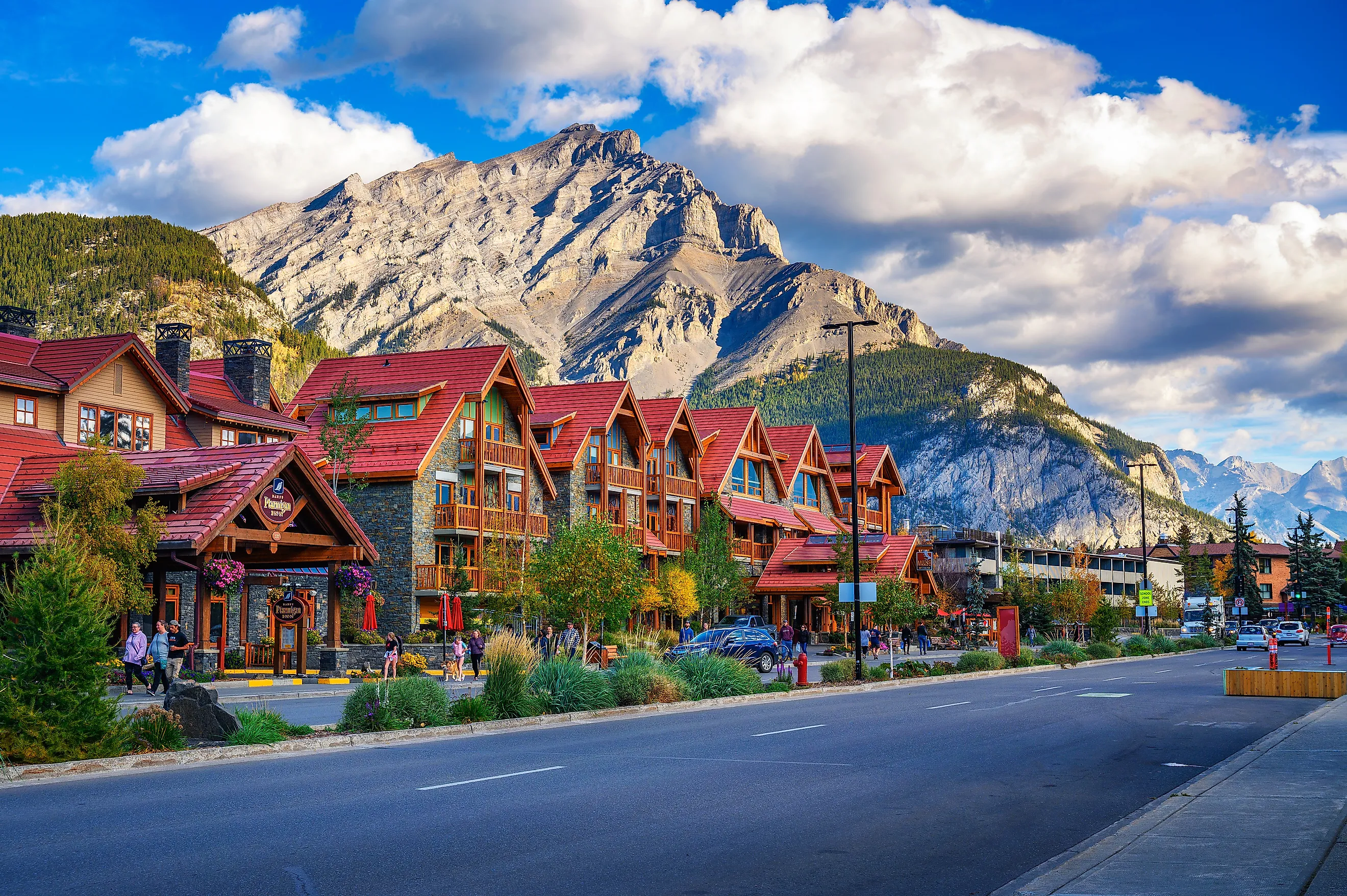
Inside Banff National Park, Banff is not a remote hamlet, which is part of its character. Sidewalks, outfitters, hotel traffic, and Cascade Mountain all meet on Banff Avenue without much separation. Bow Falls forces a hard bend in the river close to the center, an easy walk from the Fairmont Banff Springs, with enough volume to reset the scale. Sulfur in the air marks the Cave and Basin National Historic Site, where stone bathhouse rooms make the origins of the protected area plain. For a broader view, the Banff Gondola climbs Sulphur Mountain to a boardwalk looking across the Bow Valley and Sawback Range. Monod Sports has outfitted visitors and residents since 1949. Park Distillery Restaurant and Bar distills Alberta-grown grain on-site and serves sturdy, high-country food with restraint.
Canmore

Canmore's polish came later. Coal came first, then the railway, then the 1988 Winter Olympics, which brought Nordic events and lasting attention to the Bow Valley. The Canmore Museum is the right starting point, with clear exhibits on underground labor, household routines during the mining years, and the later turn toward sport. West of the center, Canmore Nordic Centre Provincial Park still carries the Olympic record through its biathlon range, cross-country trails, and summer routes below Ha Ling Peak. Grassi Lakes is shorter and steeper, ending at green water beneath limestone walls marked by climbers. Main Street draws plenty of visitor traffic, but Rocky Mountain Soap Company remains locally rooted, and The Grizzly Paw Brewing Company is a reliable stop after time outside.
Jasper

At Jasper, the park boundaries are not abstractions. The town grew from the railway and still keeps a workmanlike face of stone, timber, and wide streets. Bear's Paw Bakery on Pyramid Lake Road is a practical first call before the drive to Maligne Lake, good for coffee, sourdough, and sticky buns. Maligne Canyon shows the harsher side of the place, with footbridges over limestone slots and winter ice walks when the river freezes over. The Jasper-Yellowhead Museum and Archives gives the human record proper weight, from Indigenous travel routes to the Grand Trunk Pacific Railway and early wardens. For the larger prospect, Jasper SkyTram climbs toward Whistlers Mountain, where the Athabasca Valley opens below.
Fernie

Saturday in Fernie often begins at Rooftop Coffee Roasters, where ski boots, work jackets, and daypacks line up before the Elk Valley wakes up. The brick center has kept more grit than gloss, helped by the coal record that never quite left. Inside the 1908 Canadian Bank of Commerce building, the Fernie Museum puts that past in a firm frame, including extraction work, fire, labor, and rebuilding. Fernie Alpine Resort brings the Lizard Range close through winter bowls, summer bike trails, and ridge outlooks that explain the local loyalty. Fairy Creek Falls asks less of the visitor: a walk from the visitor centre to a narrow drop below Mount Proctor. The town works because its streets, ridges, and working habits still seem to belong to one place.
Whitefish

Whitefish began as a Great Northern Railway division point, and the railroad is still visible at the 1927 Whitefish Depot, where Amtrak's Empire Builder still stops. The Stumptown Historical Society Museum keeps the local record inside. The town now serves as one of Montana's main approaches to Glacier, but it has its own center of gravity. Whitefish Lake State Park gives the north edge a quieter feel, with boat access, pine shoreline, and a clean sightline to the surrounding peaks. Above the rail town, Whitefish Mountain Resort looks across the Flathead Valley and turns its ski terrain into lift-served hiking and biking in summer. Buffalo Cafe has earned its standing with huckleberry pancakes and breakfast plates. The Toggery remains a durable downtown outfitter.
Red Lodge

Below the Beartooth Mountains, Red Lodge keeps brick storefronts, mining bones, and a central street built for weather. The Carbon County Historical Society & Museum provides the necessary context: Crow artifacts, rodeo history, coal camps, and the harsher facts behind the storefront appeal. Yellowstone Wildlife Sanctuary, on the edge of town, offers close-up views of rescued bison, bears, birds, and big cats that cannot return to the wild. The Beartooth Highway is a great piece of engineering, rising toward high lakes, switchbacks, and exposed country near the Montana-Wyoming line. Montana Candy Emporium is worth a deliberate visit for huckleberry taffy, glass jars of old-fashioned sweets, and a storefront that treats restraint as a distant rumor.
Jackson

Jackson is the southern gateway to Grand Teton, but its identity is not defined solely by visitor traffic and resort money. Ranching, outfitting, and winter sports still show in the central blocks. Above the National Elk Refuge, the National Museum of Wildlife Art holds major works by Carl Rungius, John James Audubon, Robert Bateman, and contemporary Western artists. Town Square is defined by its four antler arches, a civic theater piece that has become Jackson's most photographed landmark. The Jackson Hole History Museum covers homesteaders, dude ranches, fur traders, mountaineers, and Native history with more substance than the storefronts might suggest. Snow King Mountain rises directly from the valley floor, with a steep hike, an alpine coaster, and winter skiing that predate the resort developments to the north. The Million Dollar Cowboy Bar keeps the saddle stools, live music, and long Western stage record.
Estes Park

Less than 90 minutes northwest of Denver, Estes Park sits at the east entrance to Rocky Mountain National Park, where wapiti move through the streets, and the Big Thompson River cuts past roads and lodges. The Stanley Hotel, opened in 1909, is the defining historic landmark, with red-roofed Georgian Revival buildings and guided tours tied to F.O. Stanley. Lake Estes offers a lower, steadier look at the peaks from its paved loop and marina. Trail Ridge Road climbs above treeline to Forest Canyon Overlook, with tundra, switchbacks, and long sightlines toward the Never Summer Mountains. Macdonald Book Shop, in business since 1928, stands as a serious local institution. Bird & Jim serves Colorado trout, bison, and high-country cooking with discipline rather than performance.
Breckenridge

At high elevation in Colorado's Tenmile Range, Breckenridge places Victorian storefronts directly below ski terrain and ore-era peaks. The resort presence is obvious, but the older record is not decorative filler. Main Street's Barney Ford House Museum tells the story of the formerly enslaved entrepreneur who built a life here, adding a sharper historical register to what can otherwise read as a well-maintained ski town. Breckenridge Ski Resort's Imperial Express SuperChair reaches terrain above 12,800 feet, putting serious alpine scale within sight of the historic center. Boreas Pass Road climbs above the rooftops to the Section House and open prospects over the Tenmile crest, especially strong during the aspen turn. Down on Ridge Street, Aurum Food & Wine serves careful Colorado cooking in a restored house.
Crested Butte

Crested Butte stands at the end of the Gunnison Valley with Mount Crested Butte in full view and Elk Avenue still reading as a coal street. Inside the former Tony's Conoco building, the Crested Butte Mountain Heritage Museum traces Ute homelands, coal extraction, biking, and ski culture with useful precision. The Elk Avenue Historic District includes false-front buildings, the Old Rock Library, and the Union Congregational Church, all maintained at a scale close to that of the nineteenth century. Kebler Pass Road offers one of the area's strongest outdoor claims, with aspen stands, a Ruby Range prospect, and access to Lake Irwin. After a day in that country, the Secret Stash on Elk Avenue is the local address for serious pizza, which is not a minor service in a place built around exertion.
Telluride

In a box canyon below steep San Juan walls, Telluride keeps Victorian streets that still show the extraction camp beneath the resort finish. The Sheridan Opera House, built in 1913, remains the key historic stage for concerts, films, and festival events. The Telluride Historical Museum, inside the former miners' hospital, sets out Ute history, gold and silver work, avalanches, and ski culture with clarity. At the east end of the gorge, Bridal Veil Falls drops 365 feet beside the historic Smuggler-Union Hydroelectric Power Plant, reached by rough road or a strenuous hike. La Marmotte serves French-leaning dinners in a stone building from the 1890s, using an old address without making a costume of it.
Ouray

Ouray makes water impossible to ignore, with mineral steam rising below sheer San Juan walls and creek noise moving through the canyon streets. Box Canyon Falls Park sends Canyon Creek through a tight quartzite gorge, with walkways close enough to feel the force. The Ouray County Museum, housed in the 1886 St. Joseph's Miners' Hospital, presents mining tools, Ute history, Victorian rooms, and old medical wards with a sober sense of place. Ouray Hot Springs Pool uses sulfur-free mineral water in outdoor soaking pools with direct sightlines to the surrounding peaks. Mouse's Chocolates & Coffee is the address for scrap cookies, espresso, and handmade truffles after a morning on the town's steep grades.
These twelve towns share a structural fact: each one grew from something extractive, transient, or infrastructural, rail, coal, ore, or tourism, and then had to decide what to keep. The ones that held their ground did so through specific, durable things: a bakery that opens before the valley wakes, a museum that doesn't soften the labor record, a pass road that earns its view. No single town on this list is the definitive version. Each one is an argument for a particular kind of place.