12 Most Neighborly Towns In Pennsylvania
Pennsylvania is full of friendly towns where riverfront hangouts and strong local food traditions make it easy to feel welcome. For fun festivals, Kennett Square in Chester County is best known for its Mushroom Festival, while New Hope adds even more energy with riverside events like PrideFest and a lively arts scene along the Delaware. Food lovers can head to Lititz, where the historic Julius Sturgis Pretzel Bakery and the town’s long-running local traditions give a weekend away some real flavor. From storybook downtowns to weekend markets, these 12 towns make it easy to plan a Pennsylvania getaway centered on meeting amazing people.
Lititz

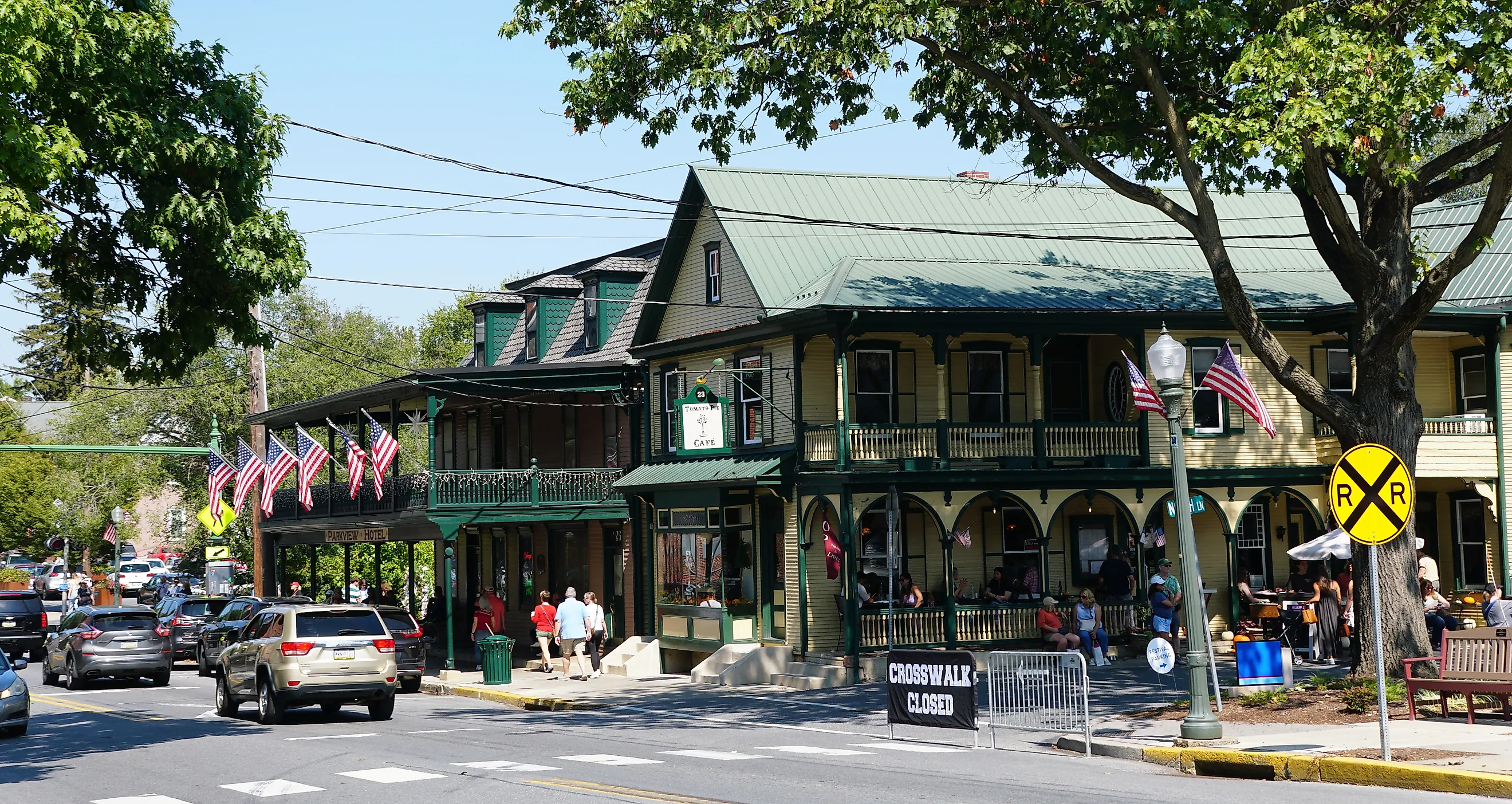
The center of Lititz holds together well, making the town easy to explore on foot. Lititz Springs Park runs right through the middle of town, built around a natural spring that feeds Lititz Run. The park is compact, about seven acres, but carefully laid out with footbridges, shaded benches, and open lawn space that hosts long-running events like the annual Fourth of July celebration and summer concerts. A few streets over, Julius Sturgis Pretzel Bakery continues to operate inside its original 1861 building, where tours walk through the old ovens and end with visitors shaping pretzels by hand.
History here isn’t limited to a single building. The Lititz Historical Foundation and Museum includes multiple preserved structures and exhibits that explain how the Moravian settlement developed and what daily life was like in the 18th century. For a longer stretch outdoors, the Lititz to Ephrata Rail Trail extends just over seven miles along a former rail corridor, with a wide, paved surface and gentle grade that makes it easy for both walking and cycling.
Wellsboro

Wellsboro is set in north-central Pennsylvania, and its wide Main Street, lined with working gas lamps, gives the town a structure you don’t see often anymore. Right along that stretch, the Wellsboro Diner draws a steady crowd into its 1939 stainless-steel car, where people come for classic breakfasts, counter seating, and quick conversations that tend to linger longer than expected. Just off that stretch, the Arcadia Theatre has been operating since 1921 and still runs daily screenings under its original marquee.
A few minutes outside town, Leonard Harrison State Park opens up quickly into one of Pennsylvania’s sharpest landscape shifts. The main overlook sits roughly 800 feet above Pine Creek Gorge, with the 1-mile Turkey Path descending through a series of switchbacks to the creek level below. It’s a direct, physical way to experience the terrain rather than just viewing it from above. In early December, Dickens of a Christmas rules the Main Street for a weekend, with over 100 vendors, live music, and costumed performers spread across several blocks. Horse-drawn carriage rides move along the street, and shops stay open later than usual, with many setting up displays and food stalls outside.
Ligonier

Ligonier exists because of Fort Ligonier, and it still feels like the town’s heart. Built in 1758 during the French and Indian War, the reconstructed fort features full grounds with ramparts, artillery positions, and barracks laid out according to the original plan. Inside the museum, the collection goes beyond basics. There are campaign maps from General Forbes’ march, British uniforms, and rare artifacts tied directly to the fort’s short but critical use. For something more low-key, the Southern Alleghenies Museum of Art (Ligonier Valley) houses a compact but well-curated collection, including rotating exhibitions and a strong focus on regional artists.
On Saturday mornings, the Ligonier Country Market sets up with about 130 local artisans bringing in seasonal produce, eggs, baked goods, and cut flowers. It runs for a few hours each week from May through September, offering a perfect time to get to know the town. October is another excellent time to plan a trip for the Fort Ligonier Days. Expect a full parade, rows of craft vendors, outdoor performances, and a timed reenactment of the 1758 battle tied to the fort.
Ambler

Ambler is easy to cover on foot, but what stands out is how much is packed into that small stretch. Act II Playhouse is the strongest draw here, known across the region for its consistently high-quality productions in a 130-seat space where every seat is close to the stage. The lineup rotates through contemporary plays, musicals, and smaller productions. A few doors down, the Ambler Theater holds onto its 1928 Spanish Colonial structure, with three screens and a balcony still in use. The programming shifts between independent films, older titles, and select new releases.
Stone & Key Cellars operates just off Butler Avenue in downtown, functioning as an urban winery and cidery. Inside, the tasting room has a solid wood bar, and the menu includes wine flights, bottles, and house-made ciders. At the edge of town, Four Mills Nature Reserve covers 56 acres with two short loop trails that run alongside Wissahickon Creek.
Lewisburg

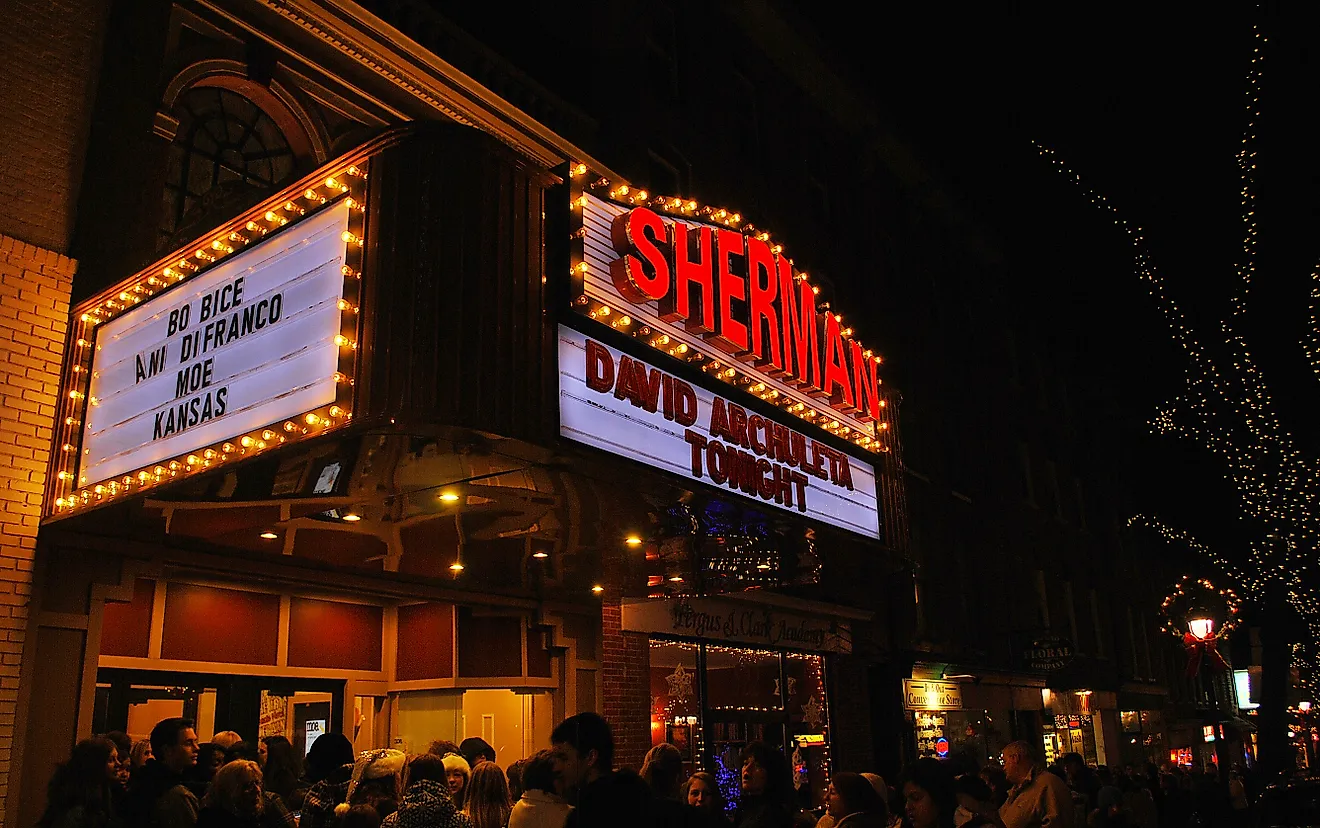
Lewisburg has Bucknell right in the middle of it, but the town doesn’t feel like it revolves around the campus. What stands out instead is how much is happening within a few blocks. The Campus Theatre, opened in 1941, is still a single-screen cinema with its original neon marquee. The ceiling murals, balcony level, and stage remain intact, and the theater runs a mix of independent films, classics, and live events without breaking that original layout. Right behind Market Street, the Bucknell University Campus itself is worth exploring, with places like the Bertrand Library, featuring a large open reading room, and the tree-lined quad that changes completely between semesters.
A different kind of draw is the Lewisburg Arts Festival, held each spring and often ranked among the top art festivals in the country. Over 100 juried artists line Market Street, alongside food vendors and live performances, turning the entire downtown into a single, walkable stretch of stalls and exhibits. If you’re not visiting during the festival, the Samek Art Museum at Bucknell is a permanent stay. The Downtown Gallery on Market Street changes shows regularly, drawing from a permanent collection of over 5,000 works that spans African, Asian, and modern American art.
Jim Thorpe

Jim Thorpe has become one of Pennsylvania’s most visited small towns, with its entire downtown set between steep slopes and the Lehigh River. The easiest way to understand that layout is on the Jim Thorpe Trolley Company tour, which loops through Broadway, passes landmarks like the Old Jail Museum and Asa Packer Mansion, and climbs into the upper streets where the elevation opens up views back over the town. From there, the Lehigh Gorge Trail picks up from the Lehigh Gorge State Park entrance near the old train station. The full trail runs about 26 miles through the gorge, but the section heading north from Jim Thorpe is the most used, following the river past rock cuts, forested stretches, and remnants of the old rail corridor.
Evenings in Jim Thorpe tend to gather around Broadway, especially at the Mauch Chunk Opera House, a restored 1881 vaudeville theatre that still runs a packed performance calendar. The lineup ranges from classic rock and jazz to folk and touring acts. Just down the street, Molly Maguire’s Irish Pub welcomes people in a building dating back to 1830, and that age is still visible in the thick stone walls and low interior spaces. The menu sticks to Irish staples, like shepherd’s pie and fish and chips, paired with draft beers and Guinness.
Kennett Square

Kennett Square doesn’t hide what it’s known for, but the town does more with it than you’d expect. At The Mushroom Cap, that’s the entire focus: fresh local varieties like oyster, maitake, lion’s mane, and portabella sit alongside dried and foraged options, such as morels and chanterelles when in season. Inside, a short video walks through how mushrooms are grown in the region, while shelves carry cookbooks, grow-your-own kits for shiitake and oyster mushrooms, and ready-made gift baskets built around local produce. That same identity expands each September during the Mushroom Festival, a two-day event that has grown from a small local celebration into one of the largest in the state. Streets fill with mushroom-based food, fried mushrooms, soups, and specialty dishes, alongside growers, craft vendors, and demonstrations that break down how cultivation actually works.
Away from mushrooms, Longwood Gardens opens up into a very different setting, covering more than 1,000 acres with formal gardens, meadow sections, and a conservatory complex that includes orchid displays, tropical rooms, and seasonal installations. Another spot locals return to often, but visitors tend to miss, is La Michoacana Homemade Ice Cream. It boasts a range of flavors, with house-made paletas, sorbets, and creamsicles lined up at the counter.
New Hope

New Hope has built a reputation as one of Pennsylvania’s most active arts towns. The Bucks County Playhouse is central to that identity, set inside a converted gristmill right on the river. It opened as a theater in 1939 and has since hosted early productions of Broadway-bound shows. Entertainment runs year-round, with musicals, plays, and touring performances that continue the playhouse's legacy. Food pulls people in just as easily. Ferry Market brings together a mix of small vendors under one roof, from baked goods to prepared meals, and Hawaiian-style plates.
A few miles out, Bowman’s Hill Wildflower Preserve covers 134 acres with over 700 native plant species and about 4.5 miles of trails moving through woods, meadows, and along Pidcock Creek. It’s one of the few places in the region focused entirely on native Pennsylvania flora, including several rare and endangered species. A more hands-on stop would be Spring Creek Farm, which operates across 165 acres and focuses on organic produce, grass-fed cattle, and pasture-raised eggs. Parts of the land are set aside for native plants, pollinators, and bird habitats, which are noticeable as you move through the property.
Bellefonte

Bellefonte, drawing attention as “Central Pennsylvania’s Victorian Secret,” holds one of the state’s most intact collections of Victorian-era buildings, many of which are now available as stays. Our Fair Lady Bed & Breakfast, set in an 1883 home, includes a separate cottage with its own entrance and patio, along with guest rooms arranged around the original house layout. Alternatively, Bellefonte Bed & Breakfast occupies a 1899 Georgian Revival residence built for a local baker, now a three-room inn with ensuite baths and a quiet garden courtyard.
The town’s name comes from the spring at its center, and that source is still visible at Talleyrand Park. It spreads about 3.5 acres along Spring Creek, where clear water, footbridges, and a steady presence of mallards, geese, and occasional herons define the space. Just a short walk away, the Gamble Mill, a water-powered gristmill built over 200 years ago near the Lamb Street Bridge, has been repurposed into a restaurant and microbrewery. People come for small-batch beers, live music nights, and a menu built around steaks, seafood, and seasonal dishes, all set within the original stone structure along the creek.
Doylestown

Doylestown stands out for how much of its identity is tied to a single figure, Henry Chapman Mercer, and the buildings he left behind. The most striking is Fonthill Castle, built between 1908 and 1912 as Mercer’s home, with 44 rooms connected by narrow stairways, built-in tiles, and hand-crafted details that feel more like a working studio than a traditional residence. A short distance away, the Mercer Museum continues that vision inside a poured-concrete structure filled with over 40,000 pre-industrial tools, arranged vertically across multiple levels. The displays include everything from whaling equipment to early printing presses, suspended and grouped by use rather than laid out in cases.
A different side of the town shows up at the James A. Michener Art Museum, set inside a former Bucks County jail, with a strong focus on Pennsylvania Impressionist paintings and regional artists. The museum spotlights feature the Nakashima Room, dedicated to woodworker George Nakashima, along with a sculpture garden and a large courtyard used for events and installations. The town’s local side is best visible at the County Theater, a restored 1930s Art Deco cinema. It screens independent, foreign, and classic films, along with filmmaker talks, lectures, and year-round special events that keep it active beyond regular showings.
Milford

Milford carries its Gilded Age past more visibly than most towns of its size. At the center of that history is Grey Towers National Historic Site, built in 1886 as the home of Gifford Pinchot. The estate isn’t just the mansion; it includes formal gardens designed for outdoor meetings, a stone “finger bowl” used during discussions, and nearly 100 acres of forested land that connect directly to early conservation work led from this site. A few blocks away, The Artery Fine Art & Craft Gallery adds another layer, operating as a cooperative featuring work from dozens of regional artists, including ceramics, glasswork, and fiber art, all displayed in a space that rotates frequently enough to change the experience between visits.
Just outside town, Raymondskill Falls is one of the most visited natural sites in the area. The iconic three-tiered waterfall drops a total of about 150 feet, making it the tallest in Pennsylvania. A short walking path connects two main viewing platforms, each giving a different angle of the falls. Along Sawkill Creek, Waterwheel Café, Bakery & Bar operates inside a restored 19th-century gristmill, prominent for its in-house pastries, dishes like crème brûlée French toast, and a menu that shifts from breakfast and lunch to Vietnamese-inspired dinners, with outdoor seating overlooking the waterwheel in warmer months.
Ohiopyle

Ohiopyle sits inside Ohiopyle State Park, a 20,500-acre stretch of river valley, forest, and trails in southwestern Pennsylvania, making the town feel more like a base within the landscape than a separate center. Right in the middle of it, Ohiopyle Falls cuts across the Youghiogheny River in a broad, 20-foot drop, with multiple viewing points, including a main overlook above the falls and a walkway that brings you closer to the river level. The water moves quickly here, especially in spring, making it one of the most active sections of the river you can see without hiking far. Closer to the center, the Ohiopyle Trading Post and River Tours serves as a base for rafting and biking, offering guided trips on the Youghiogheny and providing rentals and shuttles for the Great Allegheny Passage.
Kentuck Knob provides a good change of view. Designed by Frank Lloyd Wright in 1956, the structure is built into the hillside with a hexagonal layout, featuring local stone and large glass sections that open toward the surrounding forest. The property also includes a sculpture trail with works placed throughout the grounds. Finally, Paddler’s Pizza is one of the most consistent stops after a day outdoors, known for its hand-tossed pizzas, subs, and quick counter service, with a steady line during weekends and rafting season.
Across the most neighborly towns in Pennsylvania, what stands out isn’t just how they look, but how easily you can settle into them. In Bellefonte, you might find yourself staying in a Victorian home that still carries its original layout, while in Ohiopyle, everything revolves around the river and trails right outside your door. That range is what makes these towns some of the most approachable in the United States, offering experiences that feel natural from the moment you arrive.