11 Undisturbed Towns To Visit On The Chesapeake Bay
In 1608, Captain John Smith set out to map the massive estuary we now call the Chesapeake Bay, describing it as a place where “heaven and earth never agreed better to frame a place for man's habitation.” Although centuries of development have transformed much of the coastline into busy commercial areas, quiet corners remain where the waterman’s way of life continues much as it did generations ago. These eleven communities function as living time capsules, preserving the dialect, architecture, and maritime traditions of the past.
Tangier Island, VA

Tangier Island sits isolated in the middle of the waters, visited by Captain John Smith in 1608, the first European to record it, and settled by families whose descendants still live there today. Because it is so cut off from the mainland, the locals speak with a unique accent that is sometimes compared to older forms of English. Transportation does not rely heavily on automobiles here, and most people get around by golf cart, bicycle, or on foot, with only a few cars on the island, so visitors move through the narrow lanes by renting a golf cart or walking. A stop at the Tangier History Museum helps explain the island's deep connection to the crabbing industry and the challenges of erosion.

Visitors can try fresh seafood, especially soft-shell crabs, at restaurants around town. A quiet walk along Tangier Beach gives uninterrupted views of the bay and the working crab shacks on stilts.
Smith Island, MD

Smith Island stands as Maryland's last inhabited offshore island, reachable only by boat, which has kept modern changes at bay since British settlers arrived in the 1600s. This archipelago is known for its marshy landscapes and watermen who still harvest blue crabs using traditional methods. Visitors usually arrive by ferry at the village of Ewell, where the Smith Island Cultural Center displays exhibits on crabbing and picking. The island is also known for Smith Island Cake, the official state dessert with eight to ten thin layers of yellow cake frosted with chocolate.
For a quieter experience, a small boat ride leads to Tylerton, a tiny community home to the Drum Point Market with fresh seafood and a slower pace. Nature enthusiasts can kayak through the water trails of the Glenn Martin National Wildlife Refuge, a sanctuary for migratory birds and wildlife.
Oxford, MD

Oxford is one of the oldest ports in Maryland, officially founded in 1683, and it once served as a major shipping hub before Baltimore grew in prominence. Today, this waterfront village is known for its tree-lined streets and historic homes that look much as they did during the colonial era. A ride on the Oxford-Bellevue Ferry is a highlight, with the ferry service widely regarded as the oldest privately operated ferry in the United States, with origins dating to 1683. For a meal with historical ties, the Robert Morris Inn welcomes guests into a building from 1710 that once hosted George Washington and served as a writing spot for author James Michener.

A walk along The Strand gives wide views of the water and is a calm place to watch the sunset. The Oxford Museum maintains exhibits on oyster harvesting and boat building that reflect the town's past.
Onancock, VA

Onancock was established in 1680 as Port Scarburgh and soon became an important center for trade along the water. Onancock’s name comes from an Algonquin word meaning ‘foggy place. The centerpiece of the village is Ker Place, a brick mansion built in 1799 that now functions as a museum showing how wealthy families lived during that period. Visitors can explore Onancock Creek by kayak or boat, moving through calm waters past historic homes.

The town is also the main departure point for the Tangier Island Ferry, linking travelers to the isolated island communities nearby. For entertainment, the historic Roseland Theatre has shown movies since 1950 and remains a local gathering spot.
Cape Charles, VA

Cape Charles was created in 1884 as the southern end of a major railroad line that connected the Eastern Shore to northern markets. Because it was a planned community, the streets are neatly arranged and lined with colorful buildings from the late 1800s and early 1900s. Cape Charles Beach is the only public beach on the Eastern Shore of Virginia without an entrance fee and has calm, shallow waters suitable for families. A walk through the Cape Charles Historic District shows the largest concentration of late Victorian and turn-of-the-century homes in the area, many now used as bed and breakfasts.

To learn about the trains and ferries that shaped the region, the Cape Charles Museum and Welcome Center displays diesel engines and historical barges. A short drive away, Kiptopeke State Park contains a row of large concrete ships from World War II that were sunk to form a breakwater used for fishing.
Chestertown, MD

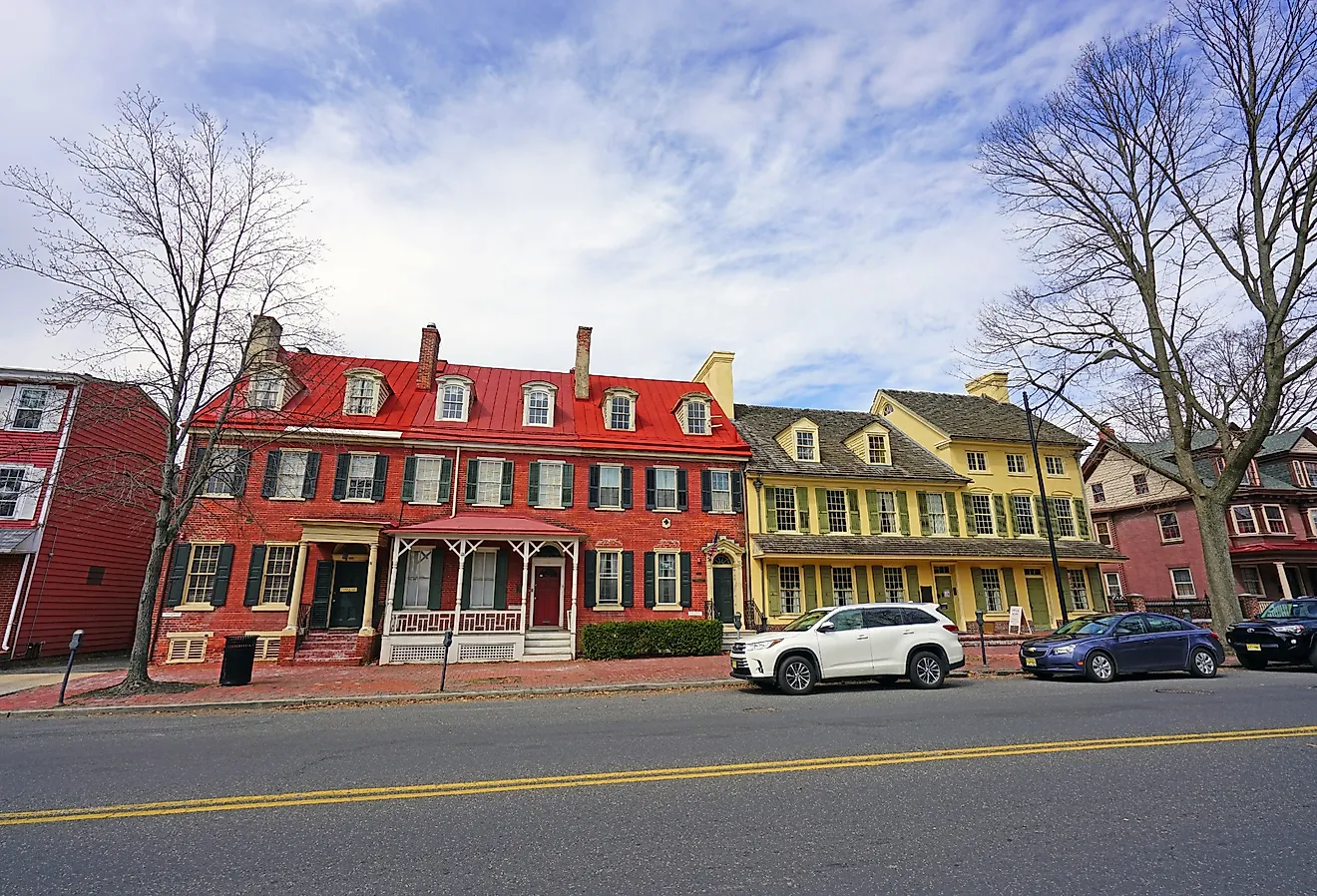
Chestertown was established in 1706 and grew wealthy as a major shipping port, at one point rivaling Annapolis in importance during the colonial period. It is known for its 1774 protest against British taxes, when residents threw tea into the river in an act similar to the Boston Tea Party. Visitors can walk the brick sidewalks of the Chestertown Historic District and see the second-largest collection of 18th-century homes in the state. Along the waterfront, the Schooner Sultana docks as a reproduction of a 1768 British ship, and it hosts educational sails on the river.

History is also present at Washington College, founded in 1782 with permission from George Washington to use his name. Every May, the Chestertown Tea Party Festival stages street theater and a reenactment of the tea dumping.
St. Michaels, MD

St. Michaels dates to the mid-1600s and gained the nickname “The Town That Fooled the British” during the War of 1812. According to local legend, residents hung lanterns in trees outside the village to mislead British ships into firing at the wrong location, which protected their homes. The Chesapeake Bay Maritime Museum is the main attraction, an 18-acre waterfront campus where guests can climb the historic Hooper Strait Lighthouse and watch craftsmen build wooden boats by hand. Patriot Cruises, which opens in April, takes visitors on a narrated tour along the Miles River to see large estates and learn about the local crab harvest.

A walk through St. Mary’s Square leads past historic homes and the St. Michaels Museum, housed in a restored 19th-century building.
Irvington, VA

Irvington sits along the Rappahannock River and grew in the late 1800s as a major stop for steamboats carrying passengers and supplies. This waterfront community has moved past its earlier shipping days to become a quiet retreat known for fresh oysters and local history. The Steamboat Era Museum displays models and artifacts from the years when river travel shaped life along the bay. The Tides Inn, a historic resort opened in 1947, teaches guests to shuck oysters and offers cruises on Carter's Creek.

A short distance away stands Historic Christ Church, one of the best preserved colonial churches in the country, built in 1735 with its original high-backed pews. The Dog and Oyster Vineyard serves regional wine paired with seafood from nearby waters.
Urbanna, VA

Urbanna was founded in 1680 as one of the original colonial ports created to ship tobacco to England. It later shifted into a fishing center and is now recognized for its long-running Oyster Festival. The best known event here is the Urbanna Oyster Festival, which fills the streets every November with parades and seafood. Visitors can see the Scottish Factor Store, a brick structure built in 1766 that once sold goods to planters and now serves as the Urbanna Museum.
A walk to the Urbanna Town Marina gives a view of boats docking along the Rappahannock River. The Museum in the Streets walking tour leads visitors to historical markers throughout the village and explains the stories behind the older homes.
Havre de Grace, MD

Havre de Grace sits where the Susquehanna River meets the bay, named by Marquis de Lafayette because it resembled a port in France. British troops burned the settlement during the War of 1812, and it later became a center for fishing and duck hunting. The Concord Point Lighthouse, built in 1827, is the oldest publicly accessible lighthouse in Maryland and the second-oldest lighthouse in the state. Visitors can walk along the water on the Havre de Grace Promenade, a wooden boardwalk with views of the marina and local birdlife.

Because the area is known as the Decoy Capital of the World, the Havre de Grace Decoy Museum displays hand-carved wooden ducks once used by hunters. The Lock House Museum explains the history of the old canals that moved goods through the region.
Rock Hall, MD

Rock Hall dates to 1707 and has long served as a working fishing village, known locally as the Pearl of the Chesapeake. It was once a shipping point for tobacco and grain, and it remains closely tied to the water today. Eastern Neck National Wildlife Refuge, a 2,285-acre island sanctuary, contains hiking trails and habitat for bald eagles and migrating waterfowl. The Waterman’s Museum maintains tools used for oystering and crabbing through the centuries and preserves the stories of the captains who built the community.

Rock Hall Harbor is a calm place to watch workboats unload their daily catch while eating seafood at a dockside restaurant. The Mainstay, housed in a repurposed historic storefront on the main street, holds live music events.
A Look Across the Bay’s Historic Communities
A journey through these eleven communities shows that the Chesapeake Bay still contains many historical sites and traditions. From the isolated shores of Smith Island to the active boatyards of St. Michaels, each location presents a clear view of the waterman’s way of life. These destinations are not only points on a map, but they are also parts of a living history where the pace is slower and long-standing practices remain visible. Visiting them allows a quiet break from modern noise and a closer look at the culture shaped by the coast.