11 South Carolina Towns Where Time Stands Still
South Carolina is a historically significant state, having played a pivotal role in numerous landmark events throughout American history. From being one of the original colonies and a major Revolutionary War battleground to the onset of the Civil War, the state is rich in historical folklore worth examining. Although it has been centuries since these events occurred, the stories have not faded. Instead, they remain visible in small, enduring settlements spread across the state, where the past continues to shape daily life.
These towns preserve their heritage through well-maintained architecture, local traditions, and a strong sense of community that has endured despite modern change. From Camden’s Revolutionary War legacy to Georgetown’s 18th-century historic district, the following South Carolina towns reflect places where time appears to move at a slower pace.
Georgetown

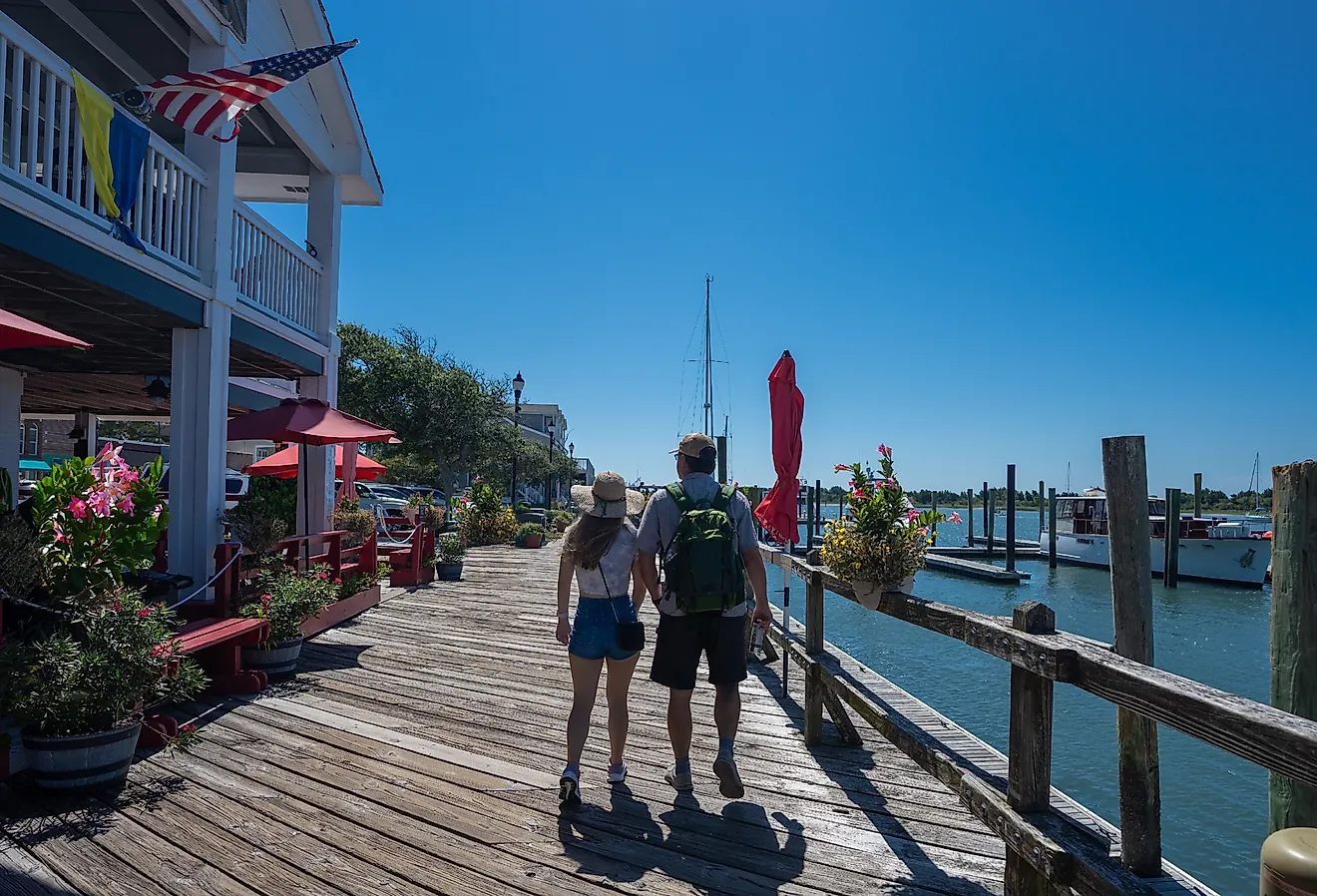
Located 40 miles from Myrtle Beach, Georgetown was founded in 1729, became an official port of entry in 1732, and was incorporated in 1805. Its history spans both land and water, with a collection of preserved structures in the Old Town district offering insight into life during the 1700s and 1800s. Among the historical markers in the town square is the Kaminski House Museum, which presents examples of Southern life in the 18th century. The South Carolina Maritime Museum focuses on the region's nautical history, featuring exhibits, historic photographs, and archival documents.

Beyond its historical sites, Georgetown’s coastal setting draws visitors to the Harborwalk for close views of the harbor. The four-block walkway offers views of the Georgetown Harbor and access to boat excursions, including cruises operated by Cap'n Rod's Lowcountry Boat Tours.
Camden

Camden is recognized as South Carolina’s oldest inland city, with a history rooted in the 1730s. It served as a Revolutionary War stronghold, a Confederate supply base, and was occupied and partially burned by Union forces under Sherman in February 1865. Visitors can explore this history at the Historic Camden Revolutionary War Site, which preserves landmarks from the colonial period, including restored homes, blacksmith shops, and fortifications across a 100-acre property. The Camden Archives and Museum provide additional context, documenting the community’s past from the Native American era onward.

With much of the town’s history concentrated downtown, visitors can browse the Camden Antiques Market, which offers a selection of vintage items. Nearby, Camden Riverfront Environmental Park provides a quieter setting for walking, picnicking, and boating along the Wateree River.
Orangeburg

Orangeburg was founded in the early 1700s and developed as a trading post settled by Swiss and German immigrants. It later played a role in the Revolutionary War and became an important center for African American culture. This history is preserved at the Orangeburg County Historical Society, which maintains a wide range of artifacts documenting the area’s past. Visitors can also examine the town’s Civil Rights history at the Cecil Williams Photography Museum, which presents the work of the American photographer who documented the movement locally.

The town’s arts community is represented at the Orangeburg County Fine Arts Center, where local artists display their work. Nearby, Edisto Memorial Gardens provides access to landscaped grounds and walking paths spread across 175 acres.
Edgefield

Edgefield has a history of stone pottery production and a strong political legacy, having been home to 10 former South Carolina governors. Visitors can learn more about this past at the Oakley Park Museum, which features exhibits from the Reconstruction and Civil War eras. The town’s pottery tradition is also reflected through preserved sites and interpretive displays within the historic district.

Beyond its historical landmarks, Edgefield offers access to the shores of Slade Lake, a quiet reservoir used for fishing and walking. The Governors Rail Trail runs alongside the water, providing a route for hikers and joggers. Downtown, long-standing local restaurants such as the Old Edgefield Grille reflect the town’s small-scale, community-centered character.
Walterboro

Walterboro’s history dates to 1783, when it was founded as a summer retreat for Lowcountry residents seeking relief from mosquito-infested rice fields. The town features a collection of historical markers throughout downtown, including the Tuskegee Airmen Memorial, which honors the service of the African American airmen. The Bedon-Lucas House also offers tours that reflect life in the 1820s and is one of the five remaining “high houses” in the historic district.

The local arts community is centered at the South Carolina Artisans Center, which displays work by more than 200 artists. Just outside downtown, Colleton State Park provides access to natural areas along the Edisto River, with opportunities for kayaking and canoeing.
Bluffton

Founded in the early 1800s, Bluffton was a Confederate stronghold that was largely destroyed during the Civil War before being rebuilt. Its historic Old Town preserves landmarks such as the Church of the Cross, a Gothic-style structure completed in 1857 and one of the few buildings to survive the fire.

Bluffton’s cultural life continues along the May River, where visitors can walk through Old Town streets, visit local art galleries, and attend performances at the May River Theatre. Weekly gatherings such as the Farmers Market of Bluffton reflect long-standing community traditions, while waterfront businesses like the Bluffton Oyster Company connect the town to its fishing heritage.
Cheraw

Cheraw dates to the 1740s, beginning as a trading post before developing into an important center during the Revolutionary era. Much of this history is preserved in the Cheraw Historic District, which includes dozens of 18th- and 19th-century buildings, among them the Greek Revival-style Cheraw Lyceum Museum.
While walking through the district, visitors can browse antique shops such as From Another Time Antiques or learn more about local history through preserved civic buildings. Just outside town, Cheraw State Park offers hiking trails, boating, and fishing, reflecting the area’s long-standing connection to the surrounding landscape.
Beaufort

Beaufort is one of the South Carolina towns where time stands still, with a history dating to the early 1700s. Its heritage is tied to rice cultivation, cotton plantations, and the Civil War. Visitors can explore the preserved historic district, which includes antebellum homes such as the John Mark Verdier House. The house offers insight into life in the early 1800s. The Beaufort History Museum provides additional context through exhibits, archives, and memorabilia related to the region’s past.

Beyond its historic core, Beaufort offers views of the surrounding waterways at Henry C. Chambers Waterfront Park. The park includes landscaped green space, a playground, and a performance area. Boat tours operated by Coastal Expeditions Beaufort provide another way to experience the town’s coastal setting.
Moncks Corner

Located north of Charleston, Moncks Corner developed as a colonial crossroads shaped by plantation life and Revolutionary War activity. It is best known for the 1780 Battle of Moncks Corner, a key event in the Southern campaign. This history is documented at the Berkeley County Museum through photographs, artifacts, and archival materials.

Visitors can also explore Old Santee Canal Park, where preserved structures and walking trails illustrate early transportation and trade routes. Nearby Cypress Gardens provides access to cypress swamps and walking paths, continuing the town’s long-standing relationship with its natural surroundings.
York

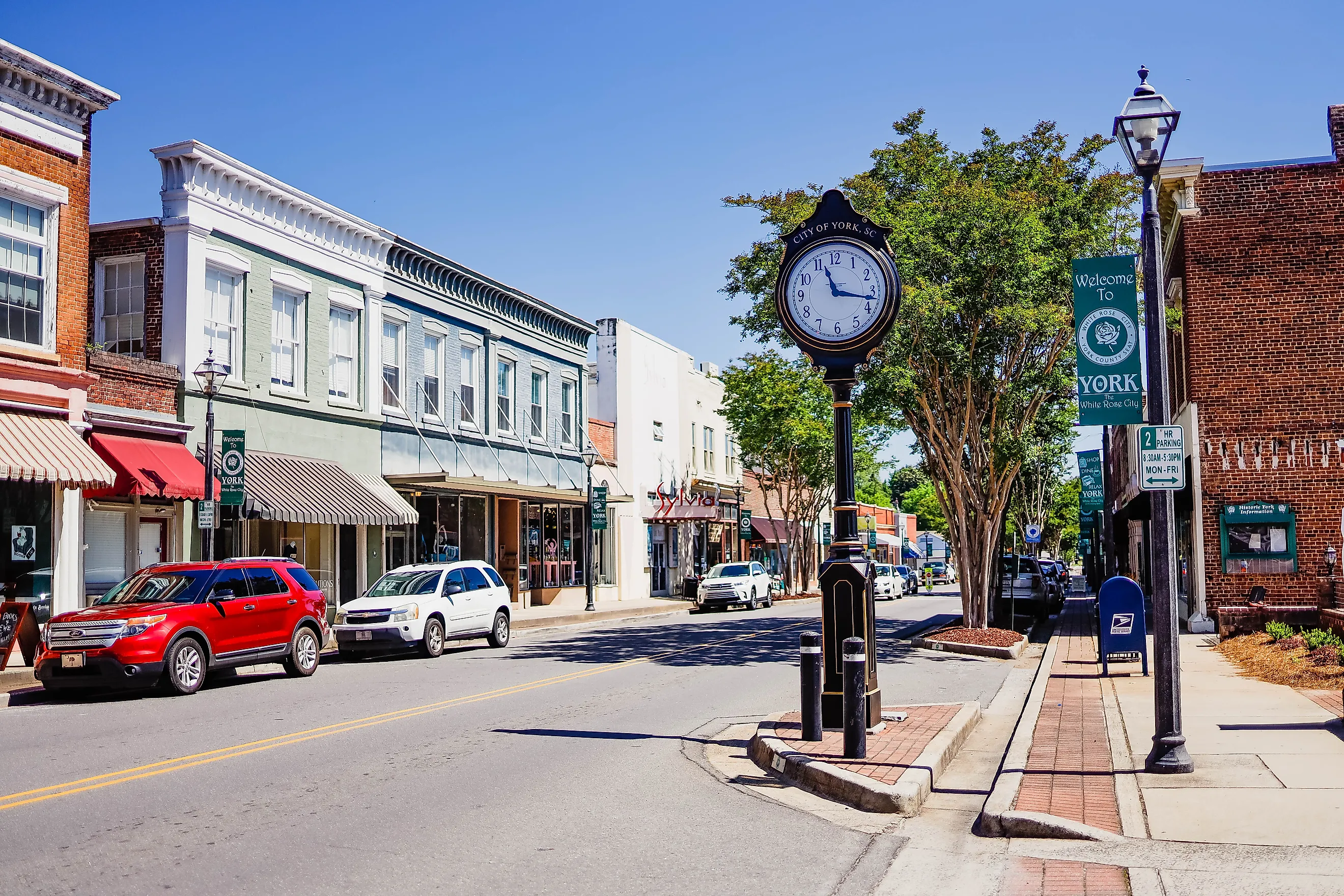
York's history begins with the Catawba Nation before becoming a Scotch-Irish settlement in the mid-1700s and later a site of Revolutionary War activity. The town’s past is documented at the Historical Center of York County, which traces local history through exhibits and archival records. Much of York’s past remains visible in the Yorkville Historic District, where preserved buildings and quiet streets reflect the town’s 18th- and 19th-century development.

York’s historic downtown developed around its courthouse square, which has long served as a civic and social focal point for the community. Cultural life continues at the McCelvey Center, housed in a historic building that hosts performances and community events. Nearby gathering places, including locally owned shops along Congress Street and Working Theory Beer Company, reflect York’s role as a long-standing social and commercial hub within the region.
Newberry

Newberry’s history dates to the frontier era of the late 1700s and later developed into an important railroad town in the 1850s, before facing disruption during the Civil War. The town features a well-preserved historic district, including the 1852 Newberry County Courthouse, which now serves as a community hall, Welcome Center, and home to the Newberry County Chamber of Commerce. The Neoclassical courthouse serves as a focal point on College Street and is a common subject for photography. The Newberry Opera House continues to host performances in its restored 1880s interior, combining history with ongoing cultural use.
Outside the downtown area, Wells Japanese Garden offers a quieter setting with walking paths, ponds, and bridges that encourage reflection.
A Slower Sense of History in South Carolina
From the Civil War history of Bluffton to the Civil Rights legacy preserved in Orangeburg, these South Carolina towns offer clear connections to the past. Their preserved streets, historic buildings, and long-standing traditions provide insight into the events that shaped both the state and the nation. Across coastal communities and inland settlements alike, these towns reflect a continuity that remains visible in daily life and local institutions.