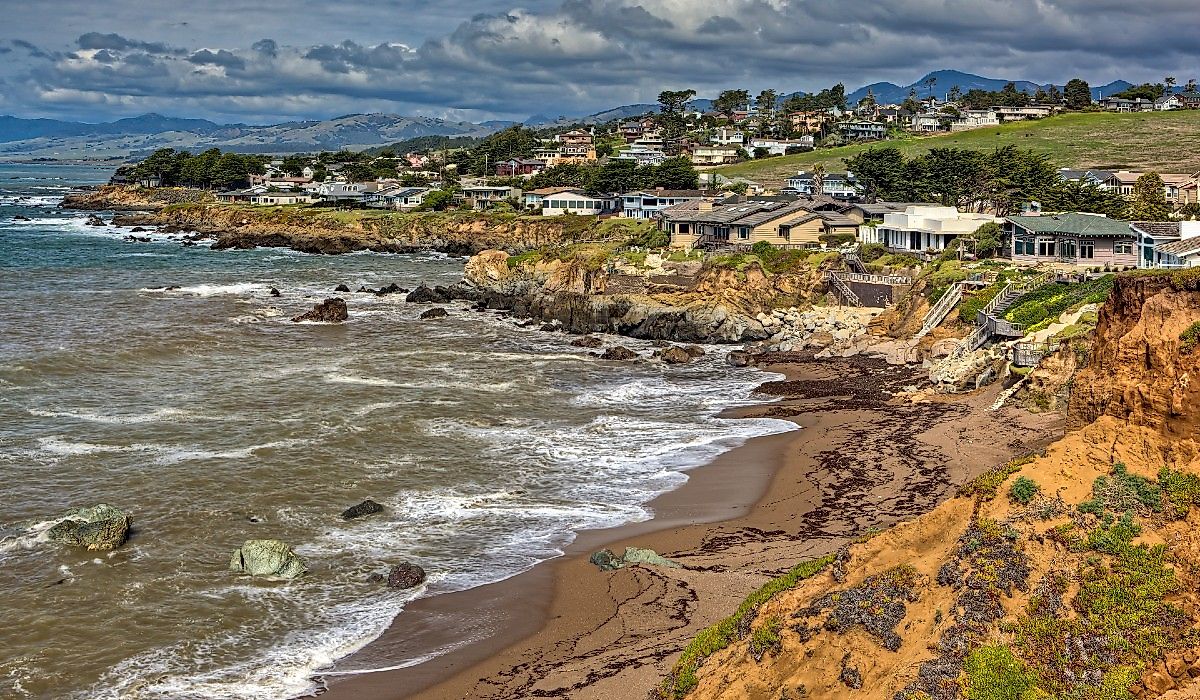
11 Towns Made For A Quiet Getaway In California
Most California towns of any reputation eventually pick up chain stores, through-traffic, or both. Carmel-by-the-Sea, founded as a writers' colony in 1903, still doesn't use numbered street addresses; mail goes to descriptive locations. Ojai has prohibited chain stores in its downtown core since the mid-1980s and operates on a one-of-a-kind valley microclimate that produces its famous "pink moment" at sunset. Ferndale preserves a Victorian commercial district intact behind a curtain of redwoods, an hour off Highway 101. Jenner has roughly 100 residents at the mouth of the Russian River. The eleven California towns below have, by various combinations of geography, zoning, and stubbornness, kept the conditions for genuine quiet.
Ojai

Ojai (population about 7,800) sits in an east-west valley running between the Topa Topa and Sulphur Mountains, the only valley orientation in California that channels the late-afternoon sun into a sustained rose-orange glow on the eastern cliffs. Locals call this the "pink moment," and it lasts roughly fifteen minutes around sunset. The town has run a downtown chain-store prohibition since the mid-1980s, which is why the Arcade on Ojai Avenue still anchors a row of independent storefronts under its 1917 Spanish Colonial Revival breezeway.
Bart's Books at Matilija and Canada Streets has been operating as the world's largest outdoor bookstore since Richard Bartindale set up bookcases on his own sidewalk in 1964; the inventory now runs about 130,000 titles, and the after-hours coin slot still works on the honor system. Meditation Mount on the east end of the valley keeps a 32-acre property with a sunset terrace open to the public free of charge. The Ojai Valley Inn, the most established hotel in town, runs a full destination spa on the site of a 1923 country club. Independent options include the Blue Iguana Inn and the Ojai Rancho Inn. The Dutchess on Ojai Avenue draws breakfast crowds with a Burmese-American menu, and the Sunday Ojai Certified Farmers' Market has been running 40-plus years.
Mendocino

Mendocino (population about 900) is a former 19th-century logging port that turned into a New England-transplant village largely because the original 1850s settlers were Maine and Massachusetts shipbuilders who brought their architecture with them. The Mendocino Headlands Historic District was placed on the National Register of Historic Places in 1971, and the 347-acre Mendocino Headlands State Park wraps three sides of the village with bluff trails, sea-arch overlooks, and the working Point Cabrillo Light Station four miles north.
The Skunk Train, chartered in 1885 and based in Fort Bragg ten miles north, runs vintage diesel rail cars on the original logging-line right-of-way through 30 miles of redwood forest and over the Pudding Creek Trestle, with a rail-bike option for self-powered riders. The MacCallum House Inn (1882) and the Heritage House Resort and Spa (formerly a Mendocino cypress family compound rebuilt as a cliffside resort) anchor the lodging end. Mendocino's coastline is rougher and less developed than the Sonoma stretch immediately south, and from October through May the rain and fog enforce a particular slowness; reservations are easy and the village shoulder seasons are when locals say it shows best.
Cambria

Cambria (population about 5,500) sits at the southern edge of the Big Sur coast, a former mercury-mining and lumber town that converted to coastal tourism after Highway 1 opened the central coast in the 1930s. Moonstone Beach is the village's anchor: a mile of beach known for the small translucent moonstone agates that wash up after winter storms, paired with a clifftop boardwalk linking the beach hotels. The Cambria Beach Lodge and the oceanfront White Water are the two best-positioned lodging options.
Hearst Castle, the Julia Morgan-designed estate William Randolph Hearst built between 1919 and 1947, sits seven miles up the coast at San Simeon. Tickets are reserved through California State Parks; the Grand Rooms tour covers the main Casa Grande and the Neptune Pool. Morgan, who designed the entire estate over 28 years, was California's first state-licensed female architect (1904) and the first woman to graduate from the École des Beaux-Arts in Paris. The Cambria Historical Museum on Burton Drive covers the village's mining and Welsh-immigration roots. The Fiscalini Ranch Preserve, a 437-acre coastal-bluff property on the west side of town, runs free public access on a five-mile trail network.
Cayucos

Cayucos (population about 2,400) is the small mid-central coast town between Morro Bay and Cambria that has resisted the resort buildout common to almost every other Highway 1 community of comparable scale. The Cayucos Pier, built in 1875 by town founder Captain James Cass to ship his dairy and lumber operations, runs 940 feet out into Estero Bay and is open free of charge for fishing, walking, and the occasional pier-jump from the railed end. The state-owned beach immediately south is one of the most dog-friendly stretches on the California coast.
Estero Bluffs State Park covers the four-mile stretch of bluff coastline immediately north of town, with parking pull-outs along Highway 1 and an undeveloped public-access shoreline. Brown Butter Cookie Company on Ocean Avenue, founded 2007 by sisters Christa and Traci Nichols, runs a single-product retail operation built around the brown butter sea-salt cookie that became their reputation. The On The Beach Bed & Breakfast and the Shoreline Inn sit directly on the sand. The town's working-cattle-ranch hinterland is a Pacific-coast rarity and is responsible for the village center staying built for residents instead of weekend houses.
Nevada City

Nevada City (population about 3,150) is the Sierra Nevada foothills former boomtown that holds one of the most architecturally intact 19th-century downtowns in the western United States. The Nevada City Downtown Historic District is on the National Register of Historic Places and covers 93 contributing buildings centered on Broad and Commercial Streets, with the National Exchange Hotel (1856) operating continuously since the Gold Rush peak. The town's design review prohibits standard chain signage and most franchise retail.
The Miners Foundry Cultural Center, a former 1856 iron foundry, runs a performance schedule of theater, music, and lectures across an industrial-stone interior. Empire Mine State Historic Park, ten minutes south in Grass Valley, preserves the headframe and 367 miles of underground workings of what was once one of the largest and richest hardrock gold mines in the country (closed 1956 after a 106-year operating run). South Yuba River State Park, fifteen minutes north, runs a network of swimming holes and a covered Independence Trail accessible to wheelchairs and strollers. The town's altitude (2,500 feet) gives it actual seasons, which is rarer in California than the postcards suggest.
Healdsburg

Healdsburg (population about 11,300) sits at the intersection of three Sonoma County wine appellations: the Alexander Valley to the east, the Dry Creek Valley to the northwest, and the Russian River Valley to the southwest, with roughly 100 wineries within a 20-minute drive of Healdsburg Plaza. The Plaza itself, a one-block public square laid out in 1857, anchors the town's restaurants and tasting rooms; the surrounding district is on the National Register of Historic Places.
The Hotel Healdsburg and the Madrona (an 1881 Italianate mansion on West Dry Creek Road that operated as a private estate before its modern hotel conversion in 2022) run the high end of the lodging market. The Healdsburg SHED, a market-and-cafe complex on Healdsburg Avenue, anchors the local-food economy alongside the year-round Healdsburg Farmers' Market (the original Saturday market dates to 1978). Noble Folk Ice Cream and Pie Bar on the Plaza is small and sells out by midafternoon. The 8-mile Westside Road south of town runs past the highest concentration of Russian River pinot noir producers, including Rochioli, Williams Selyem, and Porter Creek.
Carmel-by-the-Sea

Carmel-by-the-Sea (population about 3,150) was founded in 1903 as a planned bohemian artists' and writers' colony by developer James Franklin Devendorf and attorney Frank Powers, and it has held its 1-square-mile incorporated footprint largely intact since. The town famously does not use numbered street addresses to this day; mail is collected at the post office on Fifth Avenue and residences are identified by descriptive name or by cross-street. The downtown grid runs about a dozen blocks of cottages, courtyards, and walk-through passageways between Ocean Avenue and the beach.
Carmel Beach at the foot of Ocean Avenue is white quartz sand backed by a row of Monterey cypresses; access is free and dogs are allowed off-leash. The Carmel Mission Basilica (Mission San Carlos Borromeo de Carmelo, founded 1771 by Junípero Serra) holds the most intact mission church south of Monterey, with the saint's tomb under the altar. The 17-Mile Drive runs west from the Carmel Gate into the Del Monte Forest past Pebble Beach, the Lone Cypress, and Spanish Bay (a $11.75 per-vehicle entry fee applies, refunded with food purchase at most properties along the route). Point Lobos State Natural Reserve, three miles south on Highway 1, preserves an offshore marine reserve and bluff trails through one of the oldest groves of Monterey cypress on Earth.
Ferndale

Ferndale (population about 1,350) is the Humboldt County dairy town built by Danish, Swiss-Italian, and Portuguese immigrants in the 1850s and held intact behind a screen of redwood forest five miles off US Highway 101. The Ferndale Main Street Historic District went on the National Register of Historic Places in 1994 and covers the Italianate, Stick-Eastlake, and Queen Anne commercial buildings on Main Street; the town markets itself as "the Victorian Village" and the description holds up under daylight inspection. Russ Park, 105 acres on the southern edge of town, preserves one of the few remaining Sitka spruce coastal forests in California and runs maintained bird-sanctuary trails.
Ferndale lights its Main Street living spruce as America's tallest living Christmas tree the first Sunday of December each year, a tradition continuously held since 1934 with a four-year pause during World War II. The Ferndale Volunteer Fire Department, founded 1897, installs the lights and is responsible for the tree's maintenance. The 1890 Victorian Inn and the 1899 Gingerbread Mansion Inn anchor the village's bed-and-breakfast inventory. The Lost Coast and Humboldt Redwoods State Park (containing Avenue of the Giants, the 31-mile stretch of old-growth coast redwood along the former US 101 alignment) are 30 to 45 minutes from town.
Idyllwild

Idyllwild (population about 3,800) is the unincorporated mountain village at 5,400 feet in the San Jacinto Mountains, surrounded on three sides by the Mount San Jacinto State Wilderness and the San Bernardino National Forest. The town sits below Tahquitz Peak (8,846 feet) and Suicide Rock (7,528 feet), the southernmost dependable rock-climbing destination of significance in California, with technical routes that have been a southern California climbing standard since the 1930s. The village's most photographed resident is Mayor Max, a golden retriever serving as the town's elected ceremonial mayor (the post is held by an actual dog and currently sits with Max III).
The Idyllwild Nature Center, a Riverside County Regional Park, runs interpretive exhibits and short trails through manzanita and pine. The Pacific Crest Trail runs the ridgeline above town with several access points within a short drive. The Idyllwild Arts Academy, an internationally recruited boarding school for performing and visual arts, hosts free summer concerts on Holmes Amphitheater. The Strawberry Creek Inn and the Grand Idyllwild Lodge anchor the small-inn lodging market; restaurants close early, the night sky is dark, and the elevation buys cool summer nights even in July.
Julian

Julian (population about 1,500) is the mountain town in eastern San Diego County founded in 1869 after Confederate veteran Drury Bailey and his cousin Mike Julian struck gold in nearby Coleman Creek. The strike was modest by California Gold Rush standards but ran long enough to leave a permanent town and a substantial apple-orchard economy that took over once the gold played out. The Julian Pie Company on Main Street has been the anchor pie producer since 1986; Mom's Pie House across the street is the longer-running competitor since 1984.
The town was designated an International Dark Sky Community by DarkSky International in 2021, making Julian one of only a handful of certified communities in California; ordinances on outdoor lighting predate the designation. The 600,000-acre Anza-Borrego Desert State Park, the largest state park in the continental United States, sits half an hour east down Banner Grade and runs spring wildflower bloom roughly mid-February through April. Cuyamaca Rancho State Park, 15 minutes south, has rebuilt its trail network in the 20 years since the 2003 Cedar Fire and runs the most accessible mountain hiking near San Diego. The Julian Gold Rush Hotel, the oldest continuously operating hotel in southern California (1897), and Orchard Hill Country Inn anchor in-town lodging.
Jenner

Jenner (population about 130) is the unincorporated Sonoma Coast village at the mouth of the Russian River, where the river opens into the Pacific across a sand bar that shifts with each major rainfall and storm cycle. Goat Rock Beach, the southern half of the river mouth, is a year-round harbor seal haul-out and pupping site; California State Parks maintains a docent program that keeps a respectful distance during the March-through-August pupping season. The Jenner Headlands Preserve directly north of the village, a 5,630-acre Sonoma Land Trust property opened to the public in 2018, runs 22 miles of trail through coastal prairie and Douglas-fir forest with views down to the river mouth.
The Jenner Inn (a small property with rooms in several adjacent restored buildings) and River's End Restaurant and Inn on the bluff anchor the village's lodging. The drive south along Highway 1 from Jenner toward Bodega Bay is one of the most exposed and undeveloped stretches of state highway in coastal California, with no through-towns for 11 miles, and the drive north toward Fort Ross State Historic Park is similar. Fog rolls in off the Pacific most summer afternoons; clear days are more common from October through April.
Eleven Towns On Eleven Versions Of Quiet
The constant across these eleven towns is that each has its own working definition of quiet, and they aren't interchangeable. Carmel and Healdsburg are quiet in a curated, upper-tier way and run lodging accordingly. Ojai is quiet under a deliberate municipal policy. Mendocino, Cambria, and Cayucos run the coastal-village version of quiet, paced by fog and tide and the daylight saving change. Nevada City and Julian are inland mountain quiet with cold-night seasons. Ferndale runs the Victorian-village version, with everything closed by 8 p.m. Idyllwild is forest-floor quiet, surrounded by hiking trail. Jenner is the smallest version of quiet, with 130 neighbors and a river mouth. Choose by the kind of silence you're after.