7 Whimsical Towns to Visit in The Pacific Northwest
Bavarian villages stand alongside Victorian seaports across the region. Basalt sinkholes drain ocean water at one coastal point, while a 1906 shipwreck rusts in the sand at another. A town named after the movie about lost children sits at the mouth of the Columbia. The Pacific Northwest runs the unusual side of American small towns, with reinvention stories that turned logging mills into Bavarian shopping districts and military forts into arts campuses. Some places leaned into reinvention while others refuse to look like anywhere else. Seven Pacific Northwest towns ahead pair coastal scenery with the kind of personality that earns a curiosity visit on any itinerary.
Astoria, Oregon

The Goonies, the 1985 family adventure film, was shot across Astoria, with the Walsh House on 38th Street, the Old Goonies Jail on Duane Street (now the Oregon Film Museum), and the school exterior on Court Street all still standing as filming locations. Astoria sits at the mouth of the Columbia River and is the oldest American settlement west of the Rockies, founded by John Jacob Astor's Pacific Fur Company in 1811. The town runs about 10,000 residents along the working waterfront.
The Astoria Column, a 125-foot concrete tower on Coxcomb Hill completed in 1926, runs a spiral mural that depicts Oregon's discovery and settlement history, with an interior staircase climbing to a 360-degree observation deck. The Columbia River Maritime Museum on the waterfront holds 30,000 artifacts covering fishing, shipping, and naval history along with the lightship Columbia, a National Historic Landmark. Fort Stevens State Park, on the Pacific side of the Columbia's mouth, covers 4,300 acres including the rusted remains of the 1906 Peter Iredale shipwreck on the beach. Bucket Bites, the food truck on Marine Drive, serves Finnish-heritage pasties to Astoria's working-port crowd.
Friday Harbor, Washington

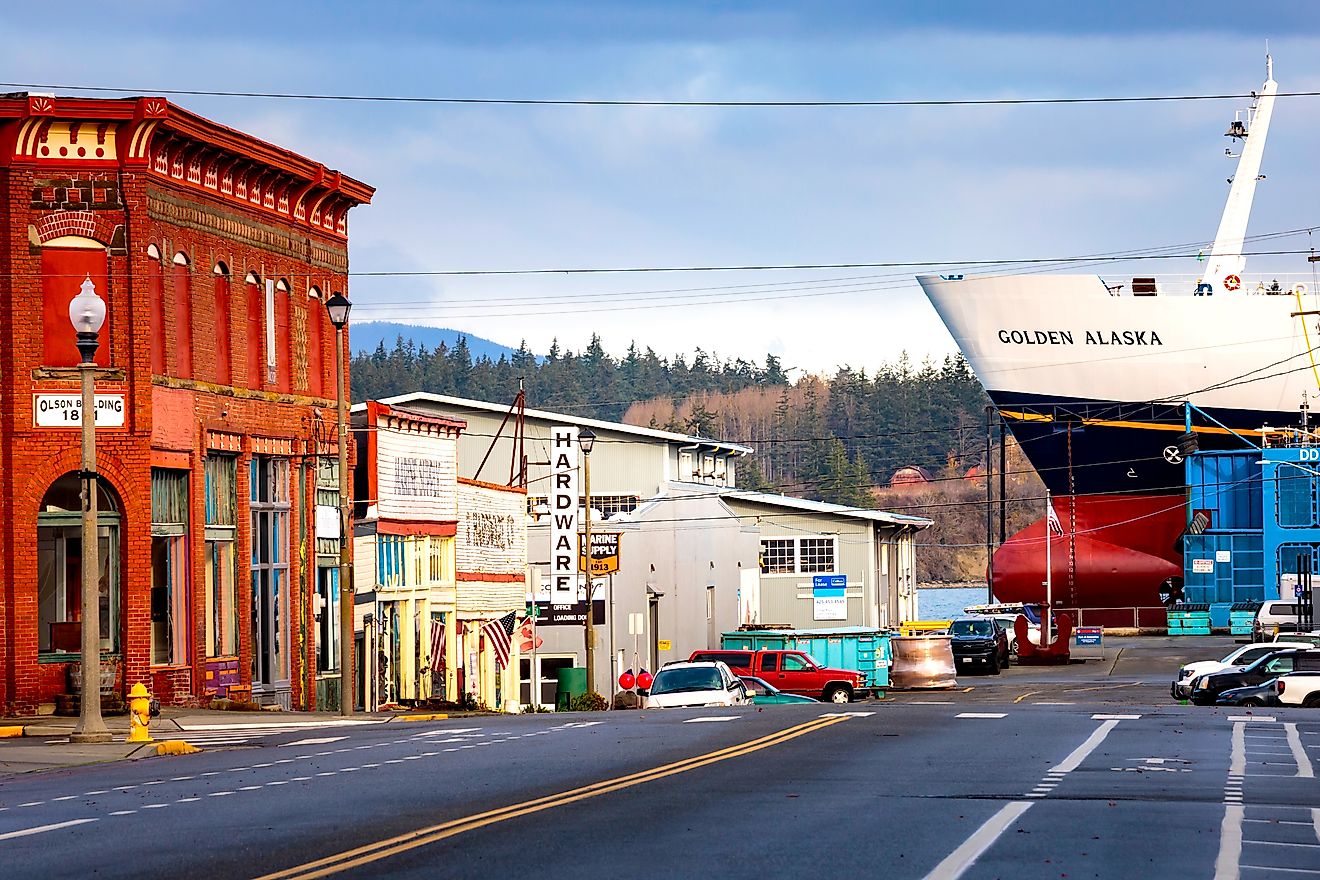
Friday Harbor is the only incorporated city in the San Juan Islands and runs without a single stoplight despite being the county seat of San Juan County. The town runs about 2,400 year-round residents on the eastern shore of San Juan Island, accessible only by ferry from Anacortes or by small aircraft to the San Juan Island Airport. The downtown wraps around the working marina with turn-of-the-century wood-frame storefronts.
The Whale Museum on First Street covers the Southern Resident orca population that spends spring through fall in the surrounding waters, with educational programs covering both the local pods and the broader Salish Sea ecosystem. Lime Kiln Point State Park, 8 miles west of town, runs a 1.5-mile coastal trail along the shore where the orcas regularly pass close enough for shore-based viewing during the summer months. The San Juan Island National Historical Park covers the sites of the 1859 Pig War standoff between American and British forces on the island, with both American Camp and English Camp preserved with original buildings and interpretive trails.
Hood River, Oregon

The Columbia River Gorge between Hood River and the city of The Dalles runs one of the most reliable wind corridors in the world, making Hood River the kiteboarding and windsurfing capital of North America. The Event Site, a 12-acre county park on the waterfront, runs the launch zone for hundreds of kiters and surfers on most summer days, with rentals and lessons available from a half-dozen local outfitters. The town itself sits at the foot of Mount Hood and runs about 8,200 residents.
The Hood River Valley is one of the largest pear-growing regions in the United States, with the Fruit Loop, a 35-mile self-drive route through the valley, passing dozens of family orchards, cider houses, lavender farms, and small wineries. The Mount Hood Railroad, founded in 1906 to haul fruit to the Columbia River, now runs heritage scenic excursions, brunch trains, and the Polar Express through the valley with Mount Hood as the backdrop. Cathedral Ridge Winery and Marchesi Vineyards run the local wine scene, both within a few minutes of downtown.
Leavenworth, Washington

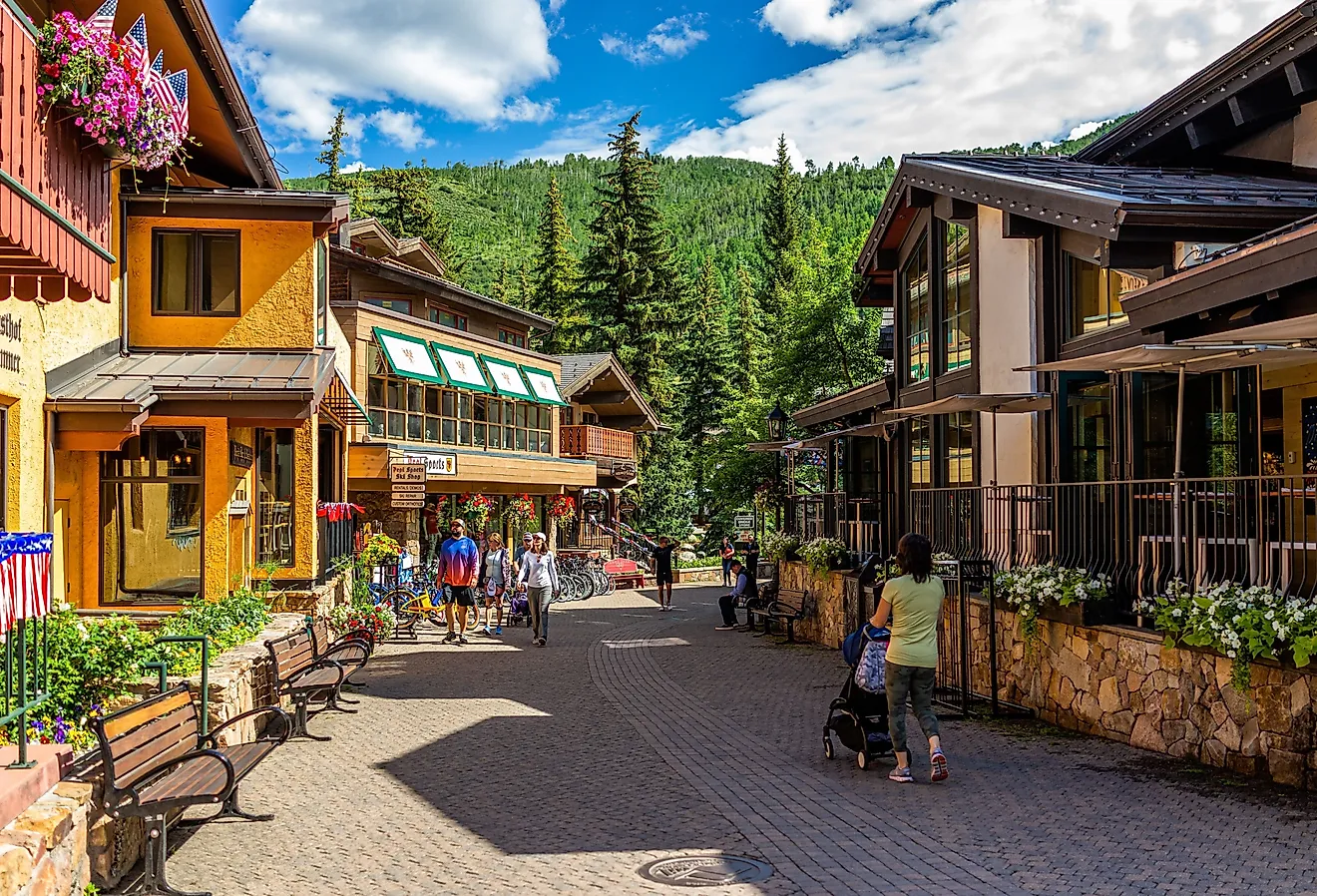
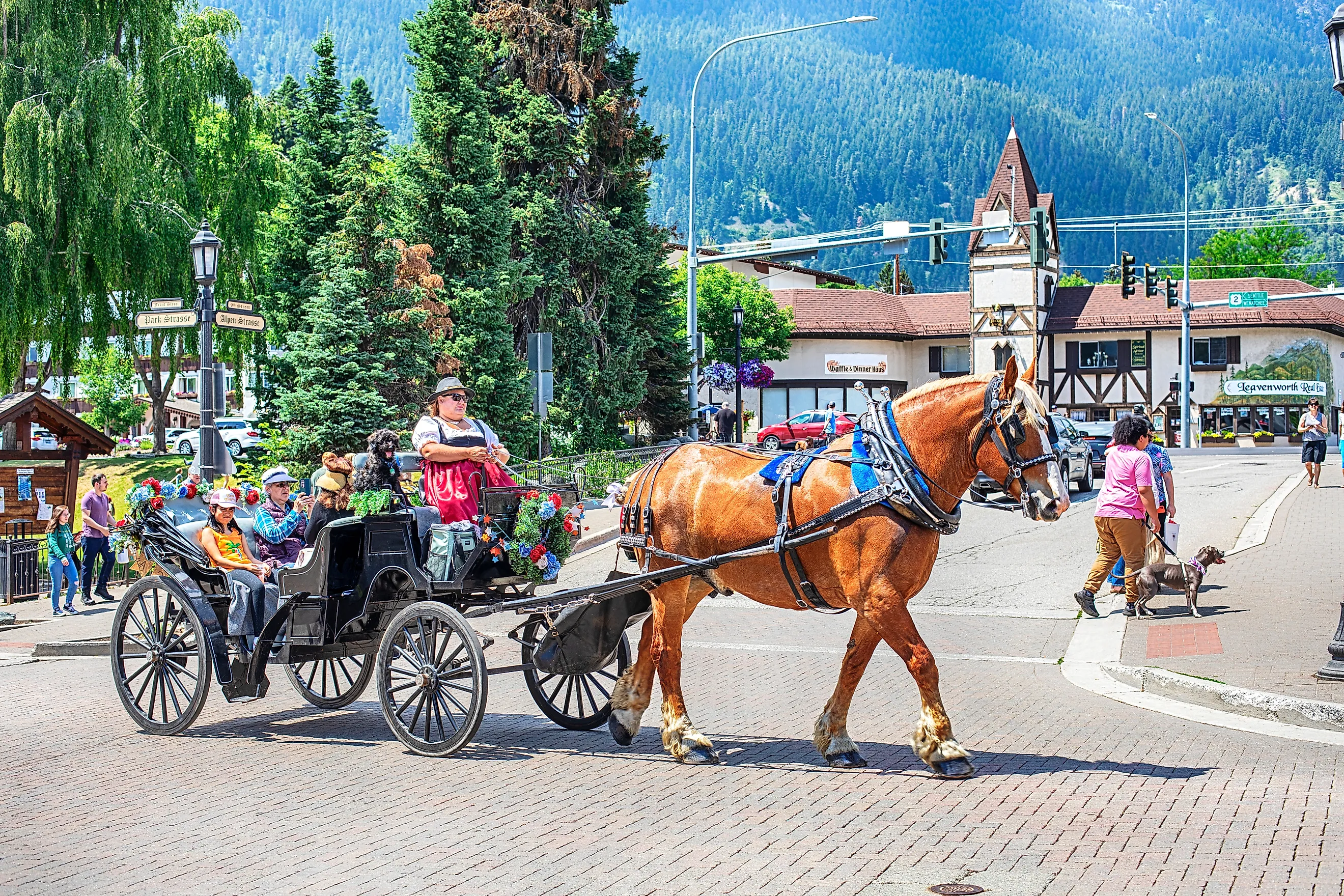
Leavenworth's downtown reinvented itself in 1962 through Project LIFE (Leavenworth Improvement For Everyone), a community-led effort to rebuild every storefront in Bavarian Alpine architecture after the railroad and logging industries collapsed and left the town economically struggling. The transformation was complete by 1969, and Leavenworth now runs about 2,200 residents on Front Street with the highest-density Bavarian-themed commercial district in the United States.
The town's annual Oktoberfest, established in 1998 and now spread across three weekends each October, hosts around 60,000 visitors across the festival run. Other major annual events include the Christmas Lighting Festival, when more than 750,000 lights cover downtown for the entire month of December, and Maifest each May. The Leavenworth Reindeer Farm, north of town, runs interactive tours through a working reindeer herd year-round. The Leavenworth Adventure Park downtown runs an alpine coaster, mini-golf, and a climbing wall through the warm months.
Port Townsend, Washington

Port Townsend boomed in the 1880s as a candidate to become the major Pacific Northwest port and built the elaborate Victorian homes and brick commercial buildings to match. When the Northern Pacific Railroad chose Tacoma instead, the boom collapsed almost overnight and the buildings froze in time. The town's 200-acre Historic District, designated a National Historic Landmark in 1977, runs one of only three intact Victorian seaport districts in the country.
Fort Worden State Park, on the bluff north of downtown, covers 433 acres and was one of three coastal artillery forts built to defend Puget Sound between 1898 and 1917. The park keeps original concrete batteries, an 11-mile trail network, the Port Townsend Marine Science Center, and the Centrum arts center, which runs the Centrum Jazz, Acoustic Blues, and Fiddle Tunes festivals each summer. The Point Wilson Lighthouse, a 1914 reinforced-concrete tower at the tip of the bluff, marks the entrance to Admiralty Inlet between the Strait of Juan de Fuca and Puget Sound.
Tillamook, Oregon

The Tillamook Creamery on Highway 101, the visitor center for the Tillamook County Creamery Association, runs free self-guided tours of the cheese-making process through observation windows above the production floor, with a tasting bar that pours samples of the cooperative's full product line. The cooperative has been farmer-owned since 1909 and is the largest cheese producer on the West Coast.
The Tillamook Air Museum, in a converted 1942 Navy blimp hangar (one of the largest free-standing wooden structures in the world at 1,072 feet long), houses one of the largest private collections of WWII-era aircraft in the country, including a Bell P-63 Kingcobra and an F-14 Tomcat. Cape Meares Lighthouse, on a basalt headland 10 miles west of town, was built in 1890 and stands only 38 feet tall (the shortest lighthouse on the Oregon coast). The Octopus Tree, a Sitka spruce with six trunks growing from a single base near the lighthouse, is one of the most photographed natural specimens on the coast.
Yachats, Oregon

The name Yachats (pronounced YAH-hots) is a Siletz word meaning "dark water at the foot of the mountain," referring to the dark basalt rock that lines the shoreline at the mouth of the Yachats River. The town runs about 1,000 year-round residents and serves as the gateway to the Cape Perpetua Scenic Area immediately south. The Adobe Resort and the Overleaf Lodge, both with cliff-edge ocean views, run the higher-end overnight options.
Thor's Well, a 20-foot-deep saltwater sinkhole in the basalt shelf just south of Cape Perpetua, draws and drains seawater dramatically through every tide cycle and is one of the most photographed natural features on the Oregon coast. Devil's Churn, a narrow basalt inlet about a mile north of Thor's Well, sends explosive spray 50 feet into the air during high tides. Spouting Horn, a third blowhole formation along the same stretch, completes the trio. Cape Perpetua itself rises 803 feet above the Pacific with the West Shelter, a CCC-built stone overlook constructed in 1933, marking the highest point.
Seven Towns, Seven Versions Of The Region
The Pacific Northwest's smaller towns each run their own version of the region's reinvention story. Astoria turned its fishing-port roots into a film-tourism destination on top of working harbors. Leavenworth turned a failing logging town into a Bavarian shopping district. Port Townsend turned an abandoned 1880s boomtown into an arts and music destination. Tillamook turned a dairy cooperative into a million-visitor-a-year attraction. Each works as the headline of its own trip, and most pair well with at least one neighbor on a multi-stop itinerary along Highway 101 or across Puget Sound.