11 Most Hospitable Towns In North Carolina
North Carolina runs from the Blue Ridge Mountains to the Atlantic, and the welcome changes as the landscape does. In the mountains, that means a barkeep at a 1922 former barber shop in Black Mountain or a college town like Boone that pulls visitors into its routine within a day. On the coast, it means front porches facing the harbor in Beaufort and a riverfront in Wilmington that USA Today once named the best in the country. In between sit towns like Hillsborough, founded in 1754 and packed with more than 100 historic buildings. The 11 towns here all share one thing: they make room for newcomers without making a show of it. You will find independent bookstores that have stayed open for decades, breweries in reused warehouses, and farmers' markets that double as the week's main gathering.
Asheville

Set against the Blue Ridge Mountains, Asheville mixes creative energy with community. Downtown holds bookstores like Malaprop's, open since 1982 on Haywood Street, and the Battery Park Book Exchange & Champagne Bar in the Grove Arcade, alongside galleries such as Blue Spiral 1 and Woolworth Walk. The Blue Ridge Parkway runs scenic overlooks just past the city limits, though some stretches may still be affected by post-Helene repairs, while Biltmore Estate opens its Gilded Age halls and gardens nearby. Along the French Broad River, the River Arts District is rebuilding after Hurricane Helene, with artists still working from former warehouses; the NC Glass Center runs public glassblowing, and spots like All Souls Pizza and PennyCup Coffee serve the studio district. Downtown, Pack Square Park hosts festivals and public gatherings, while Asheville's long-running Friday drum circle gathers at Pritchard Park.
Boone

High in North Carolina's High Country, Boone sets mountain scenery against college-town energy, with Appalachian State University filling the calendar through fall football and campus performances. Downtown Boone clusters around King Street and nearby Depot and Howard streets, with Mast General Store on King Street, Footsloggers on Depot Street, Espresso News and Melanie's Food Fantasy on Howard Street, Lost Province Brewing nearby, and Hatchet Coffee Roasters close at hand. Several access points connect the town to the Blue Ridge Parkway, with mountain vistas around nearly every bend, while outfitters such as High Mountain Expeditions rent boats for the New and Watauga rivers. Closer in, Daniel Boone Native Gardens winds through plants native to the Southern Appalachians, with benches among the flowering shrubs. Autumn foliage draws travelers seeking mountain color.
Wilmington

Wilmington sits where the Cape Fear River meets the coast, its nearly two-mile Riverwalk lined with markets, galleries, and outdoor cafés and named the country's top riverfront by USA Today in 2015. Restored warehouses hold the 230-block National Register historic district and breweries like Front Street Brewery, open since 1995, and Flytrap Brewing a few blocks off the water. Across the river, the WWII Battleship North Carolina opens its decks and exhibits. A short drive leads to Wrightsville Beach, where surfers paddle the waves and families spread along the sand, while inland Airlie Gardens runs paths beneath centuries-old live oaks draped in Spanish moss, with seasonal blooms through the year. The newer Cargo District packs creative shops and End of Days Distillery into reused shipping containers.
Beaufort

Along North Carolina's Crystal Coast, Beaufort moves at a pace set by tides and boats crossing Taylor's Creek, with front porches and waterfront benches facing the harbor. The North Carolina Maritime Museum at 315 Front Street covers the region's shipwrecks and coastal life, while nearby restaurants include the Royal James Café on Turner Street and Black Sheep on the waterfront at 510 Front Street. Restored 18th- and 19th-century homes, each marked by a Beaufort Historical Association plaque, line the side streets; rent a bicycle or take a horse-drawn carriage to see them, or visit the Old Burying Ground. Ferries run from the waterfront to Shackleford Banks, home to the wild horses, and to Cape Lookout National Seashore, where undeveloped beaches and the Cape Lookout Lighthouse remain largely unchanged.
New Bern

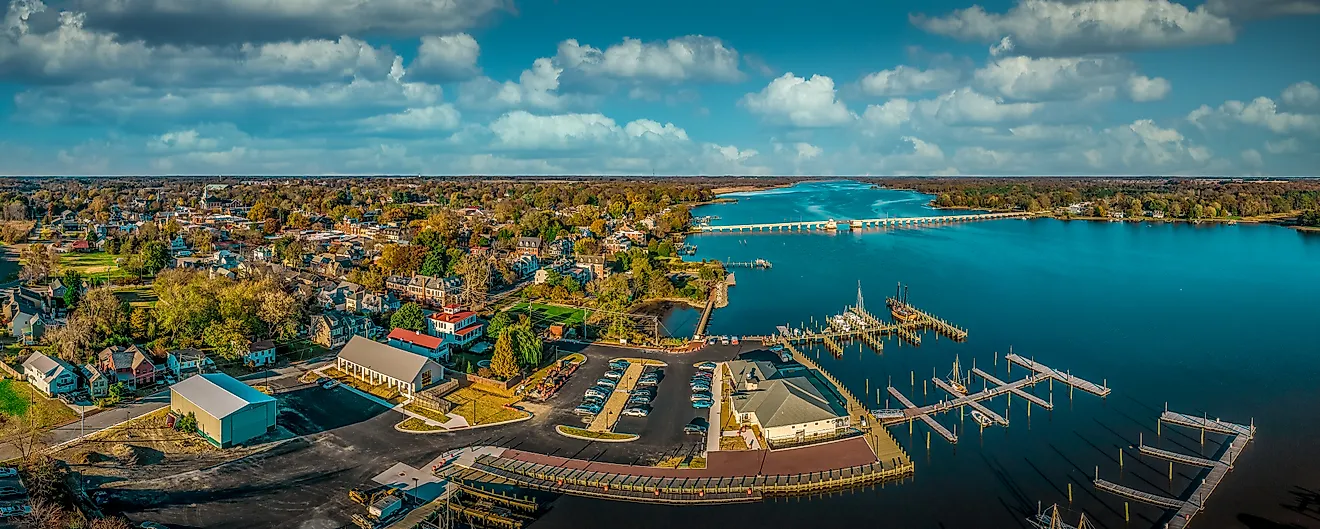
At the meeting point of the Neuse and Trent rivers, New Bern joins colonial history to an active waterfront, its brick sidewalks connecting more than 150 sites on the National Register. Founded in 1710, the town runs along Middle and Pollock streets from landmark churches like Christ Church to shops such as Blue Magnolia, restaurants including Baxter's 1892 and Morgan's Tavern & Grill downtown, and Persimmons on the Neuse River waterfront. Tryon Palace, rebuilt from the original drawings after an 1798 fire, opens its restored buildings and formal gardens onto the colonial era, and the Birthplace of Pepsi-Cola traces the drink to a local pharmacy. Union Point Park opens onto river views and hosts gatherings, with families on the lawn and boaters offshore. A red trolley runs 90-minute history tours from 610 Pollock Street.
Hendersonville

Among rolling foothills and orchards, Hendersonville keeps both its agricultural roots and the second-largest downtown in western North Carolina, with more than 100 shops and 25 restaurants along a curving, landscaped Main Street marked by the 1905 county courthouse's gold dome. Apple season brings harvest celebrations and orchard visits to Grandad's Apples in Hendersonville and Sky Top Orchard in the hills above Flat Rock, and the Cheers! Trail highlights more than two dozen craft-beverage tasting experiences in and around Hendersonville. Downtown, McFarlan Bakery has baked from the same recipes since 1930, Black Bear Coffee anchors the morning, and West First Wood-Fired draws diners for wood-fired pizzas and small plates. A five-mile drive leads to Jump Off Rock in Laurel Park, with panoramic views of the Blue Ridge and Pisgah ranges, best at sunset and during fall color.
Edenton

Facing Albemarle Sound, Edenton holds one of North Carolina's most significant collections of colonial-era architecture, its three blocks of 19th-century Broad Street buildings housing nearly 40 shops and restaurants within a walk of the waterfront. Locals stop at Blount's Mutual Drugs for an orangeade from the 1920s soda fountain, the Edenton Coffee House for a latte, and Waterman's Grill for fresh fish. Built in 1886 to guide vessels through the sound, the Roanoke River Lighthouse has been restored and relocated to the waterfront, and Historic Edenton State Historic Site ties together the 1767 Chowan County Courthouse — the oldest government building in continuous use in North Carolina — the Cupola House, and the Penelope Barker House. Free downtown parking and shoreline benches make the compact center easy to linger in.
Black Mountain

Just east of Asheville, Black Mountain sets an arts scene amid mountain scenery, its walkable downtown centered on State and Cherry streets in buildings from the 1920s and '30s. The Red House Gallery and Seven Sisters Gallery show local work, the Black Mountain Center for the Arts runs classes and performances, and Town Hardware stocks some 35,000 items across generations. The Station, a coffee-and-beer bar in a 1922 former barber shop at 100 Cherry Street, sits near the Town Pump Tavern's live music. Lake Tomahawk Park draws walkers to a path circling water that mirrors the surrounding peaks, while the Swannanoa Valley Museum documents Appalachian history and nearby trails climb for valley views. The town's creative roots trace to the experimental Black Mountain College, whose legacy continues through events like the {Re}HAPPENING.
Hillsborough

With the Eno River running through it, Hillsborough pairs more than 100 buildings dating to the 18th and 19th centuries with a busy arts calendar; founded in 1754, it's been called a museum without walls. Churton Street and nearby downtown blocks hold the Hillsborough Gallery of Arts, Purple Crow Books, Cup-A-Joe coffeehouse, and restaurants such as Antonia's and the Wooden Nickel Public House, while the Orange County Arts Commission's Eno Mill Gallery adds another arts stop nearby. The Eno Riverwalk, opened after a decade of planning, links neighborhoods to shaded paths along the river from access points at the downtown parking deck and Gold Park. Occoneechee Mountain State Natural Area climbs through forest to overlooks above the valley, and a reconstructed Occaneechi village stands on the riverbank near the tribe's original site.
Sylva

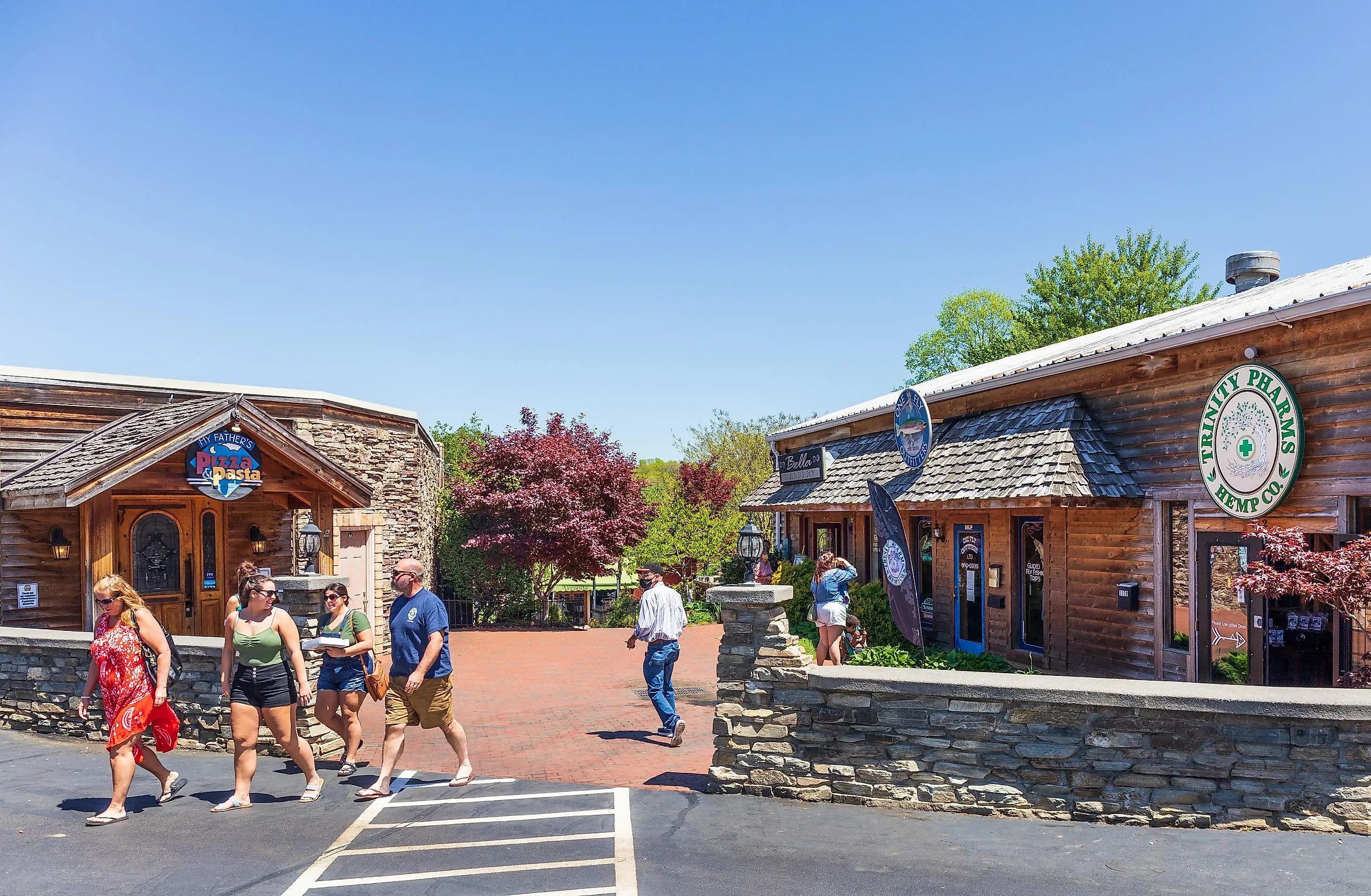
Built along the slopes of the Great Smoky Mountains, Sylva climbs a compact Main Street toward the 1914 Jackson County Courthouse — said to be the most photographed courthouse in the state — reached by 107 steps from a street-level fountain; the former courthouse now houses the public library. Downtown packs some 20 independent restaurants and bars with three walkable craft breweries: Innovation Brewing, which helped spark the revival in 2013, Balsam Falls, and Lazy Hiker. City Lights Bookstore has sold new and used books in downtown Sylva since 1985, with City Lights Café next door, and Lulu's on Main has been part of downtown Sylva since 1989 with fresh, local-leaning fare. Scotts Creek runs through the center for trout fishing along the WNC Fly Fishing Trail, and nearby stretches of the Blue Ridge Parkway and the Great Smoky Mountains Railroad add mountain and river scenery.
Manteo

On Roanoke Island, Manteo wraps a boardwalk around Shallowbag Bay, its harbor lined with boats and the reconstructed Roanoke Marshes Lighthouse. Downtown's main stretch holds boutiques, Downtown Books, and restaurants from Poor Richard's Sandwich Shop — a Manteo tradition since 1984 with After Hours live music — to the waterfront 1587 Restaurant & Lounge and Ortega'z Southwestern Grill. Across the bay, Roanoke Island Festival Park interprets the early English settlement around the Elizabeth II, a full-scale ship replica, with costumed interpreters and summer concerts. Nearby, the Elizabethan Gardens offers maintained landscapes and seasonal color, and Fort Raleigh hosts the long-running Lost Colony outdoor drama each season. A Saturday farmers' market, First Friday events, and July 4 fireworks keep the waterfront busy through the warmer months.
Where hospitality is shaped by place
From the Blue Ridge foothills to the coastal plain, North Carolina's small towns reveal how deeply place shapes the way people welcome one another. Asheville and Boone reflect the state's mountain identity in different ways, one through a creative, walkable arts scene, the other through a college-town energy where visitors are quickly drawn into local routines. Farther east, Wilmington and New Bern show hospitality shaped by water, where riverfronts, historic streets, and harbor views create natural spaces for connection.
Across these towns, hospitality runs through the ordinary business of the day. Whether in mountain streets or along coastal docks, people share space with ease, take pride in their communities, and make room for visitors. It is this steady openness, rooted in landscape, history, and everyday exchange, that gives North Carolina's towns their lasting character.