11 Main Streets Where Scotland Comes Alive
Scotland's historic character doesn't stop at Edinburgh's borders. Scotland's character is perhaps nowhere else more vividly on display than along its historic Main Streets, where centuries-old architecture, local traditions, independent shops, and welcoming pubs create a sense of place that feels distinctly Scottish. Stone-built town centers framed by rugged Highland scenery sit alongside streets lined with colorful storefronts and historic landmarks. These communities offer a glimpse into everyday Scotland beyond the major cities. For travelers seeking authentic experiences, these 11 Main Streets are places where Scotland's history and culture come alive.
St. Andrews

On the East Coast of Scotland, a medieval town with a dramatic coastline, was born a simple game that's anything but easy. Visit the R&A World Golf Museum to see how this game took the world by storm and became the international craze it is today. The Museum is an easy 5-minute walk from the town center. The town is organized around three parallel main streets, North Street, Market Street, and South Street, each one offering something unique and interesting. While walking South Street, you'll see the ruins of Blackfriars Chapel. It was built in the 1520s and destroyed in 1559 by Protestant reformers. Just north on Market Street, you'll find, as the name might suggest, an abundance of markets. Stores and restaurants dominate Market Street, bringing the city to life with a hub of activity and community. Shop at Bonkers Gift Shop, a multi-floor store with a vast array of products, and enjoy fresh, local seafood at Tailend St Andrews. The final main street in St. Andrews is North Street, where the historic University of Saint Andrews, founded in 1413, spreads out on display. The university's Wardlaw Museum sits here, and a short walk north on The Scores brings you to St. Andrews Castle, the ruined seat of the town's bishops, with incredible views of the North Sea beyond.
Kelso

The first clear reference to the town of Kelso was in 1128, when King David I gave the church at Calchou to French monks from Tiron. In 1559, the Reformation brought an end to the regular use of the Kelso Abbey, whose ruins you can now explore with just a 2-minute walk from the Square. Kelso's famous square, which is unique in Scotland, became the venue for weekly markets and two annual fairs. Today, the historic market town, located in the Scottish Borders, still hosts the Kelso Farmers Market and Kelso Antique Fair. The town is widely recognized as one of the most elegant, walkable town centers in Scotland, and you can stay in the middle of it all in one of the oldest buildings on the Square, at Cross Keys Hotel. Less than 10 minutes from the Square is Floors Castle.
Aberdour

Located in Fife, Scotland, Aberdour's town center delivers Victorian character, sea views, and medieval history. At the top of High Street, you'll find a traditional Scottish pub, a cute cafe, and local souvenir shops. From there, take a stroll down Shore Road, past the Aberdour Obelisk, and find yourself on the edge of the North Sea. You can pitch your beach chair on the sands at Aberdour Beach or Black Sands Beach to enjoy the view. Straight up the road from the business on High Street is the Aberdour Castle and Gardens. Built in the 1100s, it is one of Scotland's oldest stone castles and is known for its terraced walled gardens and beehive-shaped dovecot. The castle served three noble families for generations, including a Regent of Scotland.
Moffat

Moffat is a town in Dumfries and Galloway, Scotland, that lies on the River Annan. The town's economic center is High Street, where visitors can walk and explore the former spa town in minutes. With cafes, hotels, freshly made ice cream, and shops behind every door, there's a lot of culture to discover in this small town. Just around the corner is The Famous Star Hotel, which holds the Guinness World Records title for being the narrowest hotel in the world. At only 20 feet wide and 162 feet long, the Scottish hotel offers eight quirky bedrooms and a full-service restaurant. Once you've had your fill of all the delicious treats High Street has to offer, take a short drive to the Grey Mare's Tail to see one of the UK's highest waterfalls.
Haddington

Haddington is a historic market town situated in East Lothian, Scotland, 20 miles from Edinburgh on the banks of the River Tyne. Scottish Reformer, John Knox, was born in Haddington. The town centers around High Street and Market Street, which are linked with traditional wynds and closes, and boast more food than you can eat in a week. With fish and chip shops, cafes, and Scottish pubs, you'll be plenty full while you shop the boutiques and local stores. Just off High Street is the John Gray Centre, which brings together East Lothian Council's archaeology, museum, archive, and local history services, designed to encourage the community to engage in their history. Enjoy the views of the River Tyne on the Haddington Riverside Walk, which starts and ends on High Street. On the way, spot Nungate Bridge, a historic bridge from the 16th century. St Mary's Church dates back to the 14th century and was restored in 1971, and Haddington Town House was built in 1748 for the Council of Chamber, Jail, and Sheriff Court.
Plockton

Plockton is a scenic coastal village in the Highlands, sheltered by the bay of Loch Carron. Often referred to as the "Jewel of the Highlands," the scenery steals the show. Because of that, much of the village centers around Harbour Street, where visitors can explore its waterfront attractions on foot. For those looking to get on the water, Calum's Seal Trips offers the chance to see the seals that inhabit the Loch, as well as specialty cruises and even weddings. Toast to the happy occasion at Plockton Distillery, where you'll get an immersive experience, exploring the stories, flavors, and traditions behind the small-batch craft spirits. For some of the best views of Plockton and the harbor, walk the garden at Lilias's Garden Rudha Mor.
Inverness

The largest place on this list, Inverness is one of Scotland's most walkable cities. The city is divided by the River Ness but has several pedestrian footbridges connecting the historic Old Town with Inverness's cultural and residential districts. High Street is brimming with cafes, pubs, and boutiques. Seated in the heart of Inverness's City Center is The Victorian Market, home to independent retailers and craftsmen. Nearby, visitors explore the Inverness Museum and Art Gallery to discover the stories of creativity and heritage that have shaped the Scottish Highlands. The Inverness Castle Experience is just beyond, where guests can enjoy the grounds and panoramic views of the city. In the South Tower, you'll hear voices of storytellers guide you through an immersive audio-visual journey that celebrates the cultural history of the Highlands, and in the North Tower, the narrative weaves in music and tapestries to capture the true essence of the region.
Kirkwall

Kirkwall is a historic Norse-Scottish town located in Orkney, Scotland with a fascinating Viking heritage. It is the capital of the Orkney Islands, and is located on a seaside harbor. Kirkwall's attractions are located along a 2-kilometer loop, allowing visitors to explore the entire town on foot. The top attraction in Kirkwall is the St. Magnus Cathedral, which is free to visitors. Founded in 1137 and built of red and yellow sandstone, this cathedral is in the Romanesque style. The cathedral survived the attacks of the Reformers, Cromwellian troops, and wartime threats, and is the most complete medieval cathedral in Scotland today. Another architectural relic in Kirkwall are the Bishop's and Earl's Palaces. Centuries before Orkney joined Scotland, Kirkwall was a busy Norwegian port, and the Bishop's Palace was the only episcopal palace ever built in Norse Scotland. The Earl's Palace was added in the early 1600s. After a long journey back in time, visitors can walk 10 minutes to the Kirkwall Waterfront and Marina to enjoy the serene views and many local shops, hotels, and restaurants close by, run with the warmest Orcadian hospitality.
Oban

Oban is on the west coast of Scotland, surrounded by miles of dramatic shores and countryside. It is recognized as the "Seafood Capital of Scotland" and often referred to as the "Gateway to the Isles." It is a popular tourist destination for those looking to experience the adventurous Isles or soak up Scottish culture in town. Oban is a walkable town with a lot to see and do. Corran Esplanade and part of George Street offer long views of Oban Bay to the West, and a line of shops, restaurants, and hotels to the East. Explore all the town has to offer on the Oban Explorer Walk, which explores the center of town, the promenade, seafront villas, and takes you to two fantastic viewing spots, giving you a look at McCaig's Tower and the panorama from Pulpit Hill. McCaig's Tower was inspired by the Colosseum in Rome, commissioned in the 1890s by a native of the Isle of Lismore by the name of John Stuart McCaig. Pulpit Hill rises to a height of nearly 240 feet above the south side of Oban Bay, giving you an amazing look at the water and seaside village.
Wigtown

Wigtown is in southwestern Scotland and has a varied landscape, with a mix of rugged coastline, woodland, moorland, and mountains. Many people know of Wigtown because of the Covenanters executed here in 1685 for refusing to accept Episcopalian church services, and in particular the King's right to call himself head of the church. Five died. William Johnston, John Milroy, and George Walker were hanged, while Margaret McLachlan, a widow of sixty-three, and eighteen-year-old Margaret Wilson were tied to stakes in the tidal Bladnoch on May 11 and left for the rising water. It is the two women who are usually meant by "The Wigtown Martyrs," also known as the Solway Martyrs, and all five lie in the kirkyard above the town. In 1998, Wigtown was officially designated as Scotland's National Book Town, and is now home to a variety of book-related businesses. Readers will love walking the main streets, stopping by every bookstore the literary town has to offer. Stay on Main Street at the Booktown Bunkhouse for easy and affordable accommodations close to all the reading action, and find your favorite title at Scotland's largest secondhand bookshop, The Book Shop. The National Book Town hosts the Wigtown Book Festival each year, quickly becoming one of the UK's most-loved literary events. The festival generates £4.3 million for the local economy and swells a town whose usual population is around 1,000.
Tobermory

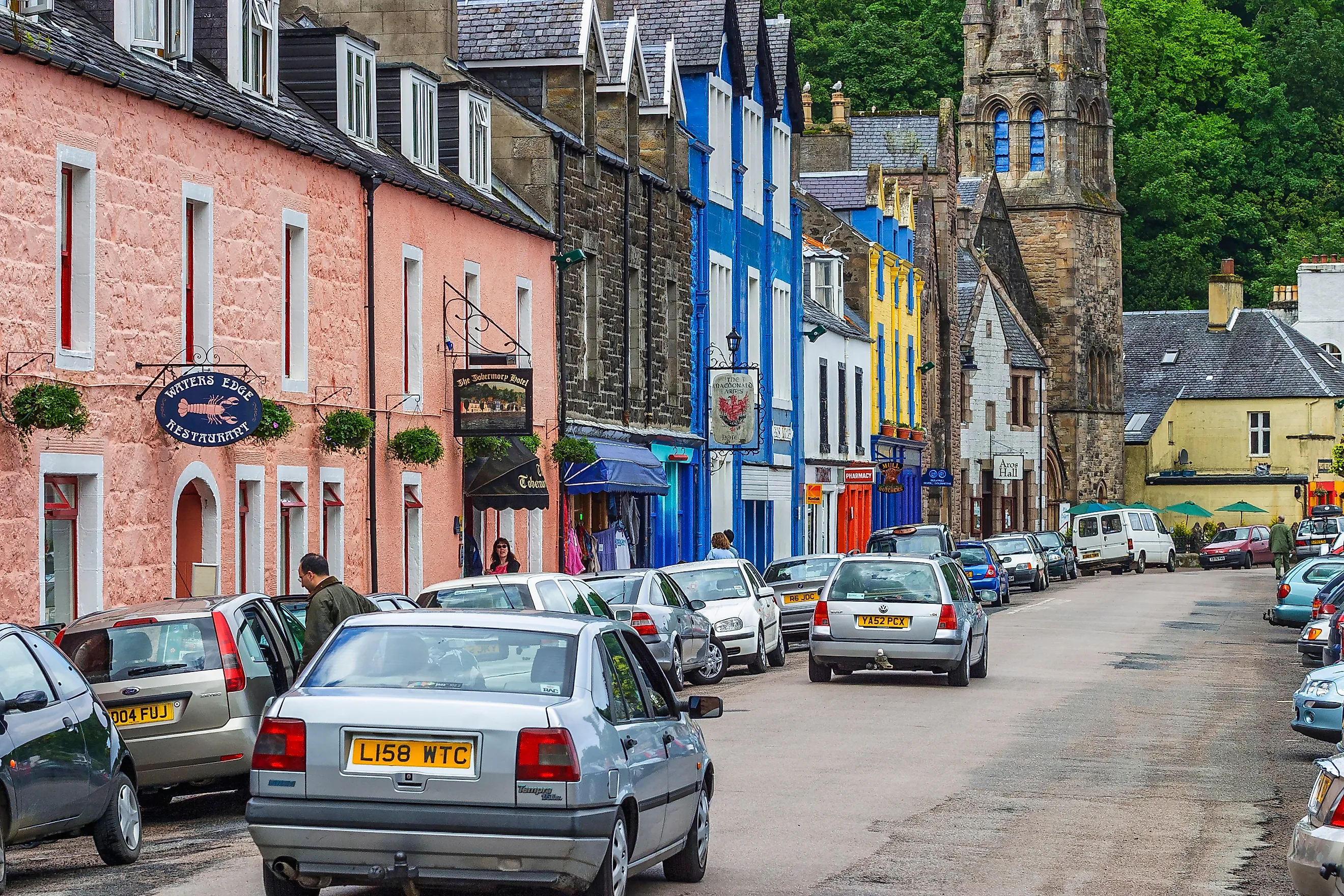
Tobermory was built as a fishing port in the late 18th century and is now the main town on the Isle of Mull. The colorful island capital of Tobermory is the ideal location for wildlife watchers to catch a glimpse of the rare and unusual Golden and White-tailed Eagles, Otter, Corncrake, and more. Main Street in Tobermory hugs the shore, giving you a view of the water to the East, while providing you with all the advantages of the town center. Stay at The Tobermory Hotel and wake up to views of the bay, and run next door to Tobermory Chocolate to get your handcrafted chocolate from a local family. Once sufficiently rested and satiated, walk up Main Street to the Tobermory Pier or explore the history of the Isle at the Mull Museum.
Where Scotland Slows Down
Historic market towns and coastal communities alike, these 11 Main Streets reveal a side of Scotland that is best experienced at a slower pace. Each one offers its own blend of centuries-old architecture, local shops, traditional pubs, and connections to the landscapes and stories that shaped the community. Scotland's spirit is often strongest in its small towns, and these Main Streets are well worth exploring.