11 Best Towns In New Mexico For Retirees
New Mexico hands a retirement room to breathe: sun on nearly every page of the calendar, mountains and desert in the same afternoon, and towns where the pace finally matches the schedule. This is a state worth spending time outside in, full of lava fields and ice caves, a copper pit nearly two miles across, gypsum dunes you can sled, and plazas where the adobe predates the railroad. White Sands and Carlsbad Caverns sit within a morning's drive of more than one town on this list. The eleven below each make a different case for settling in, whether you want a mountain village, a hot-springs soak, or a working downtown with a hospital around the corner. Pick the landscape you want to wake up to.
Silver City

Silver City runs on art now, not ore. The brick storefronts that mining money built downtown have filled with galleries and cafes, and the older end of town stays flat enough to walk a daily loop. A steady gallery scene and live music give the week its rhythm, and the high-desert climate keeps the seasons mild. The Silver City Museum, a few blocks off the main commercial stretch, is staffed by guides who know the area's multicultural history cold.
The Gila National Forest starts at the edge of town, the kind of trail network where you turn back whenever your knees say so rather than committing to a fixed loop. Fifteen miles east, the Santa Rita copper pit, the third-oldest working open-pit copper mine on the planet, drops more than a thousand feet below a roadside overlook. And up the canyons to the north, the Mogollon people stacked stone homes into the Gila Cliff Dwellings centuries before the first miner showed up.
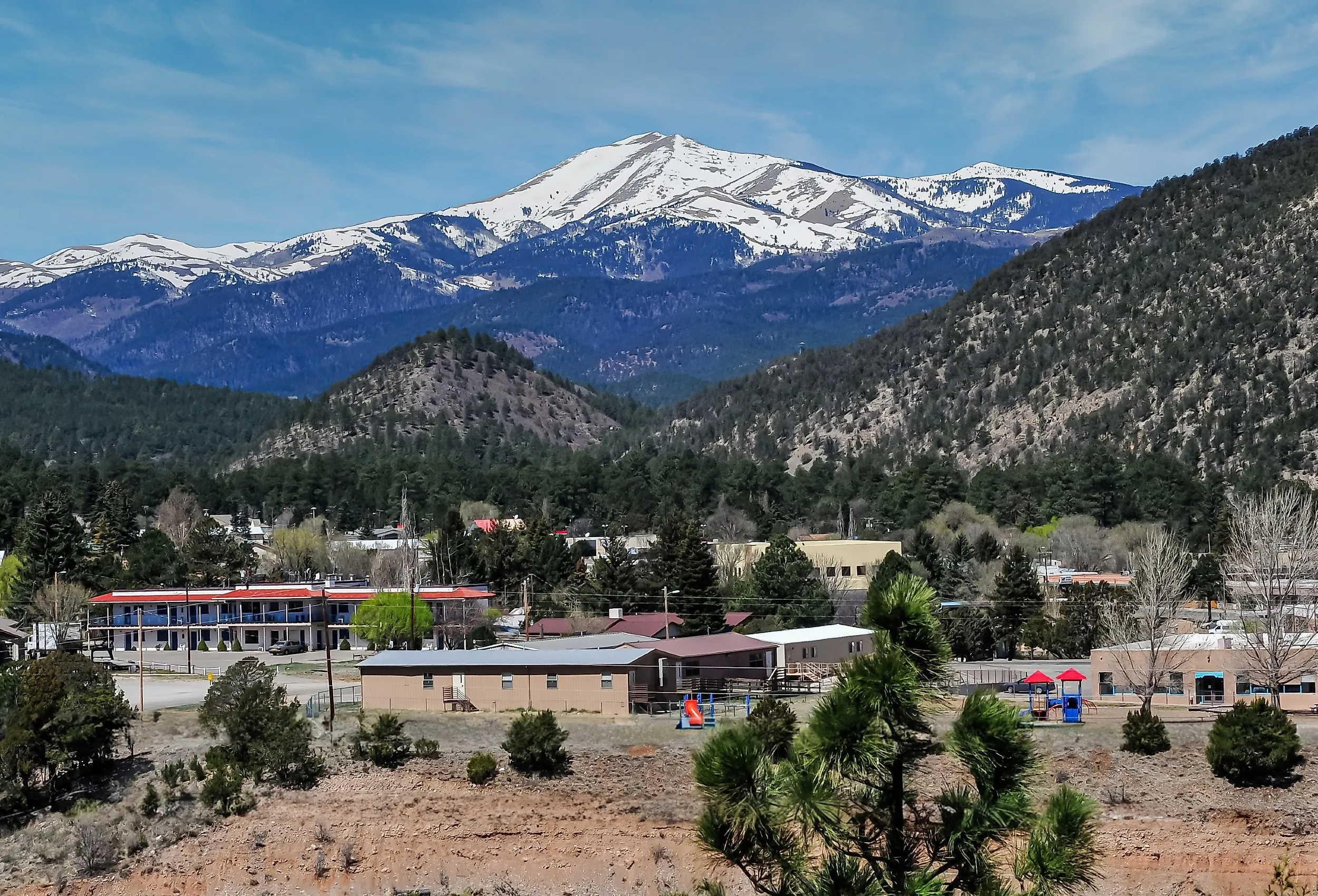
Ruidoso

Ruidoso is the cool-air option, a mountain village at about 6,900 feet where ponderosa pines stand in for desert and the summers stay mild while the rest of the state bakes. Ski Apache, owned by the Mescalero Apache Tribe, runs its lifts up Sierra Blanca toward the 12,000-foot ridgeline in winter and turns the gondola over to sightseers and zip-liners in summer. Down in the walkable Midtown shopping district, Native American jewelry and turquoise fill the trading posts, and Grindstone Lake sits minutes away for a paddle or a shoreline hike.
Ruidoso sells the mountain life outright. It also asks for clear eyes: the 2024 South Fork Fire and the flash floods that followed hit the village hard, and the burn-scarred slopes keep flood risk elevated for years, something worth weighing against the cool air and the pines. Ruidoso Downs still runs its meet, the Spencer Theater books a full season of music and dance, and the Lincoln County Medical Center covers care in town.
Portales

Out on the eastern plains near the Texas line, Portales runs on its university. Eastern New Mexico University hands the town a cultural calendar two sizes too big for its population, with concerts and lectures most weeks, and several communities in town handle independent and assisted living. The old square, wrapped around a 1930s courthouse, is an easy afternoon on foot.
The university also runs the Blackwater Draw Museum, where the artifacts and Ice Age bones come from a site just up the road where mammoth hunters camped roughly 13,000 years ago. Come fall, campus throws the Peanut Valley Festival for the Valencia peanut crop that built the town, all craft booths, music, and food. Not many retirement towns let you split a weekend between mammoth hunters and peanut brittle.
Roswell

Roswell turned one 1947 incident into an entire personality, and it commits all the way: the International UFO Museum and Research Center anchors a downtown that leans hard into little green men. The quieter draw for a retiree is convenience. This is a true regional hub, where groceries, specialists, an airport, and Eastern New Mexico Medical Center for everyday and emergency care sit in town rather than a two-hour drive off.
The museum walks you through both versions of what came down that summer, alien craft or weather balloon, and lets you decide. For a lower-key afternoon with the grandkids, the Spring River Zoo pairs small-animal exhibits with conservation education.
Las Vegas

This is the other Las Vegas, the one that came first by a few decades and never traded its history for neon. More than 900 buildings here sit on the National Register, one of the densest concentrations in the country, so an ordinary walk doubles as an architecture tour past frontier storefronts and railroad-era brick. The town wraps around a Spanish-colonial plaza, and the old districts keep errands within a few blocks.
The 1882 Plaza Hotel still rents rooms at the center of it, and the self-guided Historic Home Trail threads past the Victorian and Territorial houses on the side streets. The Fort Union Drive-in, the last one left in New Mexico, runs double features on weekend nights, and the San Miguel County Fair fills the late-summer calendar with livestock and rides.
Gallup

Gallup sits at the doorstep of the Navajo Nation, with Zuni Pueblo to the south, and it puts Native American art and culture at the center of ordinary life: more than a thousand artisans work in and around town. Red Rock Park, just east, throws its trails against sandstone cliffs and keeps a museum that traces the Ancestral Puebloans through to today's Zuni, Hopi, and Navajo. Every summer the Gallup Inter-Tribal Indian Ceremonial draws tens of thousands for dances, rodeos, and song.
The town carries a range of assisted-living options for residents who want care close by, and the days fill easily between the trading posts, the museum at Red Rock Park, and the drive out to the pueblos. It is that deep cultural calendar, more than anything, that holds retirees here through the long high-desert winters.
Alamogordo

Alamogordo's backyard is White Sands National Park, the gypsum dunes a short drive west and open for hiking, biking, a picnic, or the slow walk out to watch the sun drop. The town sits between that white basin and the Sacramento Mountains, so desert and alpine are both within reach. Up in the eastern foothills, the New Mexico Museum of Space History tracks the history of rocketry and spaceflight.
Out on Highway 54, McGinn's PistachioLand grows its crop in the desert and pours tastings at the attached Arena Blanca Winery, all in the shadow of a 30-foot roadside monument billed as the world's largest pistachio. It is exactly the kind of low-key, genuinely local outing that fills a retirement afternoon.
Carlsbad

The Pecos River runs right through Carlsbad, and the town built it a riverfront of walkways and pocket parks, a green ribbon you do not expect in this much desert. Downtown stacks murals and shops, and day to day the town delivers modern conveniences without a big city's crowds.
The headliner is underground. Carlsbad Caverns National Park holds the Big Room, the largest single cave chamber by volume in North America, and you walk it on a flat paved loop or ride the elevator down. On the north edge of town, the Living Desert Zoo and Gardens State Park gathers more than 40 Chihuahuan Desert species alongside hundreds of native plants, all of it above ground and in the sun.
Truth or Consequences

Yes, the town really is named after a 1950s radio quiz show. It was plain Hot Springs until March 1950, when residents voted to rename it for the NBC program Truth or Consequences, host Ralph Edwards turned up to broadcast the anniversary, and the name stuck; the town still throws its Fiesta for him every May. What sat under the old name is still the main draw: geothermal water bubbles up along the Rio Grande, and a downtown district of historic bathhouses lets you soak it straight from the source.
For a retiree, the appeal is the daily soak: mineral water on tap downtown and a slow, walkable pace built around it. Elephant Butte Lake State Park, New Mexico's largest reservoir, sits just up the road for boating and fishing, and quieter Caballo Lake lies to the south. The Geronimo Springs Museum fills in the rest, with prehistoric pottery, a restored miner's cabin, and a whole room devoted to Ralph Edwards.
Farmington

Farmington is the pick for retirees who want a bigger town without big-city density, anchoring the Four Corners with services, amenities, and a lot of open country at its edges. The San Juan Country Club draws an over-55 crowd to its golf and clubhouse, but the real payoff is outdoors.
Aztec Ruins National Monument, just up the road, preserves a great house the Ancestral Puebloans raised in the 1100s, complete with a reconstructed great kiva you can step inside. The Bisti/De-Na-Zin Wilderness unrolls roughly 60 square miles of eroded badlands that reward anyone willing to wander with a camera, and Navajo Lake keeps the boats and kayaks busy all summer.
Grants

Grants sits in volcano country, and the landscape is the whole reason to be here. Southwest of town, the Bandera Volcano and Ice Cave pairs a cinder cone with a collapsed lava tube cold enough to hold ice straight through August. El Malpais National Monument runs hikers out across ancient lava flows and tubes nearby.
Mount Taylor rises to the northeast, steep and snow-covered enough that endurance racers spend one brutal winter day each year clawing to the summit in a multi-sport push. Everyone else can drive partway up for the long view back over town. That mix, a volcanic landscape and an easy way into it, is what sets Grants apart.
The Case for a New Mexico Retirement
Strip away the lava and the aliens and the giant pistachio, and the thread tying these eleven towns together is plain: each one hands a retirement room to spread out, with country worth getting up for right outside the door. The dunes, the caverns, the cliff dwellings, and the copper pit are all within reach. New Mexico rewards the retiree who would rather wake up to open sky and a trailhead than to one more crowded subdivision.