10 Underrated Small Towns to Explore in The Rockies
Stanley, Idaho, counts fewer than a hundred year-round residents, yet it sits under the jagged wall of the Sawtooths with a national forest at its back door. That is the kind of place this list is after: small mountain towns in the Rockies that travelers tend to drive past on the way to Aspen or Banff. The range runs from the Canadian foothills down into northern New Mexico, and the towns below are scattered along its length, each one built around a river, a railroad, a ski hill, or a stretch of trail. None of them needs a crowd to be worth the stop.
Bragg Creek, Alberta

A family admiring the scenic view at Fullerton Loop Trail in Bragg Creek, Alberta.
The Elbow River runs right past Bragg Creek, a hamlet in the Alberta foothills about a 45-minute drive west of Calgary. The water draws anglers in summer and the riverside picnic spots fill up on weekends, but the real reason people make the trip is the trail network just west of the hamlet.
West Bragg Creek connects to the Kananaskis system, with dozens of marked routes that work for mountain biking and hiking in the warm months and turn into groomed cross-country ski and snowshoe trails once the snow sets in. The hamlet itself is a cluster of shops and cafes, close enough to the city for a day trip and far enough out to feel like the mountains have already started.
Stanley, Idaho

Stanley's permanent population sits around 100, which makes the wall of the Sawtooth Mountains rising behind it feel that much bigger. The Salmon River starts nearby, the stretch known as the River of No Return, and rafters put in here for trips that range from afternoon floats to multi-day wilderness runs. Redfish Lake, a few miles south, backs up against the peaks and gives the easiest postcard view in the valley.
Trails into the Sawtooth Wilderness leave from trailheads close to town, with options for a flat lakeside walk or a hard climb to an alpine basin. When the day is done, Kirkham Hot Springs is about an hour's drive west toward Lowman, a set of soaking pools terraced into the rock above the Payette River.
Durango, Colorado

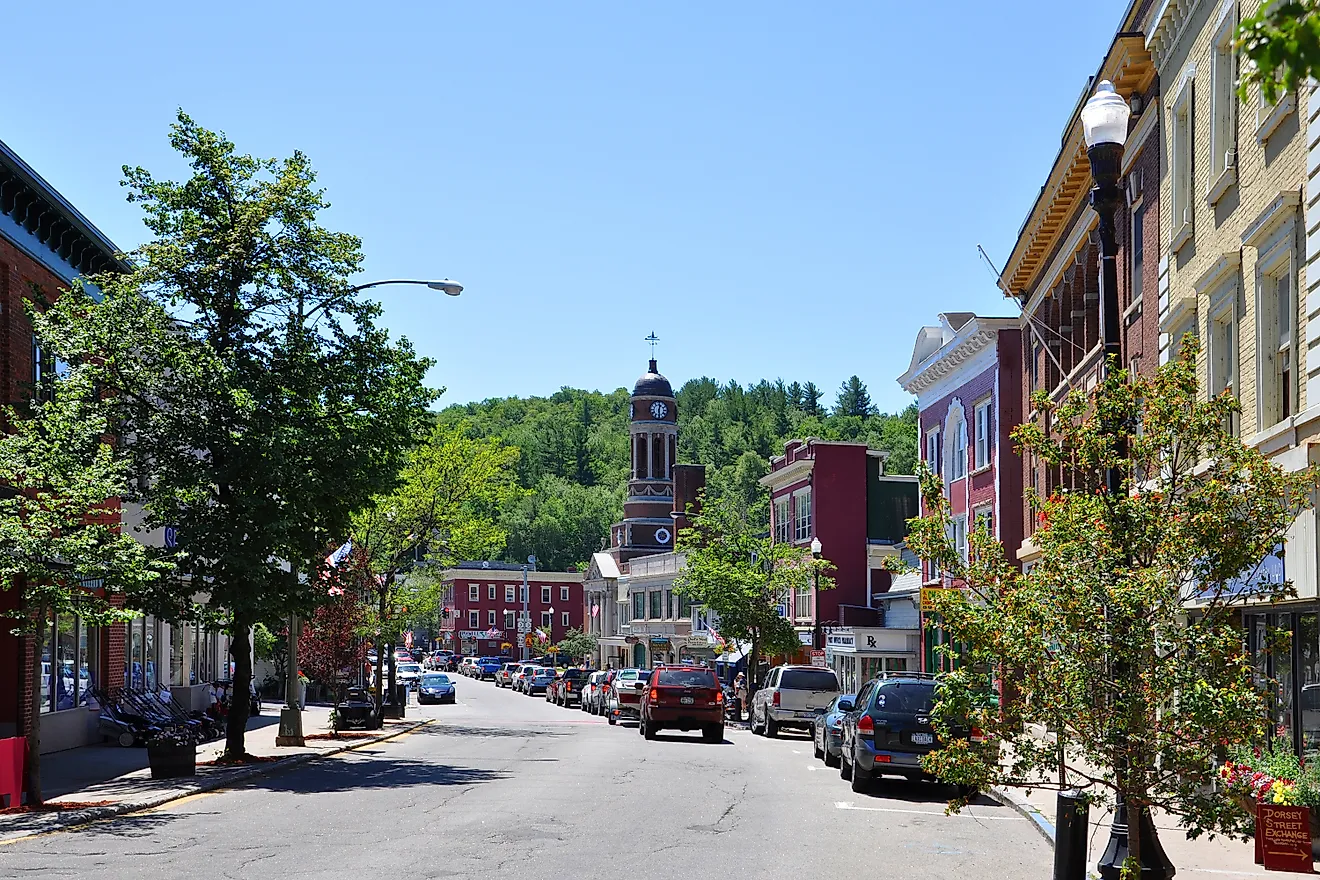
Main Avenue in Durango, Colorado.
A steam train has been running out of Durango since 1882, when the Denver & Rio Grande built the narrow-gauge line to haul silver and gold down from the San Juan Mountains. The Durango & Silverton Narrow Gauge Railroad still makes the run, a National Historic Landmark that carries passengers up the Animas River gorge on track no highway can reach. The town it leaves behind has about 19,000 residents and a brick main street built on mining money.
West of town, Mesa Verde National Park preserves the cliff dwellings of the Ancestral Puebloan people, who built into the canyon walls more than 700 years ago. Closer in, the Powerhouse Science Center fills an old coal-fired power plant on the Animas River with hands-on exhibits, and the 1887 Strater Hotel still operates downtown with its Victorian rooms intact. Oxbow Park and Preserve gives an easy riverside afternoon, and Serious Texas BBQ is the local stop for brisket afterward.
Taos, New Mexico
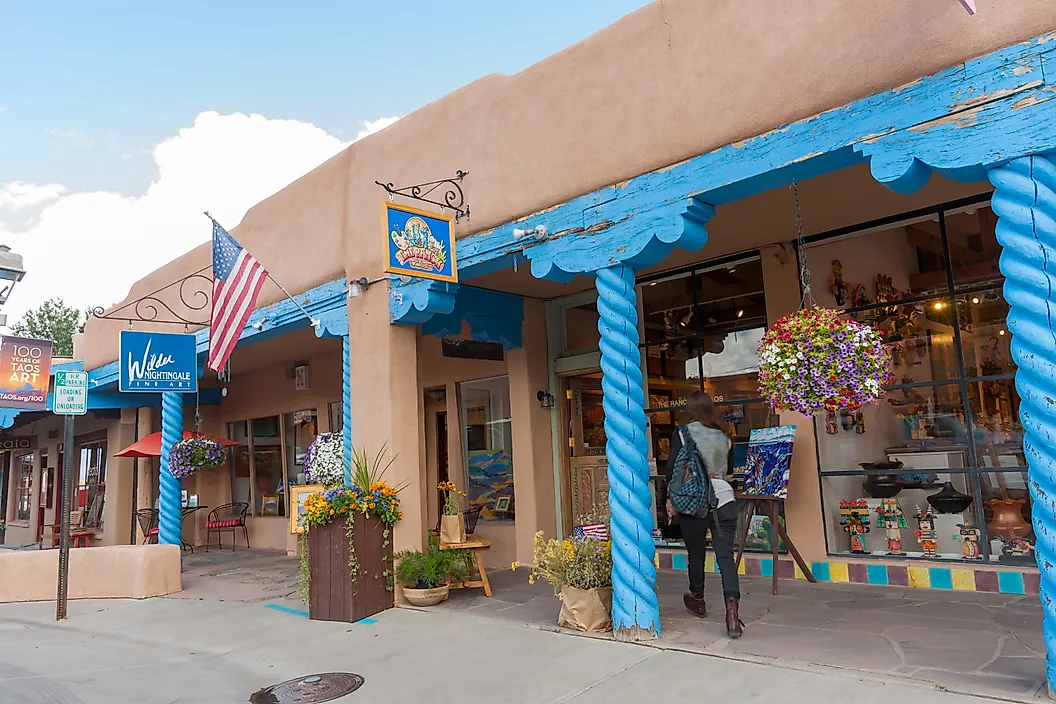
Sidewalk in Taos, New Mexico.
People have lived at Taos Pueblo for roughly a thousand years, in multi-story adobe houses that still stand at the edge of town. The pueblo is a UNESCO World Heritage Site and one of the oldest continuously inhabited communities in North America, and it sets the tone for everything around it. The town of Taos grew up later as a Spanish colonial settlement, and the layers show: Native, Spanish, and the Anglo-American artists who turned the place into a colony in the early 1900s.
Taos sits on a high plateau below the Sangre de Cristo Mountains, with a population of only a few thousand. The historic Taos Plaza anchors downtown, ringed by galleries and adobe storefronts, and the San Geronimo mission church reflects the Spanish Franciscan past. The art scene is the draw, with studios, museums, and the kind of light that pulled painters here in the first place.
Cody, Wyoming

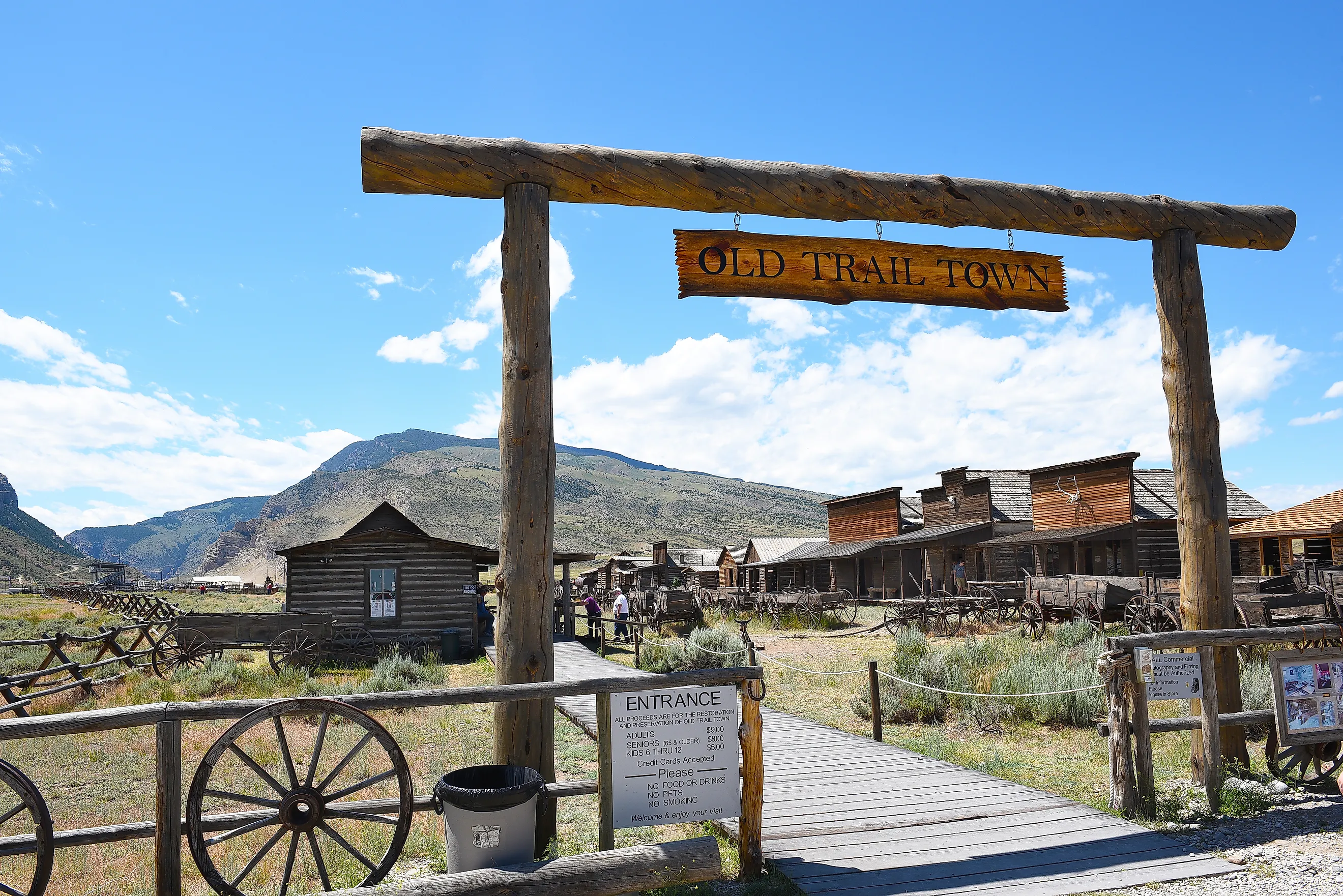
William F. Cody, the showman known as Buffalo Bill, founded the town that carries his name in 1896, and his fingerprints are still all over it. The Buffalo Bill Center of the West holds five museums under one roof, including the Whitney Western Art Museum and the Draper Natural History Museum, and the collection on the Plains Indians and frontier firearms is among the best anywhere. Old Trail Town gathers genuine 1800s log cabins and a saloon at the edge of town for a look at the frontier that is not a reconstruction.
Cody also built the Irma Hotel in 1902 and named it for his daughter; it still serves meals off the same cherrywood bar. The Buffalo Bill Scenic Byway runs west past red-rock cliffs toward the east gate of Yellowstone National Park, and the surrounding Shoshone National Forest, the first national forest in the country, opens up hiking and camping in every direction.
Crested Butte, Colorado

For a few weeks each summer the meadows around Crested Butte fill with lupine, columbine, and mule's ears, which is how the town earned its state-sanctioned title as the Wildflower Capital of Colorado. The Crested Butte Wildflower Festival times its walks and workshops to the bloom in July. The rest of the warm season belongs to the bikes: a web of summer singletrack threads the Gunnison Valley for riders of every level.
Winter turns the same slopes over to Crested Butte Mountain Resort, known for terrain steep enough to test experts. The downtown is a compact grid of brightly painted Victorian buildings left from the coal-mining days, and the West Elk Loop Scenic Byway climbs out of town over Kebler Pass, where one of the largest aspen stands in the country turns gold in late September.
Butte, Montana

Butte grew rich on copper. At the turn of the twentieth century it was one of the larger cities in the Rocky Mountain West, drawing miners from across Europe and minting the fortunes of the Copper Kings who fought for control of the hill. That history is the reason to come: the town wears it openly, from the headframes still standing over old mine shafts to the brick blocks of uptown.
The National Historic Landmark District covers much of the center, and the World Museum of Mining sits on a former mine yard with an underground tour. The Mineral Museum at Montana Technological University displays specimens pulled from the surrounding rock. Stodden Park, the restored Columbia Gardens carousel, and the Holy Trinity Serbian Orthodox Church round out an afternoon in a town shaped by the people the mines brought in.
Cañon City, Colorado

Cañon City sits where the Great Plains run into the Front Range, and a quirk of geography keeps it warmer than the mountains around it, mild enough that locals call the area a banana belt. That climate makes it a year-round base for the canyon country just outside town. The Royal Gorge Bridge spans a 1,000-foot chasm cut by the Arkansas River, and the Royal Gorge Route Railroad runs the floor of the canyon below it.
Skyline Drive climbs a narrow hogback ridge with drop-offs on both sides, and the Royal Rush Skycoaster swings out over the gorge for anyone who wants the adrenaline version. The San Isabel National Forest and the river itself handle the quieter days, with swimming holes and shaded banks. In town, Bunk House Burgers grills patties from beef raised on the owners' ranch, and El Caporal Family Mexican Restaurant covers the green chile.
Salida, Colorado

The Arkansas River runs straight through Salida, and the town has built its summer around it. The Arkansas Headwaters Recreation Area draws kayakers and rafters to one of the most-paddled stretches of whitewater in the country, and a downtown wave park lets paddlers surf within walking distance of the brick storefronts. Anglers work the same water for trout.
When the river is too cold, the Salida Hot Springs Aquatic Center fills the gap; built as a WPA project in 1937, it is the largest indoor hot springs pool in the nation, fed by mineral water piped down from springs near Poncha Springs. The historic downtown is a designated creative district packed with galleries and studios, and Captain Zipline runs an aerial course in the cliffs nearby for a faster afternoon.
Red River, New Mexico

Red River is a small ski town on the Enchanted Circle Scenic Byway, the 84-mile loop that rings Wheeler Peak through Taos, Angel Fire, and Eagle Nest. The main street is a few blocks of western storefronts at 8,750 feet, and the lifts at the Red River Ski and Summer Area come right down to the edge of it.
The mountain runs year-round. Summer brings a zipline, a scenic chairlift, and lift-served mountain biking, and the surrounding Carson National Forest opens up trails for hiking and horseback riding. The Sangre de Cristo Mountains close in on all sides, and the chairlift gives the easiest way to get above the valley for a wide look at them.
Smaller Towns, Bigger Mountains
What these towns share is a sense of proportion. Stanley keeps its hundred residents under the Sawtooths, Crested Butte hands its meadows over to wildflowers each July, and Durango still measures its days by a train that has run since 1882. The famous resorts farther up the range trade on their names; these places trade on the rivers, the trails, and the histories that happen to sit at their doorsteps. Pick one, and the mountains do the rest.