10 Storybook Towns In Connecticut
Connecticut is home to beautiful coastal villages and idyllic hillside communities, set against a landscape of glacial hills and the Long Island Sound coastline. In Mystic, the draw is the old seaport atmosphere, where the historic waterfront and bascule bridge give the town the feeling of a coastal tale brought to life. Further inland, Litchfield is centered on a broad green framed by the white-steepled First Congregational Church and surrounded by quiet hills. Below are Connecticut's 10 storybook small towns.
Mystic

Mystic grew along the Mystic River as a 19th-century shipbuilding center, its position within a protected tidal estuary near Long Island Sound shaping both its economy and layout. That maritime past is still visible today, especially along the preserved waterfront and Water Street, where historic structures like the Captain George Greenman House (built in 1839) and the Daniel Packer Inn reflect the town’s role in wooden ship construction and coastal trade. At the Mystic Seaport Museum, this legacy is brought to life through a recreated village and working vessels. At the same time, the nearby Mystic River Bascule Bridge continues to open for passing boats, maintaining a rhythm that has defined the town for generations.
Essex

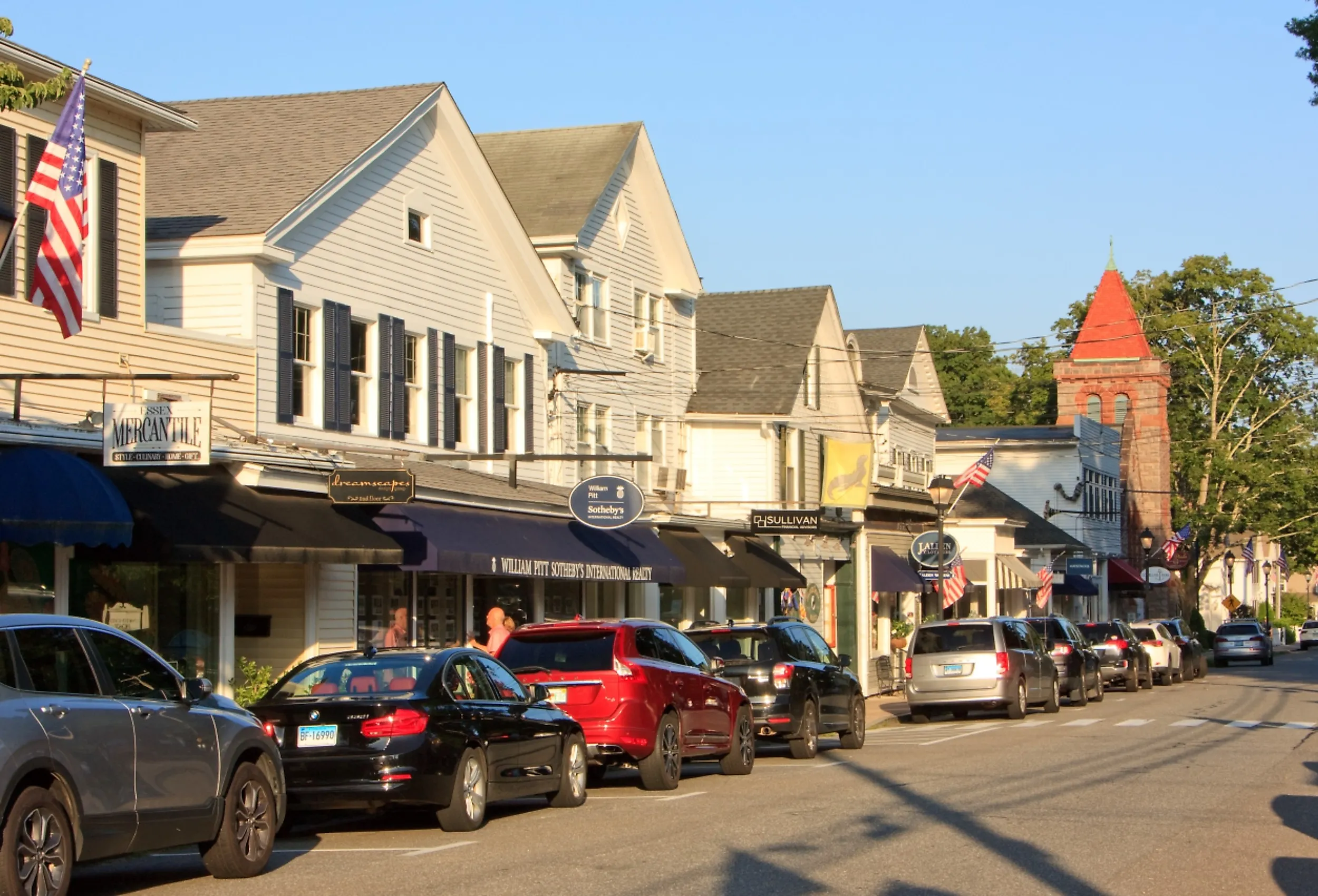
Essex sits along the Connecticut River, where a wide tidal corridor once supported shipbuilding, privateering, and maritime trade. That history still shapes the town’s appearance, particularly along Main Street, where Colonial- and Federal-era homes and storefronts remain intact. Landmarks include the Griswold Inn, which has been in operation since 1776, and the Connecticut River Museum, which interprets the region’s river-based commerce. Just beyond the center, the Essex Steam Train traces the historic rail lines that once linked inland goods to the port. Today, docks extending into the river support marina traffic and excursions, continuing Essex’s long relationship with the water.
Litchfield
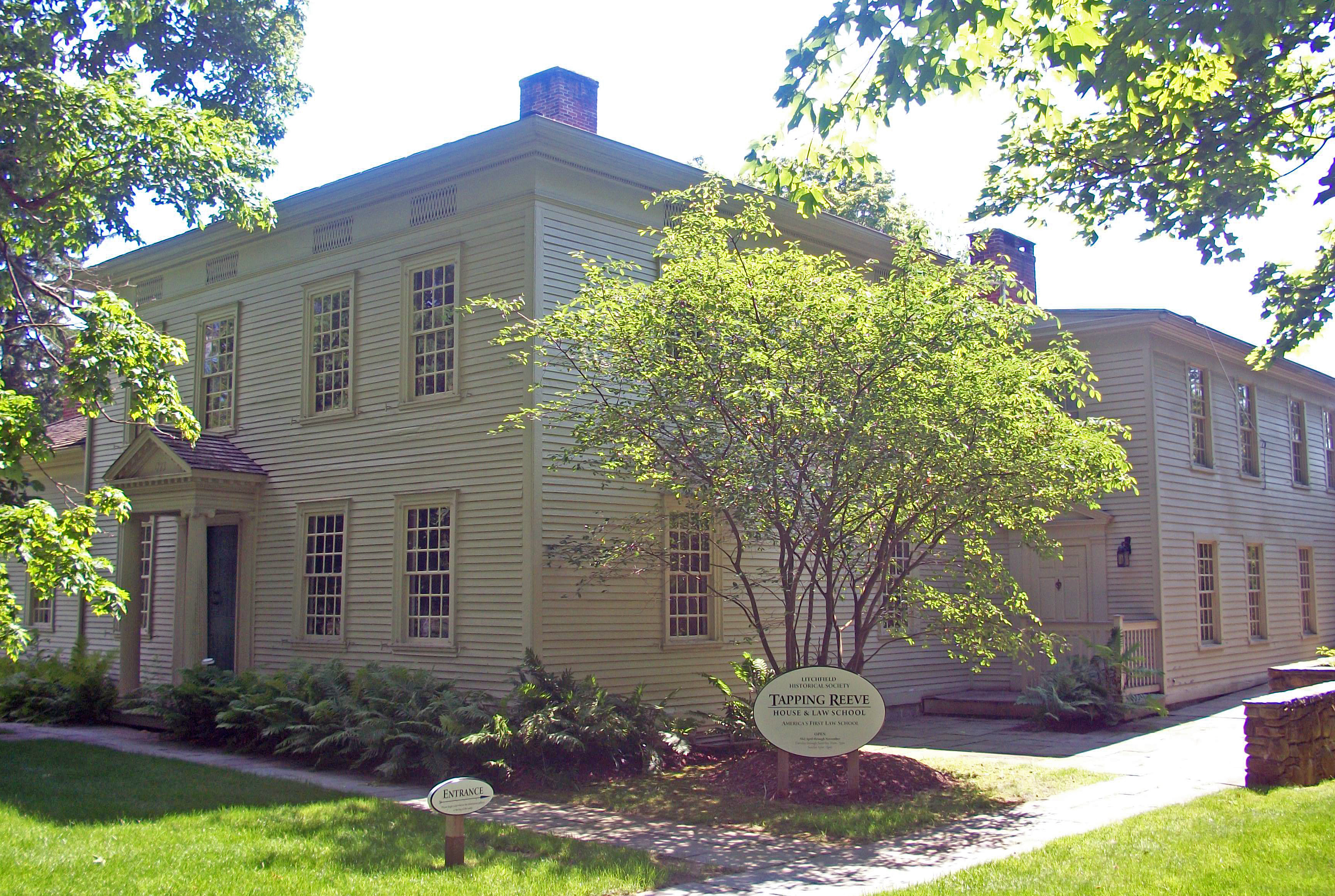
It’s no surprise that Litchfield was designated a National Historic Landmark District in 1968, given how well it preserves the structure and character of a late 18th-century New England village. The broad Litchfield Green is encircled by a dense collection of 18th- and 19th-century buildings, one of which is Tapping Reeve House and Law School, which marks the site of one of the nation’s earliest law schools. The nearby White Memorial Conservation Center, which is part of the Appalachian Mountain Club, extends the experience beyond the village with miles of trails along former carriage roads. A walk through town often ends with a stop at Litchfield Distillery for a tour and tasting of spirits crafted from regional ingredients, connecting the area’s present-day craft industry to its agricultural roots dating back to its 18th-century settlement.
Chester

Chester formed along Chester Creek near its meeting point with the Connecticut River, and its compact downtown reflects that geography. Centered on Water and Main Streets, the area has evolved into a small but active arts district. One of its most distinctive features is the rubblestone commercial block at 4 Water Street—once the Leet Store—constructed in 1909 by Italian stonemasons and remaining a focal point of the streetscape, thanks to its unique stone construction. Nearby, galleries such as the Chester Gallery and the Lori Warner Studio & Gallery sit alongside the Chester Museum at the Mill, which preserves the town’s local history by utilizing historic buildings for contemporary commerce. A short walk brings visitors to the Chester-Hadlyme Ferry, a long-running river crossing that still links both banks.
Kent

Kent's village center follows the Housatonic River Valley, its linear layout shaped by the narrow floor between surrounding hills. Activity clusters around the Kent Green, where businesses like 45 on Main Coffee & Creamery and 109 Cheese Market extend along Main Street and into the nearby Kent Barns complex. The complex is a mix of restored and rebuilt agricultural structures now used for shopping and dining. While early settlement relied on farming and river transport, the same landscape now draws visitors for outdoor access. At Kent Falls State Park, a series of waterfalls descends toward the valley, while the Bull's Bridge Scenic Area reflects early river crossings. The Appalachian Trail also passes nearby, linking the town to a broader regional network.
Stonington Borough

Stonington Borough occupies a narrow peninsula extending into Fishers Island Sound, and its centuries of maritime trade are still reflected in its active commercial fishing fleet at Stonington Town Dock. Water Street runs through a dense arrangement of stone and wood-frame buildings, creating a tightly scaled, walkable downtown. Shops like Grand & Water Antiques line the street, their wares offering echoes to the past, while restaurants such as Breakwater offer breathtaking views of the water. At the peninsula’s edge, the Stonington Harbor Light has marked the harbor entrance since 1840, and nearby Stonington Point provides access to the breakwater and open water, reinforcing the town’s ongoing connection to the sea.
Washington

Washington developed as a rural service center within the Litchfield Hills, supported early on by road networks linking surrounding farms to market towns. Rather than a single core, it consists of several distinct villages, including Washington Green and Washington Depot. Visitors can find the Gunn Memorial Library and Museum in Washington Green; it was founded in the late 1800s and remains an integral hub for the community today. Nearby, visitors can access the Steep Rock Preserve and its extensive trail system amid old-growth hemlock forests. A short drive away, the Hollister House Garden offers a more curated landscape, with Georgian architecture and formal gardens that include hedge mazes. In Washington Depot, small businesses like Hickory Stick Bookshop have served the community for over 70 years, and while they maintain a largely understated approach, subtle nods to Gilmore Girls reflect the town’s role as one of the inspirations for the fictional Stars Hollow.
Guilford

Guilford’s layout is defined by one of the largest town greens in New England, surrounded by historic homes that reflect its origins as a coastal colonial settlement along Long Island Sound. The Henry Whitfield House, dating to the 1630s, exemplifies that history, widely considered the oldest house in Connecticut and the oldest stone house in New England. The nearby harbor continues to support small-scale maritime activity, and along the shoreline, Jacobs Beach provides public access across a broad stretch of coast. Inland, sites such as the Hyland House Museum and the Dudley Farm Museum illustrate domestic and agricultural life across different periods. A stop at Guilford Food Center adds a contemporary layer, combining café, market, and prepared foods within a long-standing local institution.
Old Wethersfield

Old Wethersfield preserves one of Connecticut’s earliest settlement patterns, with Broad Street and the Broad Street Green forming the historic core where livestock once grazed. The surrounding streets retain a consistent architectural character, including sites like the Buttolph-Williams House, which reflects early colonial building styles. Nearby, the Webb-Deane-Stevens Museum highlights the town’s prominence in the colonial era with its guided tours of period homes and gardens. Along the river, Wethersfield Cove, whose boat launch areas date back to the 1600s, reminds visitors of the town’s maritime beginnings, including the 1649 launch of the Tryall, the first ship built in Connecticut. For a broader overview of this history, the Wethersfield Heritage Walk links key attractions through a self-guided route.
New Milford

New Milford's long village green serves as both a visual and functional focal point for the town. The surrounding downtown features a mix of cultural and historical institutions, including the Village Center for the Arts and the New Milford Historical Society, which manages a campus of preserved structures, including the Hine-Buckingham House. Beyond the center, the town’s landscape becomes more prominent. The Boardman Bridge spans the Housatonic River as one of the state’s few remaining lenticular truss bridges, while Lovers Leap State Park provides elevated views across the valley.
Connecticut's storybook villages remain grounded in historic purpose.
Across Connecticut, the scenic beauty of these 10 towns is tied to how they physically relate to the land and water around them. Whether oriented toward tidal inlets in Stonington Borough or organized around expansive greens in Litchfield and New Milford, each town retains a visible link between its original function and its present-day layout. Harbors still anchor street grids, and river crossings remain central to movement within the towns. That enduring link between landscape and layout is what gives these towns their storybook charm.